Table of Contents >> Show >> Hide
- Why Kitchen Cabinet Organization Matters
- 23 Tips to Organize Kitchen Cabinets and Simplify Daily Life
- 1. Empty one cabinet at a time
- 2. Declutter before you buy organizers
- 3. Group items by category
- 4. Create zones based on routines
- 5. Store everyday items at eye level
- 6. Put heavy items in lower cabinets
- 7. Use shelf risers to double vertical space
- 8. Add turntables for awkward corners
- 9. Use clear bins for loose items
- 10. Separate food storage containers from lids
- 11. Store baking sheets and cutting boards vertically
- 12. Install pull-out shelves if possible
- 13. Give your mugs a realistic limit
- 14. Keep spices where they stay freshest and most useful
- 15. Make the most of cabinet doors
- 16. Dedicate one cabinet to meal prep essentials
- 17. Create a grab-and-go lunch or snack zone
- 18. Store serving pieces away from everyday dishes
- 19. Label selectively, not obsessively
- 20. Decant only what makes sense
- 21. Reserve one shelf for backstock, not five
- 22. Reset cabinets weekly
- 23. Build a system your household will actually follow
- Smart Cabinet Zones to Try
- Common Kitchen Cabinet Organization Mistakes
- How to Keep Kitchen Cabinets Organized Long-Term
- Real-Life Experience: What Actually Changed After Reorganizing Kitchen Cabinets
- Conclusion
If your kitchen cabinets feel like a reality show where pots, plastic lids, and mystery mugs compete for survival, you are not alone. A lot of kitchens look tidy from the outside and absolutely feral on the inside. The good news is that cabinet chaos is usually not a space problem. It is a system problem. Once you organize kitchen cabinets around how you actually cook, unload groceries, and make coffee before your brain fully boots up, daily routines get dramatically easier.
This guide breaks down exactly how to organize kitchen cabinets in a way that feels practical, realistic, and easy to maintain. Instead of chasing a picture-perfect pantry fantasy, the goal is to create a kitchen cabinet organization system that saves time, reduces clutter, and helps every cabinet do its job. Whether you have a tiny apartment kitchen or a larger family setup, these 23 tips will help you simplify routines without turning your cabinets into a museum display.
Why Kitchen Cabinet Organization Matters
When cabinets are organized well, cooking becomes smoother, cleanup gets faster, groceries are easier to put away, and you stop buying your fourth jar of paprika because the other three were hiding behind a waffle maker. Good organization also helps you use vertical space better, reduce duplicate items, and keep everyday essentials within easy reach. In other words, it makes your kitchen work like a kitchen instead of a scavenger hunt.
23 Tips to Organize Kitchen Cabinets and Simplify Daily Life
1. Empty one cabinet at a time
Do not pull everything out of the entire kitchen unless you enjoy emotional damage. Work cabinet by cabinet so the project stays manageable. This also lets you see what is actually stored in each zone and prevents the classic “my whole kitchen is on the table and now I regret everything” moment.
2. Declutter before you buy organizers
The first step in kitchen cabinet organization is getting rid of what no longer earns its rent. Toss broken tools, recycle chipped containers, donate duplicates, and move rarely used specialty items elsewhere. Buying bins before decluttering is like buying hangers for clothes you secretly hate. Edit first, organize second.
3. Group items by category
Create simple categories such as plates, bowls, mugs, glasses, baking tools, lunch containers, spices, snacks, serving pieces, and food storage. Grouping like with like makes cabinets easier to reset after unloading the dishwasher and helps everyone in the house find things without opening six doors like confused raccoons.
4. Create zones based on routines
Think in terms of use, not just item type. Make a breakfast zone, coffee zone, lunch-packing zone, baking zone, weeknight cooking zone, or kid-snack zone. When you organize kitchen cabinets by routine, tasks become faster because the items used together live together.
5. Store everyday items at eye level
Prime cabinet real estate should go to the things you use all the time. Plates, bowls, glasses, favorite mugs, and the everyday skillet deserve the easiest spots. Holiday platters and novelty cake pans can take the top shelf and enjoy their seasonal hibernation in peace.
6. Put heavy items in lower cabinets
Dutch ovens, stand mixer attachments, stacks of pots, and small appliances belong in lower cabinets where lifting is safer and simpler. This reduces strain and makes it less likely that you will pull a shoulder muscle trying to rescue a slow cooker from a top shelf.
7. Use shelf risers to double vertical space
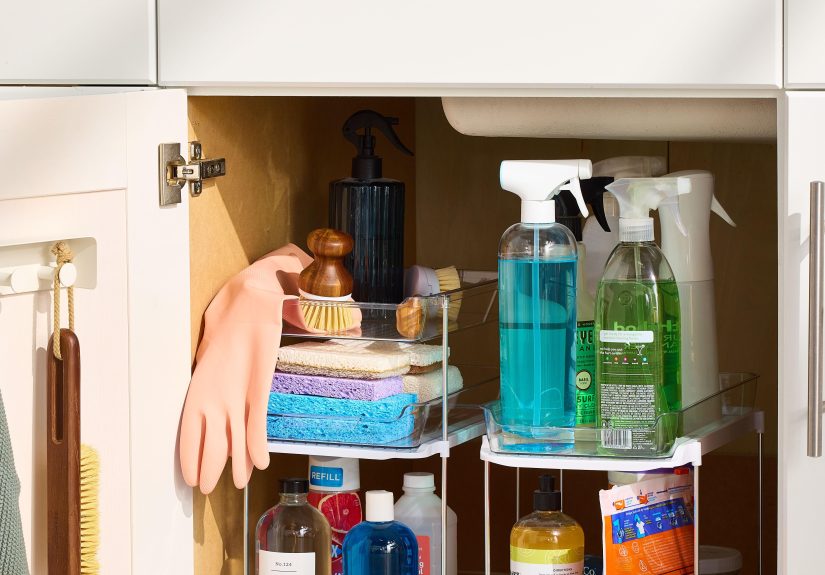
One of the easiest small kitchen storage wins is adding shelf risers. They create a second level for plates, bowls, mugs, or canned goods and help you use the full cabinet height. Instead of stacking everything into a ceramic Jenga tower, you can keep items visible and easy to reach.
8. Add turntables for awkward corners
Lazy Susans are not just for condiments and family dinners from the 1990s. They work beautifully in deep cabinets, corner cabinets, and under-sink spaces. Use them for oils, vinegars, spices, sauces, or grab-and-go snacks. A quick spin beats digging through cabinet darkness like an archaeologist.
9. Use clear bins for loose items
Packets, baking decorations, sauce mixes, tea, and snack bars tend to wander. Clear bins or handled baskets keep these small items corralled and make them easy to pull out. Cabinet organizers do not need to be fancy; they just need to stop the avalanche every time you reach for one thing.
10. Separate food storage containers from lids
Food storage containers become chaotic fast. Nest containers by size and store lids upright in a separate bin, tray, or divider. This saves space, prevents mismatched pieces from multiplying like folklore creatures, and makes leftovers feel a little less exhausting.
11. Store baking sheets and cutting boards vertically
Flat items are much easier to grab when stored upright instead of stacked. Use vertical dividers for baking sheets, muffin tins, platters, cooling racks, and cutting boards. This is one of the smartest kitchen cabinet storage upgrades because it instantly makes lower cabinets more usable.
12. Install pull-out shelves if possible
Deep lower cabinets can turn into black holes where good containers go to disappear. Pull-out shelves or rollout trays improve visibility and accessibility. If built-ins are not an option, use bins that function like drawers so you can bring the contents to you instead of crawling halfway into the cabinet.
13. Give your mugs a realistic limit
Every kitchen seems to contain one emotional support mug collection. Keep the daily favorites and reduce the extras if the cabinet is jammed. Organize mugs by frequency of use, and keep seasonal or sentimental ones elsewhere if needed. Your cabinet should not look like a ceramic reunion tour.
14. Keep spices where they stay freshest and most useful
Spices should be easy to see, easy to grab, and not shoved behind five cans of chickpeas. Use tiered risers, shallow bins, or drawer inserts. If your cabinet sits right above the stove and gets blasted with heat and steam, another cool, dry cabinet is often a better long-term home.
15. Make the most of cabinet doors
The inside of cabinet doors can hold lightweight tools such as measuring spoons, pot lids, cleaning gloves, dish towels, wrap boxes, or slim spice racks. This is especially useful in small kitchens where every inch matters. Just avoid overloading doors with heavy items.
16. Dedicate one cabinet to meal prep essentials
Store mixing bowls, measuring cups, colanders, cutting boards, and prep tools near the main work area. This simple adjustment helps weeknight cooking feel less scattered. Good cabinet organization is often about reducing steps, not just making things pretty.
17. Create a grab-and-go lunch or snack zone
If mornings are hectic, set up one cabinet or shelf with lunch containers, reusable bags, water bottles, snacks, and grab-and-go supplies. This is especially helpful for families with kids, roommates, or anyone who has ever packed lunch while also searching for a clean lid and their dignity.
18. Store serving pieces away from everyday dishes
Do not let oversized platters and special-occasion bowls bully your daily plates out of prime cabinet space. Move serving pieces to a higher shelf, sideboard, or less convenient cabinet. Everyday function should always win over once-a-year convenience.
19. Label selectively, not obsessively
Labels are helpful when they clarify categories or keep a shared system consistent. Label bins for snacks, baking, backstock, lunch supplies, or containers if that helps your household maintain order. But do not feel pressured to label every bean like a tiny museum curator. The goal is clarity, not performance art.
20. Decant only what makes sense
Decanting dry goods into matching containers can look nice and improve visibility, but it is not mandatory. Decant the items you use often and want to see at a glance, such as flour, sugar, rice, pasta, or cereal. Leave everything else in original packaging if that is easier. Organized does not have to mean Instagram-ready.
21. Reserve one shelf for backstock, not five
Bulk buying is useful until three giant jars of peanut butter are living where your cereal bowls should be. Keep backstock contained to one clearly defined shelf or bin. Once backup items start migrating everywhere, the kitchen stops being organized and starts feeling like a small grocery store with no staff.
22. Reset cabinets weekly
The secret to maintaining organized kitchen cabinets is not perfection. It is a small weekly reset. Straighten one or two shelves, put wandering items back in their zones, wipe crumbs, and check for expired food. Five to ten minutes once a week saves you from another giant reorganization later.
23. Build a system your household will actually follow
The best kitchen cabinet organization ideas are the ones people can maintain on tired Tuesdays. Keep systems simple, intuitive, and realistic. If nobody in your house will restack twelve matching bins with military precision, do not build a system that depends on it. Organizing should support your life, not create a part-time job.
Smart Cabinet Zones to Try
If you are not sure where to begin, here is a practical layout idea. Upper cabinets near the dishwasher can hold plates, bowls, and glasses. A cabinet near the coffee maker can become a mug and coffee supply zone. Lower cabinets near the stove can hold pots, pans, oils, and cooking tools. A cabinet near the prep area can store mixing bowls, measuring tools, and cutting boards. One shelf can be designated for lunch supplies or snacks. This kind of zoning turns kitchen cabinet storage into a functional map instead of random shelf assignments.
Common Kitchen Cabinet Organization Mistakes
A few mistakes tend to sabotage even the prettiest systems. The first is storing items wherever they fit instead of where they are used. The second is keeping too many duplicates. The third is stacking things so high that accessing one item disrupts eight others. The fourth is buying organizers that do not match the cabinet dimensions or the household’s habits. The fifth is assuming a one-time cleanout will stay organized forever without small resets. In short, a good system is one part storage and one part behavior.
How to Keep Kitchen Cabinets Organized Long-Term
Maintenance matters. After grocery shopping, put items directly into their categories. When unloading the dishwasher, return dishes to the same zones every time. Before buying another organizer, ask whether the real problem is too much stuff. And every few months, do a quick cabinet edit to remove expired food, abandoned gadgets, and containers that somehow lost their life partners. Kitchens stay functional when the system is easy to repeat, not when it is perfect for one glorious afternoon.
Real-Life Experience: What Actually Changed After Reorganizing Kitchen Cabinets
One of the biggest surprises about reorganizing kitchen cabinets is how quickly it changes the rhythm of the day. Before the reset, the kitchen often felt annoying in small but constant ways. A simple breakfast involved opening multiple cabinets for a bowl, a mug, coffee filters, and cereal. Making dinner meant digging through a crowded lower cabinet for the correct pan while lids clattered around like they were protesting the assignment. Nothing was technically impossible, but everything took longer than it should have.
After reorganizing by zone and frequency of use, the difference felt immediate. The coffee supplies moved into one cabinet near the machine. Mugs sat on the lower shelf, coffee and filters above them, and travel cups off to the side. Suddenly, mornings required fewer steps and much less muttering. A prep zone near the main counter held mixing bowls, measuring cups, cutting boards, and colanders. Dinner prep became smoother because the tools used together were finally stored together.
The biggest win came from fixing the lower cabinets. Pulling out all the pots and pans revealed several duplicates, one warped lid, and a roasting pan that had not been touched in years. Once the extras were removed, vertical dividers made room for cutting boards and baking sheets, while the most-used skillet and saucepan moved to the front. It was not a dramatic makeover worthy of a television reveal, but it made cooking feel calmer and more efficient every single day.
Another unexpected improvement was grocery unpacking. With clearly defined shelves for snacks, canned goods, backstock, and food storage containers, putting groceries away became faster and less random. Instead of stuffing items into whatever empty spot existed, everything had a category. That also made it easier to notice what was running low and what was already overbought. Apparently, owning four open boxes of pasta is less of a personality trait and more of an organizational failure.
Even cleanup got easier. Unloading the dishwasher became more automatic because dishes were no longer scattered across multiple cabinets. Everyone in the household could learn the zones quickly, which meant the system did not depend on one person acting as the kitchen librarian. That may be the most useful lesson of all: organization works best when it is obvious enough for tired people to follow without needing a manual.
In the end, the kitchen did not become a showroom. It became easier to live with. And that is really the point. Organizing kitchen cabinets is not about making every shelf look styled for a photo shoot. It is about removing tiny daily frictions so the kitchen supports your routines instead of slowing them down. A few smart cabinet organizers, some ruthless decluttering, and a realistic zone system can make the whole room feel lighter. Not magical. Just wonderfully, usefully, gloriously less annoying.
Conclusion
Learning how to organize kitchen cabinets is less about buying a cart full of storage gadgets and more about building a system around real life. Start with decluttering, create zones that match your routines, use cabinet organizers only where they solve a specific problem, and keep the most-used items easy to reach. From shelf risers and vertical dividers to snack zones and weekly resets, small changes can simplify cooking, cleanup, and daily routines in a big way. A well-organized kitchen cabinet setup does not need to be fancy. It just needs to make sense every time you open the door.