Table of Contents >> Show >> Hide
- What Is a Baby Quasar, Exactly?
- The Real Mystery: How Did Early Supermassive Black Holes Grow So Fast?
- How JWST Changed the Conversation
- Baby Quasars and the Cosmic Fog Problem
- Specific Clues from the Early Universe
- So What Might Baby Quasars Actually Be?
- Why This Matters for Astronomy
- What Happens Next?
- Conclusion
- Extended Reader Experience: Why the Baby Quasar Story Feels So Fascinating
- SEO Tags
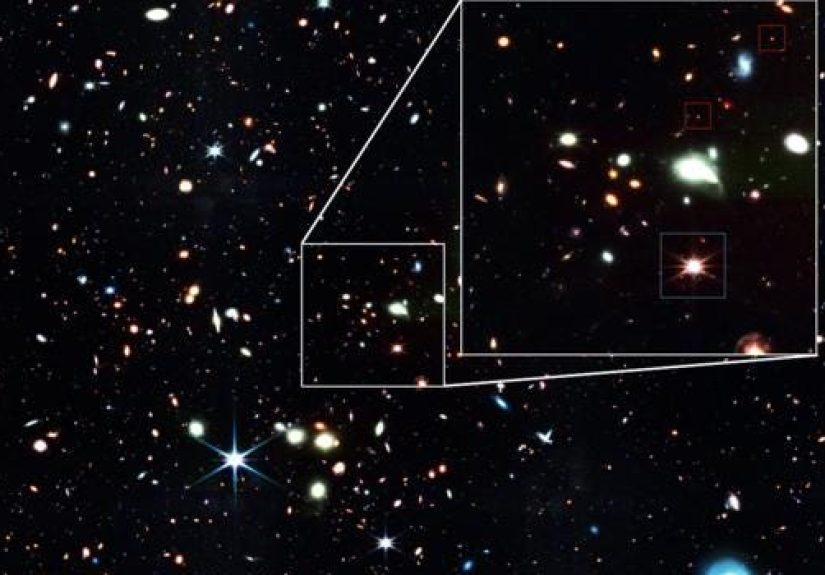
The early universe was not supposed to be this dramatic. According to the tidy version of cosmic history, the first galaxies slowly assembled, black holes grew in an orderly way, and the universe gradually switched on the lights. Then the James Webb Space Telescope showed up like the friend who opens the attic and says, “By the way, there are twelve raccoons and a jazz band in here.” Suddenly, astronomers were staring at strange little red dots, faint active galactic nuclei, and signs that baby quasars may have been lurking much earlier than expected.
That matters because one of astronomy’s biggest mysteries has been sitting in plain sight for years: how did supermassive black holes get so huge so quickly? We are talking about black holes with masses of hundreds of millions or even billions of suns appearing when the universe was still in its first billion years. On cosmic timescales, that is basically showing up to preschool with a mortgage, a lawnmower, and a retirement plan.
Now, researchers think the newly identified population of baby quasars and quasar-like objects may help explain that mystery. They may represent an early growth phase of black holes, a hidden population of faint active galaxies, or a bridge between ordinary young galaxies and the giant quasars already known from the dawn of cosmic history. The story is still developing, but one thing is clear: the universe did not build its earliest monsters in a slow, polite way.
What Is a Baby Quasar, Exactly?
A quasar is the blazing core of a galaxy powered by a ravenous supermassive black hole. Gas and dust spiral inward, heat up enormously, and pour out radiation so intensely that the quasar can outshine its host galaxy. In other words, a quasar is what happens when a black hole stops being subtle.
A baby quasar is not an official species in the cosmic zoo, but it is a useful way to describe faint, young, or partially obscured quasar-like objects in the early universe. These sources are smaller, dimmer, or more dust-shrouded than the classic monster quasars astronomers have studied for years. Because they are less obvious, they may represent a stage of black hole growth that was previously hard to catch.
Much of the recent excitement centers on the so-called little red dots found by JWST. These compact, reddish objects appear in images of the distant universe and often have unusual spectra. Some seem to host active galactic nuclei, meaning matter is falling into central black holes. Others may be extremely compact galaxies dominated by stars. A few new models even suggest an exotic transitional state sometimes described as a “black hole star” or a direct-collapse black hole phase. Translation: astronomers are thrilled, confused, and caffeinated.
The Real Mystery: How Did Early Supermassive Black Holes Grow So Fast?
This is the core of the puzzle. Astronomers have found quasars from a time when the universe was only a few hundred million years old. Yet by then, some black holes were already absurdly massive. Standard growth models can explain gradual black hole growth over long periods, but these early giants seem to have skipped the line.
To make one of these early behemoths, astronomers need some combination of three ingredients: large black hole seeds, very rapid accretion, and enough time. The problem is that the universe did not appear to offer much of that last ingredient. If the first black holes formed from the remnants of the earliest stars, their seeds may have been too small to bulk up into billion-solar-mass monsters so quickly without sustained, nearly extreme feeding.
Why the Old Picture Looked Incomplete
For a while, astronomers mainly detected the brightest quasars in the early universe. Those objects were spectacular, but they were probably just the flashy tip of the iceberg. If there were many more faint or obscured black holes growing behind curtains of gas and dust, they would be much harder to spot. That meant the universe may have been hiding the very stage astronomers needed to see.
This is where baby quasars become so important. If these faint red objects are indeed young active galactic nuclei, they may show how black holes bulked up before becoming the headline-grabbing quasars we already knew. They could be the awkward middle-school photos in the family album of a supermassive black hole.
How JWST Changed the Conversation
The James Webb Space Telescope is built to study ancient infrared light, which makes it ideal for probing the early universe. Because light from distant objects is stretched by cosmic expansion, Webb can see sources whose visible light has shifted into infrared wavelengths by the time it reaches us.
That capability has transformed the field. JWST has revealed a surprisingly rich population of compact, red, energetic objects at high redshift. Some surveys found many more little red dots than astronomers expected. In some analyses, these objects appear far more common than ultraviolet-selected quasars in the same era, suggesting that the hidden side of early black hole growth may have been badly underestimated.
In short, Webb did not just find a few weird outliers. It hinted at a whole population. And when astronomy discovers a population rather than a curiosity, theories start sweating.
The Dusty, Obscured Phase
One leading interpretation is that many of these baby quasars are wrapped in dense gas and dust. That would explain their reddish appearance and help reconcile why they do not always behave like textbook quasars. In that picture, the black hole is actively feeding, but the surrounding material muffles part of the light we would usually use to identify it.
That is a big deal for models of black hole growth. A dusty, obscured phase would mean early black holes may have spent much of their adolescence hidden from view while packing on mass at a remarkable rate. By the time they emerged as fully luminous quasars, much of the dramatic growth may already have happened.
Baby Quasars and the Cosmic Fog Problem
There is a second mystery tangled up with this one: what ended the cosmic dark ages? After the Big Bang, the universe cooled and filled with neutral hydrogen gas. That gas made space opaque to certain forms of energetic light. Eventually, during the epoch of reionization, the universe became transparent again as ultraviolet radiation ionized that hydrogen.
Astronomers know the broad outline. What they still debate is who did the work. Were the main culprits faint galaxies filled with hot young stars? Were quasars important contributors? Did both teams split the cosmic utility bill?
Recent evidence suggests that small, faint galaxies likely played the dominant role in reionization. JWST observations have strengthened the case that dwarf galaxies emitted enough ionizing light to clear much of the hydrogen fog. But that does not make quasars irrelevant. Quasars are valuable probes of the era, and faint active nuclei may still have contributed in meaningful, localized, or previously underestimated ways.
Some studies of little red dots suggest that faint AGN were probably only minor contributors to cosmic reionization overall. Even so, these objects still matter enormously, because understanding them helps astronomers separate who lit the early universe from who grew into its biggest black holes. In science, solving one mystery often means untangling it from three others that arrived uninvited.
Specific Clues from the Early Universe
The baby quasar idea does not exist in a vacuum. It fits into a broader wave of discoveries about early quasars and black holes.
Ancient quasars already looked oversized
Astronomers have studied quasars at redshifts above 7, meaning we see them as they existed when the universe was well under a billion years old. Some of these already hosted black holes weighing hundreds of millions to more than a billion solar masses. That alone suggests black hole seeds may have started bigger than once thought, or that accretion was unusually efficient in the early cosmos.
Black holes may have grown faster than their galaxies
Observations of ancient quasar host galaxies indicate that, in some cases, the central black holes appear to be growing faster relative to their galaxies than black holes do today. That flips the comfortable modern script in which galaxies and black holes evolve in a more balanced way. In the early universe, the black hole may have been the overachiever in the room.
Some early quasars show extreme behavior
Researchers have also identified highly variable quasars from the first billion years of cosmic history. Rapid brightening and dimming may point to unusual feeding conditions, jets, or other mechanisms that could help explain accelerated growth. These are not calm, mature objects. They look more like cosmic engines running hot, loud, and possibly without the owner’s manual.
So What Might Baby Quasars Actually Be?
The honest answer is: not all the same thing. That is part of the excitement and part of the headache.
Some little red dots are probably faint active galactic nuclei, meaning they are genuine black-hole-powered systems and excellent candidates for baby quasars. Some may be extremely compact, star-packed galaxies whose light is dominated more by stars than by a feeding black hole. Others may belong to a short-lived transitional phase in which a young black hole is wrapped in a dense envelope of gas.
This diversity may actually help solve the mystery better than a single explanation would. The early universe was messy. If astronomers are seeing several stages of black hole growth and galaxy formation at once, then baby quasars may not be a single object type but a family of clues. That is annoying for anyone who likes simple answers, but wonderful for anyone who likes the truth.
Why This Matters for Astronomy
If astronomers can confirm that baby quasars are common and can map how they evolve, they gain a missing chapter in the origin story of supermassive black holes. That would improve models of:
Black hole seed formation
Scientists could test whether early black holes formed from the remnants of the first stars, from direct collapse of gas clouds, or from multiple pathways working together.
Galaxy evolution
Because quasars can blow out gas and affect star formation, understanding early quasar growth also tells us how the first galaxies were shaped.
Cosmic reionization
Even if baby quasars were not the main drivers of reionization, measuring their abundance and luminosity helps astronomers refine the budget of ionizing radiation in the early universe.
The hidden universe
These discoveries are a reminder that the brightest objects are not always the most representative. Sometimes the universe hides its most important history behind dust, distance, and inconvenient wavelengths.
What Happens Next?
The next step is not to declare victory and put the mystery in a trophy case. Astronomers need more spectra, more fields, better statistics, and deeper observations across multiple wavelengths, including X-ray and radio data where possible. They also need to compare JWST observations with simulations that include dust, gas dynamics, feedback, and nonstandard black hole seed scenarios.
In practical terms, researchers are trying to answer several key questions:
- How many little red dots truly host accreting black holes?
- How massive are those black holes, really?
- Are these objects short-lived growth spurts or long-lived populations?
- Do they grow into the luminous quasars found later in the epoch of reionization?
- How much did they contribute to the universe’s first widespread ionization?
Those answers will not arrive all at once. But the baby quasar story has already done something important: it has changed the questions from “How can giant early black holes possibly exist?” to “Which growth pathways did the early universe actually use?” That is progress.
Conclusion
Baby quasars could help solve an astronomical mystery because they may reveal the previously hidden growth phase of the first supermassive black holes. Thanks to JWST, astronomers now have evidence that the early universe was crowded with faint, compact, reddish objects that may trace black holes in their formative years. These objects may not all be the same, and they probably did not single-handedly reionize the cosmos, but they offer something just as valuable: a more realistic picture of how the young universe built its most extreme engines.
The biggest lesson is that cosmic history was likely more crowded, dustier, and more inventive than older models allowed. The first billion years were not a slow opening act. They were a chaotic, brilliant, black-hole-fueled sprint. And if baby quasars really are the missing middle chapter, astronomers may finally be on the verge of understanding how the universe raised monsters while it was still in its crib.
Extended Reader Experience: Why the Baby Quasar Story Feels So Fascinating
There is a special kind of experience that comes with following discoveries like this, even for people who are not professional astronomers. Most space stories are already impressive, but the baby quasar story has an extra layer of wonder because it combines scale, mystery, and surprise in a way that feels almost unfair. First, you are told that these tiny reddish specks in Webb images are being seen from more than 13 billion years in the past. Then you learn they may be related to the birth of the universe’s earliest giant black holes. Then someone casually mentions that scientists are still arguing over what they are. That is not a scientific paper anymore. That is a cosmic detective novel with very expensive hardware.
For astronomers, the experience must be even more intense. Imagine spending years building theories about how the first galaxies and black holes formed, only for JWST to start returning images filled with objects that do not fit comfortably into the existing boxes. That kind of moment is both thrilling and mildly rude. It means nature is not just answering questions; it is rewriting the exam. But that is also what makes astronomy so alive. The baby quasar story reminds us that discovery is not tidy. It is often a long stretch of uncertainty interrupted by a few astonishing dots on a screen.
There is also something emotionally powerful about the phrase “little red dots.” It sounds almost cute, like a children’s sticker set, until you realize those dots may be ancient galaxies or black-hole-powered systems from the first billion years of the universe. Suddenly the distance becomes personal. You are not just reading about abstract equations or remote redshifts. You are looking at light that began its journey before Earth existed in anything like its current form. That can make even a casual reader pause for a moment and think, “Okay, the universe has absolutely no chill.”
The story also creates a rare balance between humility and excitement. On one hand, astronomy is dealing with incredible confidence in its instruments and methods. Scientists can infer composition, velocity, mass, and age from unimaginably faint light. On the other hand, the interpretation is still open. Some of these objects may be young active galactic nuclei. Some may be compact galaxies. Some may represent a temporary black-hole-growth stage unlike anything close to home. That uncertainty is not a flaw in the story. It is part of the experience. It lets readers witness science as a living process instead of a finished museum label.
And then there is the visual side of it. Webb’s images make the early universe look both elegant and suspicious, as if space is pretending everything is normal while quietly hiding a conspiracy of overachieving black holes. You see a tiny red point and realize it may be a clue to how galaxies evolved, how black holes formed, and how the universe emerged from its foggy youth. That is a lot of responsibility for one dot. Frankly, some full-grown galaxies have done less.
In the end, the experience of following the baby quasar mystery is satisfying because it captures what people love about astronomy in the first place. It offers huge questions, real evidence, competing ideas, and the feeling that the universe still has major plot twists left. The story is not just about black holes. It is about how human curiosity keeps reaching backward in time, pulling meaning out of ancient light, and finding that the cosmos is still stranger, funnier, and more inventive than expected.