Table of Contents >> Show >> Hide
- Before You Start: Do These Three Things First
- Way #1: Reset a Simple Dropped Chain
- Way #2: Free a Chain That Is Jammed or Wedged
- Way #3: Fix a Twisted, Stiff, or Damaged Chain Link
- Way #4: Fix the Real Cause So the Chain Stops Tangling
- How to Tell Which Fix You Need
- How to Prevent a Tangled Bike Chain
- When You Should Stop and Visit a Bike Shop
- Final Thoughts
- Experience Section: What Fixing a Tangled Bike Chain Actually Feels Like
- SEO Tags
If your bike chain has suddenly turned into a metallic spaghetti monster, take a breath. A tangled bike chain usually looks worse than it is. One minute you are riding along like the hero of your own cycling montage, and the next minute your drivetrain sounds like a drawer full of silverware falling down the stairs. Charming.
The good news is that many chain problems can be fixed at home or even at the side of the road. The trick is knowing what kind of tangle you are dealing with. Sometimes the chain simply falls off the chainring. Sometimes it wedges itself between the chainring and frame. Sometimes it wraps awkwardly around the rear derailleur. And sometimes the “tangle” is really a damaged, twisted, or worn chain trying to tell you it has had enough.
In this guide, you will learn four practical ways to fix a tangled bike chain, plus how to spot the real cause so the problem does not keep coming back like an unwanted encore.
Before You Start: Do These Three Things First
Before you touch anything, stop pedaling. Seriously. The fastest way to turn a small bike chain problem into a wallet problem is to keep mashing the pedals while the chain is jammed. That can bend teeth, damage the derailleur, scratch the frame, or make the chain wedge in even deeper.
1. Shift your brain into calm mode
Do not yank the shifter repeatedly like it owes you money. Shift once, then inspect the chain.
2. Put the bike in a stable position
A repair stand is ideal, but flipping the bike carefully or leaning it against a wall can work in a pinch. If you are roadside, just make sure the bike is stable enough that you are not fighting gravity and the drivetrain at the same time.
3. Grab a few basics
A rag, a pair of gloves, and a basic multi-tool are usually enough for simple fixes. If the chain is damaged, a chain tool and a spare quick link can turn you from “stranded cyclist” into “surprisingly capable roadside mechanic.”
Way #1: Reset a Simple Dropped Chain
This is the most common and least dramatic chain tangle. The chain has come off the front chainring or slipped off a rear cog, but it is not tightly wedged. It is just sitting there looking uncooperative.
How to fix it
- Shift to the smallest front chainring and the smallest or middle rear cog if the shifter still responds.
- Lift the chain with your hand and place it back onto the chainring or cassette cog.
- Slowly turn the crank by hand to guide the chain into place.
- Pedal gently and test shifting through a few gears.
If the chain fell off the front, the easiest reset is often to place the lower section of chain onto the bottom of the chainring and rotate the crank forward slowly. The chain should climb back on like it suddenly remembered its job description.
Why this happens
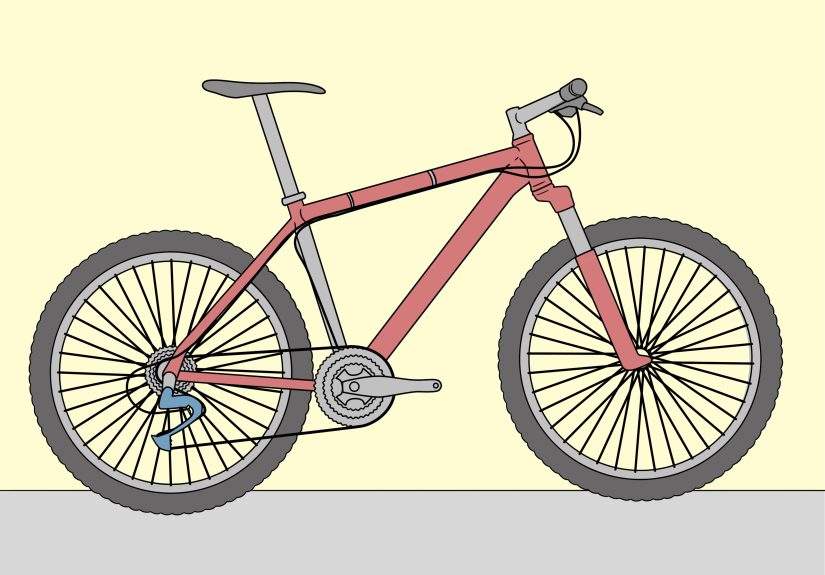
A simple dropped chain often comes from shifting under heavy pressure, rough terrain, poor front derailleur adjustment, a worn chain, or a chainline issue. On some bikes, cross-chaining can also make things more likely. That means using extreme gear combinations, such as the biggest front ring with the biggest rear cog or the smallest front ring with the smallest rear cog.
Best use case
Use this fix when the chain is loose, visible, and not trapped between parts.
Way #2: Free a Chain That Is Jammed or Wedged
This is the chain problem that gets everyone’s attention. The chain is not just off the drivetrain. It is stuck. Common jam points include:
- Between the chainring and the frame
- Between the cassette and spokes
- Around the rear derailleur cage or jockey wheels
- Between chainrings on older multi-ring cranksets
When this happens, brute force is not your friend. Think finesse, not wrestling match.
How to fix it
- Stop pedaling immediately.
- Create chain slack by pushing the rear derailleur cage forward with one hand.
- With the other hand, gently lift or wiggle the chain free from the jam point.
- If the chain is pinched near the front chainring, rotate the crank slightly backward or forward by hand only if it reduces tension. Do not force it.
- Once free, re-seat the chain and spin the cranks slowly to check the routing.
If the chain is wedged near the spokes, inspect the rear derailleur hanger before riding again. A hanger can bend from surprisingly small impacts, and once it is out of line, shifting can go from “mostly okay” to “absolutely not” in a hurry.
What not to do
- Do not stomp on the pedals to “pop” the chain free.
- Do not keep clicking the shifter over and over.
- Do not pry aggressively against a carbon frame.
- Do not ride away if the derailleur looks twisted or the hanger looks bent.
Best use case
Use this fix when the chain is physically trapped but does not appear broken.
Way #3: Fix a Twisted, Stiff, or Damaged Chain Link
Sometimes the chain is not really tangled at all. It is damaged. A stiff link, bent link, or partially separated link can make the chain skip, hop, bind, or derail in a way that feels like a tangle every few pedal strokes.
If your chain keeps catching in the same spot, look closely as you rotate the crank. Watch the chain move through the derailleur pulleys and over the chainring. A bad link often reveals itself by clicking, hesitating, or refusing to bend smoothly.
How to fix a stiff link
- Find the link that does not articulate smoothly.
- Add a drop of chain lube.
- Flex the chain side to side gently by hand.
- If needed, use a chain tool to relieve pressure very slightly at the problem pin.
- Recheck by rotating the crank slowly.
How to handle a bent or damaged link
If a link is bent, cracked, or clearly deformed, do not trust it. Replace the chain or remove the damaged section if you have the correct tools and know how to reconnect the chain safely with the right joining method. A “temporary fix” on a truly bad link can become a “surprise walking tour” five miles later.
This is also the time to consider overall chain wear. If the chain is badly worn, replacing just the problem link is like patching one hole in a pair of pants made entirely of holes. Functional, perhaps. Inspiring, no.
Best use case
Use this fix when the chain appears to move unevenly, skip repeatedly, or bind at one specific point.
Way #4: Fix the Real Cause So the Chain Stops Tangling
If your bike chain tangles once, fine. If it happens regularly, your bike is trying to communicate. Loudly. And in metal.
This fourth fix is less glamorous than a quick roadside rescue, but it matters most: solve the underlying drivetrain issue.
Common root causes
Poor derailleur adjustment
If the chain hesitates, overshifts, or drops off the cassette or chainring, your cable tension or limit screws may be off. Tiny adjustments matter here. Barrel adjusters are for fine tuning, not dramatic life reinventions.
Front derailleur misalignment
A front derailleur mounted too high, rotated slightly wrong, or set with incorrect limit screws can throw the chain inward or outward. That is especially common when chain drop happens during front shifts.
Bent derailleur hanger
If the bike fell over on the drive side, took a hit in transport, or shifted poorly after a minor crash, a bent hanger is a prime suspect. Even a small bend can wreck indexing.
Incorrect chain length
A chain that is too long can sag and derail more easily. A chain that is too short can overstress the drivetrain and shift badly. Either way, the chain is not thrilled.
Worn chain, cassette, or chainrings
Drivetrain wear causes sloppy engagement, poor shifting, and recurring chain problems. If your bike has high mileage and the chain behaves like it is tired of participating, it probably is.
How to fix the root problem
- Fine-tune cable tension in small increments.
- Check front and rear derailleur limit settings.
- Inspect the hanger alignment.
- Measure chain wear and replace parts that are beyond service life.
- Confirm the chain is routed correctly through the rear derailleur.
If that sounds like a lot, it is because drivetrain problems love teamwork. One slightly worn chain plus one mildly bent hanger plus one less-than-perfect adjustment can combine into one very annoying ride.
How to Tell Which Fix You Need
| Symptom | Most Likely Fix |
|---|---|
| Chain simply fell off but is loose | Way #1: Reset a simple dropped chain |
| Chain is wedged between parts | Way #2: Free a jammed chain carefully |
| Chain clicks or binds at one spot every rotation | Way #3: Check for a stiff or damaged link |
| Chain keeps coming off again and again | Way #4: Fix derailleur setup, hanger, wear, or chain length |
How to Prevent a Tangled Bike Chain
Preventing chain tangles is less exciting than fixing them, but it is also less likely to ruin your ride and your mood.
Keep the drivetrain clean
A grimy drivetrain shifts worse, wears faster, and hides problems until they become impossible to ignore. Wipe the chain, keep it lubricated properly, and avoid letting dirt turn your bike into a paste-making machine.
Shift lightly
Ease off pedal pressure during shifts, especially at the front. A chain is much happier moving between gears when you are not stomping on it like you are trying to win a one-person sprint to the mailbox.
Avoid extreme gear combinations
Cross-chaining can increase noise and wear, and on some bikes it can make chain drops more likely. Use a straighter chainline whenever possible.
Inspect after any fall or knock
If the bike tips over on the drive side, check the derailleur and hanger before your next ride. Tiny misalignments can cause big shifting drama.
Replace worn parts on time
Chains, cassettes, and chainrings are wear items. Waiting too long can turn a simple chain replacement into a full drivetrain replacement, which is the bike equivalent of ignoring a loose button until the whole shirt gives up.
When You Should Stop and Visit a Bike Shop
Some chain issues are still a DIY job. Others are a polite but firm invitation to let a professional take over.
Get help if:
- The derailleur hanger looks bent
- The derailleur is twisted or damaged
- The chain has cracked, separated, or snapped
- The chain keeps dropping after multiple adjustments
- The chain jam caused frame damage
- You are not sure the chain is routed correctly through the rear derailleur
There is no shame in calling in a mechanic. The goal is not to win a home-repair trophy. The goal is to ride a bike that does not try to eat itself.
Final Thoughts
A tangled bike chain feels dramatic in the moment, but many cases come down to one of four fixes: re-seat the chain, free a jam carefully, deal with a bad link, or correct the drivetrain issue that caused the mess in the first place. Start simple, work patiently, and inspect before you ride away.
Most important, do not confuse “I got the chain back on” with “the problem is solved.” If the chain keeps dropping, skipping, or tangling, your bike is not being moody. It is giving useful feedback. Listen to it now, and it will reward you later with quiet shifts, smoother rides, and fewer parking-lot repair performances in front of strangers.
Experience Section: What Fixing a Tangled Bike Chain Actually Feels Like
The first time I dealt with a tangled bike chain, I handled it with the confidence of someone who had watched exactly one repair video and therefore considered myself “basically a mechanic.” This was, in technical terms, incorrect.
I had stopped at an intersection, shifted at the wrong moment, and heard the unmistakable clunk that tells you the drivetrain has filed a complaint. The chain dropped off the front ring and wedged itself just enough to make the pedals lock. Naturally, I tried the least effective strategy first: staring at it. Then I tried the second least effective strategy: touching random parts without a plan. What finally worked was the simplest move of all. I eased the chain back onto the chainring, rotated the crank slowly, and the bike was fine. My pride needed a longer service interval.
That little episode taught me something useful. Most chain tangles are not solved by strength. They are solved by understanding where the tension is and how to reduce it. Once you learn to spot that, the whole repair becomes less mysterious. The rear derailleur is not just hanging there for decoration. It is the spring-loaded tension manager of the drivetrain. Push it forward, create slack, and suddenly the chain is far less dramatic.
Another time, the problem looked minor but was not. The chain kept skipping every few crank revolutions. I assumed the chain was dirty, because blaming dirt is one of cycling’s favorite hobbies. After cleaning it, the issue remained. Only then did I notice one stiff link passing through the derailleur pulleys like a grumpy customer refusing to fit through the revolving door. A little attention to that single link solved a problem that had felt much bigger. That experience changed the way I troubleshoot bikes in general. Repeating problems often have repeating causes, and repeating causes usually leave clues if you slow down long enough to look.
There is also a special category of chain trouble that happens when the bike falls over in a perfectly innocent parking lot. You pick it up, ride off, and the shifting feels wrong in a way that is subtle at first and maddening later. That was how I learned about derailleur hangers. They are tiny, easy to ignore, and astonishingly capable of ruining your afternoon. Once I understood that a small bend could throw off indexing and lead to chain drops, a lot of past “mystery drivetrain weirdness” suddenly made sense.
In a weird way, learning to fix a tangled bike chain makes riding more relaxing. You stop treating every clunk like a disaster. You know what to check. You know when to do a quick reset and when to stop riding before things get expensive. That is a great trade. The bike feels less like a temperamental machine and more like a tool you understand. And honestly, that confidence is part of the fun. Nothing makes you feel more competent than solving a greasy mechanical problem with a rag, a multi-tool, and a mildly annoyed expression.
So yes, chain tangles are inconvenient. They blacken your hands, test your patience, and tend to happen when someone nearby is absolutely watching. But they are also one of those bike skills that pay you back forever. Once you learn how to deal with them, every future ride feels a little less fragile and a lot more free.