Table of Contents >> Show >> Hide
- Why Cookies Stick in the First Place (It’s Not Personal… Probably)
- Start With the Right Baking Sheet (Because Not All Metal Is Your Friend)
- The Best Ways to Prevent Sticking (Ranked by “How Chill Your Baking Day Will Be”)
- Timing Is a Nonstick Tool: Let Cookies Set Before You Move Them
- Dough and Bake Tweaks That Prevent Sticky Bottoms
- The “Uh-Oh, They’re Stuck” Rescue Plan
- Quick Troubleshooting: Match the Problem to the Fix
- FAQ: The Questions Every Cookie Baker Asks Eventually
- Real-Kitchen Experiences: What Actually Happens (and What People Do Next)
- Conclusion
Few kitchen heartbreaks are as petty (and as personal) as a beautiful batch of cookies that welds itself to the pan like it’s filing for residency.
The good news: learning how to keep cookies from sticking to a baking sheet is mostly about surface + timing + a tiny bit of dough psychology.
In other words, you don’t need magicjust the right setup, a couple of smart habits, and one “don’t do that again” lesson you only have to learn once.
Below you’ll find the real reasons cookies stick, the best pan-lining options, when greasing helps (and when it sabotages you),
plus a rescue plan for cookies that are already stuck. I’ll also share a longer “real-kitchen experiences” section at the end,
because sometimes the best baking advice starts with, “So here’s what happened when…”
Why Cookies Stick in the First Place (It’s Not Personal… Probably)
Cookies usually stick for one (or a combo) of these reasons:
-
Sugar turns into glue. As cookies bake, sugar melts and can caramelize against the hot metal. If the bottoms over-brown,
that sugary layer becomes a sticky “cookie lacquer.” -
Wet dough meets a too-hot surface. A warm baking sheet (often from reusing a pan too quickly) can encourage extra spread,
which increases contact area, which increases sticking. Think of it as cookies getting clingy. -
The pan surface is working against you. Dark pans can brown faster, foil can behave unpredictably,
and old baked-on residue creates little sticky hotspots that grab onto cookie bottoms. -
Underbaked centers, fragile bottoms. If cookies are too soft when you try to lift them,
they can tear and leave the bottom layer stuck behind like cookie shed-skin. (Gross, but accurate.)
The fix is less about brute force and more about a “nonstick system”: use the right liner, bake on a smart pan,
and let physics do the heavy lifting.
Start With the Right Baking Sheet (Because Not All Metal Is Your Friend)
If your baking sheet is thin, warped, heavily scratched, or permanently wearing a crusty “patina” of old sugar, you’re fighting uphill.
Here’s what helps:
Choose a sturdy, light-colored sheet when possible
Light-colored aluminum sheets tend to bake more evenly and reduce the risk of overly dark bottoms (which often equals stickier bottoms).
Darker pans can still work, but they’re less forgivingespecially with high-sugar doughs.
Keep pans flat (and keep them from warping)
Warping can create uneven hot spots and encourage weird spread patterns. To reduce warping, avoid shocking a hot pan with cold water.
Let it cool first. A pan with a rolled rim and decent thickness helps it stay flatter over time.
Clean matters more than “seasoning” for cookies
Cookies aren’t cast iron steaks. If your sheet has baked-on sugar, old spray residue, or browned bits,
those become stick points. A clean surface (or a liner) is the simplest win.
The Best Ways to Prevent Sticking (Ranked by “How Chill Your Baking Day Will Be”)
1) Parchment Paper: The Cookie Insurance Policy
For most cookie recipes, parchment paper is the easiest, most consistent way to prevent sticking. It creates a slick barrier,
helps with even browning, and makes cleanup so easy you’ll feel like you got away with something.
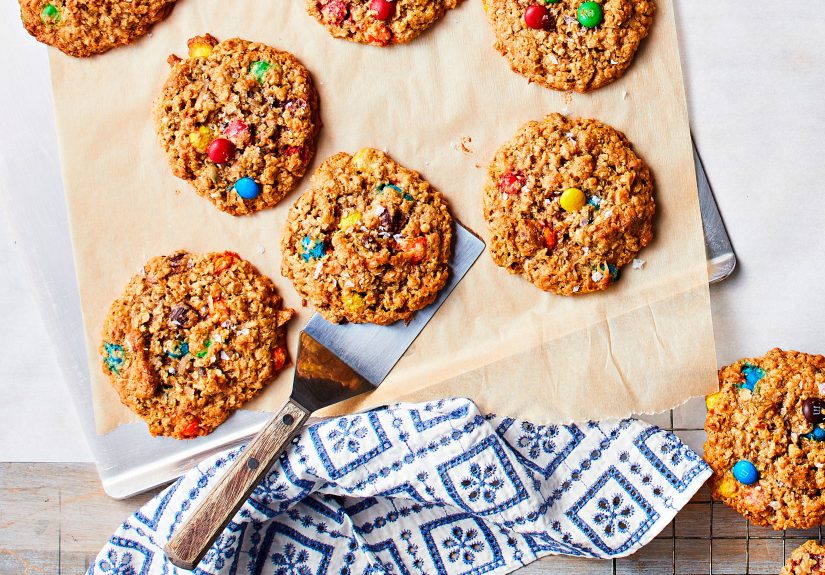
- Cut to fit. A flat sheet that covers the pan is ideal. If you’re wrestling a curly roll, crumple it into a ball and flatten it.
- Skip greasing unless a recipe truly needs it. Most cookie dough already has enough fat; extra grease can increase spread.
- Use it for multiple batches (often). If it’s not scorched or greasy, you can commonly reuse it for more than one round of cookies.
- Know your heat limits. Many parchment products are rated up to about 425–450°F. Check your box and stay within the rating.
Quick tip: Pre-cut parchment sheets are a small convenience that feels like a luxury.
No curling, no measuring, no “why is my paper trying to escape the tray?”
2) Silicone Baking Mats: Reusable, Reliable… and Sometimes a Little Weird
Silicone mats are nonstick, long-lasting, and great for lowering waste. But they’re not a perfect 1:1 swap for parchment in every cookie.
Depending on the dough, silicone can encourage more spread, reduce browning, and sometimes trap moisture as cookies cool.
That can affect texture (especially if you love crisp edges).
When silicone mats shine:
- “Lacy” cookies like florentines or tuiles, where spread is part of the plan.
- Sticky sugar-heavy mixes that you want to release cleanly.
- High-volume baking where reusability makes life easier.
If you use silicone often, consider a thinner mat for cookies, and move cookies off the mat once they’ve set
so the bottoms don’t steam themselves into softness.
3) Greasing the Pan: Sometimes Helpful, Sometimes a Trap
The internet loves to say “just grease it,” but cookie dough doesn’t always agree.
Grease can:
- Increase spreading (more contact area = more chances to stick, plus thinner cookies can over-brown faster).
- Create a fried edge vibe on cookies that aren’t meant to taste like they went through a tiny shallow-fry experience.
- Leave sticky residue that builds up over time, making future batches more likely to stick.
So when should you grease?
- If the recipe specifically calls for it (some do for texture or shape reasons).
- If you’re baking something very delicate or unusually sticky and you’re not using parchment.
- If you’re doing a hybrid approach: parchment + a light spritz for certain batters (rare, but it exists).
For the majority of drop cookies and classic chocolate chip-style doughs: line the sheet and move on with your life.
Timing Is a Nonstick Tool: Let Cookies Set Before You Move Them
Even perfectly baked cookies can stick if you try to lift them too early.
Right out of the oven, sugar is molten and structure is still forming.
Give cookies a short rest so they firm up and release cleanly.
The “Set, Then Move” rule
- Let cookies rest on the sheet for about 1–3 minutes (sometimes 5 for larger, softer cookies).
- Then transfer to a cooling rack so bottoms don’t overcook from leftover pan heat.
- Use the right tool: a thin metal spatula slides under cookies more cleanly than a thick-Giant-Plastic-Paddle situation.
For super-thin cookies (like florentines), an even better move is sliding the entire parchment sheet onto a rack to cool.
Zero scraping. Maximum dignity.
Dough and Bake Tweaks That Prevent Sticky Bottoms
If you’ve lined the pan and your cookies still stick, look at the dough and bake itself.
Small changes can make a big difference.
Chill the dough (especially for high-butter recipes)
Cold dough spreads less quickly, which reduces the chance of thin, over-caramelized bottoms.
Chilling also makes the bake more consistent, especially if your kitchen is warm.
Measure accurately (sugar and flour matter here)
Too much sugar can increase caramelization and stickiness. Too little flour can create extra spread.
If you bake often, a kitchen scale is the simplest upgrade for consistency.
Don’t overbake the bottoms
Overbaked cookies tend to glue themselves down. Watch for visual cues:
edges set and lightly golden, centers no longer shiny-wet (unless the recipe is meant to be ultra-gooey).
Also: every oven has its own personality. Some are friendly. Some are chaotic.
Avoid baking on foil for cookies
Foil can cause spreading and inconsistent browning for certain cookie doughs, which increases the chance of sticking.
If you want easy cleanup, parchment is usually the better bet.
The “Uh-Oh, They’re Stuck” Rescue Plan
If you’re already in the “cookie extraction” stage, don’t panic and start chiseling like an archaeologist.
Try this:
-
Let them cool slightly. If cookies are tearing, they may be too hot and fragile.
Give them a few minutes to set. -
Use a thin metal spatula. Slide it in low and flat, then gently wiggle to release suction.
Avoid stabbing straight downcookies remember. -
Warm the pan briefly (if sugar is the glue). Put the pan back in the turned-off warm oven for 30–60 seconds.
The goal is to soften the sticky sugar layer, not rebake the cookies into croutons. -
If all else fails, “save the tops.” If a few bottoms stay behind, you can still serve the cookies (or crumble them on ice cream).
No one has to know. Unless you tell them. Which you won’t.
Quick Troubleshooting: Match the Problem to the Fix
- Cookies stick only on batch #2 and #3: Your sheet is still warm. Cool it fully between batches or rotate multiple sheets.
- Sticky bottoms + very dark color: Switch to parchment, lighten your pan color if possible, and check oven temperature.
- Cookies spread into thin puddles and stick: Chill dough, measure flour carefully, and avoid greasing the pan.
- Cookies are soft and ripping: They may be underbaked or simply too hot to move. Rest longer, then transfer gently.
-
Cookies stick to parchment (rare, but it happens): It can occur with very sugary or candy-like mixes, or if parchment is low quality.
Try a fresh sheet, a silicone mat, or follow the recipe’s specific pan-prep instructions.
FAQ: The Questions Every Cookie Baker Asks Eventually
Do I need to grease parchment paper for cookies?
Usually, no. Most cookie dough contains enough fat to prevent sticking.
Greasing can encourage extra spread. If a particular recipe demands it, follow the recipe.
Which side of parchment paper goes up?
Most parchment is treated to be nonstick on both sides, so it typically doesn’t matter.
If your brand specifies a side, follow the package directions.
Can I use wax paper instead of parchment?
Not in the oven. Wax paper isn’t designed for baking heat and can melt or smoke.
Use parchment or a silicone mat for baking cookies.
Is a silicone mat better than parchment?
“Better” depends on your cookie goals. Silicone is super nonstick and reusable,
but it can change spread and browning. Parchment is disposable (or reusable for a few batches),
browns well, and is extremely reliable for most cookies.
Real-Kitchen Experiences: What Actually Happens (and What People Do Next)
In real kitchensespecially during holiday baking marathonscookie sticking usually isn’t one big catastrophe.
It’s a bunch of small “wait, why?” moments that stack up until you finally change one thing and suddenly life gets easier.
A common storyline goes like this: the first batch comes out fine, the second batch spreads more, and the third batch becomes a sticky mess.
When people trace it back, the culprit is often the same pan being reused while still warm. Warm pan + soft dough = more spread,
more sugary contact, and more opportunities for cookies to cling like they pay rent.
Once bakers start rotating two baking sheets (or cooling the sheet fully between batches), sticking complaints drop fast.
Another very typical experience: someone switches from parchment to a silicone mat expecting identical results,
then wonders why their cookies look different. The cookies might spread a little more, brown less on the bottom,
or lose some crispness after cooling. That doesn’t mean silicone mats are “bad”it just means they behave differently.
Many bakers end up using parchment for classic drop cookies (especially if they love crisp edges)
and saving silicone mats for super sticky doughs, candy-like lace cookies, or high-volume baking where reusability is the priority.
People also learn (sometimes the hard way) that greasing a cookie sheet isn’t a universal shortcut.
Grease can make certain doughs spread faster and thinner, which can make bottoms over-brown and stick more aggressively.
After one batch of “why are these cookies basically attached to the pan,” a lot of bakers switch to ungreased parchment
and never look back. If they need a release boost, they’ll do a light spritz on parchment for specific batters
not a heavy oil slick directly on metal.
There’s also the “my pan is old but I love it” chapter. Older sheets often have baked-on residue that you stop noticing
until cookies start sticking in the exact same spots every time. Many bakers report that deep-cleaning a sheet
(or retiring it from cookie duty and using it for roasting instead) instantly fixes the mystery.
If replacing pans isn’t in the plan, lining with parchment becomes the peace treaty: it bypasses the pan’s surface issues entirely.
Finally, there’s the experience that makes people feel like baking wizards: learning the power of the pause.
Cookies that seem stuck right out of the oven often release cleanly after a short restjust enough time for the structure to set.
Bakers who used to scrape immediately start waiting 2–3 minutes, then sliding a thin spatula underneath with a gentle wiggle.
It’s a small habit, but it turns “cookie tragedy” into “cookie victory” fast.
And once you’ve had a batch slide off parchment like it’s on a tiny buttered slip-n-slide?
You’ll wonder why you ever baked naked-pan cookies on hard mode.
Conclusion
Keeping cookies from sticking to a baking sheet isn’t about one secret trickit’s about stacking small advantages.
Use parchment paper for the most reliable release, choose a good baking sheet, avoid unnecessary greasing,
chill dough when it tends to spread, and let cookies set for a minute or two before moving them.
When those habits line up, cookies lift cleanly, bottoms brown evenly, and your spatula can retire from demolition duty.