Table of Contents >> Show >> Hide
- Why DIY Built-In Bookshelves Are Worth the Effort
- Plan First, Cut Later
- Best Materials for Built-In Bookshelves
- Tools and Materials Checklist
- Step-by-Step: How to Install DIY Built-In Bookshelves
- Step 1: Clear the Wall and Remove Trim
- Step 2: Build a Level Base
- Step 3: Cut the Main Parts
- Step 4: Pre-Finish What You Can
- Step 5: Assemble the Bookcase Boxes
- Step 6: Dry-Fit and Shim
- Step 7: Anchor the Unit to Wall Studs
- Step 8: Add Face Frames and Front Edging
- Step 9: Install Crown, Base, and Side Trim
- Step 10: Fill, Caulk, Prime, and Paint
- Common DIY Built-In Bookshelf Mistakes to Avoid
- How to Make Built-In Bookshelves Look Expensive
- What DIY Built-In Bookshelf Projects Feel Like in Real Life
- Conclusion
Built-in bookshelves are the home improvement equivalent of putting on a tailored suit. The room instantly looks more polished, your storage situation stops acting like a gremlin, and even random paperbacks suddenly seem cultured. The good news is that installing DIY built-in bookshelves is very doable if you plan carefully, measure accurately, and accept one timeless truth of remodeling: your walls are probably not as straight as they look.
If you want that custom, floor-to-ceiling look without the custom-cabinetmaker invoice that makes your wallet faint, this guide will walk you through the process. You’ll learn how to plan the layout, choose materials, build a level base, assemble the shelf units, anchor them securely, and finish everything so it looks intentional instead of “weekend experiment with emotional damage.”
Why DIY Built-In Bookshelves Are Worth the Effort
Built-ins do more than hold books. They turn awkward wall space into functional storage, frame fireplaces and windows beautifully, and can make a room feel larger and more finished. In small living rooms, tall built-ins can draw the eye upward and help the ceiling feel higher. In reading nooks, they create the cozy, collected look people usually describe with words like library, timeless, and I suddenly want tea.
They’re also flexible. You can build them from scratch, modify stock bookcases, add cabinet bases below, or create a simple painted surround that looks custom once the trim and caulk go on. That flexibility is exactly why DIY built-in bookshelves are such a popular project: they can be as fancy or as practical as your space, budget, and patience allow.
Plan First, Cut Later
Choose the Right Wall
Before you buy a single board, choose your location carefully. Great spots include the wall around a fireplace, an empty alcove, the wall around a window, a home office, or a long living-room wall that needs some architectural interest. Built-ins can also work in hallways, under stairs, and in small reading corners.
Look at the wall like a detective, not a dreamer. Check for vents, outlets, switches, baseboards, crown molding, return-air grilles, and anything else that can complicate the layout. If you are recessing any portion into the wall, be extra cautious about wiring, plumbing, insulation, or vent pipes hiding behind the drywall.
Measure Like You Mean It
Measure the height, width, and depth of the space at multiple points. Floors may slope. Walls may bow. Corners may be out of square. In older homes, this is not a bug; it is a personality trait.
Write down:
- overall wall width
- floor-to-ceiling height on the left, center, and right
- depth available without crowding walkways
- location of studs
- baseboard and crown dimensions
- outlet, vent, and switch locations
A good rule is to design to the smallest measurement where the unit must fit tightly. That gives you a better chance of getting the bookshelf into place without a dramatic conversation with a sander.
Decide on the Style
There are three common approaches:
- Full custom build: You build the carcass, shelves, face frame, and trim from raw materials.
- Modified stock units: You use ready-made bookcases, raise them on a platform, join them together, and wrap them in trim for a built-in look.
- Base cabinets plus upper shelving: You install cabinets below and open shelves above, which adds hidden storage and makes the whole unit feel more substantial.
If you want the easiest path, modified stock units are very beginner-friendly. If you want more control over dimensions and details, a full custom build is the way to go.
Best Materials for Built-In Bookshelves
The material you choose affects strength, finish quality, and price.
Paint-Grade Built-Ins
If you plan to paint the shelves, paint-grade plywood, MDF, or common softwoods are solid options. These materials are budget-friendlier and can look fantastic once primed, painted, and trimmed out. Plywood is usually the sweet spot because it offers better strength than MDF while still taking paint well.
Stain-Grade Built-Ins
If you want a stained wood finish, hardwood plywood with a good veneer or solid hardwood like oak or maple gives a richer result. Stain-grade work is less forgiving, so your cuts, filling, and finishing all need to be cleaner.
How to Prevent Sagging
Books are heavy. Suspiciously heavy. Long shelves can sag if they are too thin or unsupported, so avoid overly wide spans unless you reinforce them. One smart trick is to add a thicker front edge or a support strip beneath the shelf. Adjustable shelves are convenient, but fixed shelves add more rigidity to the case.
Tools and Materials Checklist
You do not need a professional cabinet shop, but you do need the basics:
- tape measure
- stud finder
- level or laser level
- circular saw or table saw
- miter saw
- drill/driver
- pocket-hole jig or countersink bit
- clamps
- nail gun or hammer and finish nails
- wood glue
- wood screws
- shims
- plywood, boards, or stock bookcases
- trim and molding
- wood filler
- paintable caulk
- primer and paint
- safety glasses and hearing protection
Step-by-Step: How to Install DIY Built-In Bookshelves
Step 1: Clear the Wall and Remove Trim
Start by removing anything that will interfere with the install, especially baseboards or shoe molding where the unit will sit. Score any paint lines first so you do not tear up the drywall paper. Save the trim if you plan to reuse it later.
This part feels oddly satisfying. It is the home improvement version of clearing your desk before a big project. Suddenly the wall starts looking like a blank canvas instead of a problem.
Step 2: Build a Level Base
If your built-ins will run to the floor, build a simple platform base from dimensional lumber. This base should be level even if your floor is not. Use a long level, shim where needed, and fasten the base securely. Getting this step right makes every later step easier.
The base also helps the finished unit sit slightly above the baseboard line and gives you room to add toe-kick trim or a more furniture-like bottom edge. In many projects, the base is the secret hero. Nobody compliments it, but if it is off, everything else will tell on it.
Step 3: Cut the Main Parts
For a basic full custom build, you will usually cut:
- two side panels
- top and bottom panels
- fixed shelves
- back panel
- face-frame pieces
If you want adjustable shelves, drill shelf-pin holes before assembly while the side panels are easy to handle. A shelf-pin jig or even a carefully used template helps keep the holes aligned.
Step 4: Pre-Finish What You Can
Many DIYers save time by priming and painting certain parts before final installation, especially backs, inner panels, and shelves. It is easier to paint a board lying flat than to crouch inside a finished unit later pretending that this is “good exercise.”
If you are staining, do a sample first. Wood rarely looks like it does in your imagination, and imagination is not a finish schedule.
Step 5: Assemble the Bookcase Boxes
Assemble each case on a flat surface. Use wood glue and screws or pocket-hole joinery, and keep checking for square as you go. A case that starts out slightly crooked will not magically become well-behaved once it reaches the wall.
Add the back panel once the box is square. The back helps lock the structure in place and adds rigidity. If you are installing multiple units side by side, build each one consistently so they align neatly when joined.
Step 6: Dry-Fit and Shim
Set the case or cases onto the base and slide them into position. Check for plumb, level, and fit against the wall. Use shims behind or beneath the unit as needed. This is also the moment to check how the unit meets the ceiling, adjacent walls, and any molding.
If the wall is wavy, do not panic. This is what trim, scribe strips, and small fillers are for. Thin trim pieces can hide slight gaps, and extra material on the outside stiles can be shaped to follow the wall contour for a cleaner custom look.
Step 7: Anchor the Unit to Wall Studs
Once everything is aligned, anchor the unit to the wall studs. Do not skip this step. Built-ins need to be secured, especially tall ones. Drive screws through the back or upper nailer areas into solid studs. If you are using stock bookcases, join the cases together first, then anchor them so the full system acts like one unit.
Marking stud locations clearly before lifting bulky units into place makes this much easier. Painter’s tape on the floor can be surprisingly helpful when wall marks get covered.
Step 8: Add Face Frames and Front Edging
Now comes the transformation. Face frames and front trim make ordinary shelving look custom. Attach the face frame to the front of the bookcase, then add trim to cover seams, thicken shelf edges, and disguise transitions between units.
This is where the project goes from “nice shelves” to “Wait, did these come with the house?” Wider front edges also help shelves look thicker and more substantial without requiring giant slabs of expensive lumber.
Step 9: Install Crown, Base, and Side Trim
Use molding and trim to blend the bookshelf into the architecture of the room. Reinstall baseboards where appropriate, add crown molding if the unit meets the ceiling, and cover side gaps with scribe molding, filler strips, or narrow trim pieces.
Dry-fit these pieces before nailing them in place. Tight joints matter. If a gap remains, choose the kind that can be caulked invisibly rather than the kind that stares at you forever.
Step 10: Fill, Caulk, Prime, and Paint
Fill nail holes and screw holes with wood filler. Caulk the seams where trim meets trim and where the built-in meets the wall. Sand lightly, prime any raw wood or repaired areas, and apply finish paint.
This step is what creates the true built-in illusion. A clean bead of paintable caulk can hide a shocking number of minor imperfections. It is basically concealer for carpentry.
Common DIY Built-In Bookshelf Mistakes to Avoid
- Skipping the level base: If the bottom is off, the whole project drifts off course.
- Ignoring wall and floor irregularities: Houses move; your plan has to be flexible.
- Using weak material for long shelves: Books will punish bad decisions.
- Forgetting to anchor to studs: Tall shelving should never rely on hope.
- Rushing the finish work: Paint, caulk, and trim are what make it look custom.
- Not planning around outlets and vents: Utility details are part of the design, not an afterthought.
How to Make Built-In Bookshelves Look Expensive
You do not need a luxury budget to get a polished result. A few design choices go a long way:
- run the unit close to the ceiling for a taller look
- add cabinet bases below for weight and storage
- use thicker face frames and shelf edging
- paint the built-ins the same color as the trim for cohesion
- add wallpaper or a contrasting paint color to the back panels
- mix books with framed art, pottery, boxes, and a few larger objects
- consider sconces or picture lights for a classic library feel
If you are working around a window, a built-in bench can make the whole setup feel intentionally designed rather than simply shelf-adjacent.
What DIY Built-In Bookshelf Projects Feel Like in Real Life
Now for the part many tutorials skip: the human experience. Installing DIY built-in bookshelves is one of those projects that starts with optimism, enters a suspiciously dusty middle chapter, and ends with you staring at the wall like you personally discovered architecture.
The first surprise for most people is how much the prep work matters. At the beginning, measuring, marking studs, checking the floor, and removing baseboards can feel slow and almost annoyingly unglamorous. You want to start cutting wood because that feels like “real progress.” But once you have actually built a set of shelves, you realize the planning phase was the project. The cutting and assembly only work because the prep work quietly did its job.
The second common experience is discovering that houses are dramatic. Walls lean. Corners flare. Floors dip. A unit that looked perfectly square in the garage suddenly meets the wall and reveals that the wall has been freelancing. This is the moment when many beginners think they messed up, when really they have simply met residential construction. The best DIYers learn to work with shims, filler strips, scribe molding, and caulk instead of demanding geometric perfection from a building that was born in another decade and has opinions.
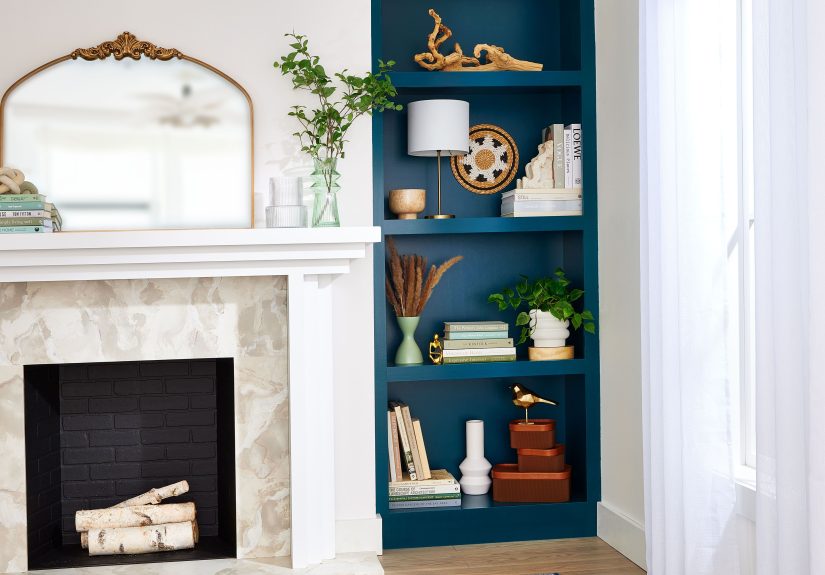
Another thing people often notice is how quickly the project changes once the face frame goes on. Before trim, the shelves may look plain, boxy, and a little underwhelming. Then the front edging is installed, the seams disappear, and suddenly the project has presence. It starts looking less like assembled parts and more like a permanent feature of the room. That moment is deeply satisfying. It is also when neighbors become suspicious and ask whether you “had someone do it.” Accept this as the compliment it is.
There is also a very real emotional arc to painting built-ins. Priming, sanding, painting, touching up, caulking, then painting again is not the glamorous side of DIY. But it is usually the difference between “homemade” and “built-in.” Many people say the painting stage feels endless right up until the last coat dries. Then suddenly all the little fixes, filled holes, and disguised seams blend into one finished piece. It is a magic trick performed with patience and a decent brush.
One of the best practical experiences of built-ins happens after the project is done: the room works better. Clutter gets a home. Vertical space gets used. Collections finally look intentional. Even a small room can feel calmer because the storage is integrated instead of floating around as random furniture. In family rooms, built-ins can hold books, baskets, games, and electronics. In offices, they make paperwork, décor, and supplies look organized instead of mildly chaotic. In reading corners, they create the kind of atmosphere that practically begs for a blanket and a long novel.
And then there is the pride factor. A well-done built-in bookshelf project tends to become one of those things people bring up again and again. Visitors notice it. You notice it every day. It becomes part of the room’s identity. That is why so many DIYers say the project is worth the time, even with the dust, the measuring headaches, and the occasional muttered monologue at an uneven wall. Built-ins are not just storage. They are one of the few DIY projects that can make a whole room feel more finished, more useful, and a little more like home.
Conclusion
If you want a project that adds storage, style, and a big dose of “I can’t believe we made that,” DIY built-in bookshelves are hard to beat. The key is to take the install seriously: plan the layout, measure more than once, build a level base, use materials that fit your finish and load needs, anchor everything securely, and spend the extra time on trim and paint. That final stretch is where the built-in magic happens.
Done well, built-in bookshelves do not just fill a wall. They upgrade the entire room. And unlike a lot of trendy projects, they stay useful year after year. Books, baskets, plants, framed photos, lamps, board games, questionable souvenirs from vacationthey all look better when they live in a well-built home.