Table of Contents >> Show >> Hide
- What Sparked the Michelle Obama and Barack Obama Divorce Rumors?
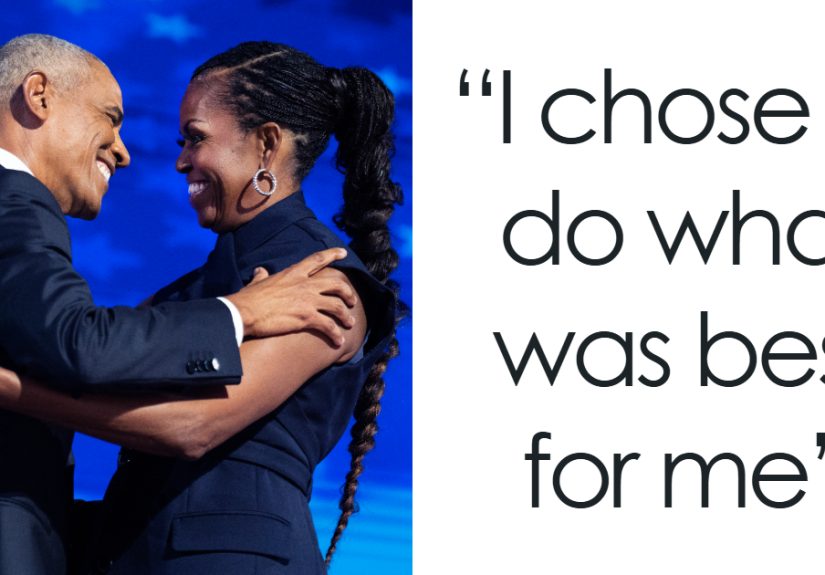
- Michelle Obama’s Response: “I Chose What Was Best for Me”
- The Joint Podcast Moment That Put the Rumors in Their Place
- Why Her Comments Received So Much Support
- Michelle Obama, Privacy, and the Social Media Problem
- A Marriage That Has Always Been Discussed Honestly
- How Michelle Reframed the Story Around Women’s Independence
- The Role of Craig Robinson and the “IMO” Podcast
- Why the Public Still Cares So Much About the Obamas
- What This Moment Reveals About Modern Rumor Culture
- Experiences and Lessons Related to Michelle Obama Finally Addressing Divorce Rumors With Barack
- Conclusion
Michelle Obama has never been a woman who needed the internet to tell her who she is. Still, when divorce rumors about her and former President Barack Obama began swirling again, the former first lady did what she often does best: she answered with honesty, humor, and just enough “please be serious” energy to remind everyone that not every missing photo is a national emergency.
The speculation grew after Michelle skipped several high-profile public events that Barack attended alone, including former President Jimmy Carter’s funeral and Donald Trump’s second inauguration in January 2025. In the world of online gossip, two solo appearances can apparently become a full-blown marriage investigation. But Michelle’s explanation was far less dramatic: she was making choices for herself.
In a series of podcast appearances and later a joint conversation with Barack on her podcast, IMO with Michelle Obama and Craig Robinson, Michelle made it clear that the rumors were unfounded. More importantly, she turned the conversation into something bigger than celebrity gossip. Her response became a lesson about marriage, privacy, aging, women’s independence, and why the public often struggles to accept that a woman can simply say “no” without a scandal hiding behind the curtain.
What Sparked the Michelle Obama and Barack Obama Divorce Rumors?
The rumors did not come from a divorce filing, a confirmed separation, or any official statement from the Obamas. Instead, they grew from public absence, social media speculation, and the modern habit of turning silence into a storyline.
Michelle Obama did not attend certain public events where many expected to see her beside Barack. For any ordinary couple, that might mean one person was busy, tired, uninterested, or simply in sweatpants with no intention of leaving the house. For a former first couple, however, absence can quickly become a headline.
Some commentators connected her absence to marital trouble. Others recycled older gossip about the couple’s private life. Online rumor mills, as they tend to do, added dramatic seasoning to a very thin soup. The problem was not that people noticed Michelle was missing. The problem was that many people treated her personal choice as evidence of a relationship crisis.
Michelle Obama’s Response: “I Chose What Was Best for Me”
Michelle Obama addressed the speculation directly during her appearance on Sophia Bush’s Work in Progress podcast. Her message was refreshingly simple: she is in a stage of life where she is finally making decisions based on what she wants and needs, not only what tradition, politics, or public expectations demand.
She explained that after years of being a mother, wife, first lady, public figure, and professional role model, she is now looking at her calendar differently. Her daughters, Malia and Sasha, are adults. Barack is no longer in office. Michelle is no longer required to show up everywhere simply because people expect the image of a former first lady standing dutifully at every public ceremony.
In other words, she did not skip events because her marriage was collapsing. She skipped some events because she is a grown woman with agency. Imagine that: a revolutionary concept, apparently still under review by the internet.
The Joint Podcast Moment That Put the Rumors in Their Place
The most memorable response came when Barack Obama joined Michelle and her brother Craig Robinson on IMO. The couple did not deliver a stiff, lawyer-approved statement. Instead, they laughed about the gossip, which may have been the most effective way to deflate it.
Michelle introduced Barack warmly, and Barack jokingly said she “took him back.” Craig Robinson teased them about being in the same room, and Michelle joked that when they are not seen together, people assume they are divorced. It was light, familiar, and unmistakably marital in the way long-term couples often are: half teasing, half truth, fully aware that the outside world has no idea what happens at their kitchen table.
Michelle also said there had not been a moment in their marriage when she thought about quitting on Barack. She acknowledged that they have had hard times, fun times, and many adventures, but she credited their relationship with helping her become a better person. That statement mattered because it did not pretend marriage is a perfect movie montage. It honored the real work of a long partnership.
Why Her Comments Received So Much Support
Michelle Obama’s response drew strong support because many people recognized the double standard she was describing. When men make independent choices, they are often seen as decisive. When women make independent choices, especially wives and mothers, the public sometimes searches for a hidden problem.
Supporters praised Michelle for saying out loud what many women experience quietly: the pressure to keep everyone comfortable, attend every event, meet every expectation, and never disappoint anyone. Her comments resonated because she framed the issue not just as a celebrity rumor but as a cultural habit. Society often expects women to explain their boundaries as if personal peace requires a permission slip.
Television commentators, fans, and readers across social media applauded her for prioritizing herself. Many saw her remarks as a reminder that aging can bring clarity, not invisibility. Michelle, now in her 60s, has been speaking more openly about freedom, ambition, therapy, grief, and what it means to own her life after decades of responsibility.
Michelle Obama, Privacy, and the Social Media Problem
Another key point in Michelle Obama’s response was the unrealistic expectation that couples must constantly prove their love online. She noted in later interviews that people sometimes assume trouble simply because they do not see her and Barack posting date-night selfies every five minutes.
That observation hits a very modern nerve. Social media has trained audiences to treat visibility as proof. If a couple posts often, people say they are happy. If they stop posting, people suspect trouble. If they post too much, people say they are overcompensating. Basically, there is no winning unless you delete the app and go eat dinner in peace.
The Obamas belong to a generation that did not build its marriage around Instagram stories. They were married in 1992, raised two daughters, survived campaigns, lived in the White House, wrote books, built a production company, and became global public figures. Their relationship existed long before “soft launch,” “hard launch,” and “Why didn’t he like her post?” became part of everyday relationship analysis.
A Marriage That Has Always Been Discussed Honestly
One reason Michelle’s response felt credible is that she and Barack have never marketed their marriage as effortless. Michelle has spoken in the past about frustration, loneliness, fertility struggles, couples therapy, and the heavy demands of Barack’s political career. Barack has also acknowledged that public life placed pressure on their relationship.
This honesty is part of their appeal. They are admired not because they seem perfect, but because they have allowed the public to see that even highly accomplished couples must communicate, compromise, apologize, grow, and occasionally roll their eyes at each other like everyone else.
The divorce rumors flattened that complexity into gossip. Michelle’s answer restored the fuller picture. A strong marriage is not one without tension. It is one where both people continue choosing the relationship after seasons of change.
How Michelle Reframed the Story Around Women’s Independence
At the heart of Michelle Obama’s response was a larger question: Why is a woman’s independence so often interpreted as a sign that something is wrong?
Michelle said that people could not imagine she was simply making a choice for herself. They had to assume her marriage was falling apart. That line landed because it exposed a familiar social reflex. A woman says no, and suddenly people ask who she is angry at. A woman rests, and people ask what she is hiding. A woman stops performing constant availability, and people decide there must be a crisis.
Michelle’s decision to choose her own schedule is especially meaningful because she spent years in roles where showing up was part of the job. As first lady, she represented the country, supported major public initiatives, raised children under intense scrutiny, and lived inside a political machine that leaves little room for privacy. After that, choosing not to attend every event is not laziness. It is self-definition.
The Role of Craig Robinson and the “IMO” Podcast
Michelle’s podcast with her brother Craig Robinson has given audiences a more relaxed and conversational version of the former first lady. The show covers relationships, family, personal growth, parenting, work, and the everyday questions people ask when life gets messy.
Craig’s presence is important because he brings sibling honesty to the conversation. He can tease Michelle, challenge her, and create the kind of room where serious topics feel less staged. When Barack appeared on the podcast, the family dynamic helped turn a rumor response into a warm, human moment.
Rather than issuing a sterile denial, Michelle and Barack let listeners hear their chemistry. The joking, the teasing, and the ease between them did more than any official statement could have done. It reminded audiences that real relationships are lived in tone, timing, laughter, and the tiny rhythms outsiders cannot fake.
Why the Public Still Cares So Much About the Obamas
The intense interest in Michelle and Barack Obama’s marriage says as much about the public as it does about the couple. For many Americans, the Obamas represent a rare image of long-term partnership under extraordinary pressure. They are political figures, yes, but they are also a cultural symbol: two high-achieving people who met as young lawyers in Chicago, married, raised children, and navigated history together.
That symbolic status can be flattering, but it also creates pressure. People project hopes, fears, and fantasies onto public couples. When those couples appear happy, audiences feel reassured. When they are seen apart, even briefly, people may panic as if a shared cultural story is under threat.
Michelle’s response gently pushed back against that. She reminded the public that admiration does not equal ownership. Support does not entitle strangers to daily evidence. A marriage can be meaningful to the public and still belong privately to the two people inside it.
What This Moment Reveals About Modern Rumor Culture
The Michelle Obama divorce rumor cycle is a case study in how quickly speculation can outrun facts. A few absences, a few social media posts, and a few opinionated voices can create a story that feels real because it is repeated often. Repetition is not confirmation, but online culture often treats it that way.
The healthier approach is to ask a simple question: What has actually been confirmed? In this case, there was no confirmed divorce, no official separation, and no credible evidence that Michelle and Barack were ending their marriage. There were only assumptions built around public appearances.
Michelle’s remarks offered a reset. She did not just deny the rumors; she challenged the process that produced them. She asked people to consider why a woman choosing herself was treated as suspicious. That is a more useful conversation than any whisper campaign about a couple most people have never met.
Experiences and Lessons Related to Michelle Obama Finally Addressing Divorce Rumors With Barack
There is a relatable experience hiding inside this very famous story. Most people are not former first ladies, and most people do not have their marriage analyzed by cable news, gossip blogs, and strangers with ring-light confidence. But many people know what it feels like to have their choices misunderstood.
Maybe you skipped a family event because you were exhausted, and suddenly relatives decided you were angry. Maybe you did not post your partner on social media for a while, and someone asked if you had broken up. Maybe you changed jobs, set a boundary, stopped answering late-night texts, or chose rest over obligation, and people turned your self-care into a mystery novel. Michelle Obama’s situation is larger in scale, but the emotional pattern is familiar.
One lesson from her response is that boundaries do not always come with applause at first. Sometimes people are comfortable with the version of you that is available, predictable, and easy to understand. When you become more intentional, they may call it selfish, cold, dramatic, or suspicious. That does not mean your boundary is wrong. It may simply mean people are adjusting to a version of you that no longer performs on command.
Another lesson is that long-term relationships cannot be measured by public visibility. A couple that posts constantly may be struggling. A couple that posts rarely may be perfectly content. Love is not a content calendar. Marriage, especially a decades-long marriage, is built through private negotiations, shared history, conflict repair, practical teamwork, and the decision to keep showing up when life changes shape.
Michelle and Barack’s comments also show that humor can be a powerful way to handle public pressure. They did not respond with anger alone. They laughed, joked, and let the absurdity of the rumors show itself. That does not mean the speculation was harmless, but it did show confidence. Sometimes the best answer to a ridiculous rumor is not a 12-page defense. Sometimes it is a smile, a joke, and a clear statement of truth.
For women in particular, Michelle’s response carries another important message: you are allowed to make decisions that serve your life. You are allowed to say no. You are allowed to disappoint people without becoming a villain. You are allowed to enter a new season with different priorities. You are allowed to stop explaining every choice as if your independence is a courtroom case.
The public support Michelle received suggests many people are hungry for that message. Her comments were not only about shutting down divorce rumors. They were about choosing peace after years of duty, embracing maturity without apology, and refusing to let speculation define her marriage or her identity.
In the end, the story is less about whether Michelle and Barack Obama are okay. They have answered that clearly enough. The deeper story is about how society responds when a woman with a public role starts living more privately, more freely, and more on her own terms. Michelle Obama did not just address a rumor. She gave people a reminder: a woman can choose herself and still love her husband. She can skip the event and still respect the institution. She can stay off Instagram and still have a life. She can be quiet and still be whole.
Conclusion
Michelle Obama’s response to the divorce rumors with Barack Obama was direct, humorous, and deeply revealing. She denied the idea that her marriage was ending, but she also did something more valuable: she challenged the assumptions that created the rumor in the first place.
Her message was not simply “we are fine.” It was “I am allowed to make choices for myself.” That is why so many people supported her. The story touched on marriage, privacy, aging, social media, and the pressure women face to keep everyone comfortable. Michelle Obama turned a gossip cycle into a cultural conversation, which is a very Michelle Obama thing to do.
As for Barack and Michelle, their joint podcast appearance showed warmth, humor, and the kind of lived-in affection that does not need constant public proof. The internet may love a theory, but sometimes the truth is much simpler: they are married, they are private, they are in their 60s, and they do not owe anyone a date-night selfie.