Table of Contents >> Show >> Hide
- The Big Question: Is Mr. Garrison Still South Park’s Trump?
- How Mr. Garrison Became Trump in the First Place
- Why the Creators Seemed Ready to Move On
- What the Newer Seasons Suggest
- So What Are Fans Actually Thinking?
- Why a Direct Trump Caricature Works Better Now
- Could Mr. Garrison Still Be Involved?
- The Real Answer: South Park Has Evolved Past the Old Bit
- What It Feels Like for Longtime Viewers: The Experience of Watching This Shift
- Final Verdict
There is a short answer, and it is gloriously messy: probably not in the old way.
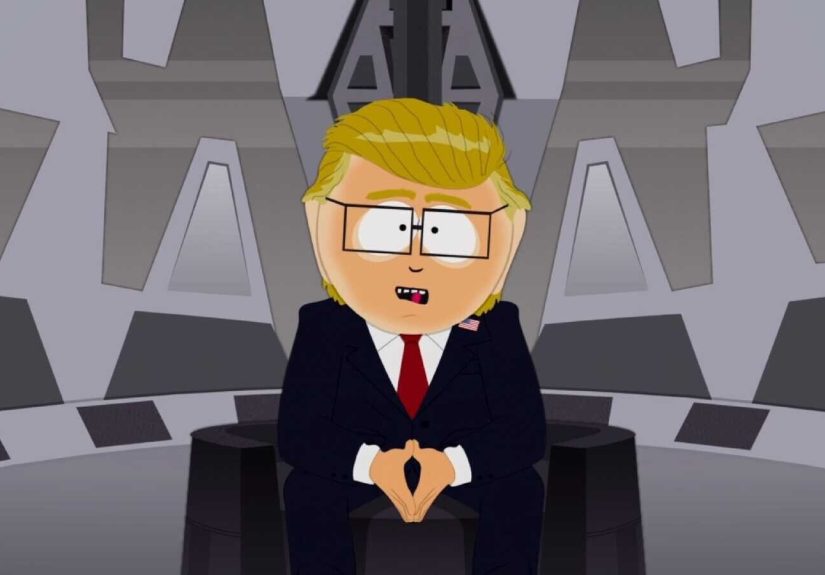
For years, South Park used Mr. Garrison as its not-so-subtle Donald Trump proxy. It was blunt, loud, chaotic, and about as delicate as Cartman with a megaphone. But the more recent direction of the series suggests Trey Parker and Matt Stone have moved away from using Mr. Garrison as a one-to-one Trump stand-in. Instead, the show appears far more interested in portraying Trump directly, while letting Mr. Garrison drift back toward being his own unhinged, familiar self.
That shift matters because fans have been debating the same question for a while now: when a new South Park season rolls around, will the show put Mr. Garrison back in the presidential saddle, or has that bit finally been retired? Based on the show’s recent seasons, the creators’ comments, and the way the satire has evolved, the answer looks less like “yes” and more like “that era has already been left in the dust cloud behind the school bus.”
The Big Question: Is Mr. Garrison Still South Park’s Trump?
Not really. At least, not anymore in the neat, old-school sense that longtime viewers remember.
Back in the Trump campaign era, Mr. Garrison became the show’s stand-in for the candidate and then the president. That approach made sense at the time. South Park thrives on speed, shock, and topical satire, and Garrison’s already chaotic personality gave Parker and Stone a ready-made vehicle for political parody. It was fast, nasty, and weirdly efficient.
But topical TV satire ages like gas-station sushi. What feels laser-sharp in one election cycle can feel stale in the next. That appears to be exactly the problem Parker and Stone ran into. The more national politics swallowed pop culture, the more the Garrison-as-Trump bit started to dominate everything around it. Instead of being one savage joke inside South Park, it risked becoming the whole meal.
And fans noticed. Some loved the absurdity of turning an already unstable teacher into a presidential parody. Others felt the joke boxed the show in. When every road led back to Washington, the town of South Park itself started losing oxygen.
How Mr. Garrison Became Trump in the First Place
The original arc was classic South Park: take a character who is already combustible, then toss him into a national fire. Mr. Garrison’s political transformation worked because he was never built for restraint. He says the worst thing in the room, then somehow finds a basement below that room and keeps digging.
That made him a natural vessel for a campaign-era satire that needed speed over subtlety. Instead of inventing a whole new political character from scratch, the show simply bent Garrison into a recognizable shape. For a while, it was a smart shortcut. Viewers instantly got the joke. No labels needed. No explanation required. Just orange-coded chaos and a constant feeling that civilization had slipped on a banana peel.
But satire built on immediacy always faces a problem: reality keeps rewriting the script. The sharper and stranger real-world politics became, the harder it was for a proxy character to feel necessary. Eventually, using Mr. Garrison to represent Trump began to look less efficient and more limiting.
Why the Creators Seemed Ready to Move On
One of the clearest clues came before the show’s return. Parker and Stone openly suggested they were tired of the gravitational pull Trump had on the series. That was not a tiny hint. That was a billboard with fireworks attached.
When creators say they do not know what more they can say about Trump, that usually means two things. First, they still think he is culturally unavoidable. Second, they are bored with the old comedic delivery system. In plain English: the issue was not that Trump had stopped being satirically useful. The issue was that Mr. Garrison may have stopped being the most useful way to satirize him.
This is where the fan conversation gets interesting. A lot of viewers assumed a new season would either revive the Garrison-as-president formula or avoid Trump almost entirely. Instead, South Park chose the third path: depict Trump more directly and free Mr. Garrison from doing all the heavy symbolic lifting. That is a more flexible model. It also lets the show mock national politics without permanently welding one legacy character to one politician.
What the Newer Seasons Suggest
Once the newer episodes arrived, the answer became much clearer. The series shifted its satire away from “Mr. Garrison is basically Trump” and toward “Trump is now a distinct target in the South Park universe.” That is a major creative pivot.
Instead of asking Garrison to impersonate the presidency again, the show started carving out a separate lane for Trump as his own grotesque political figure. Meanwhile, Garrison was shown back in South Park, much closer to his original comic identity than to a permanent Oval Office parody. That change was not subtle. It felt deliberate, strategic, and maybe a little therapeutic.
For fans, this solved an old problem. When Garrison was the Trump stand-in, every appearance carried extra symbolic baggage. He was not just Mr. Garrison anymore; he was also a political delivery truck. By separating the characters, Parker and Stone got more room to tell jokes again. And on a show like South Park, room to tell jokes is everything.
Even more telling, later official episode descriptions continued to frame the White House and national politics as major targets while also signaling the show’s awareness that it had become “too political.” That kind of self-awareness is not an accident. It reads like the creators winking at viewers and saying, “Yes, we know what this show has been doing, and yes, we are playing with that on purpose.”
So What Are Fans Actually Thinking?
Fans seem to fall into two broad camps.
The first group misses the old Mr. Garrison-as-Trump setup. For them, it was one of the cleanest examples of South Park doing what it does best: taking a familiar resident of the town, blowing him up into a cultural monster, and letting the joke spiral into national absurdity. That version had a nasty efficiency to it. Garrison was already loud, offensive, erratic, and ego-driven, which made the parody feel instantly legible.
The second group thinks moving on was overdue. Their argument is simple: the Garrison version of Trump had already said what it needed to say. Repeating the bit would not feel sharp; it would feel like reheated leftovers. Funny leftovers, maybe. But leftovers nonetheless.
And honestly, that second camp has momentum. Why? Because direct Trump satire gives the show more freedom. It lets Garrison be a side character, a town menace, a school disaster, or a walking HR violation again. It also lets the writers target the broader political machine without being forced to route every joke through one legacy teacher with a megaphone soul.
Why a Direct Trump Caricature Works Better Now
Comedy changes when the cultural moment changes. In the mid-2010s, filtering Trump through Mr. Garrison felt clever because it turned a real political phenomenon into a warped extension of an already broken character. By the mid-2020s, that filter may have become unnecessary.
Direct caricature is cleaner. It is more aggressive. It gives South Park a straighter line from current event to punchline. Instead of saying, “Here is our Trump-like figure,” the show can now say, “Here is Trump, and here is the specific institution, scandal, or absurdity we are targeting this week.” That is less metaphor and more flamethrower.
It also fixes another problem: audience fatigue. Political satire can wear viewers down when every storyline starts smelling like campaign fumes. Separating Trump from Garrison helps the series rebalance itself. South Park can still be political, but the town no longer has to pretend one teacher is carrying the entire election cycle on his back like a screaming substitute Santa.
Could Mr. Garrison Still Be Involved?
Absolutely. Just not necessarily as President Trump 2.0.
That is the nuance fans should keep in mind. Saying Mr. Garrison probably will not “play President Trump” in the old sense does not mean he is irrelevant. On the contrary, he remains one of the show’s most useful chaos generators. He can still comment on power, ego, reactionary politics, public outrage, and whatever fresh disaster is rolling down the American cultural hill.
But that is different from making him the single official Trump vessel again. The latest evidence suggests Parker and Stone prefer a looser arrangement: Trump exists as Trump, while Garrison exists as Garrison, and the two can occasionally collide when the joke demands it. That is funnier, more flexible, and far less repetitive.
So yes, Mr. Garrison can still orbit the political satire. He can still be dragged into it, distorted by it, or briefly possessed by it. But a full return to the old “Garrison is Trump” framework now seems unlikely.
The Real Answer: South Park Has Evolved Past the Old Bit
If you strip away the clicky mystery and the fan speculation, the real answer is this: South Park appears to have evolved beyond using Mr. Garrison as its primary Trump mask.
That does not mean the show has gone soft. Quite the opposite. In some ways, the newer approach is harsher because it removes the buffer. The satire is less disguised, less mediated, and less interested in plausible deniability. It is no longer saying, “Look, this teacher kind of reminds you of someone.” It is saying, “Nope, this target is the target.”
For fans, that makes the new season question easier to answer. If you are wondering whether Mr. Garrison will once again be wheeled out as the official Trump avatar, the evidence says no. If you are wondering whether he will still be wrapped up in the show’s political madness, the answer is almost certainly yes. On South Park, normal is never an available setting.
What It Feels Like for Longtime Viewers: The Experience of Watching This Shift
For longtime viewers, the experience of watching this evolution has been strangely familiar and surprisingly fresh at the same time. There is a very specific feeling that comes with seeing South Park return to a topic it once covered one way, only to attack it from a completely different angle later. It is like watching a class clown grow up just enough to become a better troll.
Back when Mr. Garrison first became the show’s Trump proxy, the experience was immediate and electric. Viewers did not need a decoder ring. The joke landed fast, and it landed hard. It felt like South Park was doing what only South Park could do: grab a national panic attack by the collar and turn it into a screaming cartoon by Wednesday night. For many fans, that was thrilling. It felt reckless in the best possible way.
But over time, there was also a kind of exhaustion. Not because the satire lacked bite, but because the real world refused to stop supplying fresh chaos. Watching the Garrison-Trump era sometimes felt like being trapped in a carnival ride built out of cable news, outrage, and broken brakes. Funny? Yes. Sustainable? Maybe not.
That is why the newer direction feels different. There is still anger. There is still absurdity. There is still that classic South Park instinct to kick the hornet’s nest, then complain about the hornets. But there is also a sense of creative release. Longtime fans can feel the writers opening a window in a room that had gotten stuffy.
And there is another layer to the experience: nostalgia. Mr. Garrison is not just a political tool. He is one of the show’s oldest engines of chaos. Seeing him pulled away from being a single-purpose national metaphor allows viewers to reconnect with what made him funny before the presidency swallowed him whole. He can be shocking, inappropriate, theatrical, and catastrophically unqualified again in ways that are local, character-based, and weirdly timeless.
For some fans, that shift is a relief. For others, it is a loss. The old version had the thrill of immediacy. The new version has the advantage of range. Watching that tradeoff play out is part of what makes the topic so interesting. It is not just a question about whether Mr. Garrison will play Trump. It is a question about what kind of satire viewers now want from South Park: the blunt-force version from the election years, or the newer model that spreads the madness across a wider canvas.
The most likely answer is that fans want both. They want the show to stay culturally sharp without becoming trapped by a single political gimmick. They want Mr. Garrison to remain dangerous, but not predictable. They want Trump satire, but they also want South Park itself back: the school, the town, the petty feuds, the stupid little obsessions, and the feeling that the entire place could collapse because one child had a terrible idea before lunch.
That is why this debate keeps surfacing. It is really a debate about balance. And in that sense, the current approach may be the smartest compromise Parker and Stone have found yet.
Final Verdict
Will Mr. Garrison play President Trump in the new season of South Park? The best reading of the evidence is no, not as the old full-time stand-in.
What the show seems to prefer now is more interesting anyway: Trump as a direct satirical target, and Mr. Garrison as a liberated chaos machine who can dip into political storylines without being permanently chained to them. That gives the series more room, more bite, and more ways to surprise viewers.
In other words, fans looking for the exact old formula may be disappointed. Fans looking for a sharper and less boxed-in version of South Park should feel pretty optimistic. And on this show, optimism is basically the emotional equivalent of hiding under your desk and hoping the next joke misses you.