Table of Contents >> Show >> Hide
- What Are PC Muscle Exercises?
- Before You Start: A Quick Safety Note
- How to Do PC Muscle Exercises: 11 Steps
- Step 1: Learn What the PC Muscle Actually Does
- Step 2: Find the Right Muscles
- Step 3: Empty Your Bladder First
- Step 4: Get Into a Relaxed Position
- Step 5: Contract the PC Muscle Gently
- Step 6: Hold for 3 to 5 Seconds
- Step 7: Relax Completely for 3 to 5 Seconds
- Step 8: Repeat 8 to 10 Times
- Step 9: Practice 2 to 3 Times a Day
- Step 10: Add Quick Flicks After You Build Control
- Step 11: Progress Slowly and Track Your Results
- Common Mistakes to Avoid
- Who May Benefit from PC Muscle Exercises?
- A Simple Beginner Routine
- When to See a Professional
- Real-Life Experience: What PC Muscle Training Feels Like Over Time
- Conclusion
- SEO Tags
PC muscle exercises may not come with dumbbells, gym selfies, or a dramatic training montage, but do not let their low-key nature fool you. These tiny-but-mighty movements can help strengthen the pelvic floor, improve bladder control, support bowel function, and contribute to better core stability. In plain English: these exercises train the muscles that help you hold things in, let things go, and keep your pelvic area working like a well-managed backstage crew.
The “PC muscle” usually refers to the pubococcygeus muscle, one part of the larger pelvic floor muscle group. Most people know PC muscle exercises by another name: Kegel exercises. They are simple, discreet, and surprisingly easy to do wrong. The goal is not to clench your entire lower body like you are bracing for a roller coaster drop. The goal is to gently contract, lift, hold, and fully relax the correct pelvic floor muscles.
Below is a practical, beginner-friendly 11-step guide to doing PC muscle exercises correctly, safely, and consistently. Whether you are managing occasional leaks, rebuilding strength after childbirth, supporting prostate health, improving pelvic awareness, or simply adding one more smart habit to your wellness routine, this guide will help you start with confidence.
What Are PC Muscle Exercises?
PC muscle exercises are controlled contractions of the pelvic floor muscles. These muscles sit like a supportive hammock at the base of the pelvis. They help support the bladder, bowel, and reproductive organs. They also help control urine flow, bowel movements, and certain sexual functions.
Think of the pelvic floor as the body’s quiet security team. When it is strong and coordinated, it helps prevent leaks when you cough, sneeze, laugh, lift groceries, jump, or sprint toward the bathroom after drinking a jumbo iced coffee. When it is weak, poorly coordinated, or too tense, problems such as urinary leakage, urgency, pelvic pressure, constipation issues, or discomfort may show up.
PC muscle exercises are not only for women and not only for people after pregnancy. Men can benefit too, especially when working on bladder control, bowel control, or pelvic muscle support after certain prostate treatments. The exercises are simple, but good technique matters more than heroic effort.
Before You Start: A Quick Safety Note
PC muscle exercises should not hurt. A gentle pulling-up sensation is normal. Pain, cramping, burning, pressure, or symptoms that get worse are signs to stop and talk with a healthcare professional or pelvic floor physical therapist. Some people do not need more strengthening; they need relaxation and coordination work instead. In other words, if your pelvic floor is already clenched like it is holding a grudge, doing more squeezes may not be the answer.
Also, do not make a habit of practicing while urinating. It is fine to identify the muscle once by briefly noticing the muscles you would use to stop urine flow, but regularly stopping your stream can interfere with normal bladder emptying.
How to Do PC Muscle Exercises: 11 Steps
Step 1: Learn What the PC Muscle Actually Does
The first step is understanding the target. The PC muscle is part of the pelvic floor, which helps control the openings for urination and bowel movements. When you contract these muscles correctly, you should feel a subtle inward and upward lift, not a big squeeze of your thighs, buttocks, or stomach.
Imagine gently stopping yourself from passing gas or holding back urine for a moment. That small lift is close to the movement you want. The key word is “gently.” You are not trying to crush a walnut with your pelvis. You are trying to wake up a specific muscle group and train it with control.
Step 2: Find the Right Muscles
To locate your pelvic floor muscles, sit or lie down comfortably. Take a few calm breaths. Now imagine you are trying to stop urine flow and prevent passing gas at the same time. You should feel a light squeeze and lift inside the pelvis.
If your stomach tightens hard, your buttocks clench, or your thighs squeeze together, you are recruiting the wrong backup dancers. Relax and try again with less force. The correct movement is small, internal, and controlled.
For beginners, it may help to place one hand on the belly and one hand on the buttocks. During a proper PC muscle contraction, both should stay mostly relaxed. If your whole body joins the party, reduce the effort by half.
Step 3: Empty Your Bladder First
Before practicing, use the bathroom if you need to. Starting with an empty bladder is more comfortable and helps you focus on the exercise instead of wondering whether your bladder is about to file a complaint.
Once you are done, choose a comfortable position. Beginners often do best lying down because gravity is not adding extra challenge. As you improve, you can practice sitting, standing, or even while waiting in line at the grocery store. Nobody will know. That is one of the great perks of PC muscle exercises: stealth fitness.
Step 4: Get Into a Relaxed Position
Lie on your back with knees bent, sit upright in a chair, or stand with your feet hip-width apart. Keep your shoulders relaxed, jaw unclenched, and belly soft. Your breathing should stay easy.
Many people accidentally hold their breath during PC muscle exercises. This creates extra pressure and makes the movement less effective. Try inhaling normally, then gently contract the pelvic floor as you exhale. If counting out loud helps you breathe, do it. Your pelvic floor does not care if you look silly in your living room.
Step 5: Contract the PC Muscle Gently
Now perform the basic contraction. Gently squeeze and lift the pelvic floor muscles. Think “up and in,” not “down and push.” A proper contraction should feel like a subtle elevator rising inside the pelvis.
Avoid pushing downward. Pushing can increase pressure on the pelvic floor and may worsen symptoms for some people. If you feel pressure moving downward, stop, reset your breathing, and try a softer contraction.
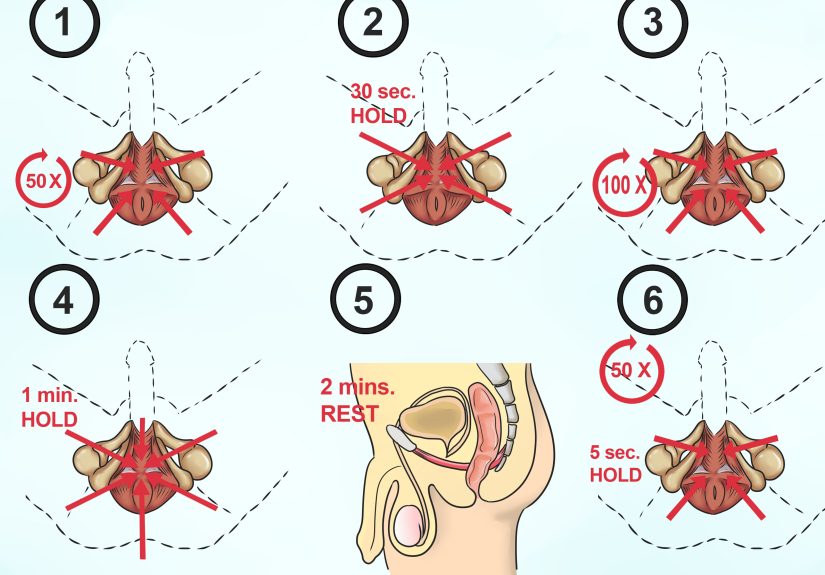
Step 6: Hold for 3 to 5 Seconds
Beginners should start with a short hold of about 3 to 5 seconds. If that feels easy and controlled, great. If your muscles fatigue after 2 seconds, that is also fine. The pelvic floor is like any other muscle group: it needs progressive training, not a surprise boot camp.
During the hold, keep breathing. Do not tighten your face, fists, abs, thighs, or glutes. A good PC muscle exercise should be quiet, focused, and almost boring. Boring is good here. Drama usually means the wrong muscles are helping.
Step 7: Relax Completely for 3 to 5 Seconds
Relaxation is not optional. After each squeeze, fully let go for the same amount of time. If you hold for 5 seconds, relax for 5 seconds. The release teaches the pelvic floor to move through its full range, which is important for coordination and comfort.
Many people focus only on the squeeze and forget the release. That is like doing biceps curls but never lowering the weight. The muscle needs both contraction and relaxation to function well.
Step 8: Repeat 8 to 10 Times
One beginner set is usually 8 to 10 repetitions. Each repetition includes one squeeze, one hold, and one full relaxation. Quality matters more than quantity. Ten sloppy clenches are not better than five clean contractions.
If you notice your belly, buttocks, or legs taking over near the end, stop the set. Fatigue is normal. The goal is to train control, not win a mysterious pelvic endurance contest that nobody asked you to enter.
Step 9: Practice 2 to 3 Times a Day
A practical routine is 2 to 3 short sessions per day. You might do one set in the morning, one in the afternoon, and one in the evening. Link the habit to something you already do, such as brushing your teeth, making coffee, checking email, or sitting down after lunch.
Consistency is where the magic happens. PC muscle exercises usually do not deliver instant results. Many people need several weeks of regular practice before noticing improvement, and bigger changes may take a few months. The good news is that each session takes only a couple of minutes.
Step 10: Add Quick Flicks After You Build Control
Once you can do slow holds comfortably, add quick contractions. These are sometimes called “quick flicks.” To do them, squeeze and lift the pelvic floor for 1 second, then fully relax for 1 second. Repeat 5 to 10 times.
Quick contractions help train the pelvic floor to respond fast, which may be useful before coughing, sneezing, laughing, or lifting. For example, if you know a sneeze is coming, gently contract the pelvic floor before it happens. This timing strategy is sometimes called “the knack,” and yes, it sounds like a 1980s band, but it can be very useful.
Step 11: Progress Slowly and Track Your Results
As your control improves, gradually increase your hold time toward 8 to 10 seconds. Keep the relaxation period equal to the hold. A more advanced routine might include 10 slow holds and 10 quick flicks, repeated 2 to 3 times daily.
Track your symptoms and progress. Notice whether leaks happen less often, urgency becomes easier to manage, or pelvic awareness improves. Do not increase repetitions endlessly. More is not always better. Overtraining the pelvic floor can create fatigue, tightness, or discomfort.
Common Mistakes to Avoid
Mistake 1: Squeezing Everything Except the Pelvic Floor
If your thighs, buttocks, or abs are doing most of the work, the pelvic floor is not getting the targeted training it needs. Use a lighter contraction and check that the rest of your body stays relaxed.
Mistake 2: Holding Your Breath
Breath-holding increases pressure in the abdomen and can make the exercise less effective. Keep breathing naturally. If needed, count out loud during each hold.
Mistake 3: Practicing While Urinating
Do not routinely stop your urine stream as an exercise. This can confuse normal bladder function and may prevent complete emptying. Use that cue only briefly to identify the muscles, then practice away from the toilet.
Mistake 4: Doing Too Much Too Soon
The pelvic floor can get tired. If symptoms worsen, pressure increases, or discomfort appears, scale back and consider professional guidance.
Who May Benefit from PC Muscle Exercises?
PC muscle exercises may help people who experience mild stress urinary leakage, such as leaking during coughing, sneezing, laughing, or exercise. They may also support bladder control after childbirth, during aging, or after certain medical treatments. Men may use them to support urinary control and pelvic function, especially after prostate-related procedures.
These exercises may also help with bowel control by improving awareness and coordination of muscles around the rectum. However, symptoms such as pain, chronic constipation, pelvic heaviness, numbness, or sudden changes in bladder or bowel habits deserve medical evaluation.
A Simple Beginner Routine
Here is a beginner-friendly PC muscle workout:
- Empty your bladder.
- Lie down or sit comfortably.
- Gently squeeze and lift the pelvic floor for 3 seconds.
- Relax completely for 3 seconds.
- Repeat 8 to 10 times.
- Do 2 sessions daily for the first week.
- If comfortable, increase to 3 sessions daily.
After two or three weeks, try holding for 5 seconds. Later, work toward 8 to 10 seconds if you can do so without strain. Add quick flicks only after you can control the slow contractions.
When to See a Professional
See a healthcare professional or pelvic floor physical therapist if you are unsure whether you are doing the exercises correctly, if symptoms do not improve after consistent practice, or if you feel pain, pelvic pressure, or increased urgency. Professional feedback can be incredibly helpful because many people think they are doing Kegels correctly when they are actually squeezing the wrong muscles or pushing downward.
A pelvic floor physical therapist can assess strength, tension, coordination, breathing, posture, and daily habits. Sometimes the best plan includes strengthening. Sometimes it includes relaxation, mobility, bladder training, constipation management, or a combination of approaches.
Real-Life Experience: What PC Muscle Training Feels Like Over Time
Starting PC muscle exercises can feel oddly anticlimactic. You may expect a dramatic workout sensation, but the first few sessions often feel like, “Am I doing anything?” That is normal. The pelvic floor is not like the biceps or quads. You cannot watch it flex in a mirror, and it will not ask for a protein shake afterward. The progress is quieter.
In the first week, the biggest challenge is usually finding the right muscles. Many beginners accidentally squeeze their glutes, tighten their abs, or hold their breath. One helpful trick is to practice lying down with one hand on the belly. If the belly hardens like a drum, reduce the effort. A proper contraction may feel only 30 to 50 percent as strong as you expected. Smaller and cleaner is better than bigger and messier.
Around the second or third week, people often notice better awareness. You may catch yourself activating the pelvic floor before a cough or while lifting something heavy. That moment is a small victory. It means your brain and muscles are starting to communicate more efficiently. The pelvic floor becomes less mysterious and more like a regular muscle group that responds to practice.
By the fourth to sixth week, some people notice fewer small leaks, better control when urgency hits, or improved confidence during daily movement. Others need longer, especially if symptoms have been present for years, after childbirth, after surgery, or alongside constipation or pelvic pain. Progress is not always a straight line. A stressful week, heavy lifting, poor sleep, or too much caffeine may temporarily make symptoms more noticeable.
The most useful habit is pairing PC muscle exercises with everyday routines. Do one set after brushing your teeth. Do another after lunch. Do quick flicks before a sneeze or laugh. This turns the exercises from a “health project” into a normal part of your day. The easier the habit feels, the more likely you are to keep it.
One important lesson from real-world practice is that more is not automatically better. Some people get enthusiastic and start doing dozens of contractions all day. Then they feel tight, tired, or uncomfortable. The pelvic floor needs rest, just like any muscle. If your symptoms worsen, reduce the volume and focus on full relaxation after every contraction.
Another practical insight: posture and breathing matter. If you always clench your stomach, tuck your pelvis, or breathe shallowly, your pelvic floor may stay tense. Adding slow belly breathing, gentle hip mobility, and relaxed sitting can make the exercises feel more natural. PC muscle training works best when it is part of a calm, coordinated bodynot a secret clenching marathon during traffic.
Finally, there is no shame in asking for help. Pelvic floor physical therapists exist for a reason. Getting professional guidance can save months of guessing and help you learn whether you need strengthening, relaxation, coordination, or all three.
Conclusion
PC muscle exercises are simple, discreet, and powerful when done correctly. The formula is easy: find the right muscles, squeeze gently, hold briefly, relax completely, repeat consistently, and progress gradually. The secret is not intensity. It is accuracy and patience.
Start small with 8 to 10 controlled repetitions, 2 to 3 times daily. Keep your breathing relaxed, avoid clenching your abs or buttocks, and never ignore pain or worsening symptoms. With steady practice, PC muscle exercises can become a practical tool for bladder control, bowel support, pelvic stability, and everyday confidence. Tiny exercise, big job. Not bad for a muscle group that does its best work in total privacy.