Table of Contents >> Show >> Hide
- The Train Incident That Turned Into a Culture Test
- Why the Backlash Hit So Hard
- Tanni Grey-Thompson Is a Household Name. That’s Part of the Point.
- The Internet’s Favorite Sport: Missing the Point
- Accessibility Is Not Luxury, and It Is Definitely Not “Special Treatment”
- What This Story Says About Ableism
- What Better Would Actually Look Like
- Related Experiences That Make This Story Even More Disturbing
- Final Thoughts
Some stories should be simple. A passenger needs assistance. The assistance does not arrive. The system apologizes, fixes the problem, and learns something useful. Instead, the story involving Paralympic legend Tanni Grey-Thompson swerved into a familiar modern mess: a failure of accessibility followed by a round of internet cruelty dressed up as “just asking questions.” Because apparently a wheelchair user being stranded on a train was not enough indignity for one news cycle.
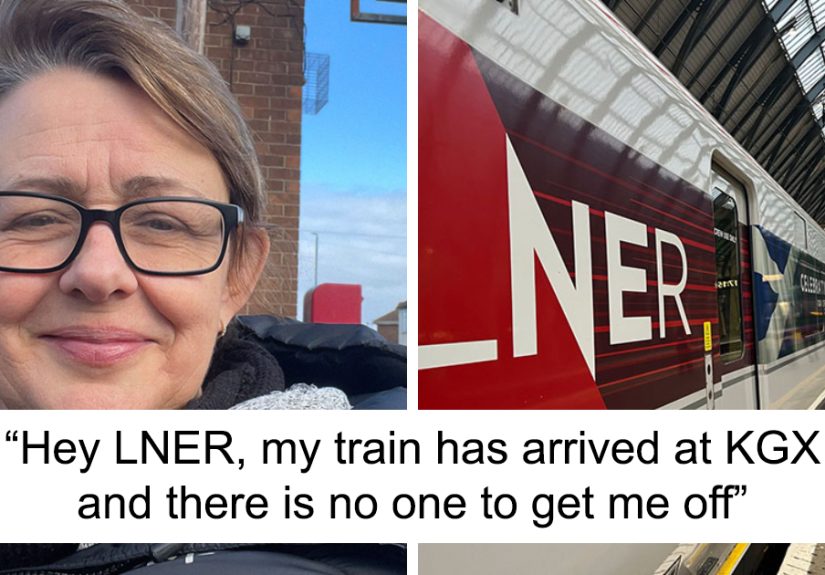
Grey-Thompson, one of Britain’s most decorated Paralympians, spoke out after she was left without help getting off a train at London King’s Cross. By her account, she waited, tried to get attention, and eventually had to crawl off the train herself. The incident was upsetting on its own. What made it even uglier was the backlash that followed, with some commenters reacting as though the real scandal was not the accessibility failure, but the audacity of a disabled person expecting public transportation to work.
That reaction is what makes this story worth more than a quick headline skim. It is not only about one bad travel night. It is about how ableism often works in public: first as a systems problem, then as a social one. First, the ramp is missing. Then the empathy disappears. And somehow the person who was failed gets treated like the inconvenience.
The Train Incident That Turned Into a Culture Test
The details matter because they show how quickly a basic mobility need can become a humiliating ordeal. Grey-Thompson was traveling ahead of the Paris Paralympics when she arrived at King’s Cross and found that no one was there to help her off the train. After waiting and trying to get assistance, she said she ended up dragging bags onto the platform area and crawling off. It is the kind of sentence that should make transportation officials break into a cold sweat.
Instead, the internet did what the internet too often does: it found a way to put the spotlight on the person who had already been failed. Some of the backlash suggested she should not have traveled alone. Some implied that missing a booked train changed everything, as though accessible travel were a one-shot coupon that expires the moment real life gets messy. Others took the old reliable route of performative impatience: if accommodating a disabled traveler creates friction, then maybe the traveler is the problem.
That logic is both cruel and absurd. People miss trains. Plans change. Connections run late. Phones die. Staff rotate. Life does not move in perfect bullet points, and accessibility that only works under ideal conditions is not accessibility. It is a fragile favor masquerading as a right.
Why the Backlash Hit So Hard
The backlash was not just rude; it was revealing. It exposed a nasty little assumption that still lingers in public life: disabled people are welcome in public spaces only if they are quiet, grateful, and logistically flawless. The moment they ask for equal treatment, the tone changes. The sympathy dries up. The comments roll in. Suddenly the issue is not “Why didn’t the system work?” but “Why didn’t you arrange your entire existence more neatly?”
That is what makes the phrase “How dare I miss a train” so cutting. It captures the sarcasm of the whole episode. It points to a worldview in which disabled people are expected to compensate for every weakness in a broken system. Miss the wrong train, and your dignity becomes optional. Speak up about it, and people accuse you of making a fuss. Complain publicly, and strangers decide you are the one who has violated some invisible social code.
Let’s be honest: this is not really about a train. It is about permission. Who gets to move through public space without being treated like an administrative headache? Who gets to expect basic competence from a service provider? Who gets to be inconvenienced without being judged as personally irresponsible? For nondisabled travelers, the answers are usually obvious. For disabled travelers, they are too often conditional.
Tanni Grey-Thompson Is a Household Name. That’s Part of the Point.
Grey-Thompson is not a marginal public figure. She is one of the most recognizable names in Paralympic sport, a decorated wheelchair racer with an extraordinary medal record and a long public life in broadcasting and advocacy. In theory, if anyone should be heard quickly, treated seriously, and assisted competently, it would be someone with that level of public profile.
And yet she still ended up on the floor of a train doorway.
That is what makes the story bigger than celebrity. Her fame did not protect her from the system failure, and it did not shield her from the public sneering that followed. If anything, her visibility only highlighted a more uncomfortable truth: if this can happen to someone widely known, articulate, and powerful enough to command headlines, what happens every day to disabled passengers whose stories never trend?
Grey-Thompson herself has emphasized that point. The most important part of her response was not “look what happened to me,” but “what about everyone else?” That shift matters. It turns the story from a one-off scandal into a structural critique. A ramp failing one famous person is news. A system repeatedly failing countless less famous people is policy failure with a PR problem.
The Internet’s Favorite Sport: Missing the Point
There is a particular kind of online backlash that always arrives wearing the costume of practicality. It sounds reasonable for about seven seconds. “Did she book assistance?” “Did she miss the original train?” “Shouldn’t she have had someone with her?” But when you stack those questions together, what you get is not accountability. You get a bureaucratic blame smoothie.
And here is the thing about that smoothie: it always seems to land on the disabled person.
Public outrage can be extremely selective. People who would never accept a broken escalator, a canceled gate agent, or a locked exit suddenly become philosophers of personal responsibility when disability access is involved. The standard shifts from “this service failed” to “prove you deserved service in the first place.” That double standard is the real scandal hiding inside the backlash.
There is also a deeper discomfort at work. Stories like this force people to confront the difference between celebrating disabled athletes and respecting disabled people. Many audiences love the inspirational version of disability: medals, resilience, ceremonial montages, dramatic music, maybe a tearful ad if the budget allows. But everyday disabled autonomy? That is where enthusiasm gets weirdly thin. A wheelchair user asking to get on and off a train with dignity is not cinematic enough, apparently.
Which is precisely why it matters. Inclusion is not proven by applause at sports events. It is proven by whether people can travel, work, commute, complain, and exist in public without being humiliated.
Accessibility Is Not Luxury, and It Is Definitely Not “Special Treatment”
One of the most exhausting myths in stories like this is the idea that accessibility is some premium add-on, like heated seats or airport lounge access. It is not. Accessibility is infrastructure. It is the difference between independence and dependence, between participation and exclusion, between being a citizen and being treated like a scheduling exception.
When a disabled passenger cannot rely on a basic process for boarding or exiting a train, the problem is not inconvenience alone. It is lost time, lost confidence, and sometimes lost opportunities. It can mean missed work, missed family events, missed performances, missed care appointments, and yes, missed trains. The irony here is almost painful: the backlash mocked Grey-Thompson for missing a train while ignoring the larger reality that inaccessible systems force disabled travelers to miss much more than that.
And the emotional toll is not trivial. Repeatedly having to calculate whether a routine trip might turn into a public ordeal changes the entire experience of movement. It turns travel into risk management. It asks disabled people to pack not just bags, but contingency plans, emotional armor, and a backup script for asking strangers not to look too shocked.
That is why accessibility cannot depend on a lucky combination of perfect timing, fully staffed platforms, and social goodwill. A functioning system has to work for real people on ordinary days, including when plans change, when assistance requests need updating, and when passengers are tired, late, stressed, or traveling alone. In other words, it has to work like public transportation is meant to work for everybody else.
What This Story Says About Ableism
Ableism is often imagined as something obvious and cartoonish, the sort of thing a villain might say in a badly written movie. In real life, it is usually more slippery. It appears in low expectations. In impatience. In systems designed around a “normal” body and then patched with exceptions. In the subtle idea that disabled people should be grateful for being included at all, even when the inclusion barely functions.
The backlash to Grey-Thompson’s experience fits that pattern perfectly. It did not always arrive as open hostility. Sometimes it came dressed as logistics. Sometimes as skepticism. Sometimes as the insistence that the real failure was not the missing assistance, but the decision to rely on assistance. That is ableism in a respectable jacket.
It also reveals how quickly disabled people are pushed into impossible choices. Travel independently, and critics ask why you did not bring help. Travel with help, and people frame that as proof that disabled people are dependent. Speak publicly, and you are “angry.” Stay quiet, and the system learns nothing. It is a no-win maze, and stories like this show just how many people are still comfortable leaving disabled travelers stuck inside it.
What Better Would Actually Look Like
The good news, if we can call it that, is that the solutions are not mystical. Better staffing. Better communication between train services and station teams. More reliable assistance systems that update when travel plans change. Infrastructure that reduces reliance on manual intervention in the first place. Clearer accountability when booked or needed help does not materialize. Faster escalation channels. Better training. Better data. Less shrugging.
Just as important, better would also mean changing the social script. When a disabled person reports a failure, the first reaction should not be to interrogate whether they followed every perfect procedure. It should be to ask what broke and how to stop it from happening again. That shift sounds small, but it changes everything. It moves the burden away from the person who was failed and back to the system that failed them.
And yes, online spaces need that same correction. Athletes, public figures, and disabled advocates should not have to accept waves of harassment as the price of speaking plainly. Criticism is one thing. Cruelty disguised as commentary is another. When the response to a mobility failure is mockery, the crowd is telling on itself.
Related Experiences That Make This Story Even More Disturbing
If Grey-Thompson’s experience sounds shocking, it is because it should. But it also fits a broader pattern that disabled travelers and disabled public figures have been describing for years. That is what makes the story sting: it feels less like an anomaly and more like a spotlight briefly swung toward a problem that has been there all along.
For one thing, Grey-Thompson has spoken before about similar frustrations with rail travel. This was not her first warning shot. In public comments over the years, she has repeatedly argued that disabled passengers are too often expected to settle for uncertainty, delay, or dependence. That history matters because it undercuts the comforting idea that this was one freak breakdown on one unlucky night. It suggests repetition, which is far more alarming than randomness.
There are other painful examples, too. Disability campaigner and former Paralympian Anne Wafula Strike drew widespread attention years earlier after describing a humiliating train journey in which she was unable to use an accessible toilet and ended up wetting herself. Different circumstances, same underlying theme: when transportation systems fail disabled passengers, the failure is not abstract. It lands on bodies. It becomes public, intimate, and degrading in ways many nondisabled travelers never have to imagine.
Then there is the everyday testimony from disabled passengers who do not make national headlines. Advocacy groups have long reported that many travelers avoid trains altogether because assistance is unreliable, stations are inaccessible, or the stress of not knowing whether they will get help is simply too much. That fear is easy to underestimate from the outside. Missing a handoff, a ramp, or a trained staff member is not a tiny hiccup when your ability to board or exit safely depends on it. It can turn a routine commute into a gamble.
The online backlash portion of Grey-Thompson’s story also echoes a wider problem in sports culture. Athletes across levels of competition increasingly face abuse on social media, and the nastiness often escalates when identity is involved, whether that identity is gender, race, or disability. Once the comment section opens, the original issue can get buried under insults, mockery, and dehumanizing hot takes. Instead of discussing what happened, the crowd starts grading whether the harmed person was likable enough, humble enough, or convenient enough to deserve empathy. That is a rotten standard for anyone, but especially for disabled people speaking about access failures.
Put all of this together and the train incident stops looking like a freakish one-day scandal. It starts to look like a case study in how exclusion works. First a system creates dependence. Then it fails. Then the person who was failed is asked to defend their own right to expect better. That cycle is the real story, and it is why Grey-Thompson’s experience resonated far beyond one station platform.
Final Thoughts
At its core, this story is brutally simple. A Paralympian needed help getting off a train. The help did not come. She spoke about it. Some people responded with empathy, others with apologies, and too many with contempt. That last reaction is the one worth remembering, because it exposed a truth that glossy inclusion campaigns often hide: society still finds it easier to celebrate disabled achievement than to guarantee disabled dignity.
Grey-Thompson’s ordeal should not be treated as a viral curiosity or an outrage-of-the-day souvenir. It should be read as a warning. A transportation system that leaves disabled passengers stranded is failing. A public conversation that blames those passengers for asking for access is failing too. And when both things happen at once, the problem is not one missed train. It is a culture still learning, very slowly, that access is not charity and dignity is not conditional.
The real question was never, “How dare I miss a train?” The real question is: how dare a modern system make that the argument at all?