Table of Contents >> Show >> Hide
- Why Health Care Feels Like It Should Be Above Politics
- How Politics Shapes Health Care Access
- Affordability: The Kitchen-Table Issue That Refuses to Leave
- Public Health Became a Political Battlefield
- Reproductive Health Shows the Collision of Medicine, Law, and Morality
- Doctors and Nurses Cannot Escape Policy
- The Role of Money: Follow the Dollars, Bring Snacks
- Social Determinants Make Health Political Before the Doctor Arrives
- Why “Apolitical” Should Not Mean “Silent”
- What a Less Political Health Care System Could Look Like
- Experiences Related to the Topic: When Politics Walks Into the Waiting Room
- Conclusion: Health Care Is Political Because It Matters
Health care should be one of the few places where Americans can put down the campaign signs, turn off the shouting heads on television, and agree on something beautifully simple: sick people should get care. A broken leg does not ask whether you voted red or blue. Diabetes does not check your party registration. A hospital bill does not politely wait until Congress finishes arguing before landing in your mailbox with the emotional warmth of a parking ticket.
And yet, in the United States, health care is deeply political. It shapes elections, budgets, court cases, state laws, family finances, and even dinner-table arguments that begin with “pass the potatoes” and somehow end with “what about the Affordable Care Act?” Health care policy affects who gets insurance, what doctors can provide, how much medicine costs, whether hospitals stay open, and how much trust people place in public health guidance.
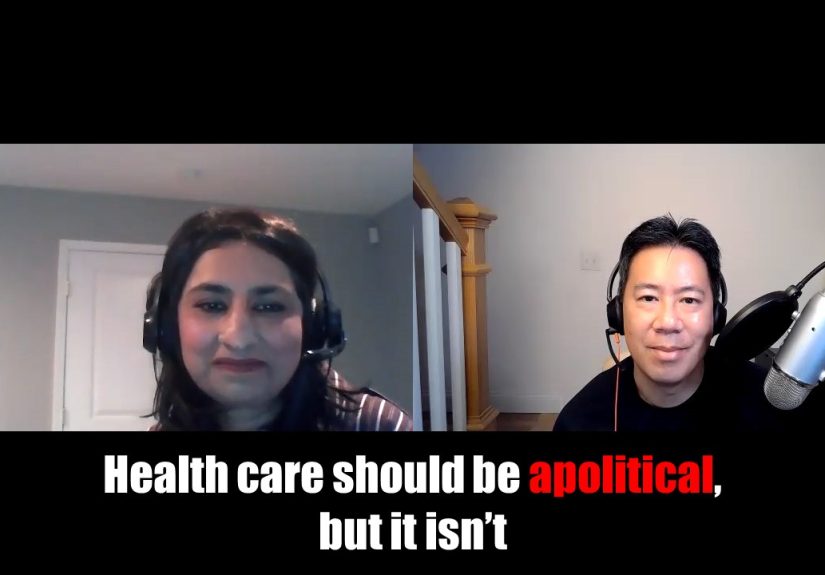
The phrase “health care should be apolitical” sounds noble. It suggests that medical decisions should be based on science, compassion, professional ethics, and patient needsnot campaign slogans. But the reality is more complicated. Health care is tied to money, power, rights, taxes, technology, public trust, and moral values. In other words, it has all the ingredients of politics, plus waiting-room magazines from 2017.
Why Health Care Feels Like It Should Be Above Politics
At its core, health care is personal. It is the parent rushing a child to urgent care. It is the older adult trying to afford prescriptions. It is the nurse working a double shift. It is the doctor spending more time on prior authorization forms than on lunch, which is impressive because lunch often does not happen at all.
Most people do not experience health care as an ideology. They experience it as a need. They want a diagnosis, a treatment plan, a fair bill, and a provider who listens. Nobody wants to turn a kidney stone into a policy seminar. The patient’s immediate question is not “What is the proper role of government in health financing?” It is usually, “Can someone please make this stop hurting?”
This is why health care seems like it should be apolitical. Medicine relies on evidence. Public health depends on prevention. Hospitals serve communities. Insurance is supposed to protect people from financial disaster. In a perfect world, policy would simply help these systems work better.
But health care is not delivered in a perfect world. It is delivered in a country where insurance is linked to employment, government programs cover tens of millions of people, state laws differ dramatically, and medical costs can turn a normal Tuesday into a spreadsheet emergency. Once decisions involve public money, legal rights, business interests, and access to services, politics enters the roomand it rarely uses its indoor voice.
How Politics Shapes Health Care Access
Access to health care in the United States often depends on where a person lives, what job they have, how much they earn, and which public programs their state has chosen to support. That is not just a health issue. It is a policy issue.
Medicaid is one of the clearest examples. The Affordable Care Act allowed states to expand Medicaid eligibility to more low-income adults, but not every state made the same decision. As a result, two people with similar income and medical needs may face very different coverage options depending on their ZIP code. Same country, same condition, different political map.
The ACA marketplace is another example. Marketplace rules, premium subsidies, enrollment protections, and eligibility standards can change when administrations or congressional priorities change. For families buying their own insurance, these decisions are not abstract. They determine whether monthly premiums feel manageable or whether the family budget starts making dramatic sound effects.
Health care access is also shaped by immigration policy, reproductive health laws, telehealth rules, prescription drug policy, and hospital funding. When a rural hospital closes, the cause may include workforce shortages, reimbursement rates, patient mix, state budget choices, and federal policy. The result, however, is painfully simple: people must travel farther for emergency care, maternity care, or routine treatment.
Affordability: The Kitchen-Table Issue That Refuses to Leave
If health care politics had a theme song, it would probably be “Why Is This So Expensive?” sung by a chorus of exhausted patients opening medical bills.
Health care affordability remains one of the most persistent concerns in American life. Even insured people can struggle with premiums, deductibles, copays, surprise costs, and prescription prices. The uninsured face even steeper barriers, often delaying care until a manageable issue becomes an expensive emergency.
This is where the debate becomes especially heated. Some policymakers argue for more government involvement to expand coverage and control costs. Others warn that too much government intervention can reduce choice, raise taxes, or burden businesses. Both sides claim to defend patients. Patients, meanwhile, are often busy trying to understand why a five-minute appointment produced a five-line bill that looks like it was written by a haunted calculator.
Affordability is not just about individual budgeting. When people skip medication, avoid preventive visits, or delay treatment because of cost, the entire system pays later. Employers face higher premiums. Hospitals absorb uncompensated care. Families lose work time. Communities become less healthy. The bill always arrives somewhere.
Public Health Became a Political Battlefield
Public health used to be most visible when something went wrong: a disease outbreak, contaminated water, unsafe food, or a natural disaster. In normal times, its best work was almost invisible. Clean water, vaccination programs, disease surveillance, restaurant inspections, and emergency preparedness are not glamorous, but they keep society functioning. Public health is like plumbing: nobody praises it at brunch until it fails.
The COVID-19 pandemic changed that. Mask guidance, school closures, vaccine recommendations, travel rules, and emergency powers became intensely political. Public health agencies had to make decisions in real time while scientific understanding evolved. That is difficult even in a calm environment. In a polarized environment, it became a trust earthquake.
Trust matters because public health depends on cooperation. People are more likely to follow guidance when they believe agencies are transparent, competent, and independent. When health guidance is seen as partisan, even accurate information can be rejected before it reaches the brain. It gets tackled at the door by team loyalty.
Recent disputes around vaccine guidance and federal health agency independence show how fragile trust can be. When recommendations appear to shift for political reasonsor when people believe data is being delayed, filtered, or framed to fit an agendapublic confidence suffers. The damage does not stay limited to one disease or one administration. It spills into childhood immunization, emergency response, chronic disease prevention, and the everyday credibility of doctors and health departments.
Reproductive Health Shows the Collision of Medicine, Law, and Morality
Few topics show the political nature of health care more clearly than reproductive health. Abortion laws, Medicaid funding rules, emergency care standards, contraception access, and maternal health programs all sit at the intersection of medical practice, religious belief, constitutional law, state authority, and personal freedom.
After the Supreme Court overturned federal constitutional protection for abortion, states moved in different directions. Some restricted abortion sharply. Others protected or expanded access. The result is a patchwork system where a patient’s options may depend heavily on state law, income, transportation, and timing.
Supporters of restrictions often frame the issue around unborn life and moral responsibility. Supporters of access frame it around bodily autonomy, medical judgment, and equality. Health care providers can be caught in the middle, trying to follow medical ethics while navigating legal risk. Patients may encounter delays or confusion in urgent situations because institutions must interpret what the law allows.
This is why saying “keep politics out of health care” is easier than doing it. Reproductive health is health care, but it is also one of the country’s most contested political subjects. The exam room may be private, but the legal environment surrounding it is anything but.
Doctors and Nurses Cannot Escape Policy
Many clinicians would love to focus only on patient care. Ask a doctor what they want, and the answer is rarely “more paperwork with tiny checkboxes.” Yet health policy follows clinicians everywhere.
Prior authorization rules affect whether treatments are approved quickly. Medicare payment rates influence practice finances. Scope-of-practice laws affect who can provide care. Telehealth regulations determine whether patients can be seen remotely. Medical education funding shapes the future workforce. Liability laws, hospital regulations, prescription rules, and insurance networks all influence what happens between patient and provider.
Professional organizations such as medical associations, hospital groups, nursing groups, and academic medical centers engage in advocacy because policy decisions directly affect care delivery. That advocacy can look political, because it is. But it is also practical. When doctors say a prior authorization process delays treatment, they are not merely making a philosophical point. They are describing a patient waiting for approval while a condition may worsen.
The challenge is that health care advocacy can be viewed through partisan lenses even when the issue is operational. A proposal to reduce administrative burden may sound boringuntil it affects your prescription, your surgery, or your specialist referral. Then suddenly “administrative simplification” becomes the most exciting phrase in the English language.
The Role of Money: Follow the Dollars, Bring Snacks
Health care is one of the largest sectors of the U.S. economy. Hospitals, insurers, pharmaceutical companies, device makers, employers, unions, government agencies, and patient groups all have stakes in the system. That does not automatically make them villains. It does mean that every major reform creates winners, losers, trade-offs, and lobbying.
Insurance companies influence coverage rules and networks. Pharmaceutical companies influence drug pricing debates. Hospitals worry about reimbursement, staffing, and uncompensated care. Employers care about benefit costs. States care about Medicaid budgets. Patients care about whether they can afford to stay alive without starting a GoFundMe.
Because so much money is involved, health care reform becomes difficult. Lowering costs for one group may reduce revenue for another. Expanding coverage may require taxes, savings, or cuts elsewhere. Increasing provider payment may protect access but raise spending. Negotiating drug prices may help patients and taxpayers but reduce industry revenue. Every lever connects to another lever, and some of them are attached to very expensive machinery.
Social Determinants Make Health Political Before the Doctor Arrives
Health is shaped long before someone enters a clinic. Housing, transportation, education, food access, pollution, neighborhood safety, employment, income, and social support all influence health outcomes. These are often called social determinants of health, which is a formal way of saying that life outside the hospital keeps sneaking into the medical chart.
A patient with asthma may need medication, but they may also need clean air and stable housing. A patient with diabetes may need insulin, but they may also need affordable groceries and transportation to appointments. A pregnant patient may need prenatal care, but also paid leave, safe housing, and nearby maternity services.
Once health depends on housing policy, labor policy, food policy, environmental regulation, and education funding, it becomes impossible to separate health care from politics. The clinic can treat symptoms, but policy often shapes the conditions that created them.
Why “Apolitical” Should Not Mean “Silent”
There is a difference between making health care partisan and making health care accountable. Health care should not be a weapon for scoring political points. But that does not mean clinicians, researchers, patients, or public health experts should stay silent about policies that affect health.
A truly apolitical health care system would not ignore policy. It would judge policy by outcomes. Does this law increase coverage? Does this rule improve safety? Does this payment model support primary care? Does this decision reduce preventable deaths? Does this program help patients get treatment earlier? Does it respect rights and medical evidence?
That kind of evaluation is not partisan. It is responsible. If a bridge collapses, engineers should explain why. If a health policy causes people to lose coverage or delay care, health experts should explain that too. Silence may look neutral, but when people are harmed, silence becomes a very quiet form of participation.
What a Less Political Health Care System Could Look Like
Health care may never be completely free of politics, but it can become less hostage to political theater. The goal is not to remove public debate. The goal is to make debate more honest, evidence-based, and patient-centered.
1. Protect Scientific Independence
Public health agencies need transparent processes, strong ethics rules, and clear separation between scientific findings and political messaging. Leaders will always set priorities, but data should not be buried because it is inconvenient. Science is allowed to be messy. It should not be forced to wear campaign merchandise.
2. Make Coverage More Stable
Patients should not have to relearn the health insurance system every time political control changes. Stable rules for Medicaid, ACA marketplaces, Medicare, and children’s coverage would reduce confusion and help families plan. Health coverage should not feel like a seasonal subscription service with surprise plot twists.
3. Focus on Affordability Across Party Lines
Drug costs, hospital prices, insurance premiums, and medical debt affect Republicans, Democrats, independents, and people who would rather discuss literally anything else. Affordability is common ground. Policymakers should treat it that way.
4. Respect Medical Judgment
Lawmakers can set broad rules, but they should be cautious about interfering with individual medical decisions. Patients and clinicians need room to consider evidence, risks, values, and circumstances. Medicine does not work well when every exam room comes with an invisible committee meeting.
5. Measure Results, Not Slogans
Health policy should be judged by measurable outcomes: coverage rates, preventable hospitalizations, maternal health, patient safety, rural access, wait times, medical debt, and public trust. A slogan cannot lower a fever. A functioning system can.
Experiences Related to the Topic: When Politics Walks Into the Waiting Room
One of the clearest ways to understand why health care is not apolitical is to listen to ordinary experiences. Imagine a working parent whose child develops a high fever on a Friday night. The parent is not thinking about federalism, market competition, or committee hearings. They are thinking about the nearest urgent care, the insurance card, the copay, and whether the pharmacy will still be open. But politics is already present. It is there in the insurance plan the employer chose, the state rules governing coverage, the availability of pediatric care, the drug pricing system, and the public health guidance the parent trustsor does not trust.
Consider a small-town patient who needs a specialist. The closest appointment is two counties away because the local hospital has reduced services. That patient may blame “the health care system,” but behind the shortage are policy decisions about rural reimbursement, workforce training, Medicaid payment, hospital consolidation, and state budgets. None of that feels political when the patient is arranging transportation. It just feels exhausting.
Or think about a physician trying to prescribe a medication. The doctor believes it is the right treatment. The patient agrees. Then the insurance process says, “Not so fast, tiny mortals.” Prior authorization requires forms, documentation, and delays. The policy may be designed to control costs or prevent unnecessary care, but from the patient’s point of view, it can feel like a locked door between diagnosis and relief. That experience turns a bureaucratic rule into a health outcome.
Public health offers another lesson. During disease outbreaks, people often want certainty. Unfortunately, science sometimes moves by updating recommendations as evidence improves. That is normal. But in a polarized environment, updates can be misread as incompetence or manipulation. A family deciding whether to follow vaccine guidance may be influenced not only by doctors, but also by news outlets, social media, political leaders, religious communities, and personal experiences. Trust becomes part of treatment.
Reproductive health experiences are even more direct. A patient facing pregnancy complications may discover that the available medical options depend on state law and hospital legal interpretation. A clinician may know what medical training recommends but must also consider legal risk. In those moments, politics is not a debate on television. It is in the room, shaping what can be said, offered, delayed, or denied.
These experiences reveal a hard truth: health care becomes political because it is where public choices touch private lives. The patient does not need to be political for the system around them to be political. A person can simply be sick, pregnant, aging, injured, disabled, uninsured, underinsured, or worried about a loved one. Then, suddenly, laws, budgets, agency rules, court decisions, and industry practices are no longer distant concepts. They are the difference between care and delay, relief and debt, trust and confusion.
That is why the better goal is not pretending health care can float above politics like a perfectly sanitized cloud. The better goal is building a culture where health policy is debated with honesty, humility, evidence, and compassion. We should argue less about which party wins and more about whether patients can get care without financial ruin. We should care less about slogans and more about outcomes. And we should remember that behind every policy fight is someone in a paper gown, pretending it closes in the back.
Conclusion: Health Care Is Political Because It Matters
Health care should be guided by science, ethics, compassion, and patient need. In that sense, it should be apolitical. But in the United States, health care is tied to laws, budgets, rights, insurance markets, public agencies, business interests, and social conditions. That makes it political whether we like it or not.
The answer is not to deny the politics. The answer is to improve them. Health care debates should be less performative and more practical. Less tribal and more truthful. Less obsessed with winning the news cycle and more focused on whether people can afford insulin, see a doctor, trust public health guidance, give birth safely, receive mental health care, and survive an emergency without being buried in bills.
Health care should not belong to a party. It should belong to patients. That may sound idealistic, but every meaningful reform starts with a basic question: what would help people get the care they need? If American health care politics began there more often, the system might still be complicatedbut at least it would be complicated in service of human beings, not just talking points.