Table of Contents >> Show >> Hide
- Why This Method Works
- How to Take Out Contact Lenses Without Touching Your Eye: 12 Steps
- Step 1: Wash your hands like you actually mean it
- Step 2: Set up your removal station
- Step 3: Confirm the lens is actually on your eye
- Step 4: Blink a few times and relax your eye
- Step 5: Look upward, not straight ahead
- Step 6: Hold your upper eyelid so you do not blink at the worst possible time
- Step 7: Pull down your lower eyelid
- Step 8: Touch only the lower edge of the lens
- Step 9: Slide the lens down onto the white of your eye
- Step 10: Pinch the lens, not your eye
- Step 11: Store or discard the lens properly
- Step 12: Know when to stop and call an eye doctor
- What to Do If a Contact Lens Feels Stuck
- Common Mistakes That Make Removal Harder
- Extra Safety Tips for Contact Lens Wearers
- Frequently Asked Questions
- Experiences People Commonly Have When Learning This Technique
- Conclusion
- SEO Tags
If removing contact lenses makes you feel like you’re about to negotiate peace with your own eyeball, you are not alone. Plenty of people are totally fine wearing contacts and then suddenly become dramatic poets when it’s time to take them out. The good news? You can remove soft contact lenses with a method that minimizes touching your eye itself. The trick is not magic, ninja reflexes, or staring contests with the bathroom mirror. It’s technique.
Before we begin, one important truth bomb: you cannot remove a soft contact lens without getting your fingers close to your eye. But you can avoid poking your cornea and making the whole experience feel like a trust exercise gone wrong. The goal is to slide the lens onto the white part of the eye and pinch the lens, not your eyeball.
This guide focuses mainly on soft contact lenses, since they are the most common type. If you wear rigid gas permeable, scleral, or specialty lenses, follow the removal method your eye doctor prescribed, because those lenses often use a different technique or a small removal tool.
Why This Method Works
Soft contacts tend to cling more tightly when your eyes are dry, when you are tired, or when you try to grab the lens straight from the center like you are catching a tiny slippery coin. That usually leads to blinking, frustration, and the classic “I touched my eye and now I need to walk around the room for emotional support” moment.
The safer approach is to move the lens gently downward onto the sclera, the white part of the eye. That area is less sensitive than the cornea, so removal usually feels easier and less intimidating. In other words, instead of attacking the lens head-on, you coax it into a better exit lane.
How to Take Out Contact Lenses Without Touching Your Eye: 12 Steps
-
Step 1: Wash your hands like you actually mean it
Start with soap and water, then rinse well. Dry your hands thoroughly with a clean, lint-free towel. This is not the moment for lotiony hands, mystery moisture, or the fuzzy towel that sheds like a golden retriever in July. Dry fingers help you grip the lens more easily, and clean hands reduce the chance of irritation or infection.
-
Step 2: Set up your removal station
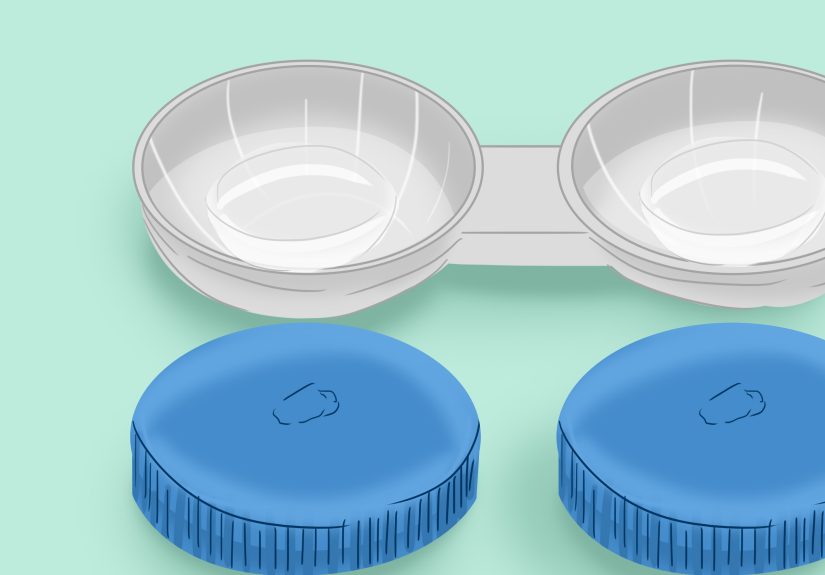
Stand in front of a well-lit mirror. Keep your contact lens case and fresh solution nearby if you wear reusable lenses. If you use daily disposables, have a trash can ready. A calm setup matters more than people think. Trying to remove a lens while leaning over a sink in bad lighting is how tiny mistakes become full-blown soap-opera scenes.
-
Step 3: Confirm the lens is actually on your eye
Yes, really. Sometimes a lens has already fallen out, folded into the corner of the eye, or become slightly off-center. Close one eye at a time and compare your vision. If one eye is blurrier, the lens is probably still in place. If your vision looks the same in both eyes, pause before you go poking around for a contact that may have already left the building.
-
Step 4: Blink a few times and relax your eye
Tension makes removal harder. Blink naturally several times. If your lens feels dry or stuck, use a rewetting drop or lubricating drop that is labeled safe for contact lenses. Then wait a few moments. Do not use tap water, bottled water, saliva, or random eye drops that are not meant for contact lenses. Your lens is not pasta, and it does not need soaking in the nearest liquid.
-
Step 5: Look upward, not straight ahead
Keep your head still and direct your eyes upward. This is the part that feels weird at first, but it’s one of the most helpful moves. Looking up lets you approach the lower edge of the lens and slide it downward without pressing directly on the center of your cornea.
-
Step 6: Hold your upper eyelid so you do not blink at the worst possible time
Use the index finger of your non-dominant hand to gently hold your upper eyelid against the bone above your eye. You do not need to yank it toward your hairline like a cartoon character. Just keep the lashes from swooping in and ruining your concentration.
-
Step 7: Pull down your lower eyelid
With the middle finger of your dominant hand, pull down your lower lid. Now your eye is open, your lens is visible, and your eyelids are no longer freelancing. This step creates space and helps you avoid touching your lashes or blinking the second your fingertip gets close.
-
Step 8: Touch only the lower edge of the lens
Using the pad of your index finger, gently touch the lower edge of the lens. Aim for the lens itself, not the center of the eye. Keep your nail far away from the action. Short, smooth nails are your friends here. Long nails are tiny chaos agents.
-
Step 9: Slide the lens down onto the white of your eye
While still looking up, gently slide the lens downward. This breaks some of the suction and moves the lens off the more sensitive cornea. Usually, this is the moment people realize removal can be much easier than they thought. The lens should move smoothly, not with a dramatic tug-of-war. If it resists, stop, blink, add a contact-safe lubricating drop, and try again after a short pause.
-
Step 10: Pinch the lens, not your eye
Once the lens is on the white part of the eye, use the pads of your thumb and index finger to gently pinch the lens and lift it away. Think “tiny soft taco,” not “paper clip.” The pressure should be light. If you feel sharp discomfort, you may be pinching skin instead of the lens, so pause and reset.
-
Step 11: Store or discard the lens properly
If your lenses are reusable, place the removed lens in the palm of your hand, clean it as directed with fresh solution, and store it in a clean case with new solution. Never top off old solution. Never use water. Replace your lens case regularly. If you wear daily disposables, toss the lens immediately. One day means one day, not “one day plus a little optimism.”
-
Step 12: Know when to stop and call an eye doctor
If the lens feels stuck after repeated gentle attempts, do not keep digging at your eye. Stop if you have pain, marked redness, sudden blurry vision, light sensitivity, unusual tearing, or discharge. Also seek help if you think part of the lens may be torn and still in your eye. Persistence is admirable in many areas of life, but not when your cornea is filing a complaint.
What to Do If a Contact Lens Feels Stuck
A stuck lens usually is not truly glued to the eye. More often, the lens is just dry, slightly shifted, or sitting so snugly that it feels impossible to remove. The fix is usually gentleness, moisture, and patience.
Try this sequence
Add one or two lubricating drops approved for contacts. Close your eye for a few seconds and blink normally. Then look in different directions to help the lens move. When it feels more mobile, repeat the slide-down method. Do not rub hard, do not panic, and definitely do not reach for tap water.
What not to do
Do not scrape with your nails. Do not pinch the center of the lens while it is still on your cornea. Do not keep trying for twenty furious minutes while your eye gets redder and more irritated. If the lens still will not come out, call your eye doctor or an urgent eye clinic for advice.
Common Mistakes That Make Removal Harder
Using wet fingers
This sounds harmless, but wet fingers can make the lens harder to grip. The result is a lot of sliding around and not much progress.
Trying to grab the lens too high
When you go straight for the center of the lens, you are more likely to poke the cornea and trigger blinking. Sliding first is usually easier and more comfortable.
Removing lenses after your eyes are already desert-dry
After long screen time, air conditioning, wind, or a full day of wear, your lenses can feel clingier. A rewetting drop before removal can make a big difference.
Ignoring the replacement schedule
Old lenses can become less comfortable and more difficult to handle. A lens that should have retired three days ago is not going to become more cooperative out of gratitude.
Extra Safety Tips for Contact Lens Wearers
Remove your lenses before taking off eye makeup. Keep water away from lenses and lens cases. Never sleep in lenses unless your eye doctor specifically prescribed them for overnight wear. Replace the case regularly, and always use fresh solution for storage. If your eyes are frequently dry, itchy, or irritated, talk with your eye doctor about rewetting drops, a different lens material, or daily disposable lenses.
If you are a beginner, practice removal when you are not rushed. The worst time to learn is five minutes before bed when you are exhausted and your mirror lighting makes you look like you are starring in a low-budget mystery film.
Frequently Asked Questions
Can I remove contacts without pinching?
Some experienced wearers can slide a soft lens low enough that it folds and comes off with minimal pinching. But for most people, a gentle pinch of the lens itself is the safest and most reliable method.
Why do I feel like I’m touching my eye even when I’m touching the lens?
Because the lens sits on your eye, any movement can feel personal. The goal is not zero sensation. The goal is to avoid direct poking, scraping, and unnecessary pressure on the cornea.
What if I wear hard or rigid lenses?
Do not assume the soft-lens pinch technique applies to rigid lenses. Many rigid gas permeable and scleral lenses require a different removal method or a special tool. Use the instructions from your eye doctor.
Experiences People Commonly Have When Learning This Technique
The first few times people try to remove contacts without touching their eye, they often discover that the hardest part is not the lens. It is the anticipation. Many new wearers describe the same pattern: the finger gets close, the eyelid panics, the person blinks, laughs nervously, and suddenly needs a motivational speech in the bathroom mirror. That reaction is normal. The eye is built to protect itself, so the blink reflex is doing its job. Learning removal is partly about technique and partly about teaching yourself that this routine is safe when done properly.
A very common experience is realizing that the lens comes out much more easily once the wearer stops aiming straight at the center of the eye. People often assume the fastest route is to pinch the lens right where it sits. Then they try the slide-down method and immediately understand why eye care professionals teach it. Moving the lens onto the white part of the eye feels less intense. For many wearers, that single adjustment is the difference between a 30-second routine and a nightly theatrical production.
Another familiar story involves dry lenses at the end of the day. Someone wears contacts through hours of computer work, a ride home in air conditioning, and maybe a little late-night scrolling for no good reason. By bedtime, the lens feels welded on. Then they add a contact-safe lubricating drop, wait a moment, blink naturally, and suddenly removal is possible again. That experience teaches an important lesson: when a lens feels stuck, force is rarely the answer. Moisture and patience usually work better.
There is also the surprisingly emotional milestone of the first successful removal without flinching. People often go from “I can’t do this, I was clearly meant for glasses forever” to “Wait, that was it?” in less than a week of practice. Repetition builds confidence. Once the motions become familiar, the process starts to feel less like eye gymnastics and more like brushing your teeth: not glamorous, but manageable and routine.
Longtime contact lens wearers also tend to report that small habits make a huge difference. Keeping nails short helps. Removing lenses in the same order every night helps. Using a well-lit mirror helps. Replacing old lens cases helps. Not waiting until your eyes are painfully dry helps most of all. In other words, successful removal is rarely about having “special” eyes. It is usually about having a repeatable system.
Finally, many wearers say the biggest improvement came when they stopped trying to be brave and started being gentle. Eye care is one area where aggressive confidence is deeply overrated. The best technique is calm, clean, and boring. That may not sound exciting, but when the reward is getting your lenses out comfortably without poking your eye, boring is actually beautiful.
Conclusion
If you want to take out contact lenses without touching your eye, the smartest strategy is to stop trying to grab the lens off the center of the cornea. Wash and dry your hands, steady your eyelids, look up, slide the lens onto the white of the eye, and gently pinch the lens away. That is the whole game plan. Simple, safe, and far less dramatic than your first few attempts may have suggested.
Once you get the hang of it, removal becomes quicker and more comfortable. And if it does not, that is useful information too. Persistent dryness, irritation, or difficulty removing lenses can mean your eyes need a different lens material, a different wearing schedule, or a check-in with your eye doctor. Your contact lenses should improve your life, not turn every evening into a suspense thriller.