Table of Contents >> Show >> Hide
- Who Is Jill Roth, and Why Does Her Story Matter?
- The Bigger Stage: Why This Story Hits at the Right Time
- From Capitol Hill to Client Advocacy
- Leadership Without a Throne
- Technology, But Only If It Pulls Its Weight
- Women, Leadership, and Visibility in Insurance
- What Independent Agencies Can Learn From Jill Roth
- The Real Win
- Experience From the Front Lines: Why This Story Feels So Familiar
Insurance is not always the first industry people describe as glamorous. Nobody has ever looked at a commercial auto policy and whispered, “Wow, what a page-turner.” And yet Jill Roth’s story makes the business feel surprisingly alive. That is partly because her career did not begin in a cubicle labeled “insurance.” It began in politics, policy, and the fast-moving world of Capitol Hill, where arguments matter, details matter, and the difference between a good answer and a sloppy one can be the difference between progress and chaos.
That background helps explain why Roth stands out in IA Magazine’s profile of her and why her story lands so well in today’s insurance environment. She is not just another executive with a polished title and a conference badge collection. She represents a modern kind of agency leader: someone who understands policy language, values advocacy, believes in practical technology, and leads with a people-first style that feels especially relevant in a hard market. In other words, she is not chasing noise. She is chasing results. She is trying to find the win.
Who Is Jill Roth, and Why Does Her Story Matter?
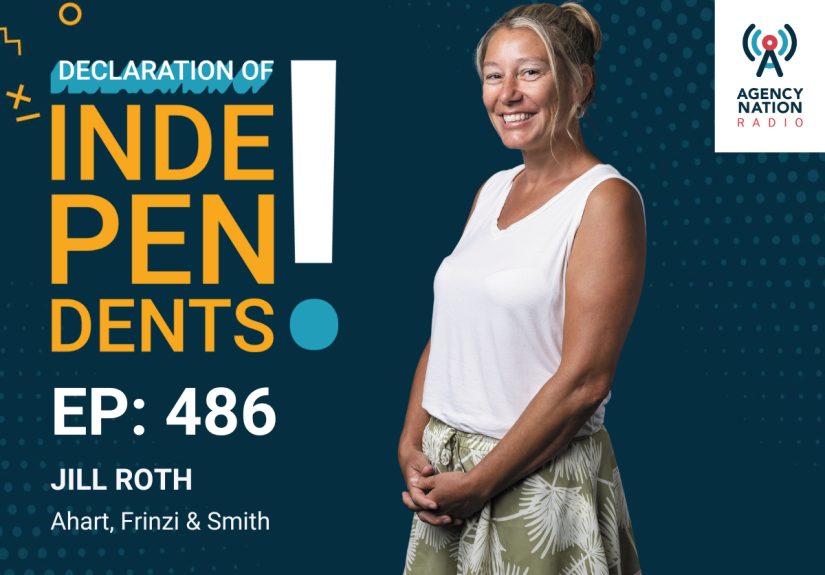
Jill Roth is executive vice president at Ahart, Frinzi & Smith, the independent agency with offices in Alexandria, Virginia, and Phillipsburg, New Jersey. Public profiles and interviews show that she studied political science and international affairs at George Mason University, worked on Capitol Hill, then brought that legislative experience into the family agency. That move matters because it shaped her professional instincts. She did not enter insurance seeing it as a simple sales game. She came in understanding that policy is powerful, regulation is real, and advocacy is not some fluffy add-on. It is part of the job.
That perspective has become one of her calling cards. In IA Magazine, Roth describes herself as someone who loves policy, whether it is legislation or a thick commercial auto form, and says what drives her is getting in there and “finding the win.” That phrase captures her entire approach. Insurance, for her, is not only about quoting faster or renewing accounts with fewer headaches, though everyone enjoys fewer headaches. It is about solving problems, protecting clients, and pushing through complexity until something useful emerges.
Her career also reflects the DNA of the independent agency channel itself. She is a third-generation agency leader who has worked in different roles, from the less glamorous early jobs to executive leadership. That matters because independent agencies are often built on deep local relationships, institutional memory, and a practical understanding of what clients actually need. Roth’s story is not just about professional success. It is about how experience across roles can create a leader who knows what the work feels like at every level.
The Bigger Stage: Why This Story Hits at the Right Time
Roth’s profile resonates because the independent insurance channel is under pressure, but it is hardly disappearing. Far from it. Recent industry research shows that independent agencies continue to hold a dominant share of commercial lines and a meaningful share of personal lines. At the same time, agencies are dealing with a brutal hard market, rising consumer frustration over premiums, heavier workloads, and constant questions about technology and talent.
That is why “finding the win” sounds less like a catchy magazine headline and more like a survival skill. In a market where premiums rise, underwriting tightens, and clients show up at renewal already one eyebrow away from panic, independent agents need more than charm. They need credibility. They need judgment. They need someone who can explain what is happening, advocate when claims or coverage issues get messy, and help clients make smart decisions even when the choices are not fun.
Roth’s leadership intersects with all of those realities. She has spoken about the importance of market access, especially through the Big “I” Alliance, during a hard market when access to carriers and competitive solutions becomes even more important. That makes her story bigger than one agency or one executive. It becomes a window into what independent agencies need from leadership right now: calm thinking, political fluency, technical competence, and the ability to turn complexity into action.
From Capitol Hill to Client Advocacy
One of the most interesting parts of Roth’s story is how directly her first career seems to feed her second. Plenty of people change industries. Fewer manage to carry over the useful parts of an old career without dragging along the nonsense. Roth appears to have done exactly that. Her background in legislative affairs gave her a working knowledge of how issues are debated, how policy gets shaped, and how to talk persuasively about matters that affect professionals and consumers.
That matters in insurance because this industry is tied to regulation, state oversight, market cycles, consumer protection, and public policy more than many outsiders realize. A leader who can read legislation and also read a policy form is operating with a double advantage. She is thinking both upstream and downstream. Upstream is the regulatory environment shaping the business. Downstream is the client standing in front of the agency, trying to understand why a renewal feels like a punch in the wallet.
Roth has described using her background to lobby on behalf of other agents and to discuss the issues that matter to the industry. That is not a minor point. Independent agencies do not only need producers and service teams. They need advocates who understand why association work, legislative involvement, and coordinated industry action can influence the conditions agencies face every day. Her career suggests that advocacy is not separate from the client mission. It supports it.
Leadership Without a Throne
Another reason Roth’s profile stands out is her leadership philosophy. She has said plainly that she does not believe in monarchies or top-down leadership. That is memorable partly because it is blunt, and partly because it cuts against the stereotype of leadership as command-and-control theater. Some executives love hierarchy the way toddlers love pressing buttons. Roth seems more interested in building the right team and giving people the tools to do the work well.
That approach is especially smart in the independent agency world, where teams are often lean, roles overlap, and one person may be handling service, sales support, relationship management, and a small emotional support session for a stressed client before lunch. Agencies do not need a tiny kingdom. They need adults who collaborate.
Roth’s comments about putting the right people in the right seats and giving them resources to excel align with what the broader industry has been wrestling with. Burnout is real in agencies. Workloads are rising. Customer-facing staff members are carrying serious stress. In that environment, leadership is not about sounding impressive at an annual meeting. It is about creating systems, culture, and expectations that make hard work sustainable.
Why empathy is not a “soft” skill
Roth has praised smart, sympathetic, empathetic staff. That language matters because empathy in insurance is often misunderstood. It is not weakness. It is not hand-holding. It is the ability to understand what a client is actually experiencing and then respond clearly and effectively. In a claims dispute, empathy helps an agent communicate better. In a hard market, it helps an agency retain trust when rates rise. In staffing, it helps leaders build workplaces where people want to stay.
That is one reason her profile feels modern. It acknowledges something the industry has learned repeatedly: the agencies that win long term are not simply the ones with access to data or tools. They are the ones that combine knowledge with human judgment.
Technology, But Only If It Pulls Its Weight
Roth’s comments about technology are refreshingly practical. Her view, in essence, is that agencies should not adopt technology just for the sake of technology. They should use it in ways that make the agency work better and allow agents to do what they do best: talk to customers and solve problems. That is an excellent filter in a market full of shiny platforms, bold promises, and software demos that somehow require six logins and a small prayer circle.
Insurance agencies are absolutely being pushed to modernize. AI, automation, digital workflows, and data tools are changing the competitive landscape. Research across the industry shows that technology can create real value, but only when it is implemented with a strategy and connected to workflows that people will actually use. Roth’s stance suggests discipline: use tools to remove friction, improve service, and support humans, not to replace common sense.
That makes her perspective especially credible in 2026. The conversation about AI in insurance is everywhere, but the best leaders are not treating it like magic dust. They are asking tougher questions. Does this help our staff? Does it improve accuracy? Does it give clients a better experience? Does it free our people to handle harder conversations? That is the right line of thinking, and it fits neatly with Roth’s people-centered leadership style.
Women, Leadership, and Visibility in Insurance
Roth’s story also matters because leadership by women in insurance still deserves more visibility than it gets. Industry research continues to show a gap between the large number of women working in insurance agencies and the smaller number who hold top leadership roles. That makes profiles like this one more than feel-good content. They are examples of what leadership can look like when expertise, persistence, and visibility meet.
But Roth’s story is useful for another reason too: it avoids the trap of turning women leaders into abstract symbols. She is not presented as a slogan. She is presented as an operator. She talks about policy, association work, market access, leadership structure, expert testimony, and agency staff. That matters. The strongest profiles of women in business do not just celebrate presence. They show substance.
And substance is exactly what Roth brings. She is involved in the Big “I” at the state and national levels, has served in leadership roles in Virginia, has been recognized nationally as a young agent, and has contributed to initiatives tied to the future of the association. That is not ceremonial leadership. That is operational influence.
What Independent Agencies Can Learn From Jill Roth
1. Learn the policy deeply
Roth’s love of policy is a reminder that expertise still matters. The agencies that earn trust are the ones that can interpret coverage, explain tradeoffs, and identify solutions when situations get messy.
2. Advocacy is part of the job
Whether the issue is a claim, a regulatory challenge, or a market access problem, agency leaders need to advocate. Roth’s background shows that understanding the system can make you far more effective inside it.
3. Build leadership sideways, not just upward
Top-down leadership may look efficient on paper, but collaborative leadership tends to work better in agencies where people wear multiple hats. The goal is not to build a throne room. The goal is to build a strong team.
4. Use technology with a purpose
Every agency is being asked to digitize, automate, and modernize. Fine. But tools should improve service and reduce friction, not create more dashboards for people to ignore while muttering under their breath.
5. Stay involved in the broader industry
Association work, peer networks, and national involvement can expand perspective and accelerate growth. Roth has spoken about how state and national engagement helped her career. That lesson applies widely: agencies get stronger when leaders look beyond their own walls.
The Real Win
The best part of Jill Roth’s story is that it does not rely on mythology. There is no fake overnight success arc here, no polished nonsense about effortless leadership. Instead, there is a clear pattern: learn the work, understand the policy, care about people, stay engaged, and keep looking for the outcome that actually helps someone.
That is why the phrase “finding the win” works so well. In Roth’s world, the win is not always dramatic. Sometimes it is helping a client through a difficult claim. Sometimes it is improving market access for member agencies. Sometimes it is building a better team culture. Sometimes it is knowing when to pivot resources because something is not working. In the independent agency business, that kind of practical win is often the one that lasts.
IA Magazine picked a smart lens for this profile because Roth’s story reflects what the industry needs more of: leaders who are technically sharp, politically aware, operationally grounded, and human enough to know that all this policy language ultimately lands in someone’s real life. That is not flashy leadership. It is better. It is useful leadership.
Experience From the Front Lines: Why This Story Feels So Familiar
What makes a story like Jill Roth’s stick is that it mirrors experiences many people in and around independent agencies already understand. Picture the client who calls after a premium jump, ready to assume the agency has somehow personally invented inflation, catastrophe losses, reinsurance pressure, and all other earthly evils before breakfast. The easy response would be to hide behind jargon. The better response, and the one Roth’s philosophy points toward, is to slow the conversation down, explain what is happening, look for options, and advocate where advocacy is possible.
Then there is the internal side of agency life. In many agencies, especially family-owned or relationship-driven firms, the day is a blur of shifting hats. One minute someone is discussing strategy. The next minute that same person is fixing a workflow issue, calming a nervous employee, answering a carrier question, and trying to remember whether they already drank the coffee currently getting cold on their desk. Roth’s career path, which included working across roles before leading, makes sense because agencies function best when leaders understand the reality of the work, not just the title on the business card.
There is also the association piece, and this is where her Capitol Hill background becomes more than an interesting career detour. Many agency professionals eventually realize that complaining about industry problems is easy, but participating in solutions is harder and far more useful. Showing up at a legislative event, joining a committee, contributing to conversations about market access, or helping peers navigate change can reshape how an agency leader sees the business. The work becomes bigger than renewals and submissions. It becomes about protecting the health of the channel itself.
Another familiar experience is the balancing act around technology. Agencies are constantly told to modernize, automate, and transform. Sometimes that advice is solid. Sometimes it sounds like it was written by a robot that has never had to explain an endorsement to a frustrated client at 4:47 p.m. on a Friday. Roth’s practical approach lands because many agency teams do not want more tech for the sake of appearances. They want fewer bottlenecks, less repetitive work, cleaner processes, and more time for real conversations.
And finally, there is the human side. The best agencies often feel less like machines and more like communities under pressure. Staff members cover for each other. Clients remember who helped them when things got rough. Leaders set the tone not only by what they say, but by what they model. When a leader values empathy, expertise, flexibility, and follow-through, the agency feels different. Clients notice. Employees notice. Carrier partners notice. That is why Roth’s story resonates beyond one profile. It captures what so many professionals are trying to build right now: an agency that performs well without losing its humanity in the process.