Table of Contents >> Show >> Hide
- What Is a Family Heritage Guest Bedroom?
- Start with the Story Before You Start with the Paint
- Choose Heirloom Pieces That Earn Their Keep
- Layer Comfort Like a Good Host, Not a Furniture Catalog
- Use Textiles to Carry Memory and Warmth
- Decorate the Walls with Meaning, Not Just Fillers
- Keep the Room Edited So the Story Can Breathe
- Color Palette Ideas for a Family Heritage Guest Bedroom
- How to Make the Space Feel Personal to Guests Too
- Experiences That Make a Family Heritage Guest Bedroom Memorable
- Conclusion
A guest bedroom can do more than hold a bed, a lamp, and that lonely chair everyone piles clothes on. Done well, it becomes a welcome ritual. Done really well, it becomes a story. That is the magic of a family heritage guest bedroom: it gives overnight guests a comfortable place to sleep while quietly saying, “This home has roots, memories, and people who know how to fold a quilt with intention.”
In a world where every room online seems to be either painfully beige or aggressively trendy, a family heritage guest bedroom offers something better: personality with a pulse. It blends comfort, function, and a sense of history. Think heirloom furniture, vintage textiles, framed family keepsakes, layered bedding, soft lighting, and a layout that feels collected instead of copied. The result is not museum stuffiness. It is warmth. It is character. It is the kind of room that makes guests say, “I slept great,” and then spend ten minutes asking about the old mirror above the dresser.
This style works because it balances two ideas that matter equally: hospitality and heritage. A beautiful guest room should be practical enough for real visitors and personal enough to feel unforgettable. That means mixing old and new, making sentimental pieces useful, and editing the room so it feels intentional rather than crowded. In other words, Grandma’s quilt gets invited to the party, but it does not have to do all the decorating by itself.
What Is a Family Heritage Guest Bedroom?
A family heritage guest bedroom is a guest space designed around personal history. Instead of relying only on store-bought decor, it uses meaningful elements such as heirloom nightstands, inherited quilts, vintage artwork, framed letters, old photographs, traditional wood furniture, or handmade textiles. These details create a room that feels emotionally rich, not just visually polished.
The idea is not to make the room look old. It is to make it look lived in, loved, and layered. A heritage-inspired guest room can still feel fresh and current. In fact, the most successful versions usually combine timeless pieces with updated comforts: a vintage bed frame paired with crisp white sheets, an antique chest next to a modern reading lamp, or a collection of family photographs styled above a newly upholstered headboard.
This decorating approach also solves a problem many homeowners run into: how to make a guest room feel special without turning it into a random spare room full of leftovers. When you anchor the space in family story, every design choice becomes easier. The room gets direction. The room gets soul. The room stops feeling like a storage unit with a pillow.
Start with the Story Before You Start with the Paint
Before choosing a wall color, rug, or curtain panel, decide what story the room should tell. Is it inspired by your grandmother’s Southern farmhouse? Your parents’ classic New England home? A mix of immigrant family traditions, handmade linens, and travel souvenirs collected over decades? A strong concept helps the room feel cohesive, even when the pieces come from different eras.
Questions That Help Shape the Design
Ask yourself a few useful questions. Which family objects are meaningful and visually interesting? What textures or colors show up in your family history? Are there recurring materials, such as oak, brass, linen, lace, or hand-stitched cotton? Which pieces are practical enough to use every day, and which are better displayed as art?
For example, a family heritage guest bedroom might include an old maple dresser refinished in a soft matte stain, a framed set of recipe cards written by a grandparent, and a folded vintage quilt at the foot of the bed. Another version might lean more collected and global, with black-and-white family photos, woven baskets from past travels, and embroidered pillow covers that reflect cultural traditions. The point is not perfection. The point is connection.
Choose Heirloom Pieces That Earn Their Keep
One of the smartest ways to design this kind of room is to select one or two anchor pieces with real history. An antique bed, a painted chest, a carved mirror, or a well-built wooden side table can immediately ground the space. These pieces bring patina, craftsmanship, and visual weight that flat-pack furniture often cannot fake, no matter how many distressed finishes it tries on.
That said, not every inherited item deserves full-time bedroom duty. Some heirlooms are beautiful but awkward. Others are charming but enormous. Choose pieces that work for the scale of the room and the comfort of your guests. A small desk can become a writing nook. A cedar chest can hold extra blankets. An old rocker can become a cozy reading corner. A delicate side chair that feels like sitting on a firm opinion from 1952? Maybe let that one retire gracefully.
How to Mix Old and New Without Making It Weird
Balance is everything. If the bed frame is ornate and traditional, keep the bedding simple and tailored. If the room includes several vintage wood tones, add lighter textiles and contemporary lamps so the space does not feel visually heavy. If your family pieces are sentimental but mismatched, unify them with a restrained color palette. Cream, sage, dusty blue, warm taupe, muted rust, and soft brown all work beautifully in a heritage guest bedroom because they let older items shine without making the room feel dark.
Layer Comfort Like a Good Host, Not a Furniture Catalog
A guest room cannot survive on charm alone. Even the prettiest heirloom quilt in the world will not rescue a lumpy mattress or a room with nowhere to plug in a phone. The best family heritage guest bedroom combines emotional warmth with practical comfort. Think boutique inn energy, but with better stories and fewer tiny soaps.
Start with the bed. Use breathable sheets, supportive pillows, and layered bedding that lets guests adjust their comfort level. A coverlet, a quilt, and an extra blanket are more useful than one dramatic comforter that looks good in photos and behaves badly at 2 a.m. Add a bench, stool, or luggage rack if space allows. Guests should have somewhere to set a bag that is not the floor and definitely not your heirloom chair with the needlepoint seat.
Nightstands matter more than many people realize. Even a small bedside surface makes a room feel more functional. Add a lamp, a coaster, a glass or carafe of water, and room for a book or phone. Bonus points for a charging station, spare outlet access, and blackout curtains. Heritage is lovely. So is being able to sleep past sunrise.
Practical Details That Make Guests Feel Genuinely Welcome
Include the little things people usually forget when packing: tissues, a phone charger, a spare toothbrush, a small tray for jewelry, extra towels, and maybe a note with the Wi-Fi password. These touches do not make the room feel generic. They make it feel generous. And generosity is very much on theme in a room designed around family tradition.
Use Textiles to Carry Memory and Warmth
Textiles are often the heart of a family heritage guest bedroom because they carry story so naturally. Quilts, hand-embroidered pillowcases, crocheted throws, vintage linens, woven coverlets, and even repurposed fabric from old garments can add depth that brand-new decor rarely has. These materials do not just decorate the bed; they soften the entire room emotionally.
A vintage quilt folded at the foot of the bed is one of the easiest ways to make the room feel layered and collected. If the textile is delicate, display it on a wall or across the back of a bench instead of using it nightly. You can also frame smaller heritage fabrics, such as lace panels, handkerchiefs, embroidered squares, or pieces from family clothing, as art. This is especially useful when you want to preserve sentimental items without asking guests to sleep under something older than most streaming services.
Rugs also matter. A woven wool rug, braided rug, or faded vintage-style runner adds softness underfoot and helps older wood furniture feel more grounded. Curtains should be full enough to feel substantial and soft enough to support the room’s mood. In a heritage-inspired space, flimsy window treatments tend to look like they were invited by mistake.
Decorate the Walls with Meaning, Not Just Fillers
Wall decor is where many guest rooms lose the plot. They start strong with a lovely bed and decent bedding, then end up with mass-produced art that looks like it was selected during a panic. A family heritage guest bedroom deserves better. The walls should support the story of the room.
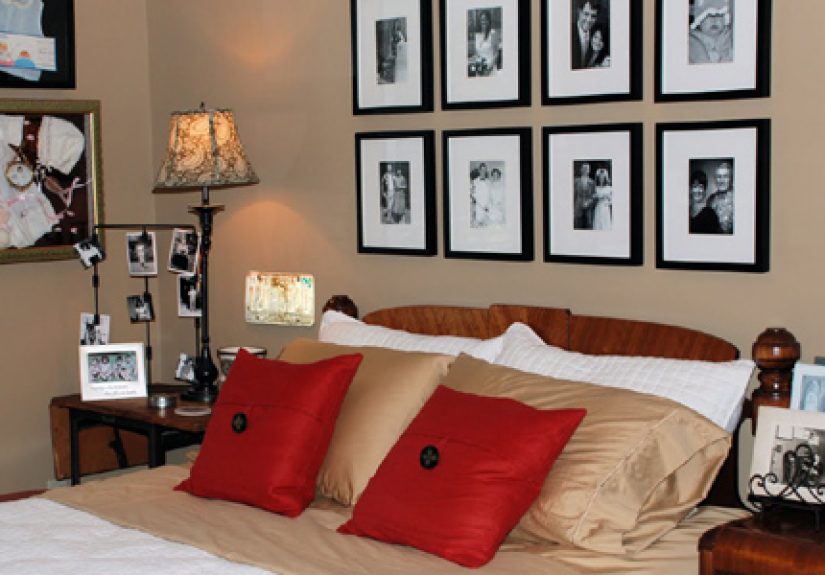
Framed family photos are an obvious choice, but presentation matters. Use a consistent frame finish or a thoughtfully mixed gallery arrangement so the display feels intentional. Black-and-white family portraits, handwritten letters, postcards, land documents, botanical sketches, or copied recipe cards can all become elegant wall art. You are not just filling blank space. You are curating a visual memory board that still feels restful enough for sleep.
If your room leans more traditional, consider wallpaper or painted paneling to add historical character. Floral patterns, subtle stripes, soft plaids, and textured neutrals all fit the heritage aesthetic well. The goal is not to recreate a movie set. It is to add a sense of permanence. A little pattern can make a guest bedroom feel rooted, and rooted rooms almost always feel more welcoming than rooms that seem designed by algorithm.
Keep the Room Edited So the Story Can Breathe
One common mistake in heritage decorating is assuming every sentimental object deserves display space. It does not. A family heritage guest bedroom should feel curated, not crowded. Guests need room to move, unpack, sit, and relax. Too many collectibles, frames, and decorative accessories can make the room feel less like a retreat and more like it is being watched by generations of porcelain birds.
Choose a few meaningful focal points and let them stand out. Maybe it is the antique walnut bed, the quilt from your great-aunt, and the wall of framed family letters. Great. Let those lead. Store the rest carefully and rotate pieces seasonally if you want variety. Editing is not disrespectful to family history. It is what allows the best parts of that history to be seen and appreciated.
Storage also plays a huge role here. Use drawers, baskets, or a closet section so guests can put away clothing and personal items. Even a beautiful room starts to feel chaotic when a suitcase explodes open for two nights. Heritage looks best when the room still functions like a room, not an attic with ambition.
Color Palette Ideas for a Family Heritage Guest Bedroom
The right color palette helps old and new pieces live together peacefully. Soft neutrals are a reliable base because they make heirlooms look intentional instead of heavy. Warm whites, cream, mushroom, flax, greige, sage, dusty blue, muted olive, and gentle terracotta all complement wood tones, vintage brass, and traditional textiles beautifully.
If you want a richer look, use deeper colors in smaller doses. A moody blue on the walls, a rust velvet pillow, or a dark floral wallpaper can add drama without overwhelming the room. Heritage-inspired design often benefits from depth, but not gloom. Guests should feel cocooned, not like they are starring in a period mystery with suspicious inheritance paperwork.
Try tying the room’s palette to one sentimental object. A quilt with faded reds and creams can inspire the bedding and curtains. A landscape painting from a grandparent can suggest moss green and sky blue. A collection of sepia family photographs might lead to brown, ivory, and soft black accents. When color comes from memory, the room feels naturally personal.
How to Make the Space Feel Personal to Guests Too
Here is the final trick: the room may be built from your family history, but it should still feel welcoming to other people. Hospitality means making space for the guest inside the story. A fresh vase of flowers, a stack of towels, a carafe of water, a couple of books, or a handwritten note can bridge that gap beautifully.
You can also personalize the room seasonally. In summer, lighten the bedding and add a woven throw. In winter, bring in an extra quilt and a heavier curtain panel. If family visits often, set aside a drawer for regular guests so returning stays feel easy and familiar. Repetition creates tradition, and tradition is exactly what a family heritage guest bedroom does best.
Ultimately, this room works because it gives guests something many spaces do not: comfort with character. It says the home is cared for. It says the family remembers. And it proves that good decorating is not about buying more things. Sometimes it is simply about finally giving the right old things the right new job.
Experiences That Make a Family Heritage Guest Bedroom Memorable
There is a big difference between sleeping in a nice guest room and staying in a room that feels like part of a family’s story. In a standard spare bedroom, you notice the basics first: whether the pillows are too flat, whether the lamp works, whether there is a place to charge your phone without unplugging something mysterious. In a family heritage guest bedroom, you notice those things too, but you also notice something else: the room feels like it has known people before you arrived.
Maybe it starts with the quilt folded at the end of the bed. It is not flashy. It is not “designer.” But someone stitched it by hand, and suddenly the room feels quieter in the best way. Maybe there is a framed recipe card on the wall, written in looping handwriting, or a row of family photographs that show the same smile repeated over three generations. These details do not need to be dramatic. They just need to be real. Real objects create emotional texture, and emotional texture is what makes a guest room stay in your memory after the trip is over.
One of the most meaningful experiences in this kind of room is the feeling of being welcomed without being overmanaged. The room does not need to shout, “Look at our heritage!” It simply lets guests discover it. The old dresser drawer opens smoothly. Inside is an extra blanket that smells clean and familiar. On the bedside table, there is a lamp, a book, a glass coaster, and a note with the Wi-Fi password written neatly enough to suggest someone actually thought ahead. It feels calm. It feels prepared. It feels like the room expected a human being, not just a suitcase.
That sense of care matters even more during family gatherings, holidays, and long weekends when homes get full and slightly chaotic. A family heritage guest bedroom can become a retreat within the noise. Guests step away from the kitchen chatter, the football debate, the cousins running down the hall, and into a room with softer light, layered bedding, and pieces that quietly remind them where they are. This is not just a place to crash. It is a place to land.
There is also something powerful about how these rooms connect generations without forcing sentimentality. A younger guest might not know the whole story behind the old brass mirror or the embroidered pillow, but they still feel the difference between a room assembled quickly and one assembled with meaning. Older relatives often respond even more deeply. They recognize objects, fabrics, or design references that recall childhood homes, grandparents’ houses, or family traditions that otherwise live only in conversation. The room becomes a bridge between memory and daily life.
And then there is the host’s experience, which is often overlooked. Creating a family heritage guest bedroom can be unexpectedly emotional. You are not just decorating. You are deciding what to preserve, what to use, what to display, and what story your home tells when someone sleeps under your roof. A cedar chest from your parents, a reupholstered chair from an aunt, a stack of books with a grandfather’s name inside the cover: these details stop being storage problems and start becoming part of a lived environment again.
The best part is that none of this requires a giant budget or a professionally staged house. Many of the most memorable heritage guest rooms are built slowly over time. A good mattress here. A refinished table there. Fresh paint. Better curtains. A framed letter. A quilt repaired instead of replaced. The room evolves, and that evolution is part of its charm. It reflects how families actually live: imperfectly, gradually, and with more layers than any catalog can offer.
In the end, the experience of a family heritage guest bedroom is not just about design. It is about atmosphere. It is about helping people feel cared for through objects that already carry care in them. It is about making a guest comfortable while also letting them feel, even briefly, that they are inside something lasting. And honestly, that is a lot more memorable than another forgettable room with generic artwork and exactly one sad pillow pretending to do all the emotional labor.
Conclusion
A family heritage guest bedroom is where comfort meets memory. It takes the practical needs of a guest room and elevates them with heirloom furniture, layered textiles, meaningful wall decor, and thoughtful hosting details. The result is a space that feels warm, personal, and timeless without feeling cluttered or old-fashioned. By mixing sentimental pieces with modern comfort, editing carefully, and designing around a real family story, you can create a guest bedroom that feels both beautiful and deeply lived in. That is what makes guests feel welcome, and what makes the room worth remembering.