Table of Contents >> Show >> Hide
- What Is a Double-Pole Circuit Breaker?
- How Double-Pole Breakers Work
- Where Double-Pole Circuit Breakers Are Commonly Used
- Double-Pole vs. Single-Pole vs. Tandem Breakers
- Choosing the Right Double-Pole Breaker
- Double-Pole Breakers and Modern Safety Features
- Signs a Double-Pole Breaker May Need Attention
- Should Homeowners Replace a Double-Pole Breaker Themselves?
- Common Myths About Double-Pole Circuit Breakers
- Why Double-Pole Breakers Matter More Than People Think
- Real-World Experiences With Double-Pole Circuit Breakers
Double-pole circuit breakers are not the celebrities of the electrical panel. They do not have the glamour of a smart thermostat or the instant bragging rights of a shiny new EV charger. But when your dryer heats up, your water heater does its quiet hero routine, or your air conditioner saves summer from turning into a personal betrayal, there is a good chance a double-pole breaker is somewhere in the background doing the important, unglamorous work.
For homeowners, remodelers, and curious people who enjoy learning how the house avoids catching an attitudeand a fireunderstanding double-pole circuit breakers is genuinely useful. These breakers are common, important, and often misunderstood. Some people think they are just “two breakers stuck together.” Others assume any breaker that fits in the panel is fair game. That is how trouble starts. This guide explains what double-pole circuit breakers are, how they work, where they are used, and what homeowners should know before they ever touch a panel cover.
What Is a Double-Pole Circuit Breaker?
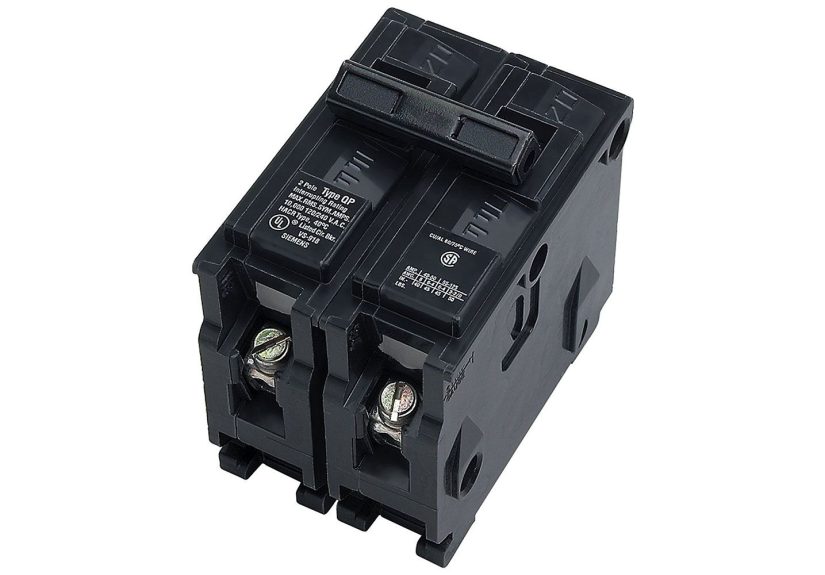
A double-pole circuit breaker is a breaker designed to control and protect two energized conductors at the same time. Physically, it usually looks like two single-pole breakers joined together with one linked handle. In the panel, it occupies two adjacent slots. Functionally, it is built so both poles trip together, which is the whole point: one problem on either side should shut down the full circuit, not leave half of it live and pretending everything is fine.
In most American homes, a double-pole breaker supplies either 240 volts or 120/240 volts to a circuit. That makes it different from a standard single-pole breaker, which usually serves a 120-volt branch circuit. A double-pole breaker is commonly used for larger appliances and equipment that demand more power than a regular lighting or receptacle circuit can provide.
Why “double-pole” matters
The phrase sounds technical, but the idea is straightforward. A single-pole breaker protects one hot conductor. A double-pole breaker protects two hot conductors and disconnects both together. Think of it less like two random switches and more like a paired safety system that refuses to let one side keep partying after the other side has already been kicked out.
How Double-Pole Breakers Work
Inside a typical U.S. residential panel, power is arranged so that two adjacent breaker positions can connect to opposite hot legs of the service. A double-pole breaker clips onto both, allowing the circuit to deliver 240 volts between those hot conductors. Some appliances use straight 240 volts for heating loads. Others use 120/240 volts because they need 240 volts for major functions and 120 volts for controls, timers, lights, or electronics.
The breaker’s job is not to “boost” electricity or make an appliance run harder. Its job is to protect the wiring and circuit from overcurrentusually overloads and short circuits. If the current exceeds the safe limit or a fault occurs, the breaker trips and interrupts power. That quick interruption helps reduce overheating and lowers the risk of equipment damage, fire, or shock-related hazards.
That also means a tripping breaker is not being annoying just for fun. It is often sending a message: the load is too high, the circuit is faulty, the breaker is failing, or the appliance connected to it has a problem. Ignoring repeated trips is a bad strategy. Replacing the breaker with a larger one “to stop it from tripping” is worse.
Where Double-Pole Circuit Breakers Are Commonly Used
Double-pole breakers are typically found on circuits serving equipment that needs more power than a standard 120-volt branch circuit can deliver. Common examples include:
- Electric clothes dryers
- Electric water heaters
- Ranges, ovens, and cooktops
- Central air conditioners and heat pumps
- Some electric baseboard heaters
- Subpanels and larger fixed equipment
The exact breaker size depends on the appliance nameplate, wiring method, and load calculation. In residential systems, double-pole breakers are widely available in ratings ranging from 15 amps up to 200 amps. That does not mean you choose one like you are ordering fries in a drive-thru. The correct amperage must match the circuit design, conductor size, and the requirements of the connected equipment.
240V does not automatically mean “huge”
Homeowners sometimes hear “240 volts” and imagine industrial-level drama. In reality, plenty of normal household equipment uses 240 volts simply because it is more suitable for heating elements, motors, and larger loads. The important takeaway is not that the breaker is scary. It is that the breaker is specialized, and specialized parts should be matched correctly.
Double-Pole vs. Single-Pole vs. Tandem Breakers
This is where a lot of confusion starts. A single-pole breaker usually serves one 120-volt circuit. A double-pole breaker serves a 240-volt or 120/240-volt circuit and trips both hot legs together. A tandem breaker, by contrast, is generally a space-saving device that puts two separate single-pole circuits into one physical breaker space.
In other words, a tandem breaker is not a true substitute for a double-pole breaker. They may both look like they are doing clever panel gymnastics, but they do different jobs. A true double-pole breaker is built for a paired circuit with common tripping. A tandem breaker is normally for two individual 120-volt circuits. Mixing up those two ideas is like confusing a bunk bed with a duplex. Similar vibes, very different architecture.
Why this distinction matters
If a circuit needs a true 240-volt supply, it needs the correct two-pole breaker listed for that panel and application. Trying to improvise with the wrong breaker type is not a smart shortcut. It is a great way to fail inspection, damage equipment, or create a safety problem that stays hidden until it does not.
Choosing the Right Double-Pole Breaker
The correct breaker is never determined by guesswork, wishful thinking, or whatever happens to be on sale in aisle twelve. Several factors matter:
1. Amperage rating
The breaker rating must match the circuit requirements and conductor sizing. Too small, and it trips constantly. Too large, and it may fail to protect the wiring properly. Neither option is charming.
2. Panel compatibility
Not all breakers are interchangeable, even if they seem to snap into place. This is one of the biggest homeowner mistakes. Breakers need to be listed or classified for use in the specific equipment. Panel labeling, breaker markings, and manufacturer documentation matter. “It fit” is not the same thing as “it is approved and safe.”
3. Interrupting rating and breaker type
Some breakers are standard thermal-magnetic models, while others include added protection. Depending on the application, you may encounter GFCI, AFCI, or even dual-function versions in the two-pole world. Residential products also vary in interrupting capacity and construction, so one 30-amp two-pole breaker is not automatically identical to every other 30-amp two-pole breaker on earth.
4. Appliance and code requirements
The appliance instructions, local code adoption, and the National Electrical Code framework all influence what is appropriate. This is one reason electricians earn their money. They are not just there to hold a flashlight and sigh at old wiring.
Double-Pole Breakers and Modern Safety Features
Standard double-pole breakers provide overload and short-circuit protection. In some situations, that is only part of the safety picture. Modern electrical protection often includes specialized devices that respond to hazards standard breakers are not designed to catch early enough.
GFCI protection
A GFCI, or ground-fault circuit interrupter, is designed to reduce shock hazards by monitoring current imbalance and cutting power quickly when electricity is leaking where it should not. In the two-pole category, GFCI breakers are available for certain 240-volt applications. These are especially useful when the circuit or equipment requires ground-fault protection and a receptacle-based solution is not practical.
AFCI protection
An AFCI, or arc-fault circuit interrupter, is designed to address fire hazards associated with dangerous arcing conditions. Standard breakers do not necessarily respond to early arcing and sparking in the way AFCIs do. That is why AFCI protection became such an important part of modern residential safety conversations.
Dual-function devices
Some breaker technologies combine protection types in one unit. On the residential side, manufacturers now offer products that add smarter protection for circuits where both fire and shock concerns matter. For homeowners, the big lesson is simple: not every two-pole breaker is just a plain old breaker anymore. Some are doing extra safety work behind the scenes.
Signs a Double-Pole Breaker May Need Attention
Breakers are durable, but they are not immortal. A double-pole breaker may need inspection or replacement if you notice repeated tripping, burning smells, scorched insulation, buzzing, crackling, overheating at the panel, visible damage, or an appliance that cuts out unpredictably. A breaker can also trip because the connected equipment is faulty, so the breaker itself is not always the villain.
One of the clearest warning signs is a breaker that trips again soon after being reset. Another is a circuit that works only intermittently or trips when one specific appliance starts up. That pattern may point to a defective motor, heating element, compressor, wiring connection, or breaker. The solution is diagnosis, not optimism.
What not to do
Do not install a higher-amperage breaker to “fix” nuisance trips. Do not assume any same-size breaker from another brand is acceptable. Do not keep resetting a breaker without figuring out why it is tripping. And definitely do not treat the panel like a DIY escape room where every wrong move carries a bonus chance of shock.
Should Homeowners Replace a Double-Pole Breaker Themselves?
For most people, the answer is no. Working inside an electrical panel can expose you to live parts even when the main breaker is off. Replacing a breaker also involves more than swapping plastic rectangles. The proper replacement has to match the panel, the circuit, the wire, the load, and the intended use. In many places, the work may also require permits or inspection.
A licensed electrician can determine whether the issue is the breaker, the appliance, the conductor terminations, the panel, or a larger service capacity problem. That is especially important in older homes, where added appliances, remodels, and outdated panels can turn a simple service call into a full detective story.
Common Myths About Double-Pole Circuit Breakers
“A double-pole breaker is just two single-pole breakers.”
Not quite. It may resemble two single-pole breakers joined together, but its common trip function and intended application are what make it a true double-pole breaker.
“If it fits the panel, it is fine.”
Nope. Physical fit is not the same as listed compatibility. Use the breaker type approved for the panel or a properly classified replacement.
“A larger breaker is better because it trips less.”
Also no. A breaker is a protective device, not a motivational poster. Oversizing it can undermine circuit protection.
“Tripping means the breaker is bad.”
Sometimes, but not always. Tripping can also mean the appliance or wiring is drawing too much current or has a fault.
Why Double-Pole Breakers Matter More Than People Think
Double-pole circuit breakers sit at the intersection of convenience, safety, and modern household power demands. They make it possible to run the heavy hitters of everyday life: hot water, laundry, climate control, and big cooking equipment. As homes add larger electric loads and more sophisticated equipment, the humble double-pole breaker becomes even more relevant.
It is not flashy. It does not come with an app. No one posts glamorous kitchen-renovation photos and says, “Please notice the excellent branch-circuit protection.” But in the hierarchy of things you absolutely want to work correctly inside your home, it ranks very high.
Real-World Experiences With Double-Pole Circuit Breakers
In real homes, people usually become aware of double-pole circuit breakers only when something stops working. The dryer goes cold. The water heater suddenly decides that morning showers should build character. The outdoor condenser sits there silently while the house slowly turns into a bread proofing drawer. That is when the breaker panel, which has spent years minding its own business, suddenly becomes the center of attention.
One of the most common experiences is the homeowner who resets a double-pole breaker once, everything comes back to life, and they assume the mystery is solved forever. Sometimes that is true after a temporary overload or a one-off disturbance. But when the breaker trips again the next day, or every time a heating cycle starts, the pattern tells a more useful story. In many cases, the breaker is not failing randomly. It is reacting to a water heater element that is starting to short, an air conditioner compressor struggling at startup, or a dryer with a worn heating component. The breaker becomes the messenger, and unfortunately people often blame the messenger first.
Another common experience shows up during remodeling. A homeowner adds a new cooktop, mini-split system, garage heater, or workshop equipment and discovers the panel is already crowded. That is when terms like “two-pole,” “tandem,” “classified breaker,” and “load calculation” arrive at the party uninvited. People are often surprised to learn that physical panel space and electrical capacity are not the same thing. A panel can appear full and still have service capacity available, or it can have empty spaces while the load calculation says, “Absolutely not.” This is the moment when a licensed electrician stops being an optional expense and becomes a very wise investment.
Older homes create their own memorable experiences. It is not unusual for a homeowner to open the panel and find an assortment of breaker brands collected over the years like refrigerator magnets from questionable vacations. On paper, all of them may be “the right amperage.” In practice, compatibility is more specific than that. Many service calls begin with some version of, “The last guy said it would be fine.” Those words are rarely followed by good news.
There is also the curious homeowner experience: the person who starts out just wanting to know why a breaker has two handles and ends up learning far more than expected about split-phase service, 240-volt loads, and why certain appliances need both hot legs disconnected together. That learning curve is actually valuable. The more homeowners understand their panels at a high level, the better they are at spotting warning signs early, reading labels correctly, and knowing when something is outside DIY territory.
Perhaps the most useful real-world lesson is this: double-pole breakers usually earn attention only when they trip, fail, or need replacement, but the best experience with one is boring reliability. You want it to sit there for years, doing exactly what it was designed to do, until the day it interrupts power for a legitimate reason. That moment may be inconvenient, but it can also be the difference between a manageable repair and a dangerous electrical event. In home ownership, boring safety is a beautiful thing.