Table of Contents >> Show >> Hide
- What Is the TMSR-LF1 Reactor?
- Why Live Refueling Matters
- How Thorium Fits Into the Story
- The Oak Ridge Connection: Old Idea, New Race
- How a Molten Salt Thorium Reactor Works
- What Makes China’s Milestone Significant?
- Challenges Still Facing TMSR Technology
- Global Impact: Why the United States and Others Are Watching
- What Comes Next?
- Experiences and Practical Reflections: What This Milestone Teaches the Energy World
- Conclusion
China’s TMSR-LF1 molten salt thorium reactor has stepped into the global spotlight for a reason that sounds almost like science fiction: it has demonstrated live refueling while operating. In ordinary nuclear conversation, “refueling” usually means planned downtime, heavy procedures, long schedules, and the kind of paperwork stack that could qualify as a load-bearing wall. With a liquid-fuel molten salt reactor, however, the engineering goal is different: add fuel salt, manage chemistry, and keep the system running without the familiar stop-and-reload rhythm of conventional solid-fuel reactors.
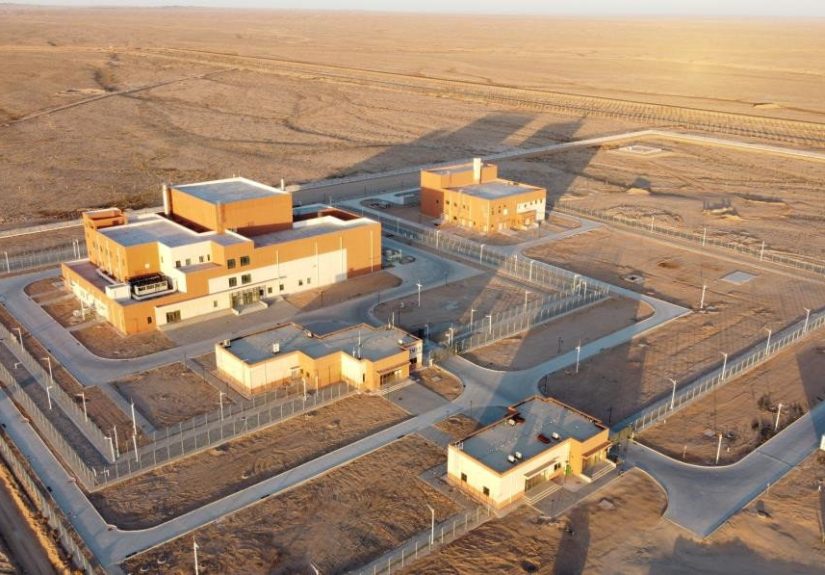
The reactor, located near Wuwei in China’s Gansu Province, is not a commercial power plant. It is a 2-MWth experimental platform built to prove that thorium, molten fluoride salts, and fourth-generation reactor design can work together under real operating conditions. That distinction matters. TMSR-LF1 is small in power output, but large in symbolism. It is testing a nuclear idea that has been discussed for decades, explored in the United States at Oak Ridge National Laboratory in the 1960s, and repeatedly filed under “promising, but difficult.” China is now trying to move it from the dusty notebook to the control room.
For the energy industry, the live refueling milestone is not just a flashy headline. It suggests that liquid-fuel molten salt reactors may one day operate with higher availability, smoother fuel management, and better integration with high-temperature industrial systems. For everyone else, it raises a simpler question: is thorium finally having its main-character moment?
What Is the TMSR-LF1 Reactor?
TMSR-LF1 stands for a liquid-fuel thorium-based molten salt experimental reactor. The “LF” part is important because it means the nuclear fuel is not locked inside solid ceramic pellets or metal fuel rods. Instead, fissile and fertile materials are dissolved in a hot liquid salt mixture that circulates through the reactor system. In simple terms, the fuel and coolant share the same moving liquid environment.
The TMSR-LF1 is operated by the Shanghai Institute of Applied Physics under the Chinese Academy of Sciences. It is based in a dry inland region, which is not an accident. One of the major attractions of molten salt reactor technology is that it can operate at high temperature and low pressure without requiring the same massive water-cooling infrastructure associated with many conventional nuclear stations. That makes the technology especially interesting for arid regions, remote industrial zones, and future energy systems that need heat as much as electricity.
A small reactor with a big job
At roughly 2 megawatts thermal, TMSR-LF1 is not trying to power a city. Its real job is to produce data: materials data, fuel chemistry data, radiation behavior data, safety data, and operational lessons. In advanced nuclear development, data is the currency that separates “cool PowerPoint idea” from “licensed engineering system.” A small test reactor can reveal whether pumps, valves, graphite, alloys, sensors, salt purification systems, and fuel-handling methods behave as expected when exposed to real neutron flux and real heat.
That is why the live refueling operation is so meaningful. The milestone demonstrates more than a clever plumbing trick. It shows that operators can interact with the fuel system while the reactor remains active, which is a central promise of liquid-fuel molten salt reactor design.
Why Live Refueling Matters
Conventional light-water reactors usually rely on solid fuel assemblies. When those assemblies need replacement or reshuffling, the reactor is shut down for a refueling outage. These outages are carefully planned and safe, but they take time. They also involve complex logistics, worker scheduling, inspections, and coordination with the electric grid.
Liquid-fuel molten salt reactors offer another possibility. Because fuel is dissolved in molten salt, fresh fuel can theoretically be added in small amounts during operation. Fission products can also be managed differently, depending on the design. The result could be a reactor that does not need long refueling shutdowns in the same way traditional reactors do. In the nuclear world, that is not a minor convenience. It is like discovering your car can be refueled while cruising down the highwayexcept the car is a reactor, the fuel is radioactive chemistry, and the “gas station” requires highly trained engineers rather than a teenager selling snacks.
Higher availability
Online refueling could improve reactor availability by reducing the need for scheduled refueling outages. For future commercial systems, that could mean more steady output and better economics, especially for industrial customers that require continuous heat or electricity.
Better fuel management
Live refueling also supports more flexible fuel management. Rather than loading a large batch of fuel and waiting years before major changes, operators may be able to adjust fuel composition gradually. That could help maintain reactor performance, compensate for burnup, and support the thorium-to-uranium fuel cycle.
Proof of liquid-fuel practicality
The most important point is practical. Molten salt reactors have long looked elegant on paper. But paper reactors are famously well-behaved. Real reactors have heat, corrosion, radiation, chemistry, vibration, aging components, human procedures, and the occasional engineering gremlin hiding behind a valve. Demonstrating live refueling gives researchers a stronger foundation for scaling the concept.
How Thorium Fits Into the Story
Thorium is often described as a nuclear fuel, but technically thorium-232 is fertile, not fissile. That means it does not easily sustain a chain reaction by itself. Instead, it can absorb a neutron and eventually convert into uranium-233, which is fissile. In a thorium fuel cycle, the reactor uses another fissile material to start and support the process while thorium acts as the fertile source for producing new usable fuel.
This is why China’s thorium-to-uranium conversion milestone is closely tied to the live refueling story. The reactor is not merely burning fuel; it is testing whether thorium can be introduced, irradiated, monitored, and converted inside a molten salt environment. That is the long-sought magic trickalthough nuclear engineers would prefer the phrase “verified fuel-cycle behavior,” because they are professionally allergic to magic.
Why thorium attracts attention
Thorium is more abundant in the Earth’s crust than uranium and is often associated with rare earth mineral deposits. Countries with significant thorium resources see strategic value in developing a fuel cycle that may reduce reliance on imported uranium. Thorium-based systems may also produce different waste streams compared with conventional uranium fuel cycles, though they are not waste-free, risk-free, or regulation-free. Anyone claiming a reactor has “no waste” is usually selling either a fantasy or a very expensive brochure.
For China, thorium molten salt technology fits several strategic goals: inland energy development, high-temperature industrial heat, fuel-cycle independence, advanced reactor leadership, and long-term low-carbon power. TMSR-LF1 is the experimental stepping stone toward that broader roadmap.
The Oak Ridge Connection: Old Idea, New Race
The molten salt reactor concept is not new. Oak Ridge National Laboratory’s Molten Salt Reactor Experiment achieved its first self-sustaining nuclear reaction in 1965 and later became the first reactor to operate on uranium-233. The MSRE showed that liquid fluoride fuel salt could be used in a working reactor system. It also revealed that the technology comes with serious engineering challenges, including materials compatibility, salt chemistry, maintenance, instrumentation, and radioactive off-gas management.
That history is important because it keeps the TMSR-LF1 story balanced. China did not invent molten salt reactors from nothing. The country is building on a technical foundation first explored deeply in the United States. What China appears to have done differently is sustain a national program long enough to construct, license, operate, refuel, and gather thorium fuel-cycle data from a dedicated experimental platform.
In advanced nuclear development, patience is not glamorous, but it is powerful. Reactors do not emerge because someone had a brilliant idea over coffee. They emerge because governments, laboratories, suppliers, welders, chemists, regulators, operators, and materials scientists keep pushing through thousands of unglamorous problems. The glamorous part is the announcement. The hard part is everything before it.
How a Molten Salt Thorium Reactor Works
A liquid-fuel molten salt reactor uses high-temperature salt as both coolant and fuel carrier. In TMSR-LF1’s case, the system uses fluoride salts, including lithium-beryllium fluoride chemistry commonly discussed under the term FLiBe. The salt remains liquid at operating temperatures and circulates through the core, carrying heat away from fission reactions.
Low pressure, high temperature
One major advantage of molten salt systems is that they can operate at high temperatures while remaining near atmospheric pressure. Conventional water-cooled reactors require high pressure to keep water from boiling at reactor operating temperatures. Molten salts do not need that same pressure regime. Lower pressure can reduce certain accident scenarios and mechanical stresses, although it does not eliminate the need for robust containment, chemistry control, and safety systems.
Passive safety potential
Molten salt reactors are often designed with strong negative temperature feedback. If the fuel salt gets hotter, it expands, reducing the density of fissile material in the core and slowing the reaction. Some designs also include freeze plugs or drain tanks so that fuel salt can drain into a passively safe configuration during abnormal conditions. These features are promising, but they must be proven design by design. “Inherent safety” is not a magic shield; it is an engineering claim that must survive testing, licensing, and operation.
High-temperature industrial uses
Because molten salt reactors can produce high-temperature heat, they may be useful beyond electricity. Potential applications include hydrogen production, chemical processing, thermal storage, desalination, synthetic fuels, and industrial heat for sectors that are hard to electrify. That is one reason TMSR-LF1 is being watched by more than nuclear specialists. It sits at the intersection of clean energy, industrial policy, and future manufacturing.
What Makes China’s Milestone Significant?
The live refueling operation matters because it supports one of the central arguments for liquid-fuel reactors: continuous or semi-continuous operation with active fuel chemistry management. The follow-on thorium-to-uranium conversion milestone strengthens the case that the reactor is not only moving hot salt around, but actually generating valuable fuel-cycle data under irradiation.
In practical terms, the achievement suggests China has made progress in several difficult areas at once: molten salt chemistry, thorium handling, reactor operation, online refueling procedures, materials performance, instrumentation, licensing, and supply-chain development. None of those is easy. Together, they represent a major systems-engineering accomplishment.
However, the milestone should not be confused with commercial readiness. TMSR-LF1 is still an experimental reactor. Scaling from 2 MWth to larger demonstration units and then to commercial power stations will require proof that the technology can operate reliably, economically, safely, and maintainably over long periods. Nuclear history is full of promising prototypes that looked great until economics, maintenance, or regulation showed up wearing steel-toed boots.
Challenges Still Facing TMSR Technology
Molten salt thorium reactors face real hurdles. The first is corrosion. Hot fluoride salts can be chemically demanding, so structural materials must resist degradation under high temperature, radiation, and complex salt chemistry. The second is fuel-salt processing. Managing fission products, noble gases, redox chemistry, and salt purity is not optional; it is central to stable operation.
The third challenge is regulatory. Most nuclear regulations were developed around light-water reactors. Advanced reactors require updated review methods, new safety cases, and a deeper understanding of nontraditional fuel behavior. Regulators need enough data to evaluate accident scenarios, source terms, safeguards, waste forms, and operational controls.
The fourth challenge is economics. A reactor can be scientifically impressive and still struggle commercially. Future molten salt reactors must prove that they can be built at reasonable cost, maintained with manageable complexity, and integrated into real grids and industrial markets. The world does not need a reactor that only works when surrounded by an army of PhDs carrying clipboards. It needs systems that utilities and industrial users can actually buy, operate, insure, and trust.
Global Impact: Why the United States and Others Are Watching
China’s TMSR-LF1 milestone is being watched closely in the United States because American laboratories pioneered much of the underlying molten salt technology. Today, U.S. institutions such as Oak Ridge National Laboratory, Idaho National Laboratory, the Department of Energy, the Nuclear Regulatory Commission, and private developers are working on advanced reactor concepts, including molten salt designs. The competition is not only about one reactor in China. It is about leadership in next-generation nuclear engineering.
If molten salt reactors mature, they could support decarbonized industrial heat, flexible power generation, advanced fuel cycles, and energy security. Countries that master the materials, fuel chemistry, licensing, and manufacturing supply chains early may gain a powerful advantage. China’s achievement therefore sends a message: advanced nuclear innovation is moving from theory to hardware, and the race is getting warmer than a fluoride salt loop.
What Comes Next?
The next major step is scale. China has discussed larger thorium molten salt demonstration systems that would move beyond laboratory-scale validation. A larger reactor would need to prove heat removal, fuel processing, component durability, maintenance strategy, and safety performance under more demanding conditions. It would also need to demonstrate whether the technology can support useful electricity generation or industrial heat applications at meaningful scale.
Future development will likely focus on longer operating campaigns, more detailed thorium fuel-cycle data, improved materials testing, automated salt chemistry control, and better integration with power conversion systems. If those pieces come together, TMSR technology could become one of the most important advanced nuclear pathways of the next few decades.
But the right tone is cautious excitement. TMSR-LF1 is not proof that thorium reactors will soon replace today’s nuclear fleet. It is proof that one of the hardest pieces of the conceptoperating a thorium-loaded molten salt system and refueling it livehas moved from theory into demonstrated practice. That is a big deal, even if the champagne should remain in a radiation-safe storage cabinet for now.
Experiences and Practical Reflections: What This Milestone Teaches the Energy World
The most useful way to understand China’s TMSR-LF1 live refueling milestone is not to imagine a futuristic reactor glowing in the desert like something from a movie. A better image is a long engineering shift: operators watching displays, chemists checking salt behavior, materials experts worrying about alloys, safety teams reviewing procedures, and managers trying not to look too nervous while history quietly happens in the background.
From an operational experience perspective, live refueling changes the personality of a reactor. In a conventional plant, refueling is a major event. It has a beginning, a middle, and an end. Teams prepare for it, execute it, inspect everything, and bring the plant back online. With a liquid-fuel molten salt reactor, refueling becomes more like an ongoing process. That means success depends on chemistry discipline, sensor reliability, operator training, and procedure quality. The reactor is not just a machine; it is a hot, circulating chemical system that must be understood in motion.
One lesson is that advanced nuclear energy is becoming more interdisciplinary. A traditional nuclear engineer still matters, of course. But molten salt systems also demand deep expertise in chemical engineering, metallurgy, thermal hydraulics, radiation chemistry, remote maintenance, robotics, safeguards, and digital monitoring. Building such a reactor is less like assembling a single product and more like conducting an orchestra where every musician is playing at 650 degrees Celsius.
Another experience from this milestone is the value of patient demonstration. Energy technologies often suffer from hype cycles. A breakthrough is announced, headlines explode, investors cheer, critics roll their eyes, and then everyone gets impatient when the technology does not become commercial by Tuesday. Nuclear development does not work that way. TMSR-LF1 shows the importance of staged progress: concept, laboratory research, materials testing, licensing, construction, criticality, full-power operation, live refueling, thorium loading, and fuel-cycle verification. Each step matters because each step lowers uncertainty.
For policymakers, the experience is clear: advanced reactors require long-term commitment. China’s work reflects years of institutional focus, supply-chain development, and national planning. Countries that want similar capabilities cannot simply announce a program and hope the atoms cooperate. They need test facilities, trained people, fuel access, regulatory pathways, and industrial partners willing to learn through failure as well as success.
For the public, the experience should encourage curiosity rather than instant judgment. Thorium molten salt reactors are neither miracle machines nor dangerous toys. They are serious engineering systems with real potential and real challenges. The live refueling milestone is exciting because it answers one practical question: can this kind of reactor be interacted with while operating? China’s answer appears to be yes. The next questions are harder: can it run for years, scale affordably, meet strict safety standards, manage waste responsibly, and compete in real energy markets?
For industry, the biggest takeaway is that nuclear innovation is no longer confined to familiar reactor shapes. The future may include small modular reactors, sodium-cooled fast reactors, high-temperature gas reactors, molten chloride systems, fluoride salt reactors, and hybrid nuclear-industrial plants. TMSR-LF1 adds momentum to that broader movement. It reminds the world that clean energy competition is not only about solar panels, wind turbines, and batteries. It is also about heat, fuel cycles, materials, and reactors that can do jobs today’s grid was never designed to handle.
In the end, China’s TMSR-LF1 live refueling operation is best understood as a door opening, not a finish line. Behind that door is a difficult path filled with technical, economic, and regulatory obstacles. But it is also a path toward reactors that may use abundant thorium, operate at high temperature, reduce water dependence, and support low-carbon industrial systems. That is why the world is paying attention. Sometimes the future does not arrive with fireworks. Sometimes it arrives as a carefully measured addition of fuel salt into a humming experimental reactor in the Gobi Desert.
Conclusion
China’s TMSR-LF1 molten salt thorium reactor has delivered a milestone that could reshape the conversation around advanced nuclear power. By demonstrating live refueling and supporting thorium fuel-cycle validation, the reactor has moved a long-discussed technology closer to practical reality. The achievement does not mean commercial thorium reactors are ready to roll off an assembly line like smartphones. It does mean that molten salt reactor development has entered a more serious, data-driven phase.
The world now has a working example of a thorium-loaded molten salt reactor producing operational lessons in real time. The next decade will reveal whether those lessons can be scaled into reliable, affordable, low-carbon energy systems. For now, TMSR-LF1 is a reminder that old ideas can become new again when engineering stamina meets national commitment. Nuclear innovation, like molten salt itself, moves best when it stays hot.