Table of Contents >> Show >> Hide
- What Is Candle Magic, Exactly?
- Why Candle Color Meanings Matter
- Candle Magic Color Meanings
- White: Purification, Clarity, Protection
- Black: Protection, Banishing, Release, Transformation
- Red: Passion, Courage, Vitality, Power
- Pink: Love, Affection, Friendship, Emotional Healing
- Green: Growth, Prosperity, Luck, Health
- Gold: Success, Recognition, Achievement
- Blue: Peace, Truth, Healing, Communication
- Yellow: Confidence, Focus, Learning, Creativity
- Purple: Intuition, Wisdom, Spiritual Insight
- Orange: Joy, Momentum, Creativity, Ambition
- Silver: Intuition, Moon Energy, Reflection
- Brown: Grounding, Home, Stability, Security
- Helpful Candle Color Combinations
- How to Perform a Candle Spell or Ritual
- Three Simple Candle Ritual Examples
- Common Candle Magic Mistakes to Avoid
- Fire Safety Rules That Are Absolutely Not Optional
- Experiences Related to Candle Magic: What People Commonly Notice in Practice
- Final Thoughts
Some people approach candle magic as a spiritual practice. Others treat it like intention-setting with better lighting. Either way, the appeal is easy to understand: a candle gives focus a physical form. You choose a color, name a goal, light a flame, and suddenly your thoughts stop sprinting in twelve directions at once. That alone can feel a little magical.
Modern candle magic blends symbolism, ritual, mindfulness, and personal meaning. It borrows from long traditions of ceremonial candle use while giving the practitioner a simple tool for reflection, release, hope, and action. The color of the candle adds another layer because colors carry emotional and cultural associations that help shape intention. White feels clear. Red feels active. Blue feels calm. Green feels like growth. Your brain notices before your conscious mind finishes the sentence.
In this guide, you will learn the most common candle color meanings, how to choose the right candle for a goal, how to perform a beginner-friendly spell or ritual, what mistakes to avoid, and what people often experience when they make candle work part of real life. Also, an important reminder: fire safety is not optional. The universe may enjoy symbolism, but your curtains do not.
What Is Candle Magic, Exactly?
Candle magic is a symbolic ritual practice that uses a burning candle as a focal point for prayer, intention, meditation, or spellwork. The flame represents movement and transformation. The wax serves as a physical vessel. The act of lighting the candle marks a beginning. The act of extinguishing it closes a cycle.
At its core, candle magic is less about theatrical gestures and more about directed attention. A ritual helps you slow down, choose a purpose, and create a moment where your mind and actions line up. That is why candle work can feel deeply spiritual for some people and psychologically grounding for others. It is part symbolism, part self-reflection, and part old-fashioned human need to mark important moments with light.
It also helps to understand what candle magic is not. It is not a substitute for effort, consent, common sense, or practical action. A ritual for confidence should still be followed by the email, the interview, the boundary, the apology, or the plan. The candle can support the work. It cannot do your taxes, text your ex wisely, or fold your laundry.
Why Candle Color Meanings Matter
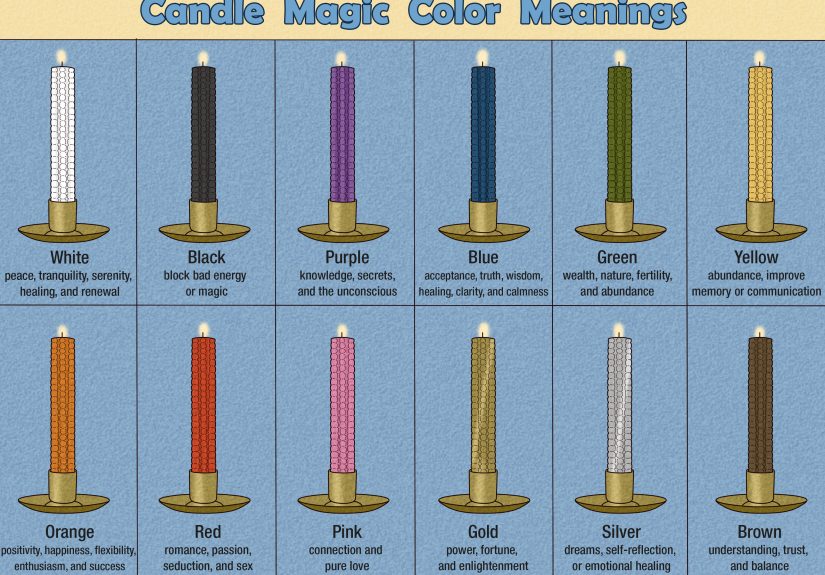
Color symbolism matters because it helps the mind focus quickly. Across many modern candle magic systems, common meanings repeat: red for passion and strength, blue for peace and truth, green for prosperity and growth, white for purification and clarity, black for protection and release. The details can vary by tradition, but the pattern is remarkably consistent.
That consistency makes candle colors useful, not rigid. Think of color as support rather than law. Intention comes first. Color strengthens the message. If you only have a white candle, you are still in business. White is the classic universal substitute and works especially well for cleansing, prayer, healing, new beginnings, and spiritual focus.
Candle Magic Color Meanings
White: Purification, Clarity, Protection
White is the all-purpose classic. It is commonly used for cleansing rituals, healing work, peace, clarity, spiritual reflection, prayer, and fresh starts. It is also the usual substitute when you do not have the “right” color on hand. If your intention feels broad, sacred, or hard to label, white is a smart choice.
Black: Protection, Banishing, Release, Transformation
Black candles are often used for boundaries, banishing negativity, cutting unhealthy ties, protection, uncrossing, and endings that make room for growth. In candle magic, black is not automatically negative. It is about containment, transition, release, and spiritual armor. Use it when something needs to end so something healthier can begin.
Red: Passion, Courage, Vitality, Power
Red is bold, active, and physical. It is associated with passion, attraction, strength, energy, motivation, survival instinct, courage, and action. Red works well for confidence, romantic heat, ambition, and personal power. It is the color you choose when your ritual goal needs backbone instead of gentle encouragement.
Pink: Love, Affection, Friendship, Emotional Healing
Pink carries softer heart energy than red. It is linked with compassion, tenderness, self-love, affection, reconciliation, friendship, forgiveness, and emotional healing. If red is about fire, pink is about warmth. It is ideal for rituals focused on self-worth, restoring sweetness, nurturing a relationship, or healing a bruised heart without forcing drama into the room.
Green: Growth, Prosperity, Luck, Health
Green is the classic prosperity color, but it is not just about money. It is also associated with growth, renewal, steady progress, balance, health, nature, luck, and long-term well-being. Use green when you want sustainable abundance rather than a flashy miracle that disappears by Tuesday.
Gold: Success, Recognition, Achievement
Gold adds confidence, visibility, authority, and success. It is often chosen for leadership goals, reputation, achievement, and personal value. Pair it with green for prosperity work, or use it alone when the real goal is not just growth but stepping into your worth without mumbling an apology afterward.
Blue: Peace, Truth, Healing, Communication
Blue is a favorite for emotional balance, calm communication, truth, justice, patience, reflection, and gentle healing. It is especially useful during stressful periods, conflict resolution, or truth-telling rituals. If your nervous system feels like it has been drinking espresso without your consent, blue can be an excellent ritual anchor.
Yellow: Confidence, Focus, Learning, Creativity
Yellow is bright mental energy. It is associated with intellect, study, optimism, communication, confidence, inspiration, fresh ideas, and decision-making. Use yellow when you need clarity, motivation, stronger self-expression, or a little solar-powered help for your brain.
Purple: Intuition, Wisdom, Spiritual Insight
Purple is often chosen for spiritual growth, inner wisdom, insight, intuition, divination, meditation, and transformation. It carries a sense of mystery and reflection. This is a strong choice for rituals aimed at understanding, guidance, self-mastery, or seeing beneath surface-level confusion.
Orange: Joy, Momentum, Creativity, Ambition
Orange blends the vitality of red with the brightness of yellow. It is associated with enthusiasm, movement, creativity, confidence, attraction, opportunity, and forward motion. Choose orange when life feels stalled and you want to shake loose some energy without going full dramatic thunderstorm.
Silver: Intuition, Moon Energy, Reflection
Silver is often tied to lunar symbolism, dream work, intuition, receptivity, and emotional awareness. It is quieter than gold and more inward-facing. Use silver for contemplation, moon rituals, journaling, dream-focused work, or subtle spiritual reflection.
Brown: Grounding, Home, Stability, Security
Brown is practical, earthy, and steady. It is associated with home, property, family, animals, reliability, routine, and emotional grounding. This is the candle for real-life stability. Brown does not show up to dazzle anyone. Brown shows up with snacks, paperwork, and a sensible plan.
Helpful Candle Color Combinations
- White + Black: Clear, protect, release, and reset.
- Red + Pink: Passion balanced with affection and emotional warmth.
- Green + Gold: Growth, prosperity, confidence, and success.
- Blue + White: Healing, calm communication, and spiritual clarity.
- Purple + Silver: Intuition, reflection, dream work, and inner wisdom.
- Brown + Green: Grounded growth for home, family, and long-term stability.
How to Perform a Candle Spell or Ritual
You do not need an elaborate altar, a memorized incantation, or a velvet robe that sheds mysteriously onto everything you own. A simple ritual done with focus is more effective than a complicated ritual done in total confusion. Here is a beginner-friendly method.
Step 1: Choose a Clear Intention
Keep the goal simple and specific. “I welcome calm communication.” “I release this habit.” “I am building steady prosperity.” “I choose clarity.” Short, present-tense wording makes it easier to focus. Vague requests create vague energy, and vague energy is the spiritual cousin of opening twenty browser tabs and finishing none of them.
Step 2: Match the Candle Color to the Goal
Pick the color that best aligns with your intention. If your goal has multiple layers, you can pair candles, but do not overcomplicate the setup. One or two candles are usually plenty for a meaningful ritual. If you are unsure, use white.
Step 3: Prepare the Space
Set the candle on a stable, heat-resistant holder. Clear nearby clutter. Move flammable items far away. Turn off anything that creates a strong draft. Many practitioners also like to center themselves before lighting the candle through a few deep breaths, a brief meditation, prayer, quiet music, or a spoken statement of purpose.
Step 4: Write, Carve, or Name the Intention
You can write your intention on paper and place it under the candle holder, or gently carve a symbol, name, or word into the candle if the wax allows. Some practitioners anoint a candle with a tiny amount of oil. If you do this, use restraint, because oils are flammable and ritual style points are not worth a dangerous flame.
Step 5: Light the Candle and Focus
Light the candle slowly and deliberately. Say your intention aloud or silently. Repeat it a few times. Then sit with the flame for several minutes while visualizing the outcome or the feeling you want to cultivate. You can pray, meditate, breathe, journal, or simply gaze at the flame while keeping your focus gentle and steady.
Step 6: Close the Ritual
Close with gratitude, a final affirmation, or a simple statement such as, “This work is sealed in clarity and peace.” Some traditions prefer snuffing the candle rather than blowing it out. Others allow it to burn down if it is safe and practical. The important thing is that the candle is fully extinguished and never left unattended.
Step 7: Follow the Ritual With Action
This part matters more than people want it to. A candle for abundance should be followed by a financial step. A candle for healing should be followed by care, boundaries, or rest. A candle for communication should be followed by the actual conversation. The symbolic act and the real-world act should support each other like mature adults.
Three Simple Candle Ritual Examples
Self-Love Ritual
Use a pink or white candle. Write down three qualities you want to strengthen in yourself, such as patience, gentleness, or confidence. Light the candle and read them aloud slowly. Spend five quiet minutes breathing deeply and imagining yourself acting from those qualities during the week ahead.
Prosperity Ritual
Use a green candle, optionally paired with gold. Write one financial intention and one practical action you will take within the next seven days. Light the candle, speak both aloud, and visualize steady progress. Prosperity work tends to become more effective when it moves from “Please, cosmic jackpot” to “I am ready to meet opportunity halfway.”
Release and Protection Ritual
Use a black candle, optionally paired with white. Write down a fear, habit, attachment, or draining situation you are ready to release. Light the candle and name what you are ending. Then follow it with a statement about what you are protecting or building next, such as peace, clarity, self-respect, or stronger boundaries.
Common Candle Magic Mistakes to Avoid
- Using vague language: A fuzzy intention creates a fuzzy ritual.
- Treating color meanings like strict laws: Correspondences vary, and intention still leads.
- Trying to do too much at once: One focused goal is better than seven chaotic ones.
- Ignoring safety: The mystical atmosphere ends immediately when the smoke detector joins the ceremony.
- Skipping practical follow-through: Ritual supports change; it does not replace participation in your own life.
Fire Safety Rules That Are Absolutely Not Optional
Before lighting a candle, trim the wick to about one-quarter inch. Place the candle on a sturdy, heat-resistant surface. Keep it away from curtains, bedding, books, paper, plants, and other flammable materials. Avoid drafts from windows, vents, or fans. Keep burning candles out of reach of children and pets, and do not move a candle while the wax is liquid.
Never leave a burning candle unattended. Extinguish the flame completely before leaving the room or going to sleep. Do not use water to put out a candle because hot wax can splatter. Allow the wax and container to cool before touching or moving them. If you use oils, herbs, paper, or decorative extras, be even more cautious, because pretty ritual details can change flame behavior fast.
Experiences Related to Candle Magic: What People Commonly Notice in Practice
One of the most common experiences people describe with candle magic is surprise at how emotional it can feel. Not necessarily in a cinematic, thunder-cracking, “the veil has parted” kind of way, but in a quieter, more honest way. When you pick a color on purpose, light a flame, and say out loud what you want or need, the ritual creates a level of focus that everyday life usually does not. For many people, that moment of focus brings up feelings they have been too busy, distracted, or avoidant to notice. A candle ritual can reveal how exhausted you are, how hopeful you still are, or how much you already know the answer to your own question.
People also tend to notice that different colors create different moods, even when they enter the ritual with the same amount of skepticism. A blue candle ritual for peace often feels slower and softer, almost like giving the nervous system permission to stop bracing. A red candle ritual can feel energizing, motivating, and direct, the emotional equivalent of standing up straighter and finally sending the message you have rewritten eleven times. Green candle work often feels less flashy but more stabilizing. It is the ritual many people associate with patience, planning, steady progress, and the strange thrill of behaving responsibly on purpose.
Another experience that comes up often is memory. People remember the candle they burned when they ended a painful chapter. They remember the white candle lit during grief, the pink candle lit during self-forgiveness, the black candle used when they finally decided that a boundary was not cruelty but care. In that way, candle magic becomes a memory marker. The ritual turns into a lived moment the body remembers, not just a thought in the head. It can feel a lot like embodied journaling, where the flame, the scent, the silence, and the words all help stamp the experience into memory.
Repetition changes the experience too. The first ritual can feel awkward or a little performative. By the third or fourth, many people say the practice begins to feel natural and comforting. Lighting the candle becomes a signal to slow down. Writing the intention becomes easier. The ritual space starts to feel emotionally familiar. That is one reason candle magic can become a meaningful weekly or daily practice even for people who are not deeply involved in formal spiritual systems. The repetition creates rhythm, and the rhythm creates trust.
There is also the very real experience of not getting what you thought you asked for, but learning something better. Someone lights a candle for love and realizes the deeper need is self-respect. Someone does a ritual for communication and discovers the real lesson is not speaking more, but speaking more clearly. Someone performs prosperity work and notices the biggest result is not sudden money but improved discipline, confidence, and willingness to act. For many practitioners, that is where candle magic becomes more than aesthetic spirituality. It turns into a reflective tool that reveals patterns, values, and next steps with uncomfortable but useful honesty.
Perhaps the most powerful experience of all is simple: candle magic gives intention a visible form. You can see the flame, hear the quiet room, smell the wax, and feel time passing while you stay with one thought. In a distracted, noisy world, that kind of focused symbolic practice can feel surprisingly radical. Sometimes the magic is not a dramatic cosmic plot twist. Sometimes the magic is that, for ten honest minutes, you finally mean what you say.
Final Thoughts
Candle magic works best when you treat it with clarity, respect, and a little humility. Color meanings can deepen the symbolism, but they do not replace intention. Ritual can support emotional focus, but it does not replace action. The candle is not the whole practice. It is the spark that helps the practice begin.
Choose a color that matches your goal. Keep the ritual simple. Stay safe. Let the experience teach you which symbols truly resonate with you. Over time, candle magic becomes less about memorizing perfect correspondences and more about building a meaningful relationship with focus, ritual, and change. That is where the real glow lives.