Table of Contents >> Show >> Hide
- What a Chicago Faucets Bar Sink Faucet Really Is
- Why Chicago Faucets Stands Out
- Key Features to Look For in a Chicago Faucets Bar Sink Faucet
- Understanding Standards, Certifications, and Compliance
- Examples of Chicago Faucets Bar Sink Faucet Configurations
- How to Choose the Best Chicago Faucets Bar Sink Faucet for Your Space
- Installation and Maintenance Tips
- Common Buying Mistakes to Avoid
- Extended Experiences With a Chicago Faucets Bar Sink Faucet
- Conclusion
If you are shopping for a Chicago Faucets bar sink faucet, you are probably not looking for a flimsy little fixture that taps out after one busy holiday weekend. You want something dependable, easy to clean, simple to service, and tough enough to handle real life. That might mean a wet bar in a home lounge, a prep sink in a basement kitchenette, a pantry setup, or even a light commercial space where the faucet gets used far more than anyone admits.
Chicago Faucets has built its reputation on commercial-grade plumbing fixtures, and that reputation matters. In a market filled with flashy finishes and dramatic marketing promises, this brand tends to win on the less glamorous but more important stuff: durability, repairable parts, solid brass construction, straightforward engineering, and configurations that make sense for actual sink use. In other words, it is the plumbing equivalent of a no-nonsense chef who shows up on time and never burns the garlic.
What a Chicago Faucets Bar Sink Faucet Really Is
A bar sink faucet from Chicago Faucets is not just a smaller version of a kitchen faucet with a fancy name. In many cases, it is a compact, deck-mounted faucet designed for prep, pantry, or bar-sink duty, often with a gooseneck spout, serviceable cartridges, and multiple handle options. These faucets are commonly chosen when buyers want a balance between space-saving design and commercial reliability.
The two most common styles shoppers run into are:
Single-Hole Bar Sink Faucets
These are great when you want a cleaner deck layout and a simple installation. A single-hole model can look more streamlined in a small wet bar or compact prep area. Chicago Faucets has single-hole manual sink faucets that use rigid or swing gooseneck spouts and efficient aerators, making them especially attractive when space is tight but usability still matters.
4-Inch Centers Bar and Pantry Faucets
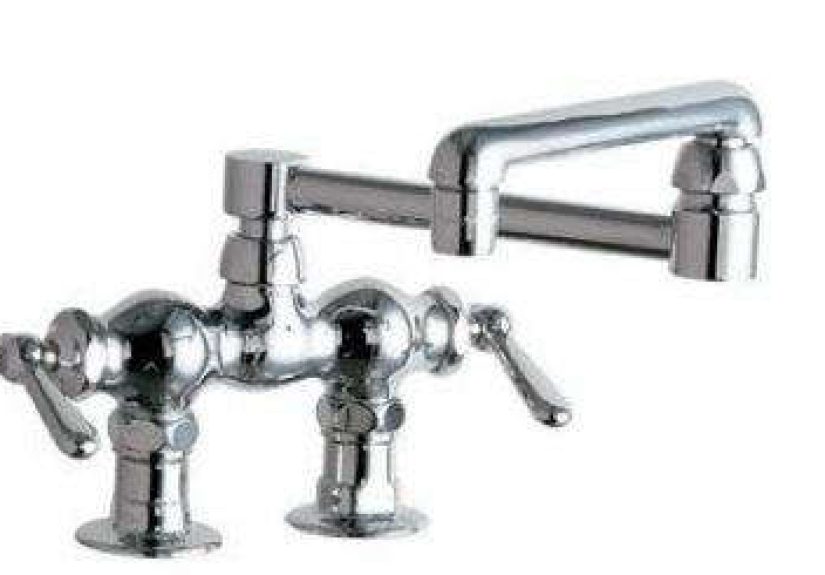
This is where Chicago Faucets feels especially at home. Their 4-inch-center deck-mounted faucets are classic workhorses. You get a wider stance, a familiar two-handle layout on many models, and a setup that feels right at home in utility-minded spaces. If your existing sink already has a 4-inch-center configuration, this style can make replacement much easier.
Why Chicago Faucets Stands Out
There are plenty of bar sink faucets on the market. Some are stylish. Some are cheap. Some are stylish until they become cheap. Chicago Faucets tends to stand apart for a few very practical reasons.
Commercial DNA
Chicago Faucets is widely associated with commercial environments, and that shows in the design language. The brand favors robust brass bodies, practical handle designs, serviceable internal parts, and configurations meant to survive repeated use. That is good news for homeowners too, especially anyone who is tired of replacing decorative faucets that were apparently designed to be admired from six feet away rather than actually used.
Serviceable Parts Instead of Disposable Design
One of the smartest reasons to choose this brand is repairability. Chicago Faucets promotes interchangeable parts and serviceable construction across much of its manual faucet line. That means a worn cartridge or aerator does not necessarily turn into a full-faucet funeral. For buyers who think long term, that matters more than a trendy silhouette.
Multiple Spout and Handle Options
Need a rigid gooseneck? Prefer a swing spout? Want lever handles, elbow blades, or wristblade handles for easier operation? Chicago Faucets offers enough variation that you can usually match the faucet to the way the sink will actually be used. That is a big advantage in bar areas where glass filling, rinsing, quick cleanup, and awkward pot maneuvering all compete for elbow room.
Compliance-Friendly Features
Many buyers are not just comparing looks and price. They also care about ADA compliance, lead law compliance, and plumbing standards. Chicago Faucets makes that conversation easier because many models are available with configurations that align with ADA operability and low-lead requirements. The key phrase here is many models, not every model, so checking the exact SKU is still essential.
Key Features to Look For in a Chicago Faucets Bar Sink Faucet
Shopping gets a lot easier when you know which specs matter. Here are the big ones.
Mounting Style
First, look at your sink deck. Is it drilled for one hole or for 4-inch centers? This sounds obvious, but it is the classic mistake that turns a fun faucet upgrade into a muttered weekend project. Match the faucet to the sink, not to your optimism.
Spout Height and Reach
A bar sink faucet should not feel cramped. Gooseneck spouts often give better clearance for filling pitchers, rinsing shakers, or washing glassware. Chicago Faucets offers models with shorter rigid or swing goosenecks as well as higher-arc options. A smaller bar sink usually benefits from a compact gooseneck that does not splash everywhere like an overexcited garden hose.
Handle Style
Lever handles are popular because they are intuitive and easy to operate. Wristblade or elbow-blade handles can be especially useful in spaces where hands are full, wet, or messy. They also align well with accessibility goals. If multiple people will use the sink, easier operation is usually worth it.
Flow Rate
Flow rate is a bigger deal than people think. For bar faucets, the federal maximum is generally 2.2 GPM, but more efficient 1.5 GPM options are also common and can be a great fit for a prep or pantry sink. If you want a water-saving setup without turning your rinse cycle into a sad drizzle, a well-designed 1.5 GPM model can hit the sweet spot.
Aerator Type
Chicago Faucets commonly uses pressure-compensating aerators or laminar-style outlets depending on the faucet. For many bar sink situations, an aerated, non-splashing flow is exactly what you want. Less mess, better control, fewer surprise droplets on your shirt five minutes before guests arrive.
Understanding Standards, Certifications, and Compliance
This part may not be glamorous, but it is where smart buyers separate themselves from panic buyers.
ADA Operability
ADA-friendly faucet operation generally means the faucet can be used with one hand and without tight grasping, pinching, or twisting of the wrist. If accessibility matters in your home or project, handle style matters a lot. Lever and blade-style handles can be much easier to use than more restrictive designs.
Lead Law Compliance and NSF/ANSI/CAN 372
For faucets that dispense water for drinking or food use, low-lead compliance is important. NSF/ANSI/CAN 372 addresses lead content requirements for drinking water system components. Chicago Faucets and major distributors often flag compliant models clearly, which makes it easier to narrow down the list if safety and code alignment are top priorities.
ASME A112.18.1 / CSA B125.1
This plumbing supply fitting standard comes up often with quality commercial faucets. It is a useful checkpoint that signals the product was evaluated against recognized performance and safety criteria for plumbing fittings. It is not the sort of thing guests will compliment at cocktail hour, but it is definitely the sort of thing that helps avoid headaches later.
Water Efficiency
Some bar sink faucets may be configured with lower-flow outlets. EPA guidance notes that bar faucets are capped at 2.2 GPM nationally and that 1.5 GPM models meeting the right criteria can qualify for WaterSense. For buyers who care about water savings, that is worth checking on a model-by-model basis.
Examples of Chicago Faucets Bar Sink Faucet Configurations
One reason this category can feel confusing is that “bar sink faucet” may refer to several nearby product families. Here are three examples that show how the lineup can vary.
1. A Compact Single-Hole Gooseneck Model
Single-hole manual sink faucets from Chicago Faucets can be a strong match for smaller bar or pantry sinks. A model with a 5 1/4-inch gooseneck spout and 1.5 GPM aerator is a good example of a compact, efficient setup. This kind of faucet works well when you want a neat footprint, easy cleaning around the deck, and enough clearance for everyday rinsing tasks.
2. A 4-Inch-Center Pantry or Bar Faucet
A 4-inch-center model such as a pantry-style configuration offers a more traditional layout and can be ideal when replacing an older faucet without changing the sink itself. This is often the practical choice for buyers who care more about straightforward compatibility and long-term service than about making the faucet look like it belongs in a sci-fi penthouse.
3. A Higher-Arc Pull-Down Variant
Some Chicago Faucets single-hole kitchen-style models with a pull-down outlet can also appeal to bar-sink shoppers who want more reach and flexibility. This route is especially useful in a premium home bar or entertaining area where the sink doubles as a prep station. It is a little more feature-rich and a little less stripped-down than a classic bar faucet, but it can be a smart choice when you want more functionality.
How to Choose the Best Chicago Faucets Bar Sink Faucet for Your Space
The right faucet depends less on hype and more on how the sink is used.
For a Home Wet Bar
Look for a compact single-hole or 4-inch-center faucet with a gooseneck spout, easy-clean chrome finish, and a moderate flow rate. You probably want something polished and durable, but not oversized.
For a Pantry or Prep Sink
Prioritize clearance, reach, and easy handle operation. A swing gooseneck or high-arc spout can make prep work much easier. If the sink sees daily use, serviceability becomes even more valuable.
For Light Commercial Use
Pay closer attention to ADA compliance, lead-law compliance, replacement part availability, and long-term maintenance. This is where Chicago Faucets really earns its keep. The brand’s commercial roots are a major asset when usage goes from “occasionally rinsing limes” to “constantly battling sticky messes.”
Installation and Maintenance Tips
Even a great faucet can disappoint if it is chosen badly or installed carelessly. A few tips go a long way.
First, verify the hole configuration and supply connection requirements before ordering. Second, check spout reach against the actual sink bowl dimensions so water lands where it should. Third, confirm the exact compliance features listed for the model, especially if ADA or lead-law compliance is required for the project.
For maintenance, clean the finish with mild soap and water rather than harsh abrasives. Inspect the aerator if flow changes over time. If the faucet starts acting cranky, look at the cartridge and service parts before assuming the whole unit needs replacement. With a serviceable faucet, a small repair can often restore performance without tearing everything out.
Common Buying Mistakes to Avoid
The first mistake is buying strictly by looks. A beautiful faucet that splashes all over a tiny bar sink becomes a decorative regret. The second mistake is ignoring the mounting pattern. The third is assuming every faucet in a brand family has identical certifications, warranty terms, or flow rates. With Chicago Faucets, the lineup is broad enough that details matter.
Another common issue is underestimating how much users appreciate easy handle control. On paper, a tiny traditional handle may seem elegant. In real life, lever or blade handles are often more comfortable, faster to use, and easier to keep functional over time.
Extended Experiences With a Chicago Faucets Bar Sink Faucet
When people describe living with a Chicago Faucets bar sink faucet, the word that comes up again and again is not “luxury.” It is “solid.” That might sound less glamorous than some lifestyle-brand advertising, but in faucet language, solid is a compliment with shoulders. The overall experience tends to feel more practical than precious. The handles move with intention, the brass construction gives the faucet a reassuring weight, and the spout usually feels like it was designed for actual work instead of a staged kitchen photo shoot.
In a home bar, that translates into confidence. You turn it on to rinse a shaker, fill an ice bucket, wash citrus residue off your hands, or do a quick cleanup before guests wander in, and it behaves like a faucet that has seen things. It is not trying to impress you with dramatic curves and vague promises. It is trying to deliver water where you need it and avoid becoming the reason your cabinet base gets soaked. That is a surprisingly lovable quality.
One of the most noticeable real-world advantages is how many Chicago Faucets configurations feel easy to control. Lever and blade-style handles are helpful when your hands are wet, sticky, or already holding something. If you are juggling a glass, dish towel, and your dignity, a handle that works without a wrestling match becomes a small daily victory. In spaces used by kids, older adults, or multiple guests, that ease of use matters even more.
There is also a maintenance comfort factor. Buyers who choose Chicago Faucets often do so because they want a fixture that can be serviced instead of tossed. That changes the ownership experience. A faucet that supports cartridge replacement or aerator maintenance feels less like a temporary accessory and more like a long-term part of the plumbing system. Plumbers tend to appreciate that. Homeowners appreciate it too, especially after dealing with cheaper fixtures that act heroic for six months and then retire without notice.
Another common experience is that these faucets suit utilitarian spaces exceptionally well. In a sleek designer bar, some people may want a more fashion-forward silhouette. But in a hardworking pantry, basement kitchenette, mudroom prep area, or compact entertaining space, Chicago Faucets often feels exactly right. It looks purposeful. It feels dependable. It does not need applause.
That said, the experience is best when the model is chosen carefully. A taller gooseneck might feel fantastic in one sink and overly splashy in another. A 2.2 GPM outlet may feel satisfyingly quick in a prep sink, while a 1.5 GPM option may be the smarter call for water savings and better control. The best feedback usually comes from buyers who matched the faucet to the sink size, mounting pattern, and real use case instead of just picking a part number that sounded official.
Overall, the long-term experience with a Chicago Faucets bar sink faucet is usually less about trendiness and more about trust. It is the kind of fixture people stop thinking about because it keeps doing its job. And honestly, for a bar sink faucet, that is about the highest compliment available.
Conclusion
A Chicago Faucets bar sink faucet is a smart choice for buyers who value durability, compliance-friendly options, serviceable parts, and practical design over flashy gimmicks. Whether you choose a compact single-hole model, a classic 4-inch-center pantry faucet, or a higher-arc configuration with more flexibility, the appeal is the same: you are getting a faucet built with real use in mind.
If your goal is to find a commercial-style bar sink faucet that can work just as well in a home wet bar, pantry sink, or light-duty professional setting, Chicago Faucets deserves serious consideration. Just make sure you match the exact model to your sink layout, preferred handle style, desired flow rate, and compliance needs. Get that part right, and you end up with a faucet that feels less like a trendy purchase and more like a long-term solution.