Table of Contents >> Show >> Hide
- Why 2020 Deserves Its Own Museum Shelf
- What Belongs in the Museum of 2020?
- 1. A Homemade Face Mask That Looks Slightly Heroic and Slightly Improvised
- 2. A Pocket Bottle of Hand Sanitizer, Preferably Half-Empty and Overvalued
- 3. A Zoom Screenshot with Frozen Faces and One Person on Mute
- 4. A School Packet or Kitchen-Table Assignment Covered in Real-Life Chaos
- 5. A Sourdough Starter Jar, Because Apparently We All Became Frontier Bakers
- 6. A Protest Sign from the Summer of 2020
- 7. A “Closed Until Further Notice” Sign from a Local Business
- 8. A Planner, Journal, or Calendar Full of Crossed-Out Plans
- How to Choose the Right Artifact
- What the Best 2020 Artifacts Really Tell Us
- Additional Reflections: What Living Through 2020 Actually Felt Like
- Conclusion
If a future museum builds a glittering, slightly haunted wing called The Museum of 2020, what should go in the display cases? A dinosaur skeleton? Tempting. A cursed sourdough jar? More accurate. A crumpled face mask, a laptop with 43 Zoom tabs open, a handwritten grocery list featuring “toilet paper???” in full panic punctuation? Now we’re getting somewhere.
The truth is that 2020 was not one story. It was several stories piled on top of one another like badly stacked pantry goods. It was a public health crisis, a work-from-home experiment, a year of layoffs and anxiety, a national reckoning over racial justice, and a moment when ordinary people suddenly realized that ordinary objects can become historical evidence. That is exactly why museums across the United States started collecting not just official artifacts, but everyday proof of how people lived, coped, adapted, argued, grieved, protested, and tried to keep bread alive on the kitchen counter.
So if the internet’s favorite hypothetical prompt asked, “Hey Pandas, what will you submit to the museum of 2020?” my answer would be this: submit the objects that tell the truth. Not the polished truth. Not the Instagram-filtered truth. The real truth. The awkward, over-sanitized, half-burnt, emotionally exhausted truth.
Why 2020 Deserves Its Own Museum Shelf
Some years pass by quietly. 2020 kicked the door open, canceled your plans, moved school and work into the kitchen, and then handed everyone a bottle of sanitizer like a consolation prize. It changed routines at the smallest level and institutions at the biggest. A museum dedicated to 2020 would not just preserve crisis; it would preserve how people responded to crisis.
That matters because history is not only made of famous speeches and government documents. It is also made of floor stickers that told strangers to stand six feet apart. It is made of homemade masks sewn late at night. It is made of planners filled with crossed-out birthdays, postponed weddings, and “maybe next month” written like a fragile prayer. The best museum objects are not always glamorous. They are revealing.
And in the case of 2020, revealing is practically the whole point. The year exposed inequality, job insecurity, digital dependence, loneliness, resilience, and the strange human ability to joke about disaster while actively living inside it. If a museum wants to explain 2020 honestly, it should not rely on one grand symbol. It should rely on many small ones.
What Belongs in the Museum of 2020?
1. A Homemade Face Mask That Looks Slightly Heroic and Slightly Improvised
If 2020 had an unofficial uniform, it was the face mask. Not a designer one. Not a perfectly folded one. The real museum-worthy mask is the kind someone stitched together from spare fabric, old elastic, and sheer determination. It represents fear, public health, mutual care, political argument, and basic survival all at once. That is a lot of symbolism for one tiny rectangle of cloth.
A homemade mask also tells a bigger story about adaptation. When supply chains were strained and routines were overturned, people made what they needed. Parents made masks for kids. Neighbors made masks for neighbors. Volunteers made masks for essential workers and vulnerable communities. A simple cloth covering became part safety tool, part social signal, and part emotional artifact. It said, “We are trying. We are worried. We are still going out for groceries anyway.”
2. A Pocket Bottle of Hand Sanitizer, Preferably Half-Empty and Overvalued
Put that little bottle under glass immediately. In 2020, hand sanitizer was not merely sanitizer. It was currency, comfort, and a tiny portable illusion of control. You could forget your wallet and still feel less exposed than if you forgot the sanitizer. A museum label might call it “alcohol-based hygiene solution.” The rest of us would call it “liquid reassurance with a suspicious citrus smell.”
This object works because it captures the era’s obsession with surfaces, safety, and ritual. Spray. Rub. Wait. Repeat. It also hints at the early shortages and the weird improvisations that followed, including distilleries making sanitizer and households stockpiling it like a sacred potion. If a future visitor wants to understand 2020 in five seconds, this artifact could do a lot of heavy lifting.
3. A Zoom Screenshot with Frozen Faces and One Person on Mute
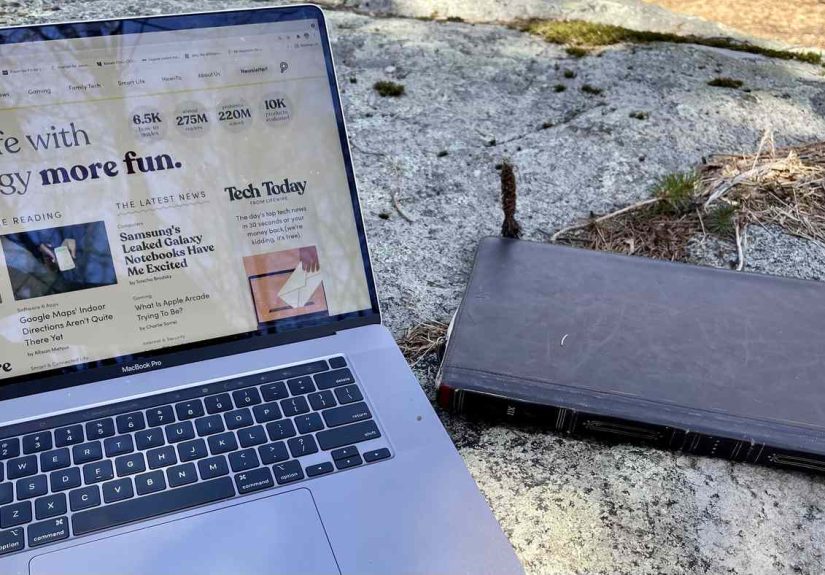
No artifact says “2020 work culture” like a screenshot from a glitchy video call. One person is accidentally too close to the camera. One person’s dog is making an unscheduled appearance. One person has turned themselves into a silhouette because the lamp is behind them. Another has been speaking passionately for 40 seconds while fully muted. That, right there, is historical truth.
A Zoom screenshot deserves museum space because it represents the sudden migration of work, school, family gatherings, therapy, birthdays, and even exercise classes into digital windows. The screen became the office, the classroom, the happy hour, and the holiday table. It also revealed who had quiet rooms, steady internet, spare devices, and flexible jobs, and who absolutely did not. Behind every “You’re on mute” joke was a serious story about labor, technology, childcare, and access.
4. A School Packet or Kitchen-Table Assignment Covered in Real-Life Chaos
If adults got Zoom, kids got the kitchen table. A museum of 2020 should absolutely include a worksheet packet, a login sheet, or a child’s handwritten assignment completed somewhere between snack time, stress, and Wi-Fi failure. This object tells the story of how education became a household logistics problem overnight.
It also preserves the emotional texture of that moment. Parents became ad hoc teaching assistants. Students learned multiplication next to cereal bowls. Teachers reworked lessons for screens, paper packets, and total uncertainty. A single marked-up worksheet can say more about the year than a polished policy memo ever could. It shows the collision between public systems and private homes. Also, it probably has mysterious jelly residue, which honestly strengthens the authenticity.
5. A Sourdough Starter Jar, Because Apparently We All Became Frontier Bakers
Every era has its signature craft, and 2020’s craft was keeping a jar of bubbling yeast alive like a needy pet. The sourdough starter belongs in the museum because it reflects scarcity, routine, boredom, creativity, and the universal human urge to perform competence while the world feels unsteady. When yeast was hard to find, people turned to starter culture. When time felt shapeless, feeding dough gave the day a plot.
More than that, sourdough became one of the great domestic symbols of the lockdown era. It represented self-sufficiency, comfort, and the hope that something might rise even if your mood did not. A museum label should probably note that the starter was “actively maintained,” which is a nicer way of saying somebody became emotionally dependent on fermented flour.
6. A Protest Sign from the Summer of 2020
No honest museum of 2020 can focus only on the pandemic. The year was also defined by nationwide and global protests over racial injustice after the killing of George Floyd. A hand-painted protest sign belongs in the museum because it carries urgency in a way few other objects can. It is public emotion made portable.
Unlike official statements, protest signs are immediate. They are made quickly, carried loudly, and often written in words so sharp they barely need explanation. Some are grieving. Some are furious. Some are devastatingly clever. Together, they document a period when streets became civic archives and cardboard became testimony. A single sign from 2020 can reveal grief, solidarity, anger, hope, and the demand not to “move on” without change.
7. A “Closed Until Further Notice” Sign from a Local Business
Few phrases hit harder in 2020 than “closed until further notice.” That sign belongs in the museum because it speaks for restaurants, salons, bars, gyms, bookstores, theaters, and family businesses that suddenly had to pause, pivot, or disappear. It is not flashy, but it is devastatingly effective as a symbol. It captures uncertainty with brutal efficiency.
In SEO language, you might call this an emblem of the 2020 economy. In plain English, it is the sign that made people stand outside staring through glass at darkened interiors, hoping temporary really meant temporary. Whether handwritten on printer paper or professionally laminated, it tells the story of lost routines, unstable income, and communities trying to support local places while also staying apart. It is a tiny rectangle of economic history.
8. A Planner, Journal, or Calendar Full of Crossed-Out Plans
If you want an artifact that captures the emotional whiplash of 2020, choose a planner. January probably looks ambitious. March looks confused. April looks like the handwriting of someone bargaining with time itself. Birthdays vanish. Trips evaporate. Events become arrows, notes, cancellations, and reschedules that never quite happen. It is less a planner than an archaeological record of disappointment.
Yet this object is not only about loss. It also reflects adaptation. Many people repurposed journals and calendars into symptom logs, gratitude lists, work trackers, and survival notebooks. The humble planner became a witness. It recorded the shift from “What am I doing this weekend?” to “What day is it?” That is not just relatable comedy. It is historical evidence of disorientation.
How to Choose the Right Artifact
If you were seriously submitting something to the museum of 2020, the best choice would not necessarily be the most dramatic object. It would be the one that explains lived experience. Good artifacts answer questions. What changed? Who was affected? What did daily life feel like? What did people fear? What did they invent? What did they lose? What did they carry anyway?
That means the ideal object has context. A mask with a note from the person who wore it on every hospital shift. A protest sign with the date and city where it was carried. A school Chromebook stickered with tiny signs of childhood resistance. A calendar page with crossed-out life events and one line that says, “Still sick.” Objects matter, but stories make them legible.
That is also why digital artifacts count. Screenshots, voice notes, text threads, online journals, recorded calls, and photographs are all part of the historical record now. The museum of 2020 would be incomplete without them, because 2020 itself was partly lived through screens. History did not stop being physical; it just acquired a login.
What the Best 2020 Artifacts Really Tell Us
The best submissions to a museum of 2020 would reveal a year of contradictions. People were isolated, yet hyperconnected. They were anxious, yet weirdly funny. They were separated physically, yet united by shared phrases, shared routines, and shared exhaustion. A bottle of sanitizer and a protest sign may seem unrelated, but both document people responding to danger. A sourdough jar and a Zoom screenshot may seem ridiculous side by side, but together they tell the story of domestic reinvention.
Most of all, the right artifacts remind us that history is not just what happened at the top. It is what happened at home, in line, on the sidewalk, in emergency rooms, at kitchen tables, and on laptop screens balanced on stacks of books. The museum of 2020 should be filled with the things people touched, carried, made, wore, canceled, and clung to.
So, Hey Pandas, what would I submit? A homemade mask, a hand sanitizer bottle, a Zoom screenshot, a school worksheet, a sourdough starter jar, a protest sign, a “closed until further notice” placard, and a planner with half the year crossed out. Together, those objects do what the best museum pieces always do: they make the past feel human. Also slightly chaotic. Very 2020.
Additional Reflections: What Living Through 2020 Actually Felt Like
Living through 2020 felt like waking up inside a group project nobody asked for and nobody could leave. At first, there was disbelief. People kept saying words like “unprecedented” because normal vocabulary seemed too small. Days blurred together. News alerts became background noise and emotional weather at the same time. A trip to the grocery store felt like an expedition. A cough felt like a plot twist. Suddenly everyone knew where the hand soap was at all times, which was not a personality trait most of us expected to develop.
For many people, home became everything all at once: office, school, daycare, gym, studio apartment theater, and reluctant restaurant. The kitchen table got promoted without consent. Chairs became ergonomic only in the imagination. People learned which floorboard squeaked during meetings, which corner of the room had decent light, and how long a laptop battery could last when a child was also borrowing the charger for school. The line between professional life and personal life did not blur; it packed a suitcase and moved out.
Emotionally, 2020 was strange because it mixed boredom with intensity. You could do almost nothing and still feel exhausted. There were quiet hours filled with dishes, email, and existential dread, followed by moments when history felt like it was crashing directly through the front door. People missed weddings, funerals, graduations, holidays, concerts, and ordinary Tuesdays with friends. At the same time, they learned to celebrate in fragments: drive-by birthdays, porch visits, video calls, and messages that basically translated to, “I cannot hug you, but I am trying very hard to mean it through Wi-Fi.”
The year also changed how people noticed everyday workers. Delivery drivers, nurses, grocery clerks, teachers, custodians, transit workers, and funeral staff were no longer background figures in the machinery of daily life. Their labor was visible in a new way because the stakes were impossible to ignore. Many families experienced 2020 through stress, job loss, illness, caregiving, and uncertainty. Others experienced it through overwork. Some experienced both at once, which is a special kind of unfairness history should not smooth over.
And then there was the emotional whiplash of public life. The same year that made people count feet of distance also brought millions into the streets demanding justice. That combination matters. 2020 was not only about retreat; it was also about response. People mourned privately and gathered publicly. They felt afraid, angry, lonely, and determined, sometimes before lunch.
Looking back, the oddest part may be how quickly the abnormal developed routines. Masks by the door. Sanitizer in the bag. Passwords for every meeting. New phrases, new habits, new caution, new fatigue. People adapted because that is what people do. Not elegantly, not always cheerfully, but persistently. That persistence is what a museum of 2020 should preserve. Not just the fear or the disruption, but the evidence that millions of ordinary people kept going, kept improvising, and kept leaving behind little objects that now read like emotional fossils from a year nobody will ever forget.
Conclusion
The museum of 2020 should not be a shrine to doom. It should be a record of reality. The year was messy, painful, inventive, funny in dark little bursts, and deeply human. The objects worth preserving are the ones that reveal that complexity: the mask that protected, the planner that mourned, the sign that protested, the bottle that reassured, the worksheet that documented disruption, and the sourdough starter that somehow became a household co-worker.
If history is the story we tell about how people lived, then 2020 deserves artifacts that show both crisis and character. Not just what happened, but how it felt. Not just what broke, but what people built in response. That is what turns a random object into a meaningful artifact. And that is why the best answer to “What will you submit to the museum of 2020?” is simple: submit the thing that tells the truest story.