
Table of Contents >> Show >> Hide
- Why Grilling Vegetables Is Tricky (and Why It’s Worth It)
- Set Up Your Grill for Success
- Prep Like a Pro: Cut, Season, Oil
- Pick the Right Grilling Method for Each Vegetable
- Temperature and Timing Cheat Sheet
- Flavor Upgrades That Make Grilled Vegetables Unreasonably Good
- Troubleshooting: Fix the Most Common Grilled Vegetable Problems
- Food Safety and Grill Hygiene (Because You’re Feeding People You Like)
- Make It a Meal: What to Do With Grilled Vegetables After They’re Perfect
- Real-World Grilling Experiences: 10 Lessons That Make “Perfect Every Time” Real
- Conclusion
Grilling vegetables sounds like it should be simple: put veggie on fire, wait, become backyard legend.
And sometimes that happens! Other times, your zucchini turns into a soggy flip-flop, your asparagus
sacrifices itself to the grill grates, and your mushrooms somehow manage to be both burnt and undercooked.
(Truly a talent.)
The good news: perfect grilled vegetables aren’t a mysterious gift bestowed upon “grill people.”
They’re the result of a few repeatable movesheat setup, smart cutting, the right amount of oil,
and knowing when to use direct heat, indirect heat, a basket, skewers, or foil. Do those things and you’ll get
vegetables that are char-kissed, tender-crisp, and so flavorful that the burgers get insecure.
Why Grilling Vegetables Is Tricky (and Why It’s Worth It)
Vegetables are basically little water balloons made of fiber, sugar, and plant magic. Grilling is dry,
high heat. So the “perfect result” is a balancing act:
drive off enough moisture to concentrate flavor and build browning, while
not drying everything out or torching the outside before the inside softens.
When you nail it, you get caramelization, a little smoke, crisp edges, and that “how is a pepper this good?”
moment. The goal isn’t just grill marks. It’s evenly cooked vegetables with real texture: tender where they should be,
crisp where you want it, and never “sad steamed vegetable pretending it’s grilled.”
Set Up Your Grill for Success
Use Two-Zone Heat (Your Secret Weapon)
The easiest way to stop burning veggies is to stop treating your whole grill like a blast furnace.
Set up two zones:
- Hot zone (direct heat): sear and char quickly.
- Cool zone (indirect heat): finish thicker or denser veggies gently.
On a gas grill, this is as simple as turning one side higher and one side lower (or off).
On charcoal, pile coals on one side and leave the other side mostly coal-free.
This gives you controlplus a safe place to move food if flare-ups start acting dramatic.
Preheat, Then Clean (Yes, In That Order)
Preheating does two jobs: it helps food release from the grates and it burns off leftover residue.
Heat the grill, scrape it clean, and you’ve already improved your odds of non-stick success by a lot.
Bonus: a clean grill tastes better and reduces food-safety risks (no one wants “mystery flavors” from last weekend).
Tools That Make Veggie Grilling Easier
- Long tongs: your best friend for turning and moving pieces between zones.
- Grill basket: prevents small veggies from falling through and makes tossing easy.
- Skewers: keep pieces organized and make flipping a one-step move.
- Foil (or foil packets): great for dense veggies that need steam/heat to soften.
- Grill pan or plancha: more surface contact = more browning, less chasing runaway mushrooms.
Prep Like a Pro: Cut, Season, Oil
Cut for Contact (Not for Chaos)
Grilling rewards surface area. If you want browning, you need the vegetable to actually touch the grill.
Aim for pieces that are:
big enough not to fall through and flat enough to sear.
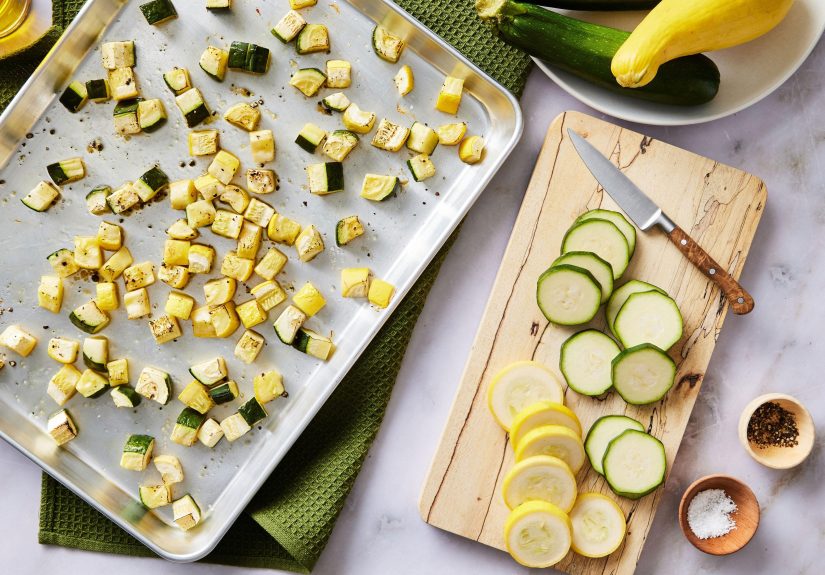
- Zucchini/summer squash: long planks (about 1/3–1/2 inch thick) beat tiny rounds.
- Eggplant: thick planks or rounds (1/2 inch) so it softens without turning to ash.
- Bell peppers: wide strips; small dice belong in a basket.
- Onions: thick rings or wedges that stay intact.
- Broccoli/cauliflower: “steaks” or large florets skewered or basketed.
Salt Strategically
Salt pulls moisture to the surface. That’s great for flavor, but if you salt delicate veggies too early,
you can accidentally create a watery surface that steams instead of sears.
A good rule:
salt hearty veggies early (eggplant, mushrooms, onions) and
salt delicate veggies right before grilling (zucchini, asparagus).
If you do salt early and see moisture pooling, just blot lightly before the grill.
Oil: Enough to Prevent Sticking, Not Enough to Start a Grease Fire
Oil helps conduct heat and prevents sticking. The trick is thin and even.
Toss veggies with a small amount of oil until they’re lightly glossyno puddles.
If you want extra insurance, you can lightly oil the grates using a folded paper towel dipped in a high-smoke-point oil
and held with tongs (never your bare hand, unless you enjoy pain).
Choose oils that can handle heat: refined avocado, canola, grapeseed, or light olive oil.
Save extra-virgin olive oil for drizzling after grilling when you want flavor, not smoke.
Seasoning That Actually Tastes Like Something
The “salt and pepper is enough” crowd is not wrongjust incomplete.
Salt + pepper + smoke is a great start, but grilled vegetables love a finishing move:
- Acid: lemon, lime, vinegar, pickled onion brineadded after grilling.
- Herbs: parsley, basil, dill, cilantroadded after grilling so they stay bright.
- Heat: chile flakes, hot honey, harissa, chipotle powder.
- Umami: miso butter, soy-sesame dressing, Parmesan, feta, tahini.
Pick the Right Grilling Method for Each Vegetable
Fast, Tender Veggies (High Heat, Quick Cook)
These cook fast and reward you with crisp edges if your grill is hot: asparagus, scallions,
zucchini planks, thin pepper strips, snap peas, green beans.
Grill over direct heat, lid down if needed, and don’t wander off “just for a second.”
Vegetables do not respect your texting schedule.
Medium-Density Veggies (Sear Then Slide)
Eggplant, mushrooms, onions, thicker peppers, and cauliflower steaks do best with a two-step approach:
sear on the hot zone, then finish on the cooler zone.
This prevents “black outside, crunchy inside,” which is not the vibe.
Dense and Starchy Veggies (Pre-Cook or Foil Is Your Friend)
Potatoes, sweet potatoes, carrots, beets, and winter squash need help.
Either parboil (a quick simmer until barely tender), then grill to brown,
or use foil packets with oil, salt, and aromatics to soften them first,
then finish uncovered over direct heat for color.
Small or “Roll-Y” Veggies (Basket, Skewers, or Foil)
Cherry tomatoes, sliced mushrooms, chopped onions, Brussels sprout halvesthese are famous escape artists.
Use a grill basket, skewers, or foil. You’ll save time and reduce the number of vegetables you donate
to the flames like a tiny sacrifice.
Whole Vegetables (The “Looks Impressive, Takes Less Work” Move)
Some vegetables are easiest when left mostly whole: corn (husk on or off), whole peppers, whole onions,
and even sturdy items like eggplant or cauliflower (with patience).
Whole vegetables often need more indirect heat and time, but the payoff is deep flavor and a dramatic reveal.
Temperature and Timing Cheat Sheet
Most vegetables grill beautifully in the medium to medium-high rangeroughly
350–450°Fwith quick items leaning hotter and thick/dense items leaning toward the lower end
(or using indirect heat).
| Vegetable | Best Cut | Method | Typical Time |
|---|---|---|---|
| Zucchini / Summer Squash | Planks (1/3–1/2 in) | Direct heat | 6–10 min total |
| Asparagus | Whole spears | Direct heat (or basket) | 6–8 min |
| Bell Peppers | Wide strips | Direct then indirect | 8–12 min |
| Mushrooms | Whole or thick slices | Basket / direct | 8–10 min |
| Eggplant | Planks (1/2 in) | Sear then indirect | 10–15 min |
| Onions | Thick rings or wedges | Indirect preferred | 12–20+ min |
| Corn on the Cob | Whole | Direct, rotate | 10–20 min |
| Potatoes / Sweet Potatoes | Parboiled slices | Direct then indirect | 10–20 min after parboil |
Times vary with thickness and grill personality (every grill has one). Your best cue is texture:
you want a little resistancenot raw crunchand visible browning where the veggie touched heat.
Flavor Upgrades That Make Grilled Vegetables Unreasonably Good
Marinades: Useful, but Don’t Let Sugar Sabotage You
Marinades can be fantasticespecially oil + acid + herbs + garlic. But sugary marinades can burn fast
on high heat and turn your grill into a caramel crime scene.
If you love sweet flavors (teriyaki vibes), use a low-sugar version, grill over gentler heat,
or brush the sauce on during the last minute or two.
A foolproof approach: season before grilling, then dress after grilling.
You get better browning and you still get big flavor.
Finishing Sauces (AKA: The Reason Everyone Asks for the “Recipe”)
- Lemon-herb vinaigrette: lemon + olive oil + garlic + chopped herbs.
- Chimichurri: parsley + oregano + garlic + vinegar + olive oil.
- Tahini-lime drizzle: tahini + lime + water + salt + cumin.
- Miso butter: softened butter + white miso + a squeeze of citrus.
- Spicy yogurt: Greek yogurt + lemon + smoked paprika + chili flakes.
The “Cheese Hug” Trick
If you want grilled vegetables to feel like a main event, finish them with a little cheese:
Parmesan, feta, cotija, or a thin slice of something melty laid on top right at the end.
It sounds obvious because it is. And it works because cheese has never failed humanity.
Troubleshooting: Fix the Most Common Grilled Vegetable Problems
Problem: Burnt Outside, Raw Inside
You’re using too much direct heat for a thick or dense vegetable.
Sear briefly for color, then move to the cooler zone and close the lid.
For potatoes, carrots, and similar: pre-cook or foil first, then finish for browning.
Problem: Vegetables Stick to the Grates
Sticking is usually a grill-prep issue. Make sure the grates are hot and clean.
Oil lightly (veggies and/or grates), then let the vegetable cook until it releases naturally.
If you try to flip too early, it will cling like it pays rent.
Problem: Soggy, Steamed Veggies
Causes include overcrowding, low heat, and watery marinades.
Give pieces space, grill hotter, and pat wet vegetables dry.
If using a basket, preheat it and don’t dump in a huge pilecook in batches.
Problem: Veggies Fall Through the Grates
Either cut larger pieces, skewer them, or use a basket/grill pan.
Foil works too, though it leans more “roasty-steamy” than “charry.”
Problem: Bitter, Harsh Char Flavor
A little char is delicious; burned oil is not. Use the right oil, avoid sugary sauces early,
and move food away from flare-ups. If you taste bitterness, finish with acid and fresh herbs to rebalance.
Food Safety and Grill Hygiene (Because You’re Feeding People You Like)
Grilled vegetables often share grill space with raw meat and poultry, which is where safety matters most.
Keep vegetables safe and delicious with a few habits:
- Use separate plates for raw proteins and cooked foods.
- Use separate cutting boards for raw meat and vegetables.
- Don’t reuse marinades that touched raw meat unless they’re boiled first.
- Wash hands, utensils, and surfaces after handling raw proteins.
- If you use a wire grill brush, check for loose bristles before cooking/serving.
Make It a Meal: What to Do With Grilled Vegetables After They’re Perfect
Perfect grilled vegetables are not just a side. They’re meal prep with a tan.
Try them in:
- Grain bowls: quinoa + grilled veggies + feta + lemon dressing.
- Tacos: grilled peppers/onions + black beans + salsa verde.
- Pasta: grilled zucchini/eggplant + tomatoes + basil + Parmesan.
- Sandwiches: grilled vegetables + pesto + mozzarella (hello, panini).
- Salads: room-temp grilled veggies + arugula + vinaigrette.
Real-World Grilling Experiences: 10 Lessons That Make “Perfect Every Time” Real
Here’s the part nobody tells you in a neat little recipe card: grilling vegetables is less about memorizing
exact minutes and more about learning a few patterns that show up at every cookout. These are the “ohhh”
moments people tend to have after a handful of grill sessionsso you can skip the heartbreak stage.
1) Your grill has hot spots. Even fancy grills do. The first time you grill vegetables for a crowd,
you’ll notice one corner browns beautifully while another corner politely warms things. The fix is simple:
move pieces around like you’re playing a low-stakes board game. Don’t set it and forget itrotate positions,
especially for quick-cooking items like asparagus and zucchini.
2) “Medium-high” is not a temperature; it’s a personality. On one grill, medium-high is perfect.
On another, it’s basically a jet engine. Start your first batch like a test run: throw on two or three pieces,
watch how fast they color, and adjust. Once you learn your grill’s vibe, everything gets easier.
3) Thin slices are not always better. New grillers often slice vegetables too thin, hoping they’ll cook faster.
They do… right up until they dry out. A slightly thicker plank gives you a juicy interior and still browns on the outside.
If you want faster cooking, increase surface contact (flat cuts) rather than making everything paper-thin.
4) The basket is the difference between “fun” and “chasing mushrooms.” The first time you grill chopped veggies
directly on grates, you’ll probably lose a few pieces and start questioning your life choices. A preheated basket
turns it into easy mode: toss, stir, and you’re doneplus you can cook a mixed medley without micromanaging each piece.
5) Oil is a tool, not a bath. In real life, the biggest “why is this bitter?” moment comes from burned oil
and sugary sauces. Lightly coat vegetables, don’t drench them, and if your marinade has sugar or honey,
treat it like a finishing glaze (late and brief) rather than a long grill companion.
6) Two-zone heat saves your dignity. When you’re grilling multiple vegetables at once,
some will finish fast and some will need time. The cooler zone becomes your holding areakeeping finished vegetables warm
without turning them to mush. It also rescues you from flare-ups when oil drips or a piece slips too close to flame.
7) Don’t over-pack the grill. At cookouts, people get ambitious and cover every inch of grate space.
That crowding traps moisture, which leads to steaming instead of searing. If you want that browned, smoky flavor,
cook in batches. Yes, it’s slightly more work. No, you won’t regret it.
8) Resting vegetables is underrated. Just like meat, vegetables benefit from a short rest.
A few minutes off the grill lets steam redistribute so you don’t cut into watery zucchini or crumbly eggplant.
It’s also the perfect time to add finishing salt, citrus, herbs, or a vinaigretteso flavor clings instead of sliding off.
9) “Perfect” is often served at room temperature. A real-world surprise:
grilled vegetables can taste amazing warm, hot, or room temp. That means less stress.
You can grill peppers and onions early, dress them with a bright vinaigrette, and serve them later without panic.
This is a cheat code for entertaining.
10) The best grilled vegetables usually have a finishing plan. The most memorable platters aren’t just “grilled zucchini.”
They’re grilled zucchini with lemon, herbs, and a salty sprinkle. Or charred peppers with a garlicky dressing.
Or corn with lime and cheese. The experience most people have after a few great batches is realizing that grilling is step one
finishing is where the magic becomes repeatable and “restaurant-level.”
Conclusion
Perfect grilled vegetables every time comes down to a simple formula:
set up two-zone heat, cut for contact, use the right amount of oil,
and match the method to the vegetable.
Add a smart finishing touchacid, herbs, sauce, or cheeseand your vegetables stop being “the healthy side”
and start being the thing people actually remember.