Table of Contents >> Show >> Hide
- Why This Discussion Was Such a Big Deal
- The All-Star Lineup and What Each Brand Brings to the Table
- What the Conversation Was Really About
- Why the Discussion Still Feels Relevant Today
- Practical Lessons Founders and Operators Can Steal Immediately
- The Experience of Joining a Discussion Like This
- Final Thoughts
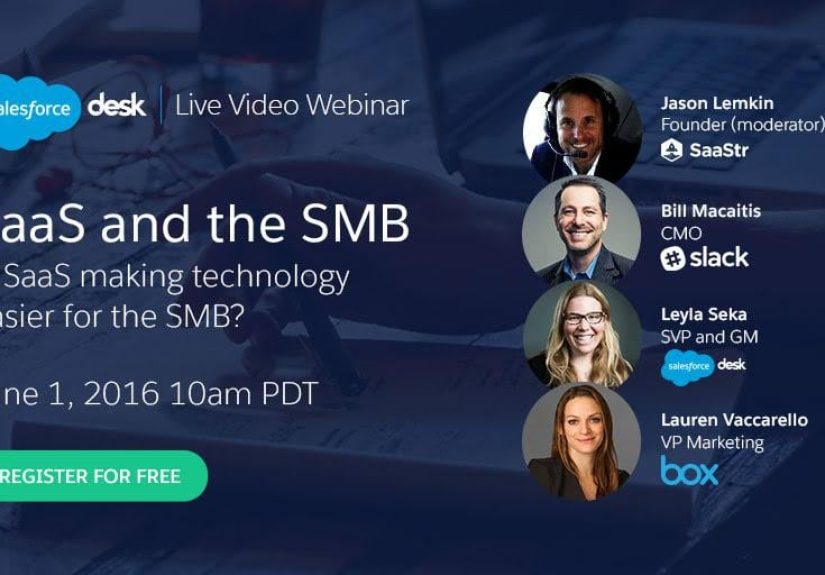
If you work in SaaS, this title reads like someone smashed together a greatest-hits playlist for modern business software. Salesforce. Desk. Slack. Box. SaaStr. That is not a random collection of logos. That is customer service, sales execution, collaboration, content management, and operator-grade SaaS wisdom all showing up to the same party. And yes, that kind of lineup deserves two exclamation points, maybe three if your pipeline is healthy.
The original discussion was built around a simple but powerful theme: what it really takes to sell, market, and deliver technology to small and midsize businesses. On paper, that sounds straightforward. In reality, it is one of the trickiest challenges in software. SMB buyers move fast, expect value quickly, hate bloated complexity, and can smell empty marketing language from three browser tabs away. Put another way: if your product pitch sounds like a corporate hostage letter, they are gone.
That is why this video discussion matters. It brings together leaders from companies that each solved a different part of the modern business stack. Salesforce and Desk brought customer relationship management and support discipline. Slack brought speed, conversation, and workflow. Box brought secure content collaboration. SaaStr brought the questions founders and operators actually care about, not the fluffy conference filler that sounds nice but says absolutely nothing.
Why This Discussion Was Such a Big Deal
At its core, this was never just a webinar. It was a masterclass in how SaaS companies win trust. The panel was originally framed around selling, marketing, and providing technology to SMBs, which is exactly where many software companies either find their footing or face-plant into the nearest revenue spreadsheet.
Small and midsize businesses are an enormous part of the U.S. economy, so understanding how they buy software is not a niche skill. It is a survival skill. SMB customers do not want five months of internal meetings, eleven approval layers, and a proposal deck that looks like it was written by a committee trapped in an airport lounge. They want products that solve real problems, teams that respond quickly, and messages that make sense the first time.
That makes this conversation especially valuable for founders, marketers, revenue leaders, customer success teams, and even product managers. Why? Because marketing to SMBs is not just about generating leads. It is about aligning brand, experience, product usability, support quality, and customer advocacy into one clean story. If one piece breaks, the whole machine wheezes like an old printer on a Monday morning.
The All-Star Lineup and What Each Brand Brings to the Table
Salesforce/Desk: Customer Service as a Growth Engine
Desk.com represented a practical truth that many startups learn a little later than they should: customer service is not a cost center you hide in the basement. It is part of your go-to-market strategy. Desk.com itself came out of Salesforce’s move to serve smaller businesses with help desk software that was more approachable than heavyweight enterprise systems. That mattered because SMBs need powerful service tools, but they do not want to hire an archaeologist to dig through the setup menu.
Salesforce’s presence in the discussion signaled something larger, too. Great companies do not just close deals. They keep customers, support them well, and turn service into retention. In software, retention is where the real romance is. Not the flowers-and-candles kind. The recurring-revenue kind.
Slack: Collaboration That Moves at Human Speed
Slack changed business communication by making work feel less like sending formal memos through a fax machine and more like actually talking to people. Its magic was not just chat. It was context. Teams could discuss projects, share files, connect tools, and keep decisions visible instead of burying them in email chains that should honestly be classified as ancient ruins.
For SMBs, that matters a lot. Small teams live and die by speed. They do not have time for friction. They need tools that help them coordinate sales, marketing, support, and operations in one flow. Slack became a symbol of that shift. Years later, Salesforce acquiring Slack only made the original panel feel even more prophetic. The lines between CRM, service, collaboration, and workflow were already blurring. This panel saw the fog rolling in early.
Box: Content Collaboration Without Chaos
Box brought another crucial piece of the puzzle: content. Businesses do not just communicate. They create proposals, contracts, onboarding materials, decks, knowledge docs, playbooks, and approvals that need to be shared securely and accessed fast. That is where Box carved out a serious role.
For growing companies, content sprawl becomes a quiet disaster. Files live everywhere. Permissions become weird. Nobody knows which version is real. Suddenly the sales deck says one thing, legal says another, and marketing is out there using a PDF from the Stone Age. Box’s value proposition has long been about secure collaboration, centralized content, and making teamwork less messy. That makes it a natural voice in any serious conversation about scaling software adoption.
SaaStr: The Operator’s Microphone
SaaStr was the perfect convener because it has always attracted people who care about what actually works. Not theory floating around in a branding cloud. Not jargon doing yoga. Real operating advice. Real lessons from scaling revenue, building teams, finding product-market fit, and surviving the strange emotional weather of software growth.
That lens changes the whole tone of a conversation. Instead of asking vague questions like, “What excites you about innovation?” SaaStr-style discussions ask the better stuff: How do you market to different customer sizes without becoming generic? How do you build brand without losing performance discipline? How do advocates influence pipeline? When does service become a competitive moat?
What the Conversation Was Really About
1. SMB Marketing Is Not “Enterprise Lite”
One of the smartest ideas behind this panel is that SMB go-to-market strategy deserves its own thinking. Too many companies treat the SMB segment like a smaller version of enterprise. That is a mistake. SMB buyers usually have fewer layers, shorter timelines, tighter budgets, and less patience for overcomplication. They want proof of value quickly. They want onboarding that does not require a map. They want pricing they can explain without needing interpretive dance.
That means messaging has to be clearer, customer education has to be tighter, and the product experience has to start delivering almost immediately. If your entire strategy depends on “they’ll understand after the fourth demo,” you are not selling software. You are hosting a confusion subscription.
2. Brand Matters More Than B2B Teams Sometimes Admit
Another major theme connected to the panel is brand marketing. This is important because too many B2B teams still talk as if brand is some fluffy side quest while “real growth” happens in spreadsheets. In reality, brand affects trust, recall, conversion quality, recruiting, partnerships, and customer confidence. It helps buyers feel safe choosing you.
That is especially true when buyers are comparing several tools that all claim to save time, increase productivity, and “unlock synergies,” which is corporate code for “please pick us.” Strong brands make a category easier to navigate. Slack did that with workplace communication. Salesforce did that with CRM. Box did that with secure cloud content. And SaaStr did that with SaaS media and community education.
3. Sales, Marketing, and Service Cannot Work in Separate Universes
One reason this topic still feels fresh is that modern B2B buying is not linear anymore. Buyers move across channels, self-educate, compare vendors, ask peers, join webinars, read reviews, download content, and expect the handoff between marketing, sales, and customer teams to feel seamless. When those teams operate in silos, customers feel the disconnect immediately.
If marketing promises speed but onboarding is slow, trust drops. If sales closes a customer that support was never prepared for, tension rises. If product launches a feature without giving marketing a usable story, nobody wins. The real takeaway from a panel like this is that growth comes from orchestration, not departmental improvisation.
4. Customer Advocates Are Stronger Than Slogans
The follow-up coverage of the webinar highlighted the role of advocates, and that is a detail worth underlining. Customer advocacy is powerful because people trust other users more than polished brand claims. A happy customer explaining how your product saved time, improved service, or reduced chaos will almost always outperform a marketing line that sounds like it came from a robot who majored in adjectives.
For SaaS companies, advocacy can show up in case studies, peer recommendations, review sites, community forums, webinars, conference talks, referrals, and organic word of mouth. In crowded markets, advocates can become your most persuasive growth channel because they carry credibility that no paid campaign can fully manufacture.
Why the Discussion Still Feels Relevant Today
Honestly, the panel may be even more relevant now than when it was announced. Today’s B2B environment is more digital, more self-serve, more cross-functional, and more crowded. Buyers expect smooth experiences across product, support, content, and communication. They do not separate those categories in their minds. They judge the whole company.
That makes the combination of Salesforce, Slack, Box, and SaaStr especially interesting. Together, they represent a broader truth: winning software companies do not just offer a product. They offer a system for getting work done, helping customers succeed, and making collaboration easier across the full customer journey.
Even the historical arc tells a story. Desk.com reflected the rising importance of modern customer support for smaller businesses. Slack showed how fast internal collaboration could become a strategic advantage. Box proved that documents and workflows are not side issues; they are operational infrastructure. And Salesforce’s later acquisition of Slack reinforced how central collaboration had become to customer and employee experience.
Practical Lessons Founders and Operators Can Steal Immediately
Build for speed, not just scale
SMB teams buy fast when value is obvious. Reduce setup friction, shorten time-to-value, and make onboarding feel like progress, not homework.
Tell one story across every team
Your ad copy, sales demo, onboarding flow, help center, and customer success emails should sound like they belong to the same company. Radical concept, I know.
Make support part of marketing
Great service creates advocates, and advocates create trust. Trust lowers acquisition friction more effectively than louder messaging.
Turn collaboration into a product advantage
When customers can communicate, share context, and act quickly, they feel momentum. Momentum sells.
Do not ignore content operations
Messy content creates messy selling. Clean files, consistent collateral, and secure sharing are not glamorous, but they absolutely help revenue move.
The Experience of Joining a Discussion Like This
There is also something uniquely energizing about joining a conversation where every speaker comes from a different corner of the same business reality. You are not just hearing one company praise its own product until your soul leaves your body. You are hearing how marketing, support, collaboration, and content all collide in the real world.
For founders, a session like this can feel like somebody finally switched on the lights in a room you have been stumbling through. You start to realize that weak conversion is not always a lead problem. Sometimes it is a trust problem. Sometimes it is a follow-up problem. Sometimes it is the fact that your support experience quietly contradicts your brand promise. That kind of insight can save months of guessing.
For marketers, these discussions are a reminder that great campaigns do not live alone. They need product clarity, customer proof, and internal alignment. You can write brilliant messaging, but if sales says something else and support delivers something else again, the customer experiences three brands instead of one. Nobody wants a software company with split personalities.
For customer success and support teams, the experience is often validating. Panels like this recognize what frontline teams have known forever: service is not the cleanup crew after the “real” work is done. Service is the real work. It shapes retention, word of mouth, expansion, and renewal. A customer who feels heard will forgive a lot. A customer who feels ignored will remember everything.
For operators inside SMB-focused software companies, the biggest takeaway is usually emotional as much as strategic. You stop feeling like your challenges are random. The budget pressure, the need for simpler pricing, the obsession with onboarding, the push for stronger referrals, the battle against internal silos, the constant tension between brand and performance marketing, all of it starts to look less like chaos and more like the normal terrain of building a serious SaaS business.
And that is why this title still works so well. “Epic” is not just hype here. It points to the range of perspectives in the room. Salesforce/Desk brings the customer relationship and service discipline. Slack brings speed and workflow. Box brings secure content collaboration. SaaStr brings operator context and the questions everyone actually wants answered. Put those together and you get more than a panel. You get a blueprint for how modern software companies earn attention, close customers, support them well, and keep growing without losing the plot.
If you have ever joined one of these conversations live, you know the feeling. You start watching for a few tactical tips and end up rethinking how your whole company communicates value. You jot down a line about customer advocates, then suddenly you are redesigning onboarding. You hear a comment about brand and start rewriting your homepage headline. You catch a point about support and realize your fastest route to growth might not be another ad campaign at all. It might be better service, cleaner collaboration, and a tighter story. That is the beauty of a truly useful SaaS discussion: it does not just inform you. It reorganizes your priorities.
Final Thoughts
“Join Salesforce/Desk, Slack, Box and SaaStr for an Epic Video Discussion!!” is more than a catchy headline from the SaaS world. It captures a bigger idea about how software companies grow: by combining strong brand positioning, usable products, cross-functional teamwork, excellent service, and credible customer advocacy. The companies involved approached that challenge from different angles, but that is exactly what made the discussion compelling.
If you are building or marketing a SaaS business today, the lesson is simple. Do not think of sales, service, collaboration, and content as separate departments with separate destinies. Your customers experience them all at once. The companies that win are the ones that make the whole journey feel connected, useful, and human. Preferably with fewer buzzwords and more results.