Table of Contents >> Show >> Hide
- Why Outdoor Cushions Blow Away So Easily
- 1. Use Cushions With Built-In Ties or Add Your Own
- 2. Add Hook-and-Loop Strips, Snap Fasteners, or Cushion Clips
- 3. Put a Non-Slip Layer Under the Cushions
- 4. Add Weight Without Making the Cushion Uncomfortable
- 5. Stack and Cover Cushions Properly When They Are Not in Use
- 6. Store Cushions in a Deck Box, Storage Bench, or Cushion Bag
- 7. Rearrange Your Patio to Reduce Wind Exposure
- 8. Build a Simple Weather Routine
- How to Choose the Best Method for Your Patio
- Common Mistakes to Avoid
- Final Thoughts
- What This Looks Like in Real Life: Practical Experiences and Everyday Lessons
If your patio cushions have ever taken a surprise trip across the deck, into the flower bed, or halfway to your neighbor’s yard, welcome to the club. Outdoor cushions are cozy, colorful, and suspiciously confident in windy weather. One minute they’re behaving like respectable patio accessories. The next, they’re auditioning for a role as low-budget parachutes.
The good news is that keeping outdoor cushions from blowing away does not require a complicated engineering degree, a dramatic pep talk, or a 24-hour weather watch. In most cases, a few smart upgrades can keep them put, protect them from wear, and save you from the “Where did the seat pad go now?” scavenger hunt. The trick is to combine the right fastening method with better storage habits and a little common sense when storms roll in.
Below are eight effective, realistic ways to stop outdoor cushions from blowing away, plus practical examples, maintenance tips, and real-life experiences that make the advice easier to use.
Why Outdoor Cushions Blow Away So Easily
Outdoor cushions are basically designed to be comfortable, not aerodynamic geniuses. Many are lightweight, slightly curved, and covered in smooth fabric that helps them dry faster. Unfortunately, that same combination can make them easy for wind to lift and toss around.
Flat seat cushions often slide because they do not grip slick furniture surfaces well. Back cushions can act like tiny sails when gusts hit them just right. Add a smooth metal chair, a breezy porch, or an open patio with no windbreak, and your cushions do not stand much of a chance.
That is why the best solution is rarely just one thing. Usually, the winning formula is this: secure the cushion, reduce slipping, protect it when not in use, and store it before ugly weather arrives.
1. Use Cushions With Built-In Ties or Add Your Own
The simplest fix is often the best one: tie the cushions to the furniture. If your current cushions already have fabric ties, use them every single time instead of assuming “I’ll just be out here for an hour.” Wind loves that kind of optimism.
If your cushions do not have ties, adding them is one of the easiest DIY upgrades you can make. Sew on sturdy fabric ties at the back corners, or attach weather-resistant replacement ties designed for outdoor fabrics. You can also use durable ribbon, canvas tape, or narrow straps if you want a budget-friendly option.
Why this works
Ties stop cushions from lifting and shifting. Even light gusts become much less of a problem when the cushion is physically attached to the chair or bench.
Best for
Dining chairs, bench cushions, rocking chairs, and seat pads.
Pro tip
Use two attachment points instead of one whenever possible. A single tie can still allow the cushion to twist, while two ties keep it aligned and better anchored.
2. Add Hook-and-Loop Strips, Snap Fasteners, or Cushion Clips
If you want a cleaner look than hanging ties, hook-and-loop fasteners can do the job. Attach one side to the furniture frame or seat base and the other to the underside of the cushion. Outdoor-rated adhesive strips are convenient, but for long-term use, sewing the strip onto the cushion and attaching the matching strip securely to the furniture is usually more durable.
Snap fasteners are another good choice when you want something more polished. They take a little more work upfront, but they hold well and are less visible. Cushion clips also work on certain styles of furniture, especially sectionals or framed seating with a lip or bar to attach to.
Why this works
These systems keep cushions from lifting straight up in gusty weather while also preventing everyday sliding when people sit down and get up.
Best for
Deep-seat patio furniture, wicker sectionals, and sofas where you want the cushions to stay neatly in place.
Watch out for
Cheap adhesive products may fail in heat, rain, or direct sun. Choose outdoor-rated hardware and check it every so often.
3. Put a Non-Slip Layer Under the Cushions
Sometimes the problem is not dramatic wind. It is the annoying little shift, scoot, and slide that turns into a full cushion escape later. A non-slip rug pad, grippy shelf liner, or outdoor mesh pad under the cushion can help create friction between the furniture and the fabric.
This is one of the most affordable fixes, and it works surprisingly well for cushions that do not fully blow away but do migrate every time someone sits down or a breeze picks up.
Why this works
More grip means less movement. Less movement means the cushion is less likely to edge its way into a position where the next gust can grab it.
Best for
Smooth metal chairs, resin seating, wooden benches, and porch swings.
Pro tip
Trim the non-slip material slightly smaller than the cushion so it stays hidden. No one wants the patio to look like a science fair project.
4. Add Weight Without Making the Cushion Uncomfortable
Weight is one of the oldest tricks in the book because it works. The goal is not to turn your cushion into a kettlebell. It is to add just enough weight that normal breezes cannot flip it over like a pancake.
You can do this in a few ways. Some homeowners tuck flat weights or small sand pouches beneath seat cushions. Others use weighted cushion covers, weighted hems, or attach discreet ankle weights to the chair base so the cushion stays in place as part of the seating setup. On benches, you can also anchor the cushion beneath a decorative throw or outdoor lumbar pillow that adds a bit of extra mass.
Why this works
Heavier cushions require stronger gusts to move. It is simple physics, and physics is not easily bullied by weather.
Best for
Loose seat cushions on sofas, benches, and loungers.
Important note
Do not trap moisture inside the cushion while adding weight. If you use any DIY method, make sure it does not interfere with drying or create mildew problems.
5. Stack and Cover Cushions Properly When They Are Not in Use
If you leave cushions out 24/7, even the best ones will eventually test your patience. A much smarter habit is stacking them neatly and securing them with a fitted cover when you are not using them.
Outdoor covers with buckles, leg ties, drawcords, or elastic hems are especially useful in windy areas. When the cover fits snugly, it not only helps keep rain and dirt off the cushions, but also makes the entire stack harder for wind to disturb. This is far better than tossing a random tarp over them and hoping for the best. A loose tarp in the wind is just another thing to chase.
Why this works
A secured cover reduces exposure, lowers the chance of individual cushions lifting off, and adds another layer of protection against sun, dirt, and moisture.
Best for
Multi-piece patio sets, sectional cushions, and homes in breezy or coastal areas.
Pro tip
Choose breathable, well-fitted covers rather than overly loose or fully non-breathable ones. A cover that stays on but traps moisture can trade one problem for another.
6. Store Cushions in a Deck Box, Storage Bench, or Cushion Bag
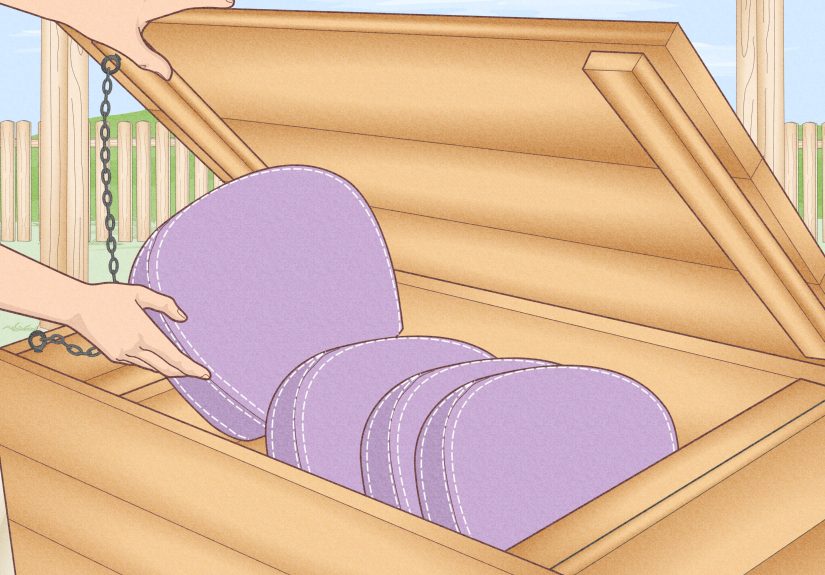
When strong wind, storms, or long stretches of bad weather are in the forecast, storage wins. Every time. A deck box, storage bench, garage shelf, or cushion bag gives you a place to stash cushions quickly and keep them dry, clean, and out of the wind.
This is especially useful for back cushions and throw pillows, which are usually the first pieces to fly off. Even if your seat cushions stay put most days, smaller accent pieces have a talent for causing chaos.
Why this works
No wind can grab what it cannot reach. Storage also helps extend cushion life by reducing exposure to rain, sun fading, and mildew-causing moisture.
Best for
Homes with frequent storms, seasonal weather swings, or patios that are not used every day.
Pro tip
Always let cushions dry completely before storing them. Putting damp cushions into a closed box is like sending mildew a formal invitation.
7. Rearrange Your Patio to Reduce Wind Exposure
Sometimes the problem is not the cushion at all. It is the layout. A chair placed in the windiest corner of the deck, a bench directly facing an open yard, or seating positioned on an exposed rooftop patio will naturally take more abuse from gusts.
Try moving furniture closer to walls, railings, privacy screens, or large planters that can block or deflect wind. Grouping furniture together can also help. A tightly arranged seating area is less exposed than a bunch of pieces scattered across an open patio like they are social distancing from each other.
Why this works
Reducing direct wind exposure makes every other cushion-securing method more effective.
Best for
Patios, porches, balconies, rooftops, and open decks.
Extra idea
Add a windbreak such as lattice panels, outdoor curtains, tall planters, or privacy screens if your yard is consistently breezy.
8. Build a Simple Weather Routine
The most underrated strategy is a routine. If you already know your area gets afternoon gusts, summer thunderstorms, or surprise windy weekends, make cushion security part of your regular outdoor reset.
That might mean tying cushions after every use, storing loose pillows before bed, stacking and covering everything before leaving for the weekend, or bringing cushions inside whenever a storm warning appears. No, it is not glamorous. But neither is finding a soggy cushion face-down in the hydrangeas.
Why this works
Consistency prevents damage before it starts. The best patio setups are not just stylish. They are easy to maintain.
Best for
Everyone, especially busy households that want outdoor spaces to stay nice without constant repair or replacement costs.
How to Choose the Best Method for Your Patio
If you are deciding which option to try first, start with how you actually use your space.
For everyday patio dining chairs
Use ties plus a non-slip layer. This is low-cost, easy to install, and effective for daily use.
For deep-seat sofas and sectionals
Hook-and-loop strips, clips, or discreet weights often work best because they hold large cushions neatly without making the furniture look over-secured.
For very windy areas
Use a combination approach: attachment method, fitted cover, and storage during storms. Coastal homes, rooftop patios, and open backyards usually need more than one solution.
For seasonal furniture
Prioritize storage. If the furniture is not used daily, storing cushions in a deck box or indoors will save you time, cleaning, and replacement money.
Common Mistakes to Avoid
One common mistake is relying on “weather-resistant” labels as if they mean “indestructible.” They do not. Water-resistant fabrics and outdoor foam are helpful, but they still benefit from proper drying, cleaning, and storage.
Another mistake is using a cover that is too loose. A baggy cover can flap in the wind, collect water, and come off more easily. Also, do not ignore wet cushions. Even if they did not blow away, moisture trapped inside the padding can lead to odors, mildew, and shorter cushion life.
Finally, do not wait until a storm warning to figure out your system. It is much easier to secure cushions when the weather is calm than when you are sprinting across the patio in flip-flops while the sky turns dramatic.
Final Thoughts
The best way to keep outdoor cushions from blowing away is to stop thinking of them as decorative extras and start treating them like part of your outdoor setup. Secure them, grip them, cover them, store them, and give them a fighting chance against the wind.
If you want the easiest path, start with ties or hook-and-loop fasteners. If you want the most reliable long-term solution, combine attachment plus storage. And if your patio is especially windy, do not be shy about using more than one method. Outdoor cushions may be soft, but your strategy does not have to be.
After all, your patio should be a place for relaxing with coffee, chatting with friends, and enjoying the weather, not a place where you routinely chase a chair cushion down the yard like it owes you money.
What This Looks Like in Real Life: Practical Experiences and Everyday Lessons
Real-life experience usually teaches the same lesson faster than any instruction manual: the best cushion fix is the one you will actually use. Many homeowners start with the cheapest possible solution, such as simply stacking cushions in a corner at night. That may work for a while, especially in a sheltered backyard, but it often fails the first time the wind changes direction or a late-night storm rolls through. What seemed “good enough” suddenly becomes a cleanup project the next morning.
A common experience is with lightweight dining chair pads. They look harmless, but they are often the first to vanish because they have less weight and less surface grip. People often discover that adding simple ties solves nearly everything. It is not fancy, but it works. Once the cushions are tied down, they stop sliding every time someone sits down, and they stop ending up crooked after every mild breeze.
Deep-seat patio sofas create a different kind of frustration. The cushions may not blow completely away, but they shift just enough to make the furniture look messy all the time. In those cases, non-slip pads and hook-and-loop strips tend to make the biggest difference. Homeowners often say the space suddenly looks neater with almost no daily effort. That is a good reminder that “blowing away” is not always dramatic. Sometimes the problem is the constant slow creep that makes a patio look untidy and high-maintenance.
Storage habits also tend to separate the happy patio owners from the exhausted ones. People who keep a deck box nearby usually have a much easier time after storms, because their cushions are protected in minutes. People who do not have storage often keep telling themselves they will bring everything in “later,” which is how cushions end up wet, dirty, or decorating the lawn at sunrise.
Another practical lesson is that weather-resistant does not mean worry-free. A lot of homeowners buy quality outdoor cushions and assume that means the cushions can live outside forever. Then a season later, they notice mildew smell, fading, or soggy inserts. The real takeaway is that even good cushions last longer when they are cleaned regularly, dried thoroughly, and put away during bad weather.
One more experience shows up again and again: windy patios usually need a combination solution. A single fix might work on a calm porch, but an exposed deck often needs ties plus grip, or storage plus covers, or layout changes plus attachment. Once people accept that, maintenance gets easier because the setup matches the space.
In other words, the smartest patio owners are not the ones with the most expensive cushions. They are the ones who have a simple routine and stick to it. And that routine is what keeps the patio comfortable, polished, and blissfully free of runaway seat pads.