Table of Contents >> Show >> Hide
- Why These Three Machines Keep Showing Up Everywhere
- What a 3D Printer Does Best
- Why Laser Cutters Feel So Efficient
- Why CNC Still Owns Precision
- 3D Printer vs. Laser Cutter vs. CNC: Which One Should You Choose?
- The Real Secret: The Best Shops Use Hybrid Workflows
- What Smart Makerspaces Understand
- How to Think Like a Better Fabricator
- Experiences From the World of Digital Fabrication
- Final Thoughts
- SEO Tags
Some tools whisper, “Let’s make a prototype.” Others kick open the workshop door and shout, “Build the whole thing already.” That is the magic of digital fabrication. A 3D printer, a laser cutter, and a CNC machine are not rivals in a melodramatic reality show. They are more like a dream team: one loves complex shapes, one thrives on speed and sheet material, and one delivers precision with the confidence of a tool that knows exactly where every thousandth of an inch went.
If you have ever wondered which machine belongs in your workflow, your makerspace, your design studio, or your product lab, the answer may be delightfully simple: probably all three. Each one solves a different kind of problem. Each one changes how ideas move from screen to physical object. And together, they create a fabrication ecosystem that is faster, smarter, and much more fun than trying to force one machine to do every job under the sun.
Why These Three Machines Keep Showing Up Everywhere
Walk into a modern makerspace, university lab, startup workshop, or product development studio and you will keep seeing the same trio: the 3D printer, the laser cutter, and the CNC machine. That is not a trend. It is a clue. These tools cover the three big ways people turn digital designs into real objects: additive manufacturing, sheet-based cutting and engraving, and subtractive machining.
A 3D printer builds an object layer by layer. It shines when a part is geometrically complicated, highly customized, or still evolving every twelve minutes because your prototype has entered its dramatic “I thought this would fit” phase.
A laser cutter slices or engraves flat materials such as wood, acrylic, paperboard, leather, and certain other approved materials. It is fast, clean, and wonderful for panels, signs, enclosures, packaging, ornaments, templates, and parts that begin life as a flat sheet before becoming something more interesting.
A CNC machine removes material from a solid block or sheet. That makes it the heavyweight champion of precision machining, smooth surfaces, strong end-use components, and repeatable parts in metal, wood, foam, and many plastics. If your part needs excellent dimensional control, durable material properties, or a finish that says “I was not born five minutes ago,” CNC often wins the argument.
What a 3D Printer Does Best
The greatest superpower of a 3D printer is freedom of form. Internal channels, organic curves, lightweight lattice structures, custom brackets, ergonomic grips, quick jigs, fixtures, and one-off prototypes all fall squarely into 3D printing territory. It allows designers to think in volume instead of just in flat profiles.
This is why rapid prototyping and 3D printing go together like coffee and late-night CAD. Need to test the shape of a handle? Print it. Need to see whether a housing clears a board, a battery, or a hinge? Print it. Need six slightly different versions before lunch so the team can stop guessing and start deciding? Again: print it.
Another big advantage is accessibility. Compared with more industrial fabrication processes, many 3D printing workflows are relatively easy to start, especially when the goal is concept validation rather than production. That ease of setup makes 3D printing especially valuable in education, product design, architecture, robotics, and small-batch manufacturing.
Best use cases for 3D printing
3D printing is a strong match for concept models, fit checks, custom organizers, low-volume accessories, ergonomic parts, fixtures, and designs with shapes that would be awkward or expensive to machine. It is also great when you need frequent changes. In a fast-moving design process, the ability to adjust a file and print again can save enormous time.
Where 3D printing is not the hero
Not every part should be printed. Surface finish can require post-processing. Strength depends on process, material, and orientation. Tolerances may be fine for many applications but not ideal for every precision fit. When a component must look immaculate, hold tight tolerances, or survive serious mechanical abuse, CNC may be the better choice. Think of 3D printing as the fastest path to complexity, not the universal answer to every manufacturing question ever asked.
Why Laser Cutters Feel So Efficient
Laser cutting has a very satisfying personality. It is fast. It is neat. It takes a flat sheet and turns it into something useful with almost theatrical confidence. For parts based on outlines, tabs, slots, engravings, labels, or layered assemblies, a laser cutter can be astonishingly productive.
This is why laser cutters are beloved in makerspaces, packaging labs, product studios, architecture programs, and sign shops. Need a prototype enclosure? A display stand? A control panel? A decorative facade? A classroom model? Laser cutting handles those jobs beautifully.
The real trick is that laser cutters excel at 2D fabrication that can be assembled into 3D objects. That means a design can start as flat parts and become a box, lamp, shelf, sculpture, game board, organizer, model, or branded product. It is less “one-piece wizardry” than 3D printing and more “smart assembly with style.”
Best use cases for laser cutting
Laser cutters shine for flat pack products, enclosures, faceplates, signage, ornaments, custom gifts, acrylic displays, educational models, packaging prototypes, and decorative work. They are especially strong when speed matters and the design can be made from sheet materials.
Where laser cutting has limits
A laser cutter is not the right tool for every geometry. It is amazing in two dimensions and very clever in shallow engraving, but it is still mostly a flat-material machine. If your design needs deep internal geometry, sculpted contours, or complex features on multiple faces, you are probably leaving laser land and heading toward 3D printing or CNC. Also, material compatibility and ventilation matter a lot. In a professional or educational setting, laser cutting belongs in a workflow with approved materials, clear rules, and proper extraction systems. No drama, just good judgment.
Why CNC Still Owns Precision
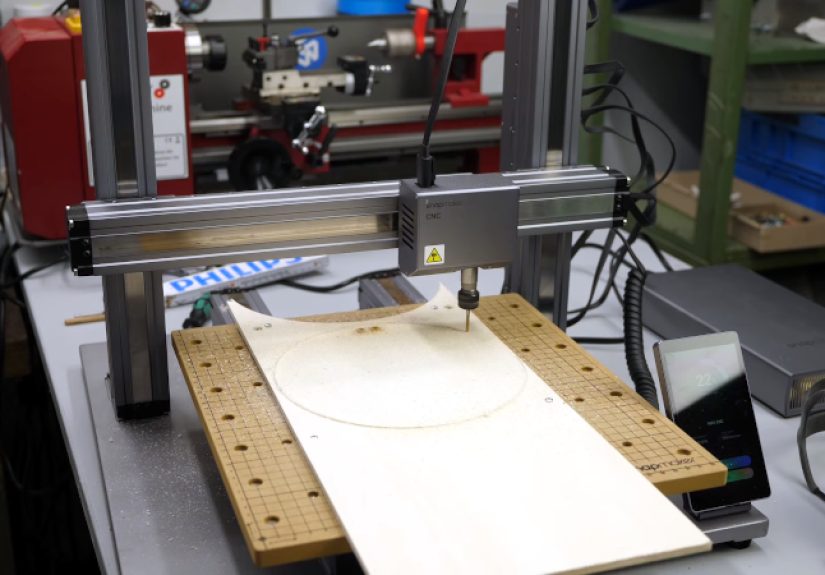
CNC machining is where digital fabrication starts wearing a tailored suit. It is precise, repeatable, and exceptionally good at producing durable parts with strong material properties and excellent finishes. Whether the machine is a router, mill, or other CNC setup, the principle is the same: material is cut away in a controlled way to create the final shape.
This subtractive process makes CNC ideal for production-grade components, functional prototypes, fixtures, furniture parts, machine components, molds, and parts that need consistent performance in the real world. If 3D printing is the champion of quick complexity, CNC is the champion of confidence. When you need a part that feels final, CNC often gets the call.
It also handles a broad range of materials extremely well. Metals, hardwoods, engineering plastics, foams, and composites all fit into CNC-centered workflows. That flexibility is one reason CNC remains central in manufacturing, product development, woodworking, and custom fabrication.
Best use cases for CNC
Choose CNC when you need tight tolerances, better surface finish, stronger end-use materials, or parts that must be accurate across repeated runs. It is often the right move for brackets, housings, tooling, cabinetry, furniture components, consumer product parts, and mechanical assemblies where fit and finish are not optional.
Where CNC asks more from the workflow
CNC is powerful, but it is not casually magical. It typically demands more setup, more planning, more fixturing, and more attention to tool access and machining strategy. Geometry has to respect how a cutting tool reaches the part. Some internal features are difficult or impossible without redesign. In other words, CNC rewards discipline. It is a fantastic machine, but it appreciates a designer who has done the homework.
3D Printer vs. Laser Cutter vs. CNC: Which One Should You Choose?
| Need | Best Bet | Why It Wins |
|---|---|---|
| Fast concept prototype with complex geometry | 3D Printer | Great for rapid iteration and shapes that are difficult to machine |
| Flat panels, signs, enclosures, decorative parts | Laser Cutter | Fast and efficient for sheet materials and clean profiles |
| Precision part with strong material properties | CNC | Excellent tolerances, finish, and durable material options |
| Custom jig or fixture for another tool | 3D Printer or CNC | 3D printing is fast and customizable; CNC is stronger for heavy use |
| Furniture panel, plywood form, or routed sign | CNC | Ideal for large sheet goods and repeatable cutting paths |
| Layered model or assembled flat-pack object | Laser Cutter | Efficient for interlocking parts and visual prototypes |
The honest answer is that choosing one tool often means choosing the first tool, not the only tool. Many of the best products use all three. A team might 3D print an early prototype, laser cut the enclosure panels, and CNC the final structural components. That is not indecision. That is mature fabrication strategy.
The Real Secret: The Best Shops Use Hybrid Workflows
The most exciting thing about digital fabrication is not any single machine. It is the handoff between them. Great workshops build workflows, not just parts. A 3D printer can create a quick fit model or custom fixture. A laser cutter can knock out packaging, templates, or panelized components. A CNC machine can deliver the final precision parts that need strength and polish.
Imagine a hardware startup developing a desktop device. The internal bracket gets 3D printed early because the geometry keeps changing. The outer acrylic panels are laser cut because they need clean windows and graphics. The aluminum mounting plate is CNC machined because it has to fit perfectly and hold up over time. Same product. Three tools. Zero identity crisis.
The same logic works in education, architecture, robotics, furniture design, museum fabrication, and custom retail displays. Once teams stop asking, “Which machine is best?” and start asking, “Which part of the job belongs to which machine?” everything gets smarter.
What Smart Makerspaces Understand
The best makerspaces are not just rooms full of expensive machines. They are systems for learning, experimentation, and responsible access. That means training, supervision, approved workflows, material rules, ventilation, maintenance, and a culture that respects both creativity and safety.
This matters because each fabrication tool introduces different realities. A 3D printer may seem friendly, but some materials and post-processing steps still require thoughtful handling. Laser cutters need strict material controls and effective fume management. CNC equipment brings noise, chips, moving tools, and setup requirements that reward patience rather than improvisation.
In practical terms, successful makerspaces do not merely collect machines like trophies. They build pathways: orientation, machine-specific training, clear access rules, thoughtful room layout, and support staff who can help people choose the right process before a project becomes an expensive lesson in optimism.
What this means for teams and schools
For schools, it means digital fabrication is most effective when paired with instruction, design thinking, and project planning. For businesses, it means the value of a tool is multiplied by workflow discipline. A machine does not save time all by itself. A machine plus training plus the right use case? That is where the magic starts paying rent.
How to Think Like a Better Fabricator
The smartest fabricators do not fall in love with a machine. They fall in love with outcomes. They ask: What does this part need to do? How fast do we need it? What finish matters? How often will it change? Does it need strength, speed, beauty, precision, or all four at once?
That mindset prevents a lot of frustration. It stops people from trying to 3D print something that should have been laser cut, or machining a part that could have been prototyped in plastic overnight, or forcing a laser cutter to solve a deeply three-dimensional problem because the machine happens to be available and looking very confident.
Good fabrication decisions come from understanding process strengths. Great fabrication decisions come from understanding process combinations. That is why digital fabrication keeps growing in product development, custom manufacturing, education, and creative industries. It is not just about making objects. It is about compressing the distance between an idea and a useful result.
Experiences From the World of Digital Fabrication
Spend enough time around a workshop that includes a 3D printer, a laser cutter, and a CNC machine, and you start to notice something interesting: each tool creates a different kind of energy in the room. The 3D printer inspires curiosity. People gather around it because it feels like watching an idea slowly materialize out of thin air. There is always someone squinting at a first prototype, turning it in their hands, and saying, “Okay, this is close, but version two is going to be better.” That is the 3D printing experience in a nutshell. It encourages iteration. It makes imperfection useful. It turns design changes into momentum instead of failure.
The laser cutter creates a different mood. It is the machine of sudden gratification. Flat stock goes in, highly polished parts come out, and everyone quietly pretends this level of efficiency is normal. Designers love it because panels, patterns, packaging, labels, and decorative details appear with remarkable speed. Even simple projects feel elevated. An enclosure is no longer just a box. It becomes a smartly assembled object with clean edges, engraved branding, and an air of “yes, someone definitely planned this.”
Then there is CNC, which tends to command a little more respect. It feels less like a friendly helper and more like the serious professional in the room. When teams need a part that fits correctly, holds up under stress, and feels truly finished, CNC often becomes the point where prototype thinking turns into production thinking. People stand a little straighter around it. They ask more questions before they commit. And when the part comes off the machine looking crisp and exact, there is a particular kind of satisfaction that says, “All right, now this is real.”
One of the best experiences in digital fabrication is seeing how these tools complement each other on a single project. A rough concept becomes a printed model. The display pieces get laser cut. The final functional components are machined. The project improves not because one tool did everything, but because each tool handled the part of the job it was best at. That is when a workshop starts to feel less like a room full of equipment and more like a creative engine.
There is also a human side to all of this that people sometimes overlook. Makerspaces and fabrication labs are full of small moments of shared problem-solving: someone helping refine a file, someone suggesting a better material, someone pointing out that a project would be faster if the team changed processes. Over time, that culture becomes just as valuable as the machines themselves. You do not only learn what a 3D printer, laser cutter, or CNC machine can do. You learn how to think in possibilities. And once you have that mindset, it is very hard to walk past a sheet of plywood, a spool of filament, or a block of aluminum without imagining what it could become.
Final Thoughts
So, 3D printer? Laser cutter? CNC? Yes, please. Not because every shop needs to collect machines like trading cards, but because each of these tools solves a different class of problem exceptionally well. 3D printing is unbeatable for fast iteration and complex geometry. Laser cutting is brilliant for speed, flat materials, and elegant assemblies. CNC machining remains the gold standard for precision, finish, and robust parts.
The real power appears when you stop treating them as competitors and start using them as collaborators. That is how great products get built. That is how great makerspaces operate. And that is how ideas move from “neat sketch” to “can I make ten more of these?” with much less frustration and a lot more joy.