Table of Contents >> Show >> Hide
- Small Changes That Make a Big Living Room Impact
- Unexpected Color and Pattern Ideas
- Furniture Tricks That Refresh the Room
- Wall, Shelf, and Surface Styling Ideas
- Texture, Comfort, and Personality
- Smart Ideas for Small or Awkward Living Rooms
- How to Choose the Best Living Room Decorating Ideas for Your Home
- Real-Life Experience: What Actually Works in a Living Room Refresh
- Conclusion
Your living room is the place where shoes disappear under the sofa, guests politely pretend not to notice your remote-control collection, and everyone somehow ends up during a partyeven if the snacks are in the kitchen. In other words, it deserves a little love.
The good news? A stylish living room does not require a mansion, a designer budget, or a dramatic “before and after” montage. Many of the best living room decorating ideas are small, practical, and delightfully unexpected. A new lampshade, a rearranged chair, a thrifted side table, or one bold pillow can change the mood faster than you can say, “Why did we ever put the sofa there?”
Below are 33 easy living room decorating ideas that blend comfort, personality, smart layout, color, texture, and budget-friendly style. Use one, use five, or try them all slowly over time. Your living room does not need to look perfect. It needs to feel like a room people actually want to live in.
Small Changes That Make a Big Living Room Impact
1. Hang One Oversized Piece of Art
Instead of filling every wall with tiny frames, try one large artwork above the sofa or mantel. Oversized art creates a strong focal point and instantly makes the room feel more intentional. It does not have to be expensive; a framed textile, enlarged family photo, or DIY canvas can work beautifully.
2. Move Furniture Away From the Walls
Many living rooms suffer from “furniture wall-hugging syndrome.” Pull the sofa or chairs a few inches away from the wall to create breathing room and better conversation flow. Even a small shift can make the space feel more designed and less like a waiting room with throw pillows.
3. Add a Statement Light Fixture
Lighting is jewelry for the room. A sculptural pendant, modern chandelier, paper lantern, or dramatic floor lamp can turn an ordinary living room into a space with personality. If replacing hardwired lighting is not an option, plug-in sconces and large floor lamps are renter-friendly heroes.
4. Layer Your Lighting
One ceiling light cannot do everything. Mix table lamps, floor lamps, wall sconces, and accent lighting to create warmth and flexibility. Use bright lighting for reading, soft lighting for movie night, and a small lamp in a dark corner so it stops looking like a suspicious cave.
5. Try a Rug That Is Bigger Than You Think
A too-small rug can make a living room feel disconnected. Choose a rug large enough for at least the front legs of your sofa and chairs to rest on it. This helps anchor the seating area and makes the whole room feel pulled together.
6. Layer Rugs for Texture
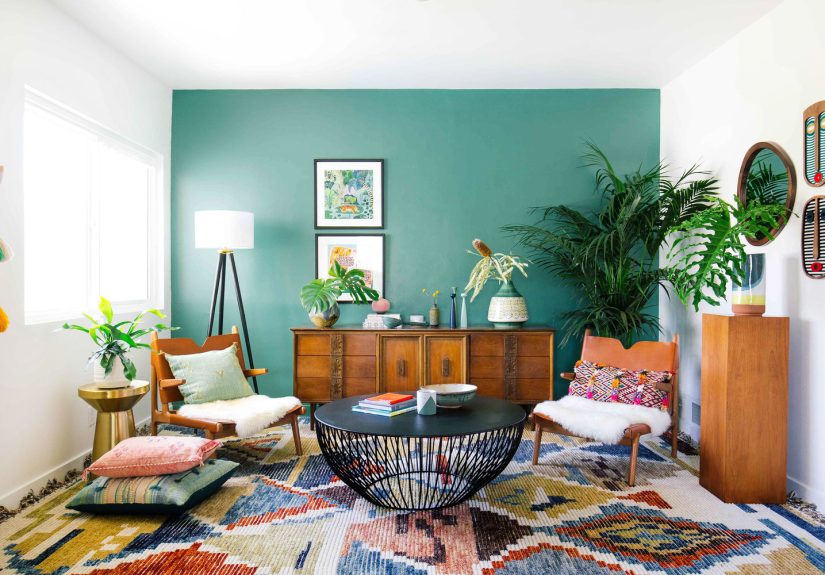
If you already own a neutral rug, layer a smaller patterned rug on top. This is a clever way to add color, hide wear, and create a collected look. A jute rug under a vintage-style patterned rug is a classic combination that feels casual but polished.
Unexpected Color and Pattern Ideas
7. Paint Just One Interior Door
An interior door painted in charcoal, olive green, navy, or deep red can add surprise without overwhelming the room. It is a small surface, so the commitment is low, but the visual payoff is high. Think of it as the living room’s quiet little plot twist.
8. Use Black Accents for Balance
A room full of pale neutrals can look soft but unfinished. Add small black accents through picture frames, a lamp base, a vase, curtain rods, or a side table. Black adds visual weight and helps other colors feel sharper.
9. Mix Two Patterns on Purpose
Pattern mixing works best when the patterns share at least one color. Try striped pillows with a floral throw, or a geometric rug with solid curtains. Keep one pattern large-scale and the other smaller so they do not fight like siblings in the back seat.
10. Add One Unexpected Color
If your living room is mostly beige, gray, white, or brown, add one unusual accent color. Chartreuse, rust, plum, cobalt, mustard, or terracotta can wake up a room quickly. Start with pillows, books, ceramics, or a throw before committing to paint or upholstery.
11. Paint the Ceiling
The ceiling is often ignored, which is rude considering it has been up there working hard all along. A soft blue, warm cream, pale pink, or moody charcoal ceiling can add depth and character. In small rooms, a painted ceiling can make the space feel cozy and intentional.
12. Use Curtains as a Color Moment
Curtains are not just window covers; they are tall, fabric-covered opportunities. Choose patterned, textured, or colorful curtains to add drama without buying new furniture. Hang them high and wide to make windows look larger and the ceiling feel taller.
Furniture Tricks That Refresh the Room
13. Create a Real Conversation Area
Arrange seating so people can talk without twisting like pretzels. Two chairs facing a sofa, a loveseat angled toward an armchair, or a pair of stools near the coffee table can make the room feel more social. A living room should invite conversation, not force everyone to stare at the television like it is giving a sermon.
14. Add a Small Stool
A small stool can act as extra seating, a side table, a plant stand, or a place to drop a book. Wood, ceramic, upholstered, or woven stools add function without taking up much space. They are especially useful in small living rooms.
15. Choose Furniture With Visible Legs
Furniture raised on legs lets light and air move underneath, which can make a room feel more open. This is especially helpful in apartments and compact spaces. A leggy sofa, slim console, or elevated media cabinet can reduce visual heaviness.
16. Reupholster or Slipcover One Piece
You do not need to replace every chair. Refreshing one tired piece with a slipcover, new fabric, or even a bold throw can shift the whole room. A patterned chair in a neutral room adds personality without turning the space into a circus tent.
17. Float a Console Behind the Sofa
If your sofa sits away from the wall, place a slim console table behind it. Use the surface for lamps, books, bowls, or baskets. This creates a finished look and adds storage without crowding the main seating area.
18. Swap the Coffee Table for an Ottoman
An upholstered ottoman softens the room and adds comfort. Add a tray on top for drinks, candles, and remotes. This is a smart choice for families, small spaces, or anyone who likes to put their feet up with the confidence of a person who owns the remote.
Wall, Shelf, and Surface Styling Ideas
19. Style Your Coffee Table in Threes
Use three elements: something tall, something low, and something personal. For example, try a vase, a stack of books, and a small bowl. This simple formula looks styled without feeling stiff.
20. Leave Some Empty Space
Not every shelf needs to look like it is preparing for a yard sale. Negative space helps important objects stand out and makes the room feel calmer. Edit shelves until each item has room to breathe.
21. Turn Books Around by Color
Organizing books by color can create a bold, graphic effect. If that feels too perfect, group them loosely by tone: dark books together, pale books together, bright books together. The goal is not library science; it is visual rhythm.
22. Hang Art Lower Than You Think
Art often gets hung too high. As a general rule, keep the center of artwork near eye level, and relate it to the furniture below it. Art above a sofa should feel connected to the sofa, not like it is trying to escape through the ceiling.
23. Create a Mini Gallery Wall
A gallery wall does not need to cover the entire room. Try three to six pieces in a small corner, above a sideboard, or beside a reading chair. Mix photos, sketches, vintage prints, and small objects for a collected look.
24. Add a Mirror Across From a Window
Mirrors bounce light and can make a living room feel larger. Place one across from or near a window to reflect natural light. Choose a frame that adds character, such as warm wood, antique brass, matte black, or woven rattan.
Texture, Comfort, and Personality
25. Bring in Natural Materials
Wood, rattan, stone, linen, wool, leather, and plants all add warmth. A room with too many smooth surfaces can feel flat, so mix textures to create depth. Even one woven basket or wood tray can make a living room feel more relaxed.
26. Add a Plant With Height
A tall plant fills vertical space and makes a room feel alive. Try a fiddle-leaf fig, rubber plant, dracaena, olive tree, or palm if the light is right. If your plant-care history is tragic, a high-quality faux tree is better than a crispy real one performing a slow botanical farewell.
27. Use Baskets as Decor and Storage
Baskets hide blankets, toys, magazines, chargers, and other living room mysteries. They also add texture and warmth. Place one beside the sofa, under a console, or near the fireplace for easy everyday storage.
28. Display Something Weird and Wonderful
A living room becomes memorable when it includes something personal: a vintage camera, handmade pottery, travel souvenir, thrifted sculpture, or framed concert ticket. Perfect rooms are nice, but personal rooms are better.
29. Add a Quilt or Textile Over the Sofa
A folded quilt, kantha throw, woven blanket, or patterned textile can change the look of a sofa instantly. This is especially useful if your sofa is neutral or slightly worn. It adds color, softness, and the comforting suggestion that someone here knows how to relax.
30. Mix Old and New Pieces
A room filled entirely with new furniture can feel like a showroom. Add vintage, antique, thrifted, inherited, or handmade pieces to create character. A modern sofa with a vintage side table or antique mirror feels layered and authentic.
Smart Ideas for Small or Awkward Living Rooms
31. Create Zones With Rugs or Lighting
Open-plan and small living rooms often need visual boundaries. Use a rug to define the seating area, a lamp to mark a reading corner, or a console table to separate the living room from the entry. Zoning makes a room feel organized without adding walls.
32. Use Vertical Storage
When floor space is limited, look up. Wall-mounted shelves, tall bookcases, vertical art, and hanging planters use height instead of valuable walking space. This keeps the room functional while drawing the eye upward.
33. Make One Corner Feel Special
Choose one neglected corner and give it a job. Add a chair, small table, lamp, plant, and art to create a reading nook. Or turn it into a music corner, game area, pet lounge, or coffee spot. Sometimes the best living room decorating idea is simply giving a forgotten corner a reason to exist.
How to Choose the Best Living Room Decorating Ideas for Your Home
Before buying anything, take a slow walk around your living room and notice what feels off. Is the room too dark? Start with lighting. Does it feel bland? Try color, pattern, art, or texture. Is it cluttered? Add baskets, shelves, or closed storage. Does the layout feel awkward? Move furniture before spending money.
The best decorating updates solve a real problem while making the room prettier. A large rug can fix a floating furniture arrangement. A mirror can brighten a dim wall. Curtains can add softness and height. A better side table can stop everyone from balancing coffee mugs on sofa arms like tiny acts of danger.
Also, decorate for the life you actually live. If you have kids, pets, movie nights, snack nights, game nights, or friends who treat the sofa like a full-body landing pad, choose durable fabrics and forgiving surfaces. If you love quiet evenings, prioritize lamps, soft textiles, and a cozy chair. If you entertain often, create flexible seating and open pathways.
Real-Life Experience: What Actually Works in a Living Room Refresh
After seeing many living rooms go through small, realistic transformations, one lesson stands out: the most successful rooms are not the most expensive ones. They are the rooms where every change has a purpose. A homeowner might start by saying, “I need a new sofa,” but after moving the existing sofa, adding a larger rug, and replacing a harsh ceiling bulb with warm lamps, the room suddenly feels new without the cost of major furniture.
One of the easiest upgrades is rearranging the seating. In many homes, the sofa automatically faces the television, while every chair looks stranded on the edge of the room. When chairs are angled toward the sofa and a small table is added between them, the room becomes more welcoming. People naturally sit down and talk. The television is still there, of course, because we are decorating a living room, not pretending streaming services do not exist. But it no longer controls the entire space.
Lighting is another update that consistently changes everything. A single overhead light can make even a beautiful room feel flat. Adding two lamps at different heights creates softness and depth. A floor lamp beside a reading chair makes the corner useful. A small lamp on a console gives the room a gentle evening glow. It is amazing how often a room described as “cold” is simply under-lit.
Texture also matters more than people expect. A smooth leather sofa, glass table, and bare floor can look sleek but feel chilly. Add a wool rug, linen curtains, woven basket, velvet pillow, or wooden side table, and the room starts to feel layered. The trick is not to match everything. In fact, matching too much can make a living room feel stiff. A little contrastold with new, shiny with matte, soft with structuredgives the space energy.
Personal objects are the final ingredient. The rooms people remember usually include something specific: a framed map from a favorite trip, a stack of well-loved books, a bowl from a local market, a family quilt, or a quirky thrift-store lamp that looks like it has stories to tell. These pieces do not need to impress anyone. They simply need to mean something.
A living room refresh works best when it happens in layers. Start with layout, then lighting, then textiles, then personality. Give yourself permission to experiment. Move the chair. Borrow a lamp from the bedroom. Try the art on a different wall. Place a plant where the sad empty corner lives. The room will tell you what is working. And if it does not, you can always move things back. That is the beauty of decorating: most mistakes are fixable, and some of them accidentally become the best idea in the room.
Conclusion
Living room decorating does not have to be complicated, expensive, or painfully trendy. The best ideas are often simple: better lighting, a smarter layout, a bolder pillow, a larger rug, a meaningful object, or one corner that finally gets the attention it deserves.
Use these 33 easy, unexpected living room decorating ideas as a menu, not a rulebook. Try what fits your home, your budget, and your daily routine. A great living room should welcome guests, support real life, and still look good when someone leaves a blanket on the sofa. In fact, that might be the secret: the most beautiful living rooms are not frozen in place. They are lived in, loved, and just polished enough to make everyday life feel a little more special.