Table of Contents >> Show >> Hide
- Why the Discovery of 573 Mountain Fortresses Matters
- These Were “Hidden,” but Not in a Movie-Trailer Way
- Why Water and Height Kept Showing Up Together
- What the Fortresses Reveal About Social Hierarchy
- From Yangshao to Shang to Early Zhou: A Long Timeline of Change
- What Modern Technology Adds to Ancient Stone
- What the Discovery Does Not Prove Yet
- Why This Story Captures the Imagination
- Experiences Related to “Archaeologists Discovered 573 Fortresses Hidden in the Mountains”
- Conclusion
Some headlines make history sound like it was found under a couch cushion. This one is better than that. Archaeologists working in the rugged mountain region around Yulin, in China’s Shaanxi Province, documented 573 ancient stone-walled fortress settlements spread across a landscape of rivers, ridges, and defensive high ground. That is not a typo. Not five. Not fifty. Five hundred seventy-three. It is the kind of number that makes even seasoned archaeology fans sit up straighter and say, “Well, that escalated quickly.”
But the real story is not just the size of the find. It is what these fortresses suggest about how ancient communities organized themselves, defended resources, chose strategic terrain, and built social networks long before modern states or neat textbook borders existed. Many of the sites appear to date from the late Yangshao period through the Shang and into the early Zhou era, giving researchers a long timeline for how fortified settlements evolved in northern China.
In other words, this discovery is not merely a mountain full of old walls. It is a giant archaeological clue board about settlement planning, defense, hierarchy, water access, and the growth of increasingly complex societies. And yes, it also proves that ancient people were just as serious about good real estate as we are. If you can guard it, water it, and see trouble coming, that hill suddenly looks very attractive.
Why the Discovery of 573 Mountain Fortresses Matters
The number alone makes the discovery significant, but scale is only the beginning. Archaeological surveys often reveal isolated sites or small clusters. A network of 573 stone fortresses suggests something much larger: a patterned settlement system across a broad region rather than a handful of disconnected defensive outposts.
That matters because patterns tell stories. When researchers see fortified sites repeatedly positioned near water systems, and often near smaller non-walled settlements, they can begin asking bigger questions. Were these places political centers? Community refuges? Storage hubs? Elite residences? Defensive compounds that also functioned as administrative or ritual nodes? The answer may turn out to be a little of everything.
Reports on the survey indicate that many of the stone-walled sites were accompanied by nearby ordinary settlements without defensive walls. That pairing is especially important. It hints that the fortresses were not random mountain shelters used only in emergencies. Instead, they may have anchored local communities, serving as central places around which daily life, labor, exchange, and protection were organized.
Once that possibility enters the room, the discovery starts to reshape how we think about prehistoric and early historic northern China. Instead of scattered villages living in isolation, we may be looking at a more layered world with strong centers, dependent satellites, and visible differences in social organization.
These Were “Hidden,” but Not in a Movie-Trailer Way
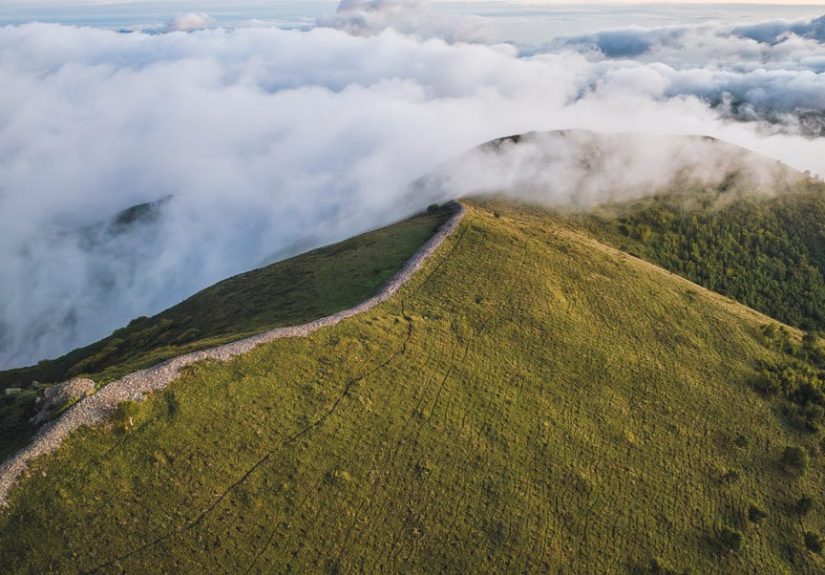
The phrase hidden in the mountains makes for a great headline, but it deserves a little translation. These fortresses were not invisible castles draped in fantasy fog. They were hidden in a more practical archaeological sense: spread across difficult terrain, often overlooked, poorly documented, or only partially understood until systematic fieldwork and aerial mapping brought them together as one coherent picture.
The survey team reportedly followed water-system maps, conducted field investigations, collected samples, and used aerial mapping to identify and document the sites. That method matters because mountainous archaeology is hard. Really hard. Distances deceive. Vegetation lies. Slopes exhaust. Stone walls can blend into the landscape so neatly that a person on foot sees almost nothing while an overhead view suddenly reveals a design that looks deliberate, geometric, and unmistakably human.
This is one reason modern archaeology has become so good at revisiting supposedly known landscapes and finding things everyone missed. Across the world, drone surveys, lidar, satellite imagery, and digital terrain models have transformed how researchers identify large settlement systems in hard-to-reach terrain. So while the 573 fortresses are ancient, the way we are learning to read them is very modern.
Why Water and Height Kept Showing Up Together
One of the most striking details in the reporting on the Yulin survey is the repeated relationship between the fortresses and rivers or water corridors. That is not surprising, but it is revealing.
Ancient settlements needed water for drinking, farming, animals, craft production, and simple survival. At the same time, communities also needed visibility, defensibility, and control over movement through the landscape. Put those needs together and you get a classic formula: settle near water, but not so vulnerably that your neighbors can stroll in and ruin your season.
Mountain ridges and elevated stone enclosures solve several problems at once. They offer commanding views, make attack more difficult, and create boundaries that are both practical and symbolic. A wall says, “This matters.” It marks inside and outside, belonging and exclusion, safety and exposure.
When fortress sites repeatedly appear near waterways, archaeologists begin to see more than a survival strategy. They see a map of power. Whoever controlled the protected high ground near useful river systems may also have influenced movement, storage, farming access, and local security. That starts to sound less like a loose village patchwork and more like a region with hierarchy.
What the Fortresses Reveal About Social Hierarchy
Another major takeaway from the survey is that the fortresses were not all built alike. Some were small and simple. Others had more complex internal layouts and more advanced construction features. That difference is archaeological gold.
Variation in size and design often points to variation in function, status, or chronology. A tiny, rudimentary stone enclosure might have served a small community or a very specific defensive purpose. A larger, more elaborate fortress with organized internal spaces suggests planning, labor coordination, and probably leadership. You do not get that kind of complexity because everyone casually showed up one weekend with rocks and free time.
This is where the discovery becomes especially interesting for historians of early social development. If some of the later or more developed sites show stronger architectural sophistication, they may reflect communities with greater technical skill, denser populations, deeper labor organization, and clearer social ranking. In plain English: some places were likely more important than others, and the stones remember that even when the paperwork is long gone.
That idea fits broader archaeological understanding of how early complex societies form. Social hierarchy does not always arrive with a trumpet fanfare. Often it appears in settlement patterns, in access to fortification, in the size of walls, in who lives near a protected center, and in how labor gets organized across a region.
From Yangshao to Shang to Early Zhou: A Long Timeline of Change
The chronology connected to the fortress network is one reason the discovery has attracted so much attention. Reports place some of these sites as far back as the late Yangshao period, around 2800 BCE, with others extending into the Shang and early Zhou worlds. That means the survey is not capturing a single moment frozen in time. It is revealing a long arc of change.
The Yangshao cultural tradition is associated with the Yellow River basin and is well known for early farming communities, painted pottery, and increasingly settled lifeways. By the time we reach the Shang and Zhou periods, northern China shows much stronger evidence of political centralization, bronze technology, ritual systems, warfare, and complex regional organization.
That broader historical background makes the Yulin fortresses especially valuable. They may help researchers trace how communities in a frontier-like mountain environment shifted from relatively early settlement traditions into more stratified, organized, and possibly militarized forms of life. Instead of treating early Chinese civilization as something that only happened in a few famous centers, discoveries like this remind us that regional landscapes mattered too.
History is rarely built in one capital city and then distributed like office memos. It grows through networks, margins, resource zones, travel corridors, and defensible hills where people build, adapt, compete, and improvise for centuries.
What Modern Technology Adds to Ancient Stone
The discovery also fits a larger global trend in archaeology: difficult landscapes are giving up extraordinary secrets when researchers combine old-fashioned fieldwork with advanced imaging tools. Around the world, archaeologists have recently used drone mapping, lidar, aerial photography, and digital modeling to reveal mountain cities, giant settlement systems, and fortresses far larger than anyone first assumed.
That does not mean technology replaces archaeology on the ground. It means the two now work as a team. Aerial surveys can show hidden patterns, wall lines, terraces, pathways, and site boundaries that are nearly impossible to grasp at eye level. Then field teams verify the details, collect artifacts, study construction methods, and establish chronology.
In the case of the 573 fortresses, that combination appears to have been crucial. A person can spend years wandering mountain slopes and still miss the bigger pattern. But once aerial data and systematic survey are layered together, a region that looked scattered starts to read like a network.
That is a major reason discoveries like this keep arriving in bunches. We are not necessarily finding a suddenly busier ancient world. We are finally getting better at seeing the one that was there all along.
What the Discovery Does Not Prove Yet
Good archaeology is exciting, but the best archaeology also knows when to calm down and drink water. The Yulin fortress survey is a major discovery, but it does not mean researchers already know everything about who lived in each fortress, how power was distributed, or exactly how every site functioned.
Survey data can reveal location, layout, clustering, and broad patterns. It can strongly suggest hierarchy, strategic planning, and regional organization. But deeper questions still require excavation, dating, environmental analysis, artifact study, and comparison with nearby sites. Archaeologists will need more evidence to distinguish whether certain fortresses were seasonal refuges, year-round settlements, local capitals, ritual centers, military strongholds, or multi-purpose community hubs.
That is not a weakness. It is the scientific process doing its job. The best finds do not end the conversation. They make the conversation smarter.
Why This Story Captures the Imagination
Part of the appeal is obvious: everyone likes a lost-world headline. Mountains, ancient walls, hundreds of forgotten strongholds, dramatic views, big historical implications. It has everything except a soundtrack and a brooding narrator.
But the deeper reason this story resonates is that it reminds us how much of the human past still survives in landscapes that people assume have already been explained. The world is not archaeologically finished. Not even close. In places where terrain is rough and records are thin, entire systems of human organization can still emerge from patient work.
The 573 mountain fortresses near Yulin are compelling because they combine scale with intimacy. Scale, because the network is enormous. Intimacy, because each site once held people making daily decisions about food, safety, labor, family, authority, and survival. That is the part stone walls never fully hide. Behind every fortress is not just strategy, but life.
Experiences Related to “Archaeologists Discovered 573 Fortresses Hidden in the Mountains”
To really appreciate this discovery, it helps to imagine the experience of the landscape itself. Not the headline. Not the number. The place. A mountain fortress is never just a ruin. It is a decision preserved in stone.
Picture starting at the bottom of a valley in the early morning. The air is cool, and the terrain rises in layers rather than straight lines. You walk near a river or seasonal watercourse, and at first the land feels ordinary. Then the slope changes. Stones begin to look less random. A line appears where no natural line should be. Another angle answers it. The mountain stops looking wild and starts looking planned.
That is one of the most powerful experiences tied to fortress archaeology: the moment when geography becomes intention. You stop seeing “rocks on a hill” and start seeing labor, defense, memory, and fear. Someone chose this ridge. Someone carried these stones. Someone wanted a view in every direction for a reason.
Now stretch that feeling across hundreds of sites. That is the emotional force of the Yulin discovery. It is not only that archaeologists found many fortresses. It is that they revealed a whole cultural habit of thinking through terrain. These ancient communities understood altitude, visibility, enclosure, and access in a deeply practical way. The mountains were not a backdrop. They were part of the architecture.
There is also the human experience of scale. Reading “573 fortresses” on a screen feels impressive. Standing in a mountain region where fortified sites repeat across ridges and water systems would feel different. It would feel like entering a world where security shaped settlement choices again and again. You would sense that no hill stood entirely alone. Each position may have belonged to a wider web of observation, movement, farming, refuge, and identity.
For archaeology lovers, discoveries like this create a strange double emotion: awe and humility. Awe, because the evidence is massive. Humility, because it means the modern world overlooked something enormous for a very long time. There is something wonderfully sobering about that. We build satellites, software, and highways, then realize a mountain still had 573 stories left to tell.
Even the quieter experience matters. Imagine what it would feel like to sit on one of those ridgelines at sunset. The walls are broken now, the people gone, the watchfulness no longer needed. But the logic of the place remains. You can still see why it was chosen. You can still read the valley below. You can still understand, without a single written word, that this was a place built for both belonging and warning.
That is why mountain fortress discoveries stay with readers. They are not just about ancient architecture. They are about the universal experience of seeking safety in an uncertain world, of turning landscape into strategy, and of leaving behind structures strong enough to whisper across millennia. The 573 fortresses hidden in the mountains may be archaeological sites, but they also feel like messages from people who knew exactly how serious geography could be.
Conclusion
The discovery of 573 ancient fortresses hidden in the mountains near Yulin is more than a catchy archaeology headline. It is a major clue to how communities in northern China organized defense, settlement, and social life over a very long period, from late prehistoric cultures into the Bronze Age world of Shang and early Zhou. The sites appear tied to water systems, clustered with smaller unwalled settlements, and varied enough in size and complexity to suggest real hierarchy and long-term development.
Most importantly, the find reminds us that ancient history is still expanding. Mountains that look quiet on modern maps can preserve entire regional systems of human life, waiting for the right mix of patient survey and modern imaging to bring them back into view. So yes, archaeologists discovered 573 fortresses hidden in the mountains. And in the process, they uncovered something even bigger: a fuller picture of how people built society where the terrain itself was both challenge and ally.