Table of Contents >> Show >> Hide
Washington, D.C. is not always the first city people mention when they talk about hip-hop capitals. New York gets the origin story. Atlanta gets the modern factory label. Los Angeles gets the sunshine-and-lowrider mythology. But D.C.? D.C. gets underestimated, which is funny because underestimating D.C. music is one of the fastest ways to reveal that your playlist has never left the tourist map.
The District has always had its own rhythm. Before rap became the main language for a new generation of local artists, go-go gave the city its pulse: live drums, call-and-response energy, neighborhood pride, and a sound that could turn any block into a family reunion with better percussion. D.C. rappers inherited that spirit, even when they were not literally rapping over go-go beats. The best Washington D.C. rappers sound urgent, stylish, stubborn, emotional, witty, and proudly regional. They carry the city in their cadence.
This ranking looks at the best rappers from Washington D.C. through a hip-hop-head lens: lyrical skill, catalog strength, cultural influence, local respect, originality, and how clearly each artist helped shape the DMV rap conversation. Some names are national stars. Others are cult heroes. A few are underground favorites who deserve a bigger microphone and maybe a better algorithm.
What Makes D.C. Rap Different?
D.C. rap sits at a fascinating crossroads. It is close enough to the East Coast tradition to value bars, sharp writing, and storytelling, but it also absorbs Southern bounce, trap drums, street-rap minimalism, soulful production, and the city’s homegrown go-go swing. The result is not one single sound. That is the point. D.C. hip-hop is a neighborhood map, not a cookie-cutter template.
Wale might give you poetry, sports references, go-go flavor, and relationship drama in one breath. Shy Glizzy can stretch pain and confidence into a melodic street anthem. GoldLink brings dance-floor bounce and glossy funk. Oddisee raps like a thinker who also knows where the drums should land. Fat Trel raps with the charisma of someone who has never met a beat he could not bully into submission. Together, these artists prove D.C. hip-hop has range, history, and a personality big enough to fill more than one lane.
The 15+ Best Rappers From Washington D.C.
1. Wale
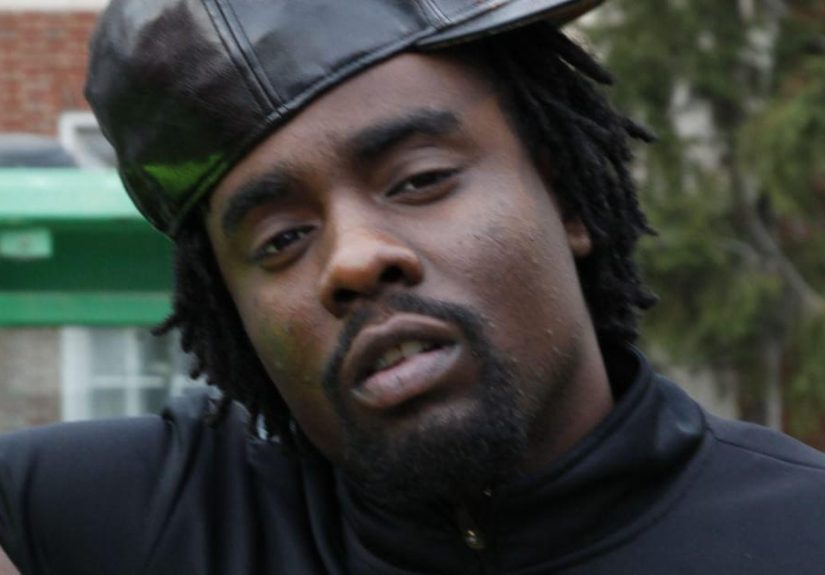
Wale is the obvious number one, and sometimes the obvious answer is obvious because it is correct. Born in Washington, D.C. and raised in the DMV, Wale became the most commercially successful rapper to carry the District’s flag into mainstream hip-hop. His early mixtapes made him a blog-era favorite, especially because he did not sound like he was auditioning for another city’s scene. He built his identity around D.C. culture, clever wordplay, sports metaphors, Seinfeld references, fashion, vulnerability, and go-go-inspired rhythm.
His catalog includes Attention Deficit, Ambition, The Gifted, The Album About Nothing, Wow… That’s Crazy, and Folarin II. Songs like “Lotus Flower Bomb,” “Bad,” “On Chill,” “Pretty Girls,” and “LoveHate Thing” show his ability to move between radio polish and lyrical detail. Wale also deserves credit for making national listeners ask, “Wait, what is go-go?” That alone should come with a civic achievement plaque.
2. Shy Glizzy
Shy Glizzy, also known as Jefe, is one of the most important voices in modern D.C. street rap. His tone is instantly recognizable: nasal, melodic, wounded, and confident all at once. That voice helped make “Awwsome” a breakout record and later made his feature on GoldLink’s “Crew” unforgettable. Plenty of rappers can brag. Shy Glizzy makes bragging sound like survival.
Projects such as Young Jefe, Law 3: Now or Never, Quiet Storm, and Fully Loaded helped establish him as a D.C. staple. What makes Glizzy special is the way he balances street realism with hooks that stick like gum under a Metro seat. His influence on younger DMV rappers is huge, and his name remains central in any serious conversation about Washington D.C. hip-hop.
3. GoldLink
GoldLink brought a sleek, danceable, future-facing sound to D.C. rap. His style blended hip-hop, house, funk, R&B, and go-go-adjacent energy into something he called “future bounce.” With The God Complex, he became one of the most exciting new artists of the mid-2010s. Then “Crew,” featuring Brent Faiyaz and Shy Glizzy, turned into a national moment and gave the DMV one of its defining modern rap records.
His album At What Cost is especially important because it feels like a love letter to a changing D.C. It is stylish, warm, restless, and deeply tied to local identity. GoldLink may not rap like a traditional punchline-heavy MC, but his flow, ear for rhythm, and ability to build atmosphere make him one of the most original rappers Washington D.C. has produced.
4. Fat Trel
Fat Trel is one of those rappers hip-hop heads defend with the passion usually reserved for playoff basketball arguments. A Northeast D.C. native with a booming presence, Trel built his reputation through mixtapes, street records, and pure charisma. He has worked with major names, signed with respected labels, and maintained a fan base that values his raw delivery and larger-than-life personality.
Projects such as Nightmare on E Street, SDMG, Georgetown, and Finally Free show why Trel matters. He can sound funny, aggressive, reflective, and reckless within the same verse. His best music feels local without being small. If D.C. rap had a heavyweight division, Fat Trel would be walking to the ring with a towel over his head and a grin that says the beat should be nervous.
5. Oddisee
Oddisee represents the thoughtful, independent, producer-MC side of Washington D.C. hip-hop. Born in D.C. and shaped by the broader DMV, he built a respected career through sharp writing, soulful beats, and a work ethic that makes most artists look like they are still pressing snooze. As a solo artist and member of Diamond District, Oddisee helped prove that D.C. rap could thrive outside mainstream formulas.
Albums like People Hear What They See, The Good Fight, The Iceberg, and instrumental projects such as Rock Creek Park reveal an artist who thinks deeply about society, ambition, family, race, class, and independence. He is not chasing trends; he is building architecture. For listeners who want substance with groove, Oddisee is essential.
6. Nonchalant
Nonchalant deserves far more credit in D.C. rap history. Her 1996 single “5 O’Clock” became a national hit, bringing a calm but commanding voice from Washington D.C. into mainstream hip-hop. The song’s reflective tone and memorable hook helped it stand apart during a crowded era. She was not trying to out-shout everyone; she made restraint sound powerful.
As a female rapper from D.C. who reached national charts in the 1990s, Nonchalant helped open a door that too many histories barely mention. Her debut album Until the Day remains an important piece of the city’s rap story. If hip-hop heads are building a true D.C. canon, Nonchalant cannot be treated like a footnote. She is chapter material.
7. Tabi Bonney
Tabi Bonney brought color, style, and international flair to D.C. hip-hop. The son of Afro-funk musician Itadi Bonney, Tabi developed a sound that mixed rap, fashion, melody, and global cool. His breakout single “The Pocket” became a local favorite, and his visuals helped him stand out during an era when many independent rappers were still figuring out how to look interesting on camera.
Tabi’s music often feels sunny without being shallow. He helped expand the idea of what a D.C. rapper could look and sound like. Not every great rapper has to be grim-faced in a hoodie under bad lighting. Tabi showed that charisma, creativity, and visual identity could be part of the package.
8. Lightshow
Lightshow is a favorite among listeners who appreciate direct, street-rooted D.C. rap with focus and hunger. He came up during the 2010s wave that pushed the District’s rap scene toward greater national attention. His Life Sentence series and projects like Kalorama Heights gave fans a rapper who sounded locked in, ambitious, and proudly local.
What makes Lightshow stand out is his clarity. He does not overcomplicate the mission. His delivery is firm, his writing is grounded, and his music often feels like a report from inside the city rather than a postcard about it. Among D.C. rap fans, Lightshow is one of those names that separates casual listeners from people who actually did the homework.
9. Yung Gleesh
Yung Gleesh is one of D.C.’s most distinctive cult figures. Before fully stepping into rap, he had ties to go-go’s younger bounce-beat world, and that sense of rhythm helped shape his off-kilter style. His flow can sound loose, strange, hypnotic, and weirdly magnetic. In other words, not everyone gets it immediately, but those who do tend to really get it.
Gleesh’s influence is bigger than traditional chart numbers. He helped bring outsider attention to D.C. street rap and became a reference point for artists interested in more eccentric flows and underground energy. He is proof that being one of the best does not always mean being the most polished. Sometimes it means sounding like nobody else in the room.
10. Chaz French
Chaz French combines emotional storytelling with a sharp, modern rap sensibility. Raised in the D.C. area, he gained attention with projects like Happy Belated and These Things Take Time, where he balanced personal reflection, ambition, and polished production. His music often deals with family, struggle, growth, and the pressure to turn pain into progress.
Chaz belongs on this list because he helped widen the emotional vocabulary of DMV rap. He can rap with urgency, but he is also comfortable being vulnerable. That matters. Hip-hop heads know toughness is not just volume; sometimes it is the ability to tell the truth without hiding behind ad-libs.
11. Q Da Fool
Q Da Fool is one of the strongest voices from the DMV’s hard-edged rap wave. While often associated with the broader Maryland-D.C. scene, his impact on the regional sound is impossible to ignore. His delivery is intense, focused, and built for beats that sound like they were assembled in a basement during a thunderstorm.
Projects such as 100 Keys and his Kenny Beats collaboration Bad Influence helped introduce his style to listeners beyond the DMV. Q Da Fool’s best tracks have momentum, personality, and the kind of local slang and rhythm that make a scene feel alive. He is not background music. He is front-row, elbows-out rap.
12. No Savage
No Savage represents a younger generation of Washington D.C. rap. His music blends melodic street storytelling with forceful delivery, and he has built a strong following through records that move quickly across streaming platforms and social media. Tracks connected to projects like Life of a Savage and Life of a Savage 2 show his ability to switch between aggression and melody.
What gives No Savage his appeal is emotional immediacy. He sounds like an artist rapping from inside the moment, not years after the fact. For newer fans exploring D.C. rappers, he is one of the names that explains where the city’s sound has been heading.
13. NAPPYNAPPA
NAPPYNAPPA is the left-field pick that serious hip-hop heads should already have circled in red marker. Born and raised in Southeast Washington, D.C., he is known for experimental flows, abstract writing, and a fearless underground approach. As part of the city’s creative rap underground, he brings an art-school-meets-block-cypher energy that feels refreshingly unpredictable.
Projects such as New Balance, +HEARTMATH+, AUTONOMOUS, and IFEELJUSTLYKTHEIRART show an artist more interested in expression than easy formulas. NAPPYNAPPA is not trying to make rap for people who only listen while folding laundry. His music asks for attention, and it rewards adventurous ears.
14. Kokayi
Kokayi is one of D.C.’s most respected creative forces: rapper, producer, vocalist, educator, and collaborator. His work blends hip-hop with soul, experimental textures, and live-musician instincts. He has been connected to Grammy-recognized work and remains an important figure for listeners who value musicianship alongside bars.
Kokayi’s strength is versatility. He can rap, sing, produce, and build sonic worlds that do not feel trapped by genre lines. In a city famous for live music culture, that matters. He represents the bridge between D.C.’s bandstand energy and its independent hip-hop imagination.
15. Uptown XO
Uptown XO is a key member of Diamond District alongside Oddisee and yU, and his solo work carries a strong D.C. identity. He raps with the perspective of someone who has watched the city change block by block. His music often explores gentrification, survival, pride, and the complicated relationship between memory and progress.
As an MC, Uptown XO values substance. His voice fits the tradition of rappers who treat the microphone like a community archive. He may not have the mainstream profile of Wale or GoldLink, but his importance to underground D.C. hip-hop is real.
16. yU
yU, another Diamond District member, is a thoughtful lyricist with a warm, grounded style. His solo albums and group work show a rapper who values mood, message, and craft. Like Oddisee and Uptown XO, yU helped give D.C. a respected underground lane rooted in soul samples, careful writing, and grown-man perspective.
He is the kind of rapper who rewards repeat listens. The first play gives you the rhythm; the second gives you the details; the third makes you wonder why more people are not talking about him. Hip-hop heads love artists like that because discovery is half the fun.
17. Priest Da Nomad
Priest Da Nomad is a veteran voice in D.C. hip-hop, known for socially aware writing, sharp performance skills, and a commitment to community-minded rap. He represents the city’s independent foundation, the era and attitude that existed before streaming playlists started deciding who gets called “next.”
His work matters because D.C. hip-hop was not born when national media finally noticed it. Artists like Priest Da Nomad helped build the groundwork, performing, recording, and carrying the culture when the spotlight was smaller. Every scene needs elders, architects, and truth-tellers. Priest fits that role with honor.
Honorable Mentions From the D.C. and DMV Rap Conversation
A proper D.C. rap discussion also has to nod to artists connected to the broader DMV ecosystem. Rico Nasty, IDK, Logic, Cordae, Big Flock, Young Moe, Shabazz PBG, Xanman, KP Skywalka, and Paco Panama have all contributed to the region’s hip-hop identity in different ways. Some are from Maryland or Virginia rather than Washington, D.C. proper, but hip-hop culture rarely respects neat county lines. The Metro does not stop being important because a map gets picky.
The DMV’s strength comes from that overlap. D.C. gives the region its historic cultural center. Maryland and Virginia add their own neighborhoods, studios, schools, slang, and fan bases. Together, they form a rap ecosystem that has become increasingly influential, especially in underground and street-rap circles.
Why Hip-Hop Heads Respect Washington D.C. Rappers
Hip-hop heads respect authenticity, and D.C. rap has a lot of it. The city’s best rappers do not sound manufactured by a label conference room where someone says, “Can we make this more viral?” They sound like artists shaped by real scenes: go-go shows, local radio, neighborhood reputations, independent grind, street DVDs, blogs, SoundCloud waves, and word-of-mouth fandom.
Another reason D.C. rap stands out is its emotional range. Wale can be poetic and petty in the same song, which is honestly a very human combination. Shy Glizzy turns tension into melody. GoldLink makes local memory feel danceable. Oddisee turns observation into philosophy. Fat Trel makes charisma feel like a contact sport. NAPPYNAPPA proves the underground is still weird in the best possible way.
For years, D.C. rappers had to fight for recognition without the industry infrastructure enjoyed by cities like Atlanta or New York. That struggle created artists with strong identities. When you do not have an obvious blueprint, you either imitate someone else or build your own. The best Washington D.C. rappers chose the second option.
Listening Experience: How to Explore D.C. Rap Like a Real Fan
The best way to experience D.C. rap is not to treat it like a checklist. Start with the obvious names, then follow the branches. Listen to Wale’s early mixtape energy and notice how go-go rhythm slips into his hip-hop instincts. Then play The Album About Nothing to hear how he turns anxiety, fame, humor, and ambition into a personal universe. Wale is at his best when he sounds like he is arguing with himself and winning by a split decision.
After that, move to Shy Glizzy. Play “Awwsome,” then “Crew,” then deeper cuts from the Young Jefe and Law series. Listen for the voice first. It bends, cracks, slides, and somehow lands exactly where it should. Glizzy’s music is not just about what he says; it is about how much feeling he squeezes out of a phrase.
GoldLink is the next essential stop. At What Cost works best as a full-album listen because it captures D.C. as a place of memory, motion, nightlife, and change. It is stylish enough for a party but specific enough to feel rooted. If Wale is the ambassador and Shy Glizzy is the street voice, GoldLink is the cool cousin who knows the DJ, the dance floor, and the history behind the groove.
For lyric-focused listeners, Oddisee and Diamond District are mandatory. Their music is perfect for people who like beats with warmth and verses with something to unpack. Oddisee’s production feels lived-in, like soul music wearing fresh sneakers. Diamond District’s work gives you a broader view of D.C. underground rap, where neighborhood observation and grown-up reflection matter as much as hooks.
Then go to Fat Trel and Lightshow for the rawer side of the city’s 2010s rise. Their music captures hunger. It feels local, direct, and physical. Fat Trel has that big-personality quality where even a simple line can sound entertaining because he delivers it like he has already convinced himself it is classic. Lightshow offers a more focused, documentary-like approach, giving listeners a street-level view without unnecessary decoration.
If you want to understand the weirder and more experimental edges, spend time with Yung Gleesh and NAPPYNAPPA. Gleesh can sound slippery and strange, but that is the appeal. He helped make room for flows that do not march in straight lines. NAPPYNAPPA, meanwhile, belongs to the adventurous underground. His music feels like a notebook, a basement show, a performance-art piece, and a rap tape all arguing at once. That is a compliment.
Do not skip Nonchalant, either. Older D.C. rap is too often treated like a prelude to the streaming era, but “5 O’Clock” is a crucial record. It reminds listeners that Washington D.C. had nationally relevant rap voices before the blog era, before “DMV” became a common regional tag, and before every fan had a ranking list in their pocket.
The ideal D.C. rap listening experience is layered. Make one playlist for mainstream entry points: Wale, GoldLink, Shy Glizzy. Make another for street-rap essentials: Fat Trel, Lightshow, Q Da Fool, No Savage, Yung Gleesh. Make a third for underground and lyrical exploration: Oddisee, Diamond District, NAPPYNAPPA, Kokayi, Priest Da Nomad. By the time you are done, you will hear that D.C. rap is not a side story. It is a full conversation.
And here is the fun part: the scene is still moving. D.C. and the broader DMV continue producing artists who mix melody, slang, go-go-influenced percussion, trap structure, and underground experimentation. The next great Washington D.C. rapper might already be uploading songs right now, probably with cover art that looks chaotic, a title in all caps, and a beat that sounds like a haunted bounce house. That is how scenes grow: locally first, loudly second, historically later.
Conclusion
The best rappers from Washington D.C. prove that the city’s hip-hop story is deeper than casual fans might assume. Wale gave the District a national rap ambassador. Shy Glizzy helped define modern D.C. street melody. GoldLink turned local rhythm into future bounce. Oddisee and Diamond District built an independent lyrical tradition. Fat Trel, Lightshow, Yung Gleesh, No Savage, Q Da Fool, NAPPYNAPPA, Nonchalant, Tabi Bonney, Kokayi, Priest Da Nomad, and others all added different colors to the mural.
D.C. rap is not one sound, one era, or one personality. It is go-go memory, street ambition, lyrical craft, underground weirdness, emotional honesty, and regional pride. For hip-hop heads, that makes the District one of the most rewarding scenes to explore. Ignore it, and your rap knowledge has a monument-sized blind spot.