Table of Contents >> Show >> Hide
- Why Simon Pegg Drew a Hard Line on a Shaun of the Dead Reboot
- What Made Shaun of the Dead So Personal in the First Place
- Why a Sequel Does Not Really Work Either
- The Bigger Problem With Reboot Culture
- Why the Original Still Feels So Fresh
- The Real Legacy of Shaun of the Dead
- Extra Perspective: Why This Conversation Hits So Hard for Fans
Hollywood loves a reboot the way a zombie loves a crowded shopping mall: shambling toward it with absolute commitment and very little self-awareness. That is exactly why Simon Pegg’s recent comments about a possible Shaun of the Dead reboot landed with such force. He was not being coy. He was not dangling a sequel tease. He was not doing that modern movie-star thing where someone says “never say never” while quietly checking franchise stock prices. He was blunt. If someone rebooted Shaun of the Dead, he said, it would be “cynical and exploitative.”
That line stings because it cuts straight through the fog machine. It is not just a complaint about one beloved zombie comedy. It is a criticism of an entire entertainment habit: digging up finished stories because recognizable titles are easier to market than fresh ideas. And in the case of Shaun of the Dead, Pegg’s frustration makes even more sense because the movie was never just a clever genre spoof. It was personal. It was handmade. It was specific. It had real emotional bruises under the fake blood.
More than 20 years after the film first shuffled into theaters, Shaun of the Dead still feels alive because it was built with intention, affection, and a very precise comedic brain. That is exactly why reboot talk feels wrong to so many fans. Some films are franchises waiting to happen. Others are lightning in a bottle. This one was a pub pint filled during a thunderstorm.
Why Simon Pegg Drew a Hard Line on a Shaun of the Dead Reboot
Pegg’s argument is not complicated, and that is part of its power. He has openly acknowledged that he and Edgar Wright do not control the property. Universal owns the film, which means a reboot could theoretically happen with or without the original creators’ blessing. That legal reality is exactly what makes his comments feel less like marketing chatter and more like a creative warning shot.
His objection is not that sequels or franchises are automatically bad. In fact, Pegg has spent a healthy chunk of his career in franchises, from Star Trek to Mission: Impossible. He is clearly not allergic to recurring intellectual property. What he resists is the idea of reviving a story that already said what it needed to say, then wrapping it in nostalgia and selling it back to audiences like reheated leftovers with a fancy poster.
That distinction matters. Pegg is not arguing against fun. He is arguing against hollow repetition. There is a difference between expanding a story and strip-mining it. A reboot of Shaun of the Dead would risk doing the latter because the original’s charm is rooted in the chemistry, timing, and lived-in specificity of the people who made it.
“Cynical and Exploitative” Is About More Than One Movie
That phrase sounds severe because it is severe. Pegg is describing a business model that often treats audience affection as a resource to be harvested. When studios dust off a beloved title, they are not always responding to artistic necessity. Sometimes they are responding to the simple fact that familiarity reduces risk. Viewers know the name. Search engines know the name. Social media knows the name. Suddenly the hardest part of movie marketing is already done.
But Shaun of the Dead was never a title-first movie. It was a voice-first movie. The voice came from Pegg, Wright, Nick Frost, and the larger creative orbit around them. Strip away that voice and what do you really have? A zombie comedy set in Britain? Those ingredients are not enough. Plenty of movies have ingredients. Very few have flavor.
What Made Shaun of the Dead So Personal in the First Place
One reason Pegg resists a reboot so strongly is that he has described the movie as deeply personal. Beneath the gags, record-throwing, and pub-hopping survival plan, the story pulls from real feelings and real relationships. Pegg has talked about how elements involving Shaun’s family life, especially the tension around his stepfather, connected to personal experience. That is not trivial background detail. It is the emotional wiring of the film.
The result is a movie that does something rare in horror comedy: it earns its sentiment without sacrificing its bite. Shaun begins the film as a drifting, half-asleep adult who is stuck in routine, dodging responsibility, and mistaking comfort for stability. The zombie outbreak is absurd, yes, but it also becomes a brutal mechanism for forcing him to wake up. He has to grow up while the world falls apart around him. Not subtle, perhaps, but very effective.
This is why Shaun of the Dead still lands years later. It is not only funny because zombies are slow and people are dumb. It is funny because it recognizes that modern life often makes people look a little undead before the apocalypse even starts. That joke works because it is observational, not decorative. The movie is laughing at cultural numbness, male immaturity, routine, and denial, all while remaining unexpectedly tender.
The Secret Sauce Was Specificity
What fans often remember first are the jokes: the cricket bat, the pub plan, the deadpan denial, the music cues, the beautifully escalating chaos. But what keeps the film from fading into cult-movie wallpaper is specificity. Shaun and Ed do not feel like generic comedy leads. They feel like people with history, bad habits, and a genuinely lopsided friendship. Liz is not just “the girlfriend.” She is the grown-up pressure Shaun keeps dodging. The supporting characters are not filler. They are friction.
That is part of why rebooting the movie would be so difficult. A studio could copy the plot beats. It could copy the structure. It could even copy the title, which Pegg clearly hates as a practice when it is done merely for recognition. But it could not easily recreate the exact emotional temperature that made the original work. And without that, all you have is a zombie comedy wearing someone else’s nametag.
Why a Sequel Does Not Really Work Either
Pegg has also made the case against a sequel, and it is a smart one. Shaun already has a completed arc. He starts as a passive, stunted man-child and ends as someone who has gone through loss, responsibility, and change. To make another installment around him, creators would need to dismantle that growth just to give him somewhere new to go. That is not storytelling. That is emotional resetting.
Franchises often do this when they cannot imagine letting a successful ending stay successful. The hero gets older but somehow less wise. The lesson is learned and then unlearned. The happy ending becomes a temporary pause before the next poster. Pegg’s objection cuts to the heart of that problem: if the story is over, forcing it open again may only weaken what made it satisfying.
And honestly, the ending of Shaun of the Dead is part of why people love it. It is funny, a little bittersweet, and perfectly calibrated to the movie’s tone. A sequel would have to top that ending or at least justify disturbing it. Good luck with that. Even the zombies would probably shrug.
The Bigger Problem With Reboot Culture
Pegg’s comments also tap into a wider frustration that movie fans have been feeling for years. Too many reboots are built around branding rather than vision. That does not mean every remake is bad. Some are terrific. Some reinterpret older material in exciting ways. Some discover entirely new emotional angles. But the best remakes are made because creators have a fresh point of view, not because a studio boardroom spotted a familiar title with brand equity.
That is where Pegg’s criticism becomes especially sharp. He has even pointed to the issue of simply reusing titles, arguing that it can feel disrespectful when the old title is borrowed mainly because audiences already know it. His broader point is that recognition alone is not creativity. Memory is not a substitute for imagination.
In that sense, Shaun of the Dead has become a useful test case. If a movie this complete, this beloved, and this creator-specific can still be viewed as reboot material, then almost nothing is safe from the modern content grinder. The question is no longer whether a title deserves a reboot. The question is whether the industry has learned to stop asking.
Why the Original Still Feels So Fresh
There is a reason critics and audiences have kept Shaun of the Dead in circulation for two decades. It does not merely spoof zombie movies; it understands them. Edgar Wright and Simon Pegg made a film that respects George Romero’s influence while also twisting the subgenre into something funny, sad, romantic, and absurdly precise. It is parody made by people who love the thing they are parodying.
That balance is hard to fake. Too many genre comedies wink at the audience so aggressively that they stop functioning as actual stories. Shaun of the Dead works because the zombie threat is real inside the film. Characters can die. Tension matters. Stakes matter. The comedy rises out of character and circumstance, not from the movie constantly elbowing viewers in the ribs and muttering, “Get it?”
The film’s reputation has only grown with time. It is regularly treated as a standout horror comedy, a key entry in the Cornetto trilogy, and one of the titles that helped define Edgar Wright’s kinetic style for global audiences. The 20th-anniversary re-release only underlined that durability. This was not a dead relic being wheeled back into theaters for sentimental reasons. It was a reminder that the movie still plays.
A Cult Classic That Outgrew the Word “Cult”
Shaun of the Dead may have started as a modestly scaled horror-comedy gamble, but its afterlife has been unusually strong. Over time, it became one of those movies people recommend with evangelical cheer: “You haven’t seen it? Fix that immediately.” Its appeal crosses genre lines because it is not just for zombie fans, comedy fans, or British-cinema nerds. It is for anyone who likes movies that are smart enough to be silly and silly enough to be smart.
That is another reason Pegg’s comments resonate. Viewers do not protect this movie because it is untouchable. They protect it because it already feels complete. It has a beginning, a middle, an end, and a point of view. In the reboot era, that almost feels rebellious.
The Real Legacy of Shaun of the Dead
The most interesting thing about Pegg’s refusal to endorse a reboot is that it reveals what the original actually means to him. It is not just a hit from earlier in his career. It is not a piece of IP sitting in a vault. It is a work bound up with friendship, personal history, creative hunger, and the strange little miracle of making something niche that somehow travels everywhere.
That legacy should be enough. Not every beloved film needs to become a content pipeline. Some movies should simply keep their dignity, their ending, and their bar tab. Shaun of the Dead belongs in that category. Its best future is probably the one it already has: new fans discovering it, old fans revisiting it, and everyone quietly agreeing that the safest place for this particular classic is not the reboot machine, but the shelf marked “leave it alone.”
Extra Perspective: Why This Conversation Hits So Hard for Fans
Part of the reason this topic keeps getting attention is that Shaun of the Dead is not just a movie people admire; it is a movie people remember experiencing. There is a big difference. Plenty of films get called classics because critics say they are important. Shaun of the Dead became beloved because audiences felt like they found it. They quoted it with friends, watched it on dorm-room TVs, dragged roommates into the living room for “just one scene,” and somehow ended up rewatching the whole thing. That kind of affection creates protectiveness.
For many viewers, the film arrived at exactly the right moment in movie culture. Zombie stories were already familiar, but this one felt fresh instead of recycled. It was genuinely funny without turning horror into a joke with no teeth. It was emotional without becoming mushy. It had cinematic style without losing the grubby charm of ordinary people making bad decisions under pressure. The film felt cool, but not smug. Smart, but never exhausting. That combination is rare enough that fans naturally get nervous when anyone mentions rebooting it.
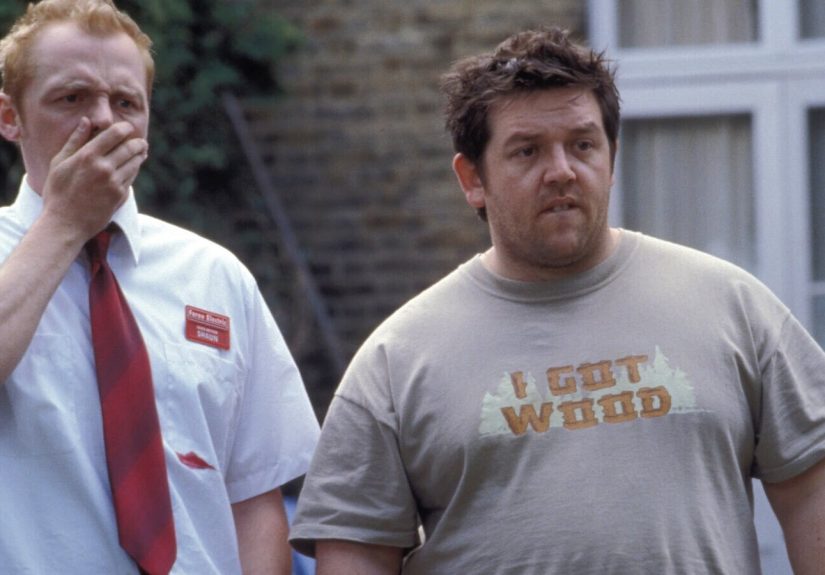
There is also the friendship factor. Simon Pegg and Nick Frost brought a chemistry that felt unmanufactured. Their banter was not just scripted to sound like friendship; it sounded like years of irritation, affection, co-dependence, and shared dumb ideas. Audiences do not only remember Shaun and Ed as characters. They remember the rhythm between Pegg and Frost. Recasting that would not just be difficult. It would feel like a tribute band trying to recreate a conversation people already know by heart.
Then there is Edgar Wright’s filmmaking style, which is all over the movie without overwhelming it. The visual timing, the snap of the edits, the setup-and-payoff structure, the way jokes return later with more meaning than they first seemed to have those touches are a huge part of why the film still feels nimble. A reboot could imitate the fast cuts and needle drops, sure. But imitation is not the same as instinct. You can borrow a haircut. You cannot borrow someone’s reflexes.
What fans often fear is not just that a reboot would be bad. It is that it would be aggressively average. That may be worse. A terrible remake at least goes down swinging. A bland one just sits there, staring into the middle distance, consuming brand value. That is why Pegg’s “cynical and exploitative” remark rings true. It captures the specific dread of watching a singular work get flattened into content.
At the same time, this conversation says something encouraging about the original. The reason people resist a reboot is because the movie still works. It still earns laughs. It still lands emotionally. It still feels handcrafted in a media landscape increasingly built from templates. In a weird way, Pegg’s rejection of a reboot is also a compliment to the film’s staying power. He is saying it does not need rescuing, updating, or franchising. It already survived. It already mattered. It already found its audience.
And maybe that is the most satisfying part of the whole debate. In an era when every decent idea seems to be one meeting away from becoming a universe, Shaun of the Dead remains something refreshingly finite. One movie. One complete arc. One oddly beautiful story about growing up, waking up, and maybe heading to the pub before things get worse. Fans are not being precious when they want to keep it that way. They are recognizing that sometimes the smartest creative decision is the hardest one for Hollywood to accept: stop.