Table of Contents >> Show >> Hide
- So… Are We Talking About Actual Zombie Birds?
- The Science Behind the Spook Show
- How a Taxidermy Bird Becomes a “Bio-Drone”
- Why Do This At All?
- The Big Questions: Ethics, Privacy, and “Please Don’t Make This a Spy Duck”
- Engineering Challenges That Still Stand Between “Prototype” and “Practical Tool”
- Zooming Out: “Dead Bird Drones” Fit a Bigger Trend in Biohybrid Robotics
- What Happens Next?
- Conclusion
- Field Notes: A 500-Word Experience Add-On
If your brain just pictured a flock of undead pigeons shambling down Main Street… congrats, you have an imagination and (probably) a healthy distrust of headlines. What’s actually happening is still strangejust the engineering kind of strange, not the summon-the-exorcist kind. Researchers are experimenting with “bio-hybrid” drones that use parts of taxidermied birds (yes, birds that are already dead and preserved) combined with motors, sensors, and control systems to create drones that look a lot more like the real thing.
The nickname “drone zombies” is clicky and dramatic, but the core idea is surprisingly practical: building bird-like drones is hard, and real feathers and wings come pre-optimized by nature. Instead of trying to manufacture a perfect replica of a wing (a task that has humbled plenty of smart people), these teams are asking: “What if the wing already existsand we just add a brain, muscles, and a battery?”
In this article, we’ll break down what these bird-bodied drones really are, why scientists want them, what they can (and can’t) do today, and the big ethical and legal questions that come with turning a museum-style mount into a flying robot. No horror-movie soundtrack requiredthough you’re welcome to play one softly in the background for vibes.
So… Are We Talking About Actual Zombie Birds?
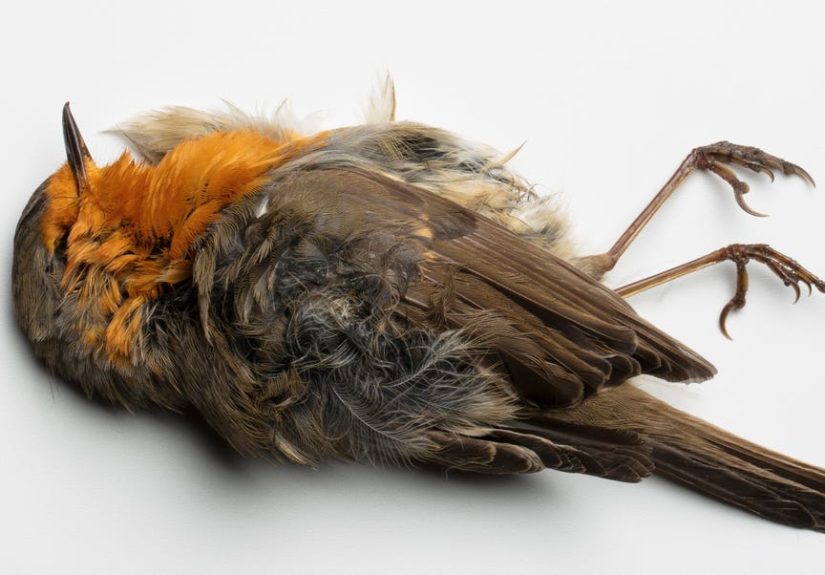
Not in the sci-fi sense. These aren’t reanimated animals. They don’t have living tissue, nerves, or biological control. They’re more like taxidermy meets robotics: preserved bird parts integrated onto a mechanical drone platform. Some designs combine real feathers or wings with artificial structures; others use a preserved body as an outer “shell” over a drone mechanism.
A widely covered example comes from researchers at the New Mexico Institute of Mining and Technology (New Mexico Tech), where the concept has been discussed as a “nature-friendly” approach to wildlife monitoring and avian flight research. In plain English: a drone that looks more like a bird might be less disruptive to animals than a loud, obviously mechanical quadcopter.
The key word is “might.” The promise is real, but so are the limitations. These prototypes are not magical perfect fliers. They’re early-stage machines that hover, glide, and flapsometimes awkwardlywhile the engineers learn what works and what doesn’t.
The Science Behind the Spook Show
Why flapping-wing flight is the boss fight of drone design
A typical consumer drone “cheats” by using rotors. Rotors are efficient, controllable, and comparatively easy to model. Birds don’t do that. Bird flight is a nonstop conversation between flexible wings, airflow, micro-adjustments, body posture, and environmental conditions like gusts and thermals.
Engineers can build flapping-wing drones (ornithopters), but matching real-bird performance is incredibly difficult. Wings aren’t rigid boardsthey bend, twist, and respond dynamically to air pressure. And if your wing model is even a little off, your drone won’t just fly worse. It might not fly at all.
Why real wings and feathers are tempting
Here’s the uncomfortable-but-true engineering pitch: nature already did the design work. Feathers, wing shapes, and lightweight skeletal structures evolved for flight efficiency. Using taxidermied components can reduce the need to fabricate complex wings from scratch and can provide a realistic silhouette.
That realism isn’t only aesthetic. It can influence aerodynamics, especially for gliding and stability. It may also matter behaviorally: animals respond to shapes, motion patterns, and “threat cues.” A drone that looks and moves more like a bird could potentially blend in better than a buzzing plastic rectangle with props.
How a Taxidermy Bird Becomes a “Bio-Drone”
Turning a preserved bird into a drone is less “mad scientist lightning storm” and more “careful integration work with a lot of trial and error.” The general workflow looks like this:
- Ethical sourcing: use birds that are already deceased and legally acquiredoften via taxidermy channels, not harm-to-build.
- Mechanical integration: fit a lightweight frame, motors/servos, and linkages inside or alongside the preserved body.
- Power + controls: add batteries, a flight controller, and stabilization (think: the drone’s “inner ear”).
- Sensors: depending on the goal, integrate cameras or other instruments for observation and data collection.
- Flight testing: iterate constantlybecause “it looked good on the workbench” is not the same as “it flies.”
Current prototypes discussed publicly are still far less agile than real birds, but they’ve demonstrated basic capabilities such as hovering, gliding, and flapping for forward movement. Some reporting has described flights on the order of tens of minutes for certain versions, which is respectable for early-stage experimental platforms (and also a reminder that batteries are still the boss of modern robotics).
Why Do This At All?
The honest answer is: because this weirdness could be useful in a few places where standard drones are… kind of terrible guests. The research motivation usually lands in three buckets: wildlife monitoring, fundamental flight science, and aviation safety.
1) Wildlife monitoring with less disruption
Traditional drones can stress wildlife. Animals may flee, change behavior, or abandon important activities (like feeding or nesting) when a noisy, unfamiliar device appears overhead. That’s a problem if your goal is to observe natural behavior rather than behavior that screams, “A ROBOT IS HERE.”
A bird-like drone could potentially reduce that disturbance, especially if it can be quieter, smaller, and visually less alarming. It’s not a guaranteed solutionsome animals might still notice or reactbut it’s a thoughtful attempt at reducing observer impact.
2) Studying how birds fly (without chasing them in planes)
If you’ve ever watched geese travel in formation, you’ve seen one of nature’s most famous aerodynamic group projects. Researchers want to understand how birds coordinate, how they switch positions, and how wing shape and motion affect efficiency.
A bio-hybrid bird drone might be able to fly closer to real flocks than a typical dronepotentially gathering data in ways that are safer, cheaper, and less disruptive than using aircraft to follow birds (which, to be clear, is as difficult as it sounds).
3) Aviation safety and bird strike mitigation
Bird strikes are a real and persistent aviation issue, which is why the FAA maintains a National Wildlife Strike Database and encourages reporting to improve safety practices. The more we understand bird behavior near airportsespecially patterns around water, food sources, and migrationthe better airports can plan mitigation strategies.
In theory, a realistic bird-like drone could help with monitoring or research around these environments. That’s not the same as “a robot bird will solve bird strikes,” but it highlights why “learning bird flight” isn’t just academic curiosityit has practical safety implications.
The Big Questions: Ethics, Privacy, and “Please Don’t Make This a Spy Duck”
Ethics: the difference between “repurposing” and “exploiting”
The ethical center of gravity depends on sourcing and intent. If researchers are using already-deceased, legally acquired specimens, and the goal is conservation-friendly monitoring or flight science, many people see it as a form of reuselike using donated tissue for medical research.
But discomfort is understandable. A preserved animal body carries emotional weight, cultural meanings, and questions about respect. If the tech ever created demand that incentivized harm, it would cross a bright ethical line for most observers.
Legal reality check: you can’t just “find a bird” and build a drone
In the United States, handling and possessing migratory birds (or their parts) is regulated. There are specific federal frameworks for migratory bird permits, and taxidermy work on migratory birds can require permitting. U.S. Fish & Wildlife Service guidance has also changed over time around salvage and authorization, so responsible teams work through legal channels, not roadside DIY.
Translation: if you’re reading this and thinking, “I have a craft glue gun and a dream,” the dream should probably remain a dream. Research programs do this with institutional oversight, documentation, and compliancebecause “oops, felony” is a terrible project milestone.
Privacy: disguise can be the feature… or the problem
Let’s address the elephant in the sky: a drone that looks like a bird could be used for surveillance. Even if the current researchers emphasize wildlife applications, the underlying conceptcamouflage + sensorsis inherently dual-use.
That’s why policy and transparency matter. Clear rules about where drones can operate, what data can be collected, and how it’s stored are not optional “later” problems. They’re now problems, because trust evaporates fast when technology starts to feel sneaky.
Engineering Challenges That Still Stand Between “Prototype” and “Practical Tool”
If you’re imagining a perfectly lifelike robotic hawk cruising through the clouds… we’re not there. Not even close. Here are the big technical hurdles:
Power and payload
Batteries are heavy, cameras and sensors add weight, and flapping mechanisms can be mechanically complex. Every extra gram demands more energy. That’s why early versions often prioritize basic flight stability and short mission profiles.
Durability and maintenance
Biological materials vary and can degrade. Even preserved specimens are not identical manufacturing parts. Feathers can be damaged, joints can loosen, and the external “skin” isn’t designed to be a rugged, rainproof drone shell. Real-world field use requires protection from weather, dust, and impactwithout ruining the whole “looks natural” advantage.
Control complexity
Flapping flight adds layers of control challenges. Rotors give straightforward thrust vectors. Flapping involves oscillations, changing lift patterns, and interactions between flexible surfaces and airflow. The software has to work harder, and the mechanical system has more ways to be… dramatic.
Biological variation
One reason engineers love standardized parts is that they behave predictably. Nature does not do “standardized.” Two birds of the same species can have different wing stiffness, feather wear, and body geometry. That variability can be scientifically interestingbut it’s an engineering headache when you want repeatable performance.
Zooming Out: “Dead Bird Drones” Fit a Bigger Trend in Biohybrid Robotics
As odd as it sounds, using biological structures in robots is not a one-off stunt. It sits near a growing area sometimes called biohybrid roboticssystems that combine biological materials with synthetic control and power.
A famous (and equally headline-friendly) example is “necrobotics,” where researchers repurposed deceased spiders as mechanical grippers. The logic is similar: biological bodies can contain elegant mechanisms that are hard to reproduce with traditional fabrication at small scales. In that spider work, the researchers used the animal’s natural structure to create a functional gripping device with minimal assembly.
The through-line is not “let’s be creepy.” It’s “nature already built a high-performance structurecan we reuse it responsibly?” Whether people find the result fascinating or unsettling often depends less on the physics and more on the values around it.
What Happens Next?
In the near term, expect iterative improvements rather than instant sci-fi breakthroughs:
- More stable flight: better control algorithms, improved wing actuation, and smarter stabilization.
- Better data collection: sensors tuned for wildlife observation, environmental monitoring, and flight research.
- Expanded “animal-like” platforms: some teams have explored bird forms beyond pigeonsthink ducks and other species with different flight or movement patterns.
- Clearer governance: as the tech becomes more capable, public-facing rules and transparency will matter more, not less.
Long term, the biggest test won’t be whether engineers can build a convincing “bird drone.” They probably can. The real test is whether society can shape how it’s used: for conservation and sciencerather than creepy, consent-free surveillance.
Conclusion
“Scientists are turning dead birds into drone zombies” is a headline designed to make your eyebrows leave your face. But behind the shock value is a real engineering problem (bird flight is tough), a real ecological concern (drones can disturb wildlife), and a real research opportunity (learning from nature’s designs without reinventing every feather).
If this field succeeds, it won’t be because it’s spooky. It’ll be because it’s useful, carefully regulated, ethically sourced, and honestly communicatedso the public understands the difference between “wildlife-friendly research tool” and “spy bird you can’t unsee.”
Field Notes: A 500-Word Experience Add-On
Imagine you’re on a windswept stretch of open land at the edge of a wildlife refuge. It’s early, the light is soft, and everything feels like it’s running on “nature time”slow, cautious, observant. You’ve got binoculars, a notebook, and a team that’s trying not to look like a marching band in the middle of the habitat. Because the moment wildlife realizes humans are here, the data starts lying to you.
Normally, this is where a traditional drone would show up and ruin the vibe: the familiar mosquito-like whine, the sharp silhouette, the hovering that screams, “I am a machine doing machine things.” Birds scatter. Other animals freeze. Your “natural behavior” study suddenly becomes a study of “how fast can everyone evacuate when a gadget appears.”
Now swap in a prototype that looks… unsettlingly bird-like. Up close, you can tell it’s a device. You see the careful seams, the engineered interior, the places where natural anatomy meets hardware. But at a distance, it reads as “bird” first. Your brain does a quick double-takelike when you see a mannequin that’s just realistic enough to make you apologize for bumping into it.
The first “experience” is psychological: you’re watching your own reaction. Part of you is impressed. Part of you is thinking, “This is either brilliant or the beginning of a very weird museum exhibit.” You also become extremely aware of tone. You don’t joke loudly about “zombie drones” near the project, because the ethical line matters here. This isn’t about shock. It’s about minimizing harm and learning something real.
Then the practical side kicks in. Fieldwork is never as clean as lab work. There’s wind. Dust. Light changes. A random gust that makes your calibration look like it got done by a caffeinated squirrel. Your team checks the controls twice, because losing a drone is expensive, but losing a bird-shaped drone is also the kind of thing that becomes a local legend overnight.
When it launches, the second “experience” is soundor rather, the lack of it compared to a typical drone. It’s not silent, but it’s different. It doesn’t announce itself as aggressively. That small difference changes how you move, how you observe, and how you interpret the scene. You’re still careful. You still assume the animals might notice. But you also get a glimpse of the promise: observation that interferes less.
The weirdest moment is when something in the environment responds as if it’s just another bird. Maybe it’s a cautious glance instead of panic. Maybe nothing reacts at all. That’s when the research stops being a headline and becomes a toolone that could help people study flight, reduce disturbance, and answer questions that matter in conservation and aviation safety. And yes, you still go home and tell your friends, “I spent the morning working with a drone that looks like a bird,” because some sentences are too strange not to share.