Table of Contents >> Show >> Hide
- Who Is Michaël Verheyden?
- What Makes the Petite Vase Special?
- How the Petite Vase Fits Into a Modern Home
- Investment Piece: Is the Petite Vase Worth It?
- How to Care for an Alabaster Vase
- Petite Vase vs. Other Designer Vessels
- Who Is the Michaël Verheyden Petite Vase For?
- Real-Life Experiences with the Petite Vase
Some people collect souvenir shot glasses. Others collect refrigerator magnets.
And then there are the people who quietly place a hand-carved stone vessel on a console table
and let everyone wonder, “Okay, who suddenly got very chic?” That’s the subtle magic of the
Michaël Verheyden Petite Vase.
Designed by Belgian industrial designer Michaël Verheyden, the Petite Vase isn’t just a container
for a single stem. It’s a small-scale sculpture, a piece of functional art carved from alabaster
that brings a sense of calm luxury to whatever room it lands in. If you’ve ever looked at a photo
of a beautifully styled Belgian interior and thought, “Why does this look so peaceful?”this vase
is that mood in object form.
Who Is Michaël Verheyden?
Before we zoom in on the Petite Vase, it helps to know the mind behind it. Michaël Verheyden is a
Belgian designer known for creating what he calls “uncommon objects for common rituals”:
everyday pieces like bowls, trays, vessels, and lamps, elevated through thoughtful design and
impeccable materials.
Trained as an industrial designer, Verheyden has built a studio that works almost like a
small-scale atelier. He and his wife, Saartje Vereecke, design and produce collections of
home accessories that sit somewhere between utilitarian object and art piece. Instead of chasing
trends, he focuses on timeless forms, subtle color palettes, and tactile materials like
marble, alabaster, bronze, oak, and leather. The result is a body of work that feels both very
contemporary and oddly serenelike it’s been around forever but never gets old.
His pieces are intentionally quiet. No logos. No flashy details. The luxury is in the weight of the
stone, the depth of the finish, the precision of the curves. The Petite Vase is a perfect example
of that “low-key but definitely not low-end” design language.
What Makes the Petite Vase Special?
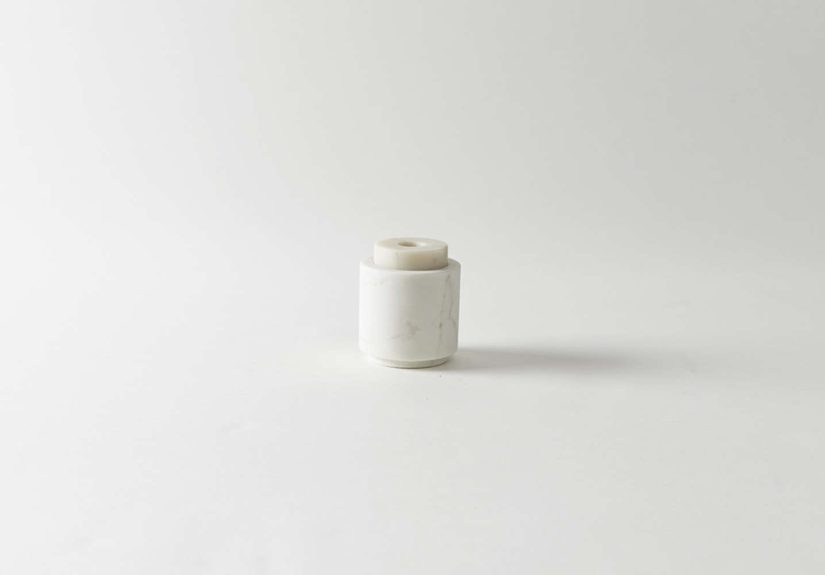
The Michaël Verheyden Petite Vase is, on paper, a small stone vase. In reality,
it’s more like a minimalist totem for people who care about details. Typically crafted in
alabastermost often a creamy white, soft grey, or warm tabac tonethe vase is compact but
substantial. You can feel the quality the moment you pick it up.
Dimensions and Scale
Depending on the retailer and finish, the Petite Vase usually measures around
4 inches in diameter and approximately 5 inches high (about 10–12.5 cm tall).
It’s small enough to sit comfortably on:
- a nightstand or bedside shelf
- a narrow entryway console
- a coffee table tray vignette
- a bathroom counter next to your favorite candle
The small footprint means you don’t have to rearrange your entire room to make it work.
It’s a “just add here” piece that plays nicely with books, other ceramics, or even a cluster
of different stone objects.
Materials: Why Alabaster Matters
Most versions of the Petite Vase are carved from alabaster, a natural stone
loved in high-end interiors because of its soft translucency and subtle veining. No two pieces
look exactly alikesome have more dramatic lines, others are more cloud-like and creamyso each
vase feels one-of-a-kind.
Alabaster also interacts beautifully with light. In bright daylight it looks cool and stone-like;
in evening lamp light, it can take on a gentle glow, emphasizing the natural pattern of the material.
If you’ve ever wanted a vase that looks just as good empty as it does with flowers, alabaster is
your friend.
A Clever Lid and a Single Stem
One of the signature details of the Petite Vase is its removable lid. Many
versions feature:
- a solid stone top that sits neatly on the vessel
- a small opening designed to hold a single bud or a very minimal arrangement
When it’s in use, the lid essentially turns the vase into a soliflore or bud vase:
perfect for one dramatic stem, a petite branch, or a tiny cluster of wildflowers. When it’s not,
the top can double as a paperweight or sculptural object on its own, depending
on the design.
It’s a clever way of dealing with scale. Rather than trying to be an all-purpose flower vessel,
the Petite Vase embraces the idea of a small, daily ritualclipping one flower from your garden,
or picking up a single stem on the way home and giving it a place of honor.
How the Petite Vase Fits Into a Modern Home
On Instagram and in design editorials, you’ll see the Michaël Verheyden Petite Vase
styled in all sorts of settings: on chunky oak coffee tables, minimalist stone plinths, glass
shelving, even tucked into the corner of a kitchen counter next to a stack of linen napkins.
The beauty of this piece is that it doesn’t shout for attention, but it holds its own in
almost any composition.
Styling Ideas for Different Rooms
In the Living Room
Place the vase on a stack of design books on your coffee table, topped with a single branch of
eucalyptus or a short, sculptural flower like a ranunculus or an anthurium. Pair it with:
- a small bronze or brass object
- a low ceramic bowl
- a candle in a similar neutral palette
The combination of texturesstone, metal, paper, waxadds depth without visual clutter.
In the Bedroom
On a nightstand, the Petite Vase feels almost like a tiny altar to calm. Use it for:
- a single stem of something fragrant (like a garden rose or sprig of lavender)
- an airy grass or dried botanical for a more sculptural look
Because of its soft form and stone material, it reads as peaceful rather than fussyideal for a
sleep space that leans cozy-minimal.
In the Bathroom or Entryway
In a bathroom, set the vase near a sink with a tiny stem, a rolled hand towel, and a beautiful
hand soap. In an entryway, pair it with a tray for keys and a small bowl for loose change.
It’s an instant “I live like this all the time” moment, even if your actual life is more
“I just remembered my keys at the last second.”
What Does It Pair With?
The Petite Vase is particularly at home in interiors that feature:
- Natural wood: oak, walnut, or ash
- Stone and plaster finishes: limewashed walls, stone countertops
- Neutral textiles: linen, wool, cotton in whites, greys, and warm browns
But it also works as a balancing element in more eclectic spaces. If you have a lot of color or
pattern, this calm little stone piece acts like a grounding notethink of it as the visual
equivalent of a deep breath.
Investment Piece: Is the Petite Vase Worth It?
Let’s be honest: the Michaël Verheyden Petite Vase is not a budget find.
Depending on the retailer, finish, and currency, pricing can range from a few hundred dollars
into the mid-hundreds. You’re paying for:
- hand-carved natural stone
- a small-batch European studio, not mass production
- a globally recognized designer name
- timeless aesthetic that doesn’t date quickly
If your goal is simply “a vase,” any big-box store can deliver. If your goal is “a small object
that quietly elevates a room and could live in your home for decades,” the price makes more sense.
Think of it the way you might think of a favorite leather bag or pair of boots: you don’t buy it
just because you need something to hold your phone or cover your feet; you buy it because it
feels good every time you use it.
How to Care for an Alabaster Vase
Because the Petite Vase is usually made of alabaster, it deserves a bit more care than a glass
or ceramic piece.
Basic Care Tips
- Limit standing water. Alabaster is porous and can stain if water sits for too long.
Use a small internal glass tube or insert for stems if you’re worried, or empty and dry it promptly
after use. - Wipe with a dry or slightly damp cloth. Avoid harsh cleaners. A gentle wipe is usually
enough to keep dust and fingerprints at bay. - Use uncolored beeswax to refresh the surface. Some retailers recommend a thin layer
of clear, uncolored beeswax to bring back a soft sheen if the surface starts to look dull over time. - Keep away from acidic substances. Citrus, vinegar, wine, or other acidic liquids can
etch or stain the stone. This is a “no lemon juice nearby” object.
Follow those basics and your vase will age gracefullydeveloping a subtle patina rather than
obvious damage. It’s the difference between “worn-in” and “worn out.”
Petite Vase vs. Other Designer Vessels
If you browse high-end home shops, you’ll notice plenty of designer vases in marble, ceramic,
or glass. What sets the Michaël Verheyden Petite Vase apart is its
combination of:
- Scale – it’s truly petite, which makes it incredibly versatile
- Purity of form – clean lines, no decorative ornament
- Material honesty – the stone is the star, not a decorative afterthought
- Ritual focus – it’s built around a single stem, a daily gesture
Many other vases are designed to be “centerpieces” or showstoppers. The Petite Vase is more like
a supporting actor that somehow steals every scene. It doesn’t dominate a surface; it completes it.
Who Is the Michaël Verheyden Petite Vase For?
You don’t need to be a professional stylist or art collector to appreciate this piece, but there
are a few personality types who will especially love it:
- The Minimalist: Someone who would rather have one perfect object than ten
okay ones. - The Scent & Flower Lover: The person who always has a small bud, a sprig
of green, or a bit of seasonal foliage by the sink or bedside. - The Detail-Oriented Host: The friend whose table settings always have one
detail you didn’t even think ofbut now can’t unsee. - The “Quiet Luxury” Enthusiast: Anyone who loves understated, logo-free, but
clearly elevated design.
It also makes a thoughtful gift for design-conscious newlyweds, a milestone birthday, or
a housewarming where you want to bring something more enduring than a bottle of wine.
Real-Life Experiences with the Petite Vase
Design objects are easiest to understand when you see how people actually live with them. So
imagine a few different scenarios where the Michaël Verheyden Petite Vase becomes
part of someone’s everyday routine.
Scenario 1: The Morning Ritual
Picture someone who starts their day quietly: the coffee grinder hums, the kettle warms, and
sunlight moves slowly across the kitchen counter. Next to the coffee setup, there’s the Petite
Vase, sitting on a small, worn wooden board next to a ceramic mug. Every Sunday, they bring home
a bunch of market flowers. Each day that week, a single stem takes its turn in the vasefirst the
showy bloom, then the supporting foliage, then the few hardy pieces left at the end.
The vase doesn’t demand attention, but it becomes part of that daily rhythm. The act of choosing
which stem to use becomes its own tiny, grounding moment. Over time, the alabaster might pick up
the faintest signs of handlinga softened sheen where it’s lifted and moveda living record of
how often it’s part of the day.
Scenario 2: A Nightstand Companion
In another home, the Petite Vase lives on a nightstand with a small reading lamp and a stack of
books. It holds a single dried flower: something sculptural and long-lasting, like a dried poppy
head or a simple stem of bunny tail grass. The owner doesn’t always have fresh flowers, but they
like the idea of a natural shape next to their bedsomething soft and organic to balance out the
rectangular form of the books and the lamp base.
At night, the warm light from the bedside lamp skims over the alabaster, highlighting its natural
veining. It becomes part of the room’s overall sense of calm. When the owner changes the bedding
or swaps the art on the wall, the Petite Vase stays. Its neutral, sculptural quality means it
works with everything.
Scenario 3: A Small but Mighty Desk Detail
For someone working from home, the Petite Vase might sit on a desk. Most of the time, the
removable lid functions as a paperweight on top of a small stack of notes, while the base itself
stands empty off to the sidemore sculptural object than “vase in use.” Occasionally, when a
meeting goes particularly well or a project finally wraps up, the owner cuts a single flower from
somewhere (a backyard rose, a branch from a potted plant, or even a stem rescued from a larger
bouquet in the living room) and gives it pride of place on the desk.
That little gesture becomes a quiet reward system: finished a big deadline? Fresh stem. Survived
a week of back-to-back calls? New foliage. The vase itself never changes, but the story around it
does.
Scenario 4: Hosting and the Art of the Tiny Gesture
Imagine a dinner party where the host doesn’t use one big centerpiece but instead scatters small
vases along the length of the table. The Michaël Verheyden Petite Vase anchors one of these mini
clusters, paired with a low candle and a ceramic dish of salt. It holds a single, delicate stem
maybe something that arches slightly over a plate without getting in the way of conversation.
Guests may not know the designer’s name, but they notice the atmosphere: the table feels thoughtfully
composed, not crowded. Someone will eventually pick up the vase between courses, feel the weight of
the stone, and ask, “Where did you find this?” That’s the kind of object this isquiet, but memorable
enough that people can’t help but touch it.
Scenario 5: Living with It Over Time
Over years, the Petite Vase becomes one of those pieces that moves with you. It might start in a
small apartment on top of an IKEA bookshelf, then graduate to a marble bathroom shelf, and later
stand on a custom-built oak cabinet. It doesn’t go out of style when trends shift from “all white
everything” to “warm natural textures” to “bold color accents,” because it was never about a trend
to begin with. It’s simply a beautifully made object that adapts to new surroundings.
That’s ultimately the appeal of the Michaël Verheyden Petite Vase: it’s not just a
pretty thing or a name-drop design piece. It’s a small, functional sculpture that supports everyday
ritualsmorning coffee, bedtime reading, desk work, dinner with friendswhile bringing a sense of
calm, weight, and quiet luxury to the room. If you’re building a home where every object earns its
place, this is the kind of piece that easily makes the cut.
SEO JSON