Table of Contents >> Show >> Hide
- What “Spin” Means (and What It Doesn’t)
- Why the Material Choice Is a Big Deal: 316L Stainless Steel
- Design Details That Actually Change Your Day-to-Day
- Flow Rate, Efficiency, and Real Performance
- Installation and Fit: Make Sure Your Kitchen Likes This Faucet
- Finishes: Matte, Polished, and PVD Options
- Maintenance and Care: Keeping Spin Looking Sharp
- Who Should Buy the MGS Spin Kitchen Faucet?
- MGS Spin vs. Typical Big-Box Pull-Down Faucets
- Buyer Tips: Choosing the Right Spin Variant
- FAQ
- Real-World Experiences Related to the MGS Spin Kitchen Faucet (Extended)
- Conclusion
Some kitchen faucets are basically “water levers.” They show up, do the job, and disappear into the background like a
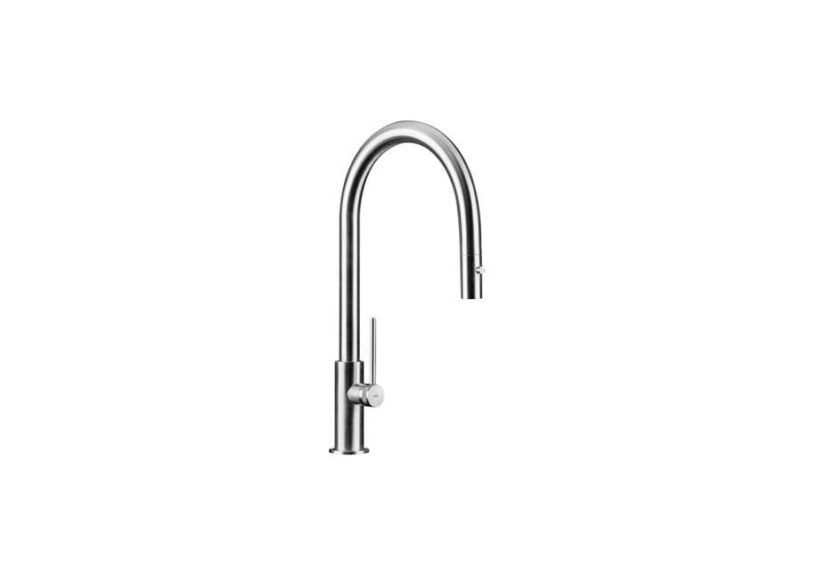
well-behaved extra in a movie. The MGS Spin Kitchen Faucet is not that faucet.
The Spin line is more like a minimalist stainless-steel tool you’d expect to see on a chef’s prep tableclean geometry,
serious material choices, and details that feel engineered instead of “decorated.” If you’re the kind of person who notices
when a cabinet door closes with a satisfying thunk, the Spin collection is going to make you irrationally happy.
What “Spin” Means (and What It Doesn’t)
“Spin” isn’t a marketing moodit’s a design idea. At the core, the Spin collection focuses on streamlined, modern profiles and
high-function movement: rotating spouts, compact footprints, and (in certain models) pull-out or pull-down spray heads
that don’t look like they’re wearing a backpack.
Here’s the big picture: the Spin family includes a few variations that all share the same design language, but differ in how they
handle daily kitchen chaosrinsing, filling, spraying, and doing that awkward sink-dance around a giant stockpot.
Spin (the classic)
The standard Spin is a single-hole faucet with a rotating spout. It’s intentionally sleek and often described as
a great match for smaller sinks or bar/prep setupsespecially if you want a clean counter without extra accessories.
Spin D (dual-spray pull-down)
Spin D adds a pull-down dual spray hand spray, giving you a more flexible rinse and a more “working kitchen” feel
while keeping the minimalist silhouette. You get the practicality of a spray function without the visual bulk that some pull-downs bring.
Spin HD (pull-out with ergonomic spray control)
Spin HD takes the spray concept further with an approach that’s very “design meets usability”: a dual-spray hand shower with a control
layout intended to feel natural in your handeven when you’re holding it at weird angles to rinse a colander the size of a small canoe.
Spin DB (bar/prep version)
Spin DB is a smaller-format option that’s commonly positioned as a bar or prep faucet. Think secondary sink, small basin,
or a setup where you want a premium tool but don’t need the full-size reach of a main faucet.
Filtered-water companions (Spin C / Spin HC)
If your kitchen setup includes a filtration system (including reverse osmosis), the Spin lineup also includes filtered-water options designed
to integrate cleanlyso you’re not stuck with a mismatched “extra faucet” that looks like it time-traveled from another decade.
Why the Material Choice Is a Big Deal: 316L Stainless Steel
Many premium-looking faucets are made from brass with a decorative finish applied over the top. That’s not automatically badbrass can be excellent.
But the Spin line is known for leaning into solid stainless steel construction, including 316L in certain modelsoften described as
“marine grade.”
In real life, that matters most in three situations:
- Coastal or humid climates where corrosion resistance isn’t just a nice-to-have.
- Outdoor kitchens or semi-exposed installations where the faucet sees more environmental stress.
- People who hate fussy finishes and want something that ages gracefully, not dramatically.
Stainless also has a “feel” advantage. A well-machined stainless faucet tends to feel substantialless hollow, less “decorative shell,” more tool.
If you’ve ever used a faucet that wobbled like it was auditioning for a slapstick comedy, you’ll appreciate a build that feels planted.
Design Details That Actually Change Your Day-to-Day
A rotating spout that earns the name “Spin”
The defining featureespecially on the classic Spinis the rotating spout. This sounds obvious until you compare it to a faucet
with a limited swivel arc that can’t comfortably reach a second bowl or rinse the corners of a wide sink.
With a full rotation-friendly design, you can swing from “fill the pasta pot” mode to “rinse the cutting board” mode without awkward wrist angles.
That’s not glamorous, but it’s the difference between a faucet that’s pretty and a faucet that’s useful.
Compact profile without feeling undersized
One of the reasons people gravitate toward Spin is that it can look visually light on the counter. That’s especially helpful in kitchens where the sink
sits in a busy zonenear a window, next to open shelves, or in a smaller footprint where a giant coil-spring faucet would dominate the room.
Coin-slot aerator: small feature, big sanity saver
Hard water happens. Mineral buildup happens. Aerators clog, spray patterns get weird, and suddenly your faucet is doing interpretive dance instead of
producing a clean stream. Some Spin configurations use an easy-to-clean aerator design that’s meant to make maintenance simpler.
Translation: less time hunting for a tiny special key while your sink slowly turns into a science project.
Dual-spray options that don’t feel like an afterthought
For Spin D and Spin HD, the “working” features matter: dual spray modes let you switch between an aerated stream (good for filling,
handwashing, and daily use) and a spray (good for rinsing produce, blasting off stuck oatmeal, and making your colander feel like it’s at a spa).
A well-designed spray switch should be easy to use with wet hands and should stay consistentno flimsy buttons that feel like they’ll give up after a year.
The Spin family is built around the idea that the controls should be integrated and durable, not tacked on.
Tight-space friendliness
Kitchens love to trap you in corners: backsplash behind the faucet, window ledge above, shelves nearby, and just enough space for your hand to operate the handle
if you approach from precisely the correct angle like a puzzle game.
Certain Spin variants are designed with limited handle “back swing” so the lever doesn’t smack into a backsplash. If your sink is against a wall or you have a
thick ledge behind it, this detail can be the difference between “sleek modern faucet” and “why did I do this to myself?”
A built-in “child safety” logic (without looking like a toy)
Some Spin models are designed so that the handle position favors cold water as a default direction. That’s a subtle but meaningful safety-minded choice in family kitchens
where little hands may try to operate the faucet. It’s not a substitute for supervision, but it’s a thoughtful layer of design.
Flow Rate, Efficiency, and Real Performance
Let’s talk about the thing nobody wants to admit: a faucet can be water-efficient and still feel weak if the spray pattern or internal design isn’t good.
On the flip side, a faucet can be high-flow and still be annoying if it splashes everywhere or lacks control.
In the U.S., kitchen faucet flow is shaped by a mix of federal limits and state-level requirements. Many “efficiency-minded” kitchen faucets land in the
1.5–1.8 gallons-per-minute range, and California’s CALGreen code is well known for specifying a 1.8 gpm maximum at standard pressure.
The Spin family is commonly listed with flow rates that align with these efficiency expectations (often around the mid-to-high 1.x gpm range, depending on model and configuration).
The important point is not just the numberit’s how the faucet uses that flow: a good aerator, a well-shaped spray face, and stable pressure behavior can make an efficient faucet
feel plenty strong in everyday tasks.
One more nuance: people often see “WaterSense” mentioned in kitchen faucet discussions. WaterSense is famous for bathroom fixtures, but kitchen faucets don’t typically get the same kind of
consumer-facing WaterSense label the way bathroom faucets do. In practice, when manufacturers reference “meeting WaterSense requirements,” it’s often about aligning with efficiency expectations
and related standardsnot claiming a kitchen faucet is “WaterSense labeled” in the way a bathroom faucet might be.
Installation and Fit: Make Sure Your Kitchen Likes This Faucet
A premium faucet should not become a premium headache. Before you commit, sanity-check your setup. The Spin line is typically single-hole, deck-mounted,
which is great for clean installations and modern sinksbut details matter.
Quick fit checklist
- Mounting: Single-hole deck mount (confirm your sink/counter hole size).
- Counter thickness: Some Spin variants specify a maximum counter thickness (common high-end specs often sit around the 1–2 inch range).
- Handle clearance: If your faucet sits close to a backsplash, choose a variant designed for tight rear clearance.
- Pull-out/pull-down room: If you choose Spin D or Spin HD, make sure there’s enough cabinet space for the hose and counterweight to move freely.
- Right-side vs. flexible handle placement: Certain configurations are intended to be installed with the handle on a specific side, while others allow more freedom.
Hot water and “don’t melt your own happiness”
Installation documents for high-end faucets often specify maximum and recommended hot-water temperatures. This isn’t them being dramaticit’s about protecting seals, hoses, and internal parts
so the faucet performs long-term. If your water heater runs extremely hot, consider tuning it to a sensible range so your faucet (and your hands) stay in good shape.
Finishes: Matte, Polished, and PVD Options
Spin faucets are frequently offered in stainless finishes (matte/brushed and polished), plus certain PVD-coated options in darker or warmer tones.
PVD finishes are popular in modern kitchens because they tend to be more durable than traditional platinghelpful if you don’t want your faucet to look “tired” after a few years of dish duty.
If you like the look of black or bronze but fear constant fingerprints and cleaning rituals, a PVD finish can be a smart compromise. Just follow the care guidance:
avoid abrasive pads, skip harsh chemicals, and treat the finish like the premium surface it is.
Maintenance and Care: Keeping Spin Looking Sharp
Stainless steel is generally forgiving, but kitchen life is relentless: hard water, soap, acidic foods, and the occasional “oops” moment with a scrubby sponge that thinks it’s sanding a deck.
Keep things simple:
- Daily: Wipe down with a soft cloth and mild soap if needed. Drying helps prevent water spots.
- Weekly: Check the aerator/spray face for buildup, especially if your water is hard.
- As needed: If spray patterns get uneven, clean the outlet parts carefully and rinse thoroughly.
- Avoid: Abrasive pads, harsh bleach-based cleaners, and “mystery” chemicals that promise miracles.
If you choose a specialty finish (especially darker tones), be extra gentle. Many finish issues aren’t “defects”they’re scars from overly aggressive cleaning.
Your faucet is not a cast-iron skillet; it does not need to be “seasoned” with every product under the sink.
Who Should Buy the MGS Spin Kitchen Faucet?
The Spin line isn’t trying to win the “best faucet under $199” award. It’s aimed at people who care about material quality, design restraint, and longevity.
You’ll probably love it if:
- You want a modern stainless steel kitchen faucet that looks architectural, not ornate.
- You’re building a coastal home or outdoor kitchen where corrosion resistance matters.
- You value precision feelsmooth movement, stable mounting, reliable spray switching.
- You prefer a cleaner counter aesthetic and don’t want a bulky “industrial” coil look.
- You’re pairing the main faucet with a filtered water faucet and want everything to look intentional.
You might want a different direction if you need an ultra-budget option, want touchless sensors as your top priority, or prefer a very traditional design style.
MGS Spin vs. Typical Big-Box Pull-Down Faucets
This comparison isn’t about “good vs. bad.” It’s about priorities.
- Material: Spin leans into machined stainless; many mainstream faucets rely on brass bodies with plated finishes.
- Design: Spin is minimalist and architectural; mainstream options often add visual features to signal “premium.”
- Service feel: High-end faucets often emphasize smooth control and precise motion.
- Long-term vibe: Stainless tends to age like a good kitchen knifehonestlywhile plated finishes can age like a phone casemysteriously.
If you want something that blends into a high-end, modern kitchen and still functions like a serious tool, Spin can justify its place.
If you’re doing a quick rental refresh, you probably don’t need this level of engineering.
Buyer Tips: Choosing the Right Spin Variant
1) Match the faucet to the sink style
A single-bowl workstation sink might pair beautifully with Spin D or Spin HD (spray function helps with rinsing large surfaces).
A smaller prep sink may look cleaner with the classic Spin or Spin DB.
2) Decide how you actually wash dishes
If you rinse everything under running water, a dual-spray model will feel like a daily upgrade.
If you mostly fill a pot, wash hands, and occasionally rinse produce, the classic rotating spout may be enough.
3) Think about water filtration early
If filtered water is part of your kitchen plan, coordinate the faucet set so the filtered-water tap looks like a sibling, not a distant cousin.
This is where the Spin companion filtration faucets can be especially appealing.
FAQ
Is the MGS Spin Kitchen Faucet good for small sinks?
Many people consider the Spin profile a strong fit for smaller sinks or bar/prep areas because it stays visually light and doesn’t require a separate side spray.
If you want more rinsing flexibility, Spin DB or Spin D can bring spray functionality without overwhelming the space.
Is “marine grade” stainless steel worth it?
If you live near salt air, have an outdoor kitchen, or just want a faucet that’s resilient and low-drama over time, it can absolutely be worth it.
The value shows up over years, not weeks.
Do I need a plumber to install it?
If you’re comfortable with standard faucet replacement steps, you may be able to handle installationespecially for the non-spray versions.
For pull-out/pull-down models, the under-sink routing and counterweight setup should be done carefully to avoid hose snags and weird retraction behavior.
When in doubt, a plumber can save you from turning “faucet day” into “why is the cabinet soaked?” day.
Real-World Experiences Related to the MGS Spin Kitchen Faucet (Extended)
Because I can’t literally stand in your kitchen and rinse your colander (and honestly, that would be weird), the best way to talk about “experience” is to describe
what tends to matter once the faucet is installed and real life begins: cooking, cleaning, kids, guests, hard water, and the occasional panic when you hear a mysterious
clunk under the sink.
Experience #1: The weeknight rinse marathon. In a busy household, the faucet gets used for rapid-fire tasks: rinsing rice, washing berries,
filling a pot, cleaning a cutting board, and blasting sauce off a spoon before it becomes a permanent art installation. This is where the Spin D and Spin HD style of
dual-spray flexibility shines. Switching between stream and spray feels less like “activating a feature” and more like “using the tool properly.” When the spray mode is
well controlled, you spend less time repositioning dishes just to avoid splashback.
Experience #2: The small sink that refuses to act small. Smaller sinks and bar/prep sinks are often expected to do a lot:
coffee rinse, cocktail station, quick veggie wash, and “temporary place where utensils go when the dishwasher is full.” A compact, rotating-spout faucet like the classic Spin (or a smaller
variant like Spin DB) can feel surprisingly capable because rotation is the hidden superpower. You can aim water exactly where you want it without leaning into the sink like you’re trying
to hear a secret. In tight spaces, that kind of control is comfort.
Experience #3: The hard-water reality check. If your water leaves spots on everything, the faucet finish and aerator design become daily characters in the story.
Stainless steel tends to be easier to live with because you can wipe it down quickly without obsessing. If mineral buildup starts affecting the flow, an easy-to-clean outlet design can
save time. The “experience” here is less about glamour and more about not having to schedule a weekly argument with your faucet.
Experience #4: The backsplash clearance win. People rarely celebrate “my handle doesn’t hit the wall,” but they should.
In kitchens with a tight backsplash or window ledge behind the faucet, limited handle travel is a practical blessing. It’s the kind of feature you forget aboutbecause it quietly works
which is basically the highest compliment a kitchen fixture can get.
Experience #5: The premium feel that changes how the kitchen feels. This is the part that’s hard to quantify but easy to notice.
A well-built faucet changes the kitchen vibe in the same way a solid door handle changes a room: it’s a small touchpoint you interact with constantly, and when it feels precise and stable,
the whole space feels more intentional. People might not walk in and say, “Wow, that’s a 316L stainless faucet,” but they often notice the clean silhouette and the “everything here is chosen”
feeling it adds.
The common thread: the MGS Spin Kitchen Faucet experience tends to be less about flashy features and more about quiet competencesmooth movement, durable materials, practical spray behavior,
and a design that doesn’t age out when the trend cycle spins again (pun absolutely intended).
Conclusion
The MGS Spin Kitchen Faucet is for people who want their kitchen hardware to feel as thoughtfully made as the rest of the space.
It’s minimalist without being boring, engineered without feeling clinical, andwhen you choose the right variantgenuinely convenient in daily use.
Whether you pick the rotating-spout classic, a dual-spray workhorse like Spin D or Spin HD, or a compact prep-friendly option like Spin DB, the big idea stays consistent:
durable stainless steel construction, clean lines, and functionality that doesn’t require a user manual and a pep talk.