Table of Contents >> Show >> Hide
- Quick Navigation
- Why MS changes the way you walk
- Leg braces 101: AFOs, KAFOs, and what they really do
- FES for foot drop: the “tiny zap” option
- Other assistive devices that earn their spot
- How to choose the right device (without guessing)
- Costs and coverage in the U.S.: Medicare + insurance basics
- Common mistakes (and how to avoid them)
- Building a mobility toolbox that fits your life
- Real-world experiences: what it feels like to find “the one” (and yes, it might be a brace)
- Conclusion
Multiple sclerosis has a talent for turning a simple walk to the mailbox into a low-budget obstacle course: surprise toe-drag, random leg heaviness, a knee that wants to audition for “Best Supporting Role,” and fatigue that shows up early like it owns the place. The good news: you don’t have to “just push through.” The right leg brace or assistive device can make walking safer, smoother, and less exhaustingwithout making you feel like you’re wearing medieval armor (unless that’s your vibe).
This guide breaks down the most useful leg braces (like AFOs and KAFOs), functional electrical stimulation (FES), and everyday mobility aidsplus how to choose, fit, and actually use them in real life.
Why MS changes the way you walk
MS affects the central nervous system, which is basically your body’s high-speed communication network. When nerve signaling gets glitchy, walking can change in a few common ways:
Foot drop: the toe-catcher
Foot drop happens when you have trouble lifting the front of your foot (dorsiflexion). The result can be toe-drag, tripping on tiny bumps, or that unmistakable “slap” as your foot hits the ground. You might compensate by hiking your hip or swinging your leg outwardeffective in the moment, but tiring over distance.
Spasticity and stiffness: the “my calf is doing interpretive dance” problem
Spasticity can make muscles feel tight, resistant, or prone to spasms. In the legs, it can interfere with smooth steps and can make walking more effortful. Some people feel like their legs are “pulling” in certain directions or locking up when they least want a dramatic moment.
Weakness, balance changes, and ataxia
MS can cause weakness in specific muscle groups (like hip flexors or ankle dorsiflexors), changes in sensation, and balance issues. Some people experience ataxia (coordination problems) that can make gait less steady. Add fatigueone of MS’s signature plot twistsand you get a walking style best described as “variable.”
That variability matters. The best assistive device isn’t the “most intense” one; it’s the one that matches your current walking pattern, your environment (home vs. uneven sidewalks), and your goals (short errands vs. long days out).
Leg braces 101: AFOs, KAFOs, and what they really do
“Orthotics” and “braces” are external devices designed to support weak muscles, improve alignment, or limit unwanted motion. For MS, they’re commonly used to address foot drop, ankle instability, knee buckling, knee hyperextension, and spasticity-related positioning issues.
Ankle-foot orthosis (AFO): the foot drop workhorse
An AFO supports the ankle and foot to help keep toes from dropping and catching on the ground. If foot drop is the main issue, an AFO is often the first brace discussedbecause it can make your gait safer and reduce trips.
- Rigid AFO: Limits ankle motion more. Helpful if you need stability and consistent positioning. Tradeoff: can feel stiff on stairs or uneven terrain.
- Articulated (hinged) AFO: Allows some ankle motion while still assisting dorsiflexion. Useful if you need support but don’t want to feel like your ankle has been grounded for life.
- Dynamic or “springy” designs (including carbon fiber styles): Often lighter and can store/return energy during walking. Great when you want support without a bulky feel.
- Off-the-shelf vs. custom: Off-the-shelf can work for straightforward needs; custom can be better for complex gait patterns, unique anatomy, significant spasticity, or skin sensitivity.
The most underappreciated AFO fact: your shoe choice matters. A good brace in a flimsy shoe is like putting racing tires on a shopping cart. Bring the shoes you actually wear to fittings and training sessions.
Knee-ankle-foot orthosis (KAFO): when the knee needs a co-pilot
If your knee buckles, feels unstable, or hyperextends (snaps back) during walking, an AFO alone may not be enough. A KAFO supports the knee and ankle together. These can be bulkier and require more energy to use, so they’re usually considered when knee control is a major safety issue.
Some people also use simpler knee braces (for example, to limit hyperextension) alongside an AFObecause sometimes you don’t need a full-body “exosuit,” just targeted support.
What braces can’t do (and why that’s okay)
Braces can improve mechanics and safety, but they don’t replace the role of physical therapy, strengthening, stretching, balance training, and spasticity management. Think of a brace as a tool that helps your body do the job with fewer detoursnot a magic wand that erases MS.
FES for foot drop: the “tiny zap” option
Functional electrical stimulation (FES) uses mild electrical pulses to activate muscles during walking. For foot drop, FES typically stimulates muscles that lift the foot at the right time in the gait cycle, helping with toe clearance and smoother steps.
Who might benefit from FES?
- People with foot drop who still have intact peripheral nerve pathways to the muscles being stimulated.
- People who dislike brace stiffness or want a more “natural” ankle feel while still getting lift.
- People who can commit to training (there’s a learning curve, and setup matters).
When FES may not be the best fit
- Significant spasticity or muscle tightness that overpowers the movement you’re trying to cue.
- Sensory issues or skin sensitivity that make electrodes uncomfortable.
- Complex gait patterns where foot drop isn’t the only limitation (for example, major hip flexor weakness).
FES and AFOs aren’t enemies. They’re more like rival coffee shops: both can get you through the day, and one may suit your routine better. Some people even use one option for longer outings and the other for shorter trips. A clinician experienced in MS gait can help you trial and compare.
Other assistive devices that earn their spot
Braces are just one lane in the mobility highway. Many MS patients get the biggest improvement by pairing leg support with the right walking aid or daily-living device.
Canes and walking poles: small device, big confidence
A cane can help when one leg is weaker, balance is slightly off, or fatigue makes your gait less consistent. Trekking poles can also be useful as a “unilateral assist” option for some people, offering rhythm and stability. The key is fit and trainingbecause a too-tall cane is basically a stick that teaches your shoulder to complain.
Walkers and rollators: stability without white-knuckling
If balance is a bigger issue, or if both legs fatigue quickly, a walker or rollator can provide a wider base of support. Rollators (walkers with wheels and often a seat) can be especially helpful for MS fatigue because they let you rest strategicallybefore your legs stage a protest.
Wheelchairs and scooters: energy management, not “giving up”
Using a wheelchair or scooter doesn’t mean you’ve “failed walking.” It can be a smart strategy to save energy for what matters: family time, work, travel, events, andyesactually enjoying the outing instead of spending it scanning for the nearest chair like it’s a rare Pokémon.
Transfer aids and home safety devices
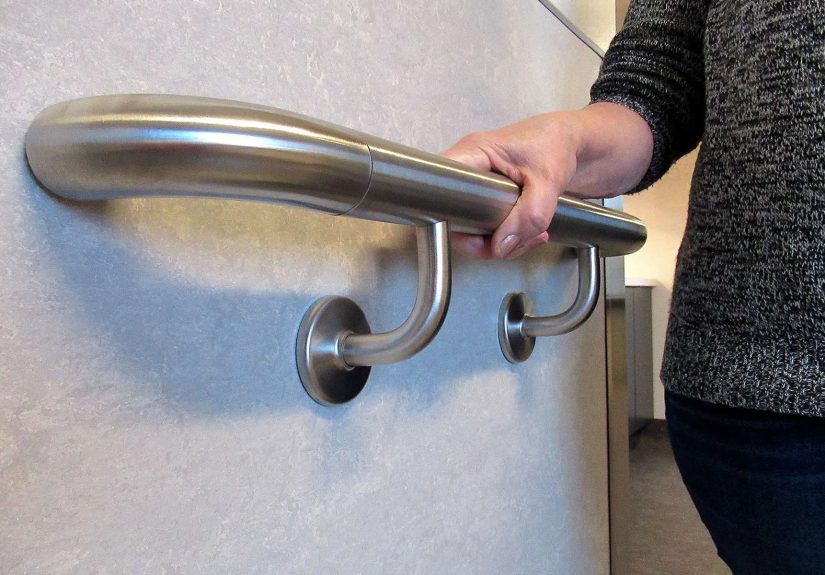
Mobility isn’t only about walking. Devices like grab bars, tub benches, raised toilet seats, bed rails, and transfer boards can reduce fall risk and conserve energy. These are often recommended by occupational therapists who specialize in making your home work with you.
How to choose the right device (without guessing)
The best outcomes usually happen when you treat device selection like a mini-project: assess, trial, fit, train, and adjust. Here’s a practical roadmap.
1) Start with a walking assessment
A physical therapist (PT) or rehabilitation clinician can observe your gait, look for foot drop, knee instability, spasticity patterns, balance reactions, and fatigue effects. The goal is to identify why you’re tripping or slowing downnot just what it looks like.
2) Match the device to the problem (and your environment)
- Mostly foot drop: AFO or FES may help.
- Foot drop + ankle instability: A more supportive AFO style may be needed.
- Knee buckling or hyperextension: Consider knee bracing or KAFO-level support.
- Balance or fatigue-driven risk: Cane, trekking pole, rollator, or wheelchair strategies may help.
- Home fall concerns: Add grab bars, shower seating, improved lighting, and trip-hazard cleanup.
3) Prioritize fit, comfort, and skin safety
Especially with MS, sensations can change. Any brace that causes rubbing, pressure points, or skin breakdown is not “something you’ll just get used to.” Ask about padding, sock choices, gradual wear schedules, and re-fitting. Check your skin after use, particularly in the first few weeks.
4) Train with the device (yes, it’s a skill)
Braces and walking aids work best with instructionhow to step, how to turn, how to handle stairs or curbs, and how to use the aid without developing new pain. The goal isn’t just “use it,” but “use it well.”
5) Revisit over time
MS symptoms can fluctuate. A device that’s perfect during one season of your life may need tweaks later. Re-assess if you notice increased tripping, new pain, higher fatigue cost, or changes in spasticity.
Costs and coverage in the U.S.: Medicare + insurance basics
Assistive devices can be life-changingand also, unfortunately, wallet-threatening. Coverage depends on the device, documentation, and insurer rules. Here are practical high-level points to discuss with your clinic and supplier.
Medicare (Part B) and braces
Medicare covers certain braces (including AFOs and KAFOs) under the braces benefit when medical criteria are met. In plain English: the brace needs to be a rigid or semi-rigid device used to support a weak or deformed body part or to restrict motion in an injured/diseased part, and your clinician must document medical necessity.
Custom vs. off-the-shelf
Insurers often treat custom-fitted and custom-fabricated devices differently than off-the-shelf items. If you need a custom brace, clear documentation helps: why off-the-shelf isn’t sufficient, what functional limitations exist (falls, toe drag, knee instability), and what goals the brace supports.
Shoes, inserts, and the “coverage gotcha”
Coverage rules for shoes and inserts can be more limited than coverage for braces. If footwear is part of your solution (for example, extra depth for an AFO), ask your supplier about what’s billable and what’s notbefore you discover it at checkout like a surprise plot twist you did not request.
Tip: Keep a simple “mobility folder” with your evaluation notes, device prescription, and supplier documentation. It makes appeals and prior authorizations much less painful.
Common mistakes (and how to avoid them)
- Choosing the device that “looks least noticeable” instead of the one that’s safest. Start with function; style can be optimized later.
- Skipping training. A cane, walker, AFO, or FES system can change your mechanics. Training reduces falls and aches.
- Ignoring footwear. Braces need stable shoes. Bring your usual shoes to fittings and ask about recommended styles.
- Wearing a new brace all day on Day 1. Build up gradually to protect your skin and help your body adapt.
- Overdoing “hero walking.” If you need a rollator or chair for energy management, that’s strategynot surrender.
Building a mobility toolbox that fits your life
Many MS patients do best with a “toolbox” approach: different devices for different days and distances. Here are realistic combos clinicians often recommend:
Combo ideas
- AFO + trekking pole/cane: Toe clearance plus balance support for community walking.
- FES + supportive shoe + PT gait training: A more natural ankle feel with structured practice.
- Rollator for outings + no device at home (as safe): Save energy where it counts.
- Wheelchair/scooter for long events: Reduce fatigue cost so you can actually enjoy the day.
- Grab bars + tub bench + night lighting: Because bathrooms at 2 a.m. should not be extreme sports.
The “right” setup is the one that helps you do more of what you valuesafely, comfortably, and with less fatigue.
Real-world experiences: what it feels like to find “the one” (and yes, it might be a brace)
There’s the clinical description of an AFO“supports dorsiflexion, improves toe clearance”and then there’s the lived experience, which is more like: “Why does this feel weird? Why is my shoe suddenly a studio apartment? Why am I walking like a robot who just learned about ankles?”
Most people don’t fall in love with a brace on Day 1. The first week is often awkward. Your gait has been doing its own thing for months (or years), and a brace politely informs your leg that it’s time for a new routine. You may feel faster in a straight line but clumsier when turning. You may notice muscles working differently. That doesn’t mean it’s wrongit means your body is adapting. A good clinician will teach you how to turn safely, manage stairs, and build up wear time so you don’t end up with sore spots that sabotage the whole plan.
Shoe shopping becomes… an adventure. Some people discover that one pair of sneakers is the “brace-friendly MVP,” while fashionable shoes quietly retire to the back of the closet like they’ve accepted their fate. It can feel annoyinguntil you realize you’re no longer doing that constant micro-calculation of “Will I trip on this rug?” and your brain gets to spend energy on literally anything else.
Canes and walkers have their own emotional learning curve. Plenty of folks resist a cane because it feels like a public announcement. Then they try it with proper fitting and coaching, and suddenly: fewer near-falls, more confidence, and less end-of-day exhaustion. The cane didn’t make anything worse; it made the hard parts more manageable. Same for rollatorsespecially the ones with a seat. That seat is not a symbol. It’s a tactical rest station. You sit for two minutes, reset your legs, and keep living your life.
FES can feel like joining a very small, very polite lightning club. The first time the stimulation triggers, some people laugh because it’s surprising, like your leg just received a calendar invite titled “Lift Foot: Now.” After a few sessions, many people get used to the sensation. Setup matterselectrode placement, timing, and footwear can make or break the experience. The best stories usually involve a patient and clinician treating it like tuning an instrument, not flipping a switch.
The most consistent “aha” moment across experiences is this: the best device doesn’t just change your gait. It changes your decisions. You stop avoiding outings because you’re worried about falls. You stop rushing through errands because you’re afraid fatigue will spike. You take a longer route in the park because you can. You use a wheelchair at the museum so you can stay for the whole exhibit instead of leaving after the first room. Assistive devices don’t shrink your world. Used well, they expand it.
If you’re early in the process, give yourself permission to iterate. It’s normal to trial an AFO style and realize you need a different stiffness. It’s normal to pair a brace with a cane and later switch to a rollator for longer distances. It’s normal to have “good walking mornings” and “why are my legs made of wet sand” afternoons. Tools exist for all of it. The win is not perfectionit’s safer steps, fewer falls, and more days that feel like yours.
Medical note: This article is educational and not medical advice. Always talk with your neurologist, PT/OT, or orthotist about what’s appropriate for your specific symptoms and health history.
Conclusion
Leg braces and assistive devices aren’t about “giving in” to MSthey’re about getting smart with support. Whether it’s an AFO for foot drop, a KAFO for knee instability, FES to cue more natural movement, or a cane, walker, rollator, scooter, or wheelchair to manage balance and fatigue, the goal is the same: safer mobility with less effort. The best results come from assessment, proper fitting, training, and the freedom to adjust over time. Your walking doesn’t have to be perfect. It just has to be safer, steadier, and more sustainable.