Table of Contents >> Show >> Hide
Some people buy a fancy light fixture when they want a room to feel magical. I, apparently, decided to pick a fight with paper instead.
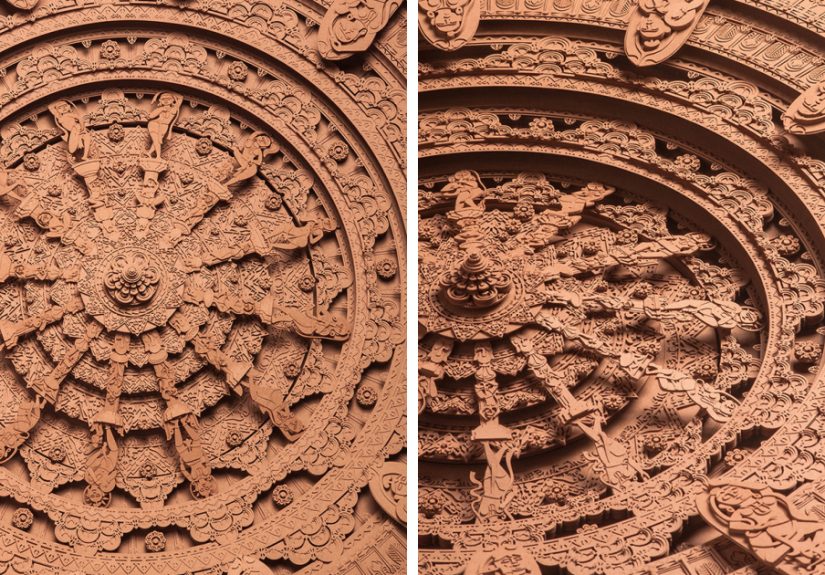
What started as a simple craft idea turned into a surprisingly emotional art project: I made what I can only describe as a “portal to heaven” with paper. Not a literal one, obviously. Nobody vanished into the ceiling. But visually, that was the goal. I wanted something glowing, layered, airy, and almost impossible-looking, like a doorway made of light, soft shadows, and stubborn little sheets of cardstock that refused to behave until they absolutely had to.
The result was a paper artwork that felt part sculpture, part illusion, and part daydream. It had depth, movement, and that delicious kind of drama only paper can create when light sneaks through the cuts just right. If you have ever looked at layered paper art, kirigami, cut-paper collage, or pop-up engineering and thought, “That looks peaceful and terrifying,” then congratulations: you already understand this project.
In this article, I’m sharing how the idea came together, why paper was the perfect medium, what artistic principles made the piece work, and what I learned while building a handmade scene that looked far more expensive and mystical than its actual ingredients. Spoiler: the materials were humble. The attitude was celestial.
How the Idea Started
The phrase “portal to heaven” came to me before the design did. I wasn’t interested in making something overly religious or too literal. I wanted to capture a feeling instead: awe, calm, brightness, upward movement, and that odd silence you get when something looks delicate but also strangely infinite. Paper turned out to be ideal for that kind of illusion because it can do two things at once. It feels fragile up close, yet it can build remarkable structure when layered with intention.
I started thinking about arches, tunnels, clouds, halos, rays of light, and the soft geometry of openings. Then I thought about how cut paper has been used across traditions to decorate homes, tell stories, create patterns, and turn empty space into meaning. That is the secret sauce. Paper art is never just about what you cut. It is also about what you leave behind.
That negative space became the soul of the piece. Instead of treating the background as blank nothingness, I treated it like the glowing center of the work. The opening was the message. The paper simply taught the eye how to believe in it.
Why Paper Was the Perfect Medium
Paper makes light visible
Paint can suggest light. Paper can stage it. Once you cut openings into a surface and place layers at different distances, light becomes an active collaborator. It slips between edges, throws shadows, softens transitions, and adds that theatrical glow artists have chased for centuries. In my project, the “heaven” part did not come from drawing clouds with fussy detail. It came from controlling brightness, contrast, and spacing so the center looked luminous and unreachable.
Layers create depth without heavy materials
One of the biggest joys of layered paper art is that it can look architectural without becoming bulky. By stacking rings, silhouettes, and sculpted edges from front to back, I could create a tunnel effect that tricked the eye into seeing much more space than actually existed. A few millimeters between layers can feel like miles if the shapes are arranged well. That is paper’s party trick: tiny physical distance, huge visual payoff.
Color does the emotional heavy lifting
I leaned into a palette of white, cream, pale blue, soft gold, and hints of blush. Those colors were not random. Cool hues helped create airiness and distance, while warmer accents kept the piece from looking sterile. A heavenly image that feels like an office printer error is not the dream. The color choices needed to feel radiant, not clinical. Even a mostly white paper sculpture benefits from subtle variation, because shadows become more interesting when the tones are not identical.
How I Built the “Portal to Heaven”
Step 1: I sketched the opening first
Instead of drawing every decorative detail, I started with the void. I asked myself what shape the viewer would be looking into. Was it a doorway? A glowing circle? A layered arch? A burst of light? In the end, I used a soft oval-arch hybrid because it felt both architectural and dreamlike. Straight lines would have made the piece feel too rigid. A fully round opening felt too cosmic. The hybrid shape gave me ceremony without making the artwork look like a paper spaceship.
Step 2: I designed the foreground, middle ground, and background
Once the center was defined, I treated the artwork like a tiny stage set. The foreground needed bold cut edges that framed the view. The middle ground needed rhythm, with repeating curves and openings that guided the eye inward. The background needed the brightest area, because that was where the illusion of transcendence lived. Thinking in layers changed everything. This was not a flat poster pretending to be deep. It was depth, engineered one sheet at a time.
Step 3: I let repetition build wonder
Repeating shapes made the portal feel infinite. I used nested contours, echoing arches, and gentle radiating forms so the design seemed to expand inward. Repetition is one of those art principles that sounds boring until it suddenly looks magnificent. Done right, it creates movement, calm, and a sense of order that feels almost sacred. Done wrong, it looks like a confused snowflake. The trick was varying the scale just enough to keep the eye curious.
Step 4: I used shadows as part of the design
The shadows were not accidental leftovers. They were built into the composition. Every raised edge created a second drawing beneath it. That shadow drawing made the piece feel alive, especially when the light shifted during the day. Morning light made the portal look crisp and hopeful. Evening light made it more dramatic, like a choir had entered the room and was waiting for the fog machine to kick in.
The Art History Hiding Inside the Project
Even though this was a personal craft build, it quietly borrowed from several major paper-based traditions and artistic ideas. That is part of what made the project so satisfying. It felt playful, but it was standing on a very real creative foundation.
Paper cutting traditions have long transformed simple materials into celebrations, symbols, and decorative storytelling. Cut-paper practice also teaches a timeless lesson: shape and emptiness are partners, not enemies. That idea appears again in collage, stencil work, and silhouette-based design, where positive and negative space fight, flirt, and eventually agree to make something beautiful together.
The project also owes a debt to modern cut-paper art. Henri Matisse famously pushed painted paper into a whole new realm, treating scissors almost like a drawing tool. That mindset helped me stop fussing over perfection and start thinking more like a composer. I was not simply trimming paper. I was arranging color, shape, rhythm, and breathing room.
Then there is kirigami, the art of cutting and folding paper into forms that shift dimension. I did not make a strict kirigami work, but the logic of transformation mattered. A flat surface became sculptural. A static object seemed kinetic. A basic sheet became an experience. The same spirit appears in pop-up engineering, where cuts, folds, tabs, and hidden supports make paper feel almost mechanical in its cleverness.
Contemporary paper artists have shown just how far this material can go. Some use layering to mimic nature’s complexity. Others use folds, scoring, and repetition to create mesmerizing geometric structures. That range gave me permission to build something emotional and immersive without feeling limited by the supposed simplicity of paper. Paper is only “basic” until someone with a blade and an idea proves otherwise.
What Makes It Feel Like a Portal
Contrast
The brightest center sits against darker or denser framing layers. That contrast tells the eye where to go. Without it, the piece would have been pretty but sleepy. With it, the work gained drama and direction.
Scale
I exaggerated the opening so it felt larger than the surrounding details. Scale changes meaning. When the center appears grander than expected, the whole piece gains psychological weight. It stops looking like decoration and starts feeling like an entrance.
Movement without actual motion
Curves, repeated shapes, and radiating lines pull the viewer inward. The paper does not move, but the eye does. That sensation creates the illusion that the piece is opening, glowing, or unfolding in real time.
Negative space
This is the big one. A portal is not a thing in the same way a flower or a building is a thing. A portal is an opening. That means the emptiness has to carry meaning. The paper frames the experience, but the space inside it is the emotional center of gravity.
Mistakes I Made and What I Learned
I made several deeply educational mistakes, which is the polite way of saying I glued things wrong and stared at them in silence.
First, I learned that too much detail in the outer layers can weaken the whole composition. I started with intricate cuts because I was feeling ambitious and slightly overconfident. But when every edge screams for attention, the eye never reaches the center. Once I simplified the front layers, the portal effect became stronger immediately.
Second, glue placement matters more than most crafters would like to admit. Uneven adhesive caused slight warping, and slight warping in a layered paper piece becomes extremely visible under light. I had to restart a few sections using smaller amounts of glue and better support between layers. Paper remembers your shortcuts and tells on you later.
Third, I discovered that lighting is part of the artwork, not an afterthought. A layered sculpture can look flat under harsh overhead light and miraculous under soft side lighting. After testing different setups, I realized the best presentation came from indirect warm-white light behind and around the piece, not directly blasting its face like an interrogation lamp.
Tips for Making Your Own Paper Portal Art
Start with one strong central opening. Do not build twenty competing focal points and expect peace to follow.
Use spacers between layers. Even a little separation creates richer shadows and more believable depth.
Limit the palette. A restrained color scheme often feels more elegant and more atmospheric.
Test your lighting early. The sculpture and the light should evolve together, not meet awkwardly at the end.
Balance precision with softness. Crisp cuts are important, but a few hand-touched edges can keep the work from feeling cold.
Let negative space breathe. Empty areas are not wasted space. They are where the magic lives.
My Experience Making a “Portal to Heaven” With Paper
Making this piece felt strangely personal from the beginning. I expected a fun craft session with a little trial and error, maybe a few dramatic sighs, maybe one moment where I accused cardstock of having a bad attitude. What I did not expect was how calming the whole process became once I stopped trying to force it. The more I worked on it, the more it felt like I was building not just an object, but an atmosphere. I was shaping quiet. I was cutting my way toward stillness.
There was one evening when I had most of the layers laid out on the table, but nothing was glued yet. They were just loose shapes, stacked one behind another, not fully committed to becoming anything. Then the lamp on my desk hit them from the side, and suddenly the shadows lined up in a way that made the center glow. For a second, the whole composition looked alive. That was the moment I knew the project had something. I actually sat there staring at it longer than I’d like to admit, as if the paper had just delivered a plot twist.
What I loved most was how physical the process felt. You cannot rush paper. It exposes impatience immediately. If your hand slips, the cut shows it. If your glue is messy, the surface tattles. If your spacing is uneven, the shadows become weird little snitches. So I had to slow down. I had to pay attention to pressure, angle, alignment, and sequence. In a world where so many things happen on screens and disappear with one tap, there was something satisfying about creating a piece that only worked because I stayed present with it.
I also found myself thinking a lot about why the phrase “portal to heaven” felt right. For me, it was less about religion and more about emotional lift. The piece represented that human urge to imagine a place beyond noise, beyond clutter, beyond stress. A space that feels brighter, softer, and larger than the room you are standing in. Paper was perfect for expressing that because it is humble. It is ordinary. When ordinary material creates an extraordinary feeling, the result hits harder. It reminds you that wonder does not always need expensive tools. Sometimes it just needs patience, light, and a good craft knife.
Another memorable part of the experience was watching how the artwork changed throughout the day. In the morning, the portal looked clean and optimistic. At noon, the shadows became shorter and the structure looked more graphic, more architectural. At night, with warmer light, it became dreamy and almost theatrical. It was like the same piece kept introducing different versions of itself depending on the hour. That made it feel less like a fixed object and more like a conversation between material and environment.
By the time I finished, I realized the project had given me more than a final image. It gave me a better appreciation for paper as a serious artistic medium. It taught me to trust layering, to respect negative space, and to think of light as part of composition rather than decoration. Most of all, it reminded me that art can be gentle and powerful at the same time. This little “portal to heaven” was made from sheets of paper, glue, shadows, and stubbornness, but it ended up feeling far bigger than its ingredients. And honestly, that is my favorite kind of magic.
Conclusion
Making a “portal to heaven” with paper taught me that paper art can be far more immersive, emotional, and sophisticated than people expect. With thoughtful cutting, layered depth, controlled color, and carefully placed light, a simple material can create the illusion of something luminous and almost untouchable. That is the beauty of paper sculpture: it transforms ordinary sheets into space, mood, and wonder. Mine may have started as a craft experiment, but it ended as a reminder that some of the most powerful visual experiences come from the humblest materials.