Table of Contents >> Show >> Hide
- What Does PS Mean?
- Is It PS, P.S., or P.S.?
- Where Should You Put PS in an Email or Letter?
- When Should You Use PS?
- When Should You Avoid PS?
- How to Write a Good PS
- PS Examples for Emails and Letters
- PS in Emails vs. PS in Letters
- Common Mistakes When Using PS
- Practical Experience: What Works Best When Using PS
- Conclusion
- SEO Tags
There are few tiny writing tools as charmingly old-school and surprisingly useful as PS. It looks like something your great-aunt might add to a handwritten birthday card right before reminding you to wear a sweater. Yet somehow, this little postscript has survived the journey from quills and sealing wax to inboxes, newsletters, business emails, and thank-you notes.
So, what does PS mean in emails and letters? In simple terms, PS stands for postscript, from the Latin phrase post scriptum, meaning “written after.” Traditionally, it was used when someone finished a letter, signed their name, and then remembered one more thing. Today, a PS can still be an afterthought, but smart writers also use it as a deliberate communication tool: a final reminder, a warm personal note, a gentle nudge, or a call to action.
This guide explains how to use PS correctly, where to place it, when it works best, when it feels awkward, and how to write one that sounds human instead of like a robot wearing a cardigan.
What Does PS Mean?
PS means postscript. It is a short note added after the main body of a letter or email, usually after the writer’s signature. Think of it as the “one more thing” section of your message.
In handwritten letters, PS became popular because editing was inconvenient. If you forgot to mention that Aunt Linda’s pie won the county fair, you could either rewrite the entire letter or add a neat little PS at the bottom. Most people chose the second option because paper was precious and rewriting letters is nobody’s idea of a wild Friday night.
In modern emails, the PS is no longer necessary in the same practical way. You can easily scroll up, edit the message, and add missing information. But the PS remains useful because it naturally attracts attention. Readers often scan emails from the top, skim the middle, and look at the ending. A well-written PS can make the final line memorable.
Is It PS, P.S., or P.S.?
The most common forms are PS and P.S. Both are widely understood. In American English, PS without periods is increasingly common and is also recommended by some style guides. However, P.S. with periods is still familiar and perfectly acceptable in many settings.
The key rule is consistency. If your brand style guide uses “PS,” stick with “PS.” If your school, company, or publication prefers “P.S.,” use that. What you should avoid is switching between styles in the same message like a punctuation DJ.
Common PS formatting options
- PS: Thanks again for your help with the project.
- P.S. Thanks again for your help with the project.
- P.S.: Thanks again for your help with the project.
For clean American business writing, PS: is simple, modern, and easy to read. For a more traditional personal letter, P.S. may feel warmer and more classic.
Where Should You Put PS in an Email or Letter?
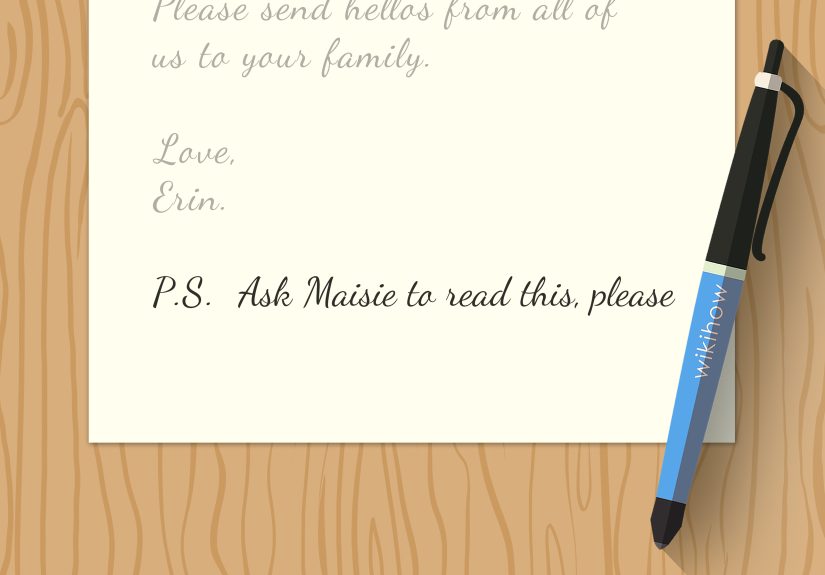
A PS belongs after the closing and signature. That placement matters because the word “postscript” literally means something written after the main message. If you place it before your sign-off, it is not really a PS; it is just another paragraph wearing a fake mustache.
Correct email format
Here is a simple email structure:
Hi Jordan,
Thanks again for reviewing the proposal. I attached the revised version with the updated timeline and budget notes.
Best,
AlexPS: I also included a one-page summary in case you want the quick version before the meeting.
Correct letter format
Sincerely,
Maria ThompsonP.S. I hope your garden survived the squirrels this year. Ours has entered negotiations.
Notice that the PS comes after the name. It should feel like a bonus note, not a surprise paragraph that got lost on the way to the conclusion.
When Should You Use PS?
A PS works best when it adds value. It should not be a dumping ground for every thought you forgot to organize. Used well, it gives your message a final sparkle. Used badly, it becomes the email version of someone following you to your car to keep talking.
1. Use PS to add a friendly personal touch
In personal letters, thank-you notes, or relationship-building emails, a PS can make the message feel warmer. It can mention a shared joke, a small detail, or a thoughtful aside.
PS: I tried the coffee you recommended. You were right. My old coffee now tastes like printer ink.
This kind of PS works because it sounds natural. It does not carry heavy information. It simply leaves the reader smiling.
2. Use PS to reinforce an important reminder
If your email includes a deadline, attachment, event time, or next step, the PS can gently highlight it again without repeating the whole message.
PS: The registration deadline is Friday at 5 p.m., so please send your form before then.
This is especially helpful when readers are busy. A PS gives the most important detail one last chance to wave from the bottom of the page.
3. Use PS for a call to action
In marketing emails, newsletters, fundraising letters, and sales messages, a PS is often used to repeat the main call to action. This does not mean shouting “BUY NOW” like a pop-up ad with caffeine problems. It means giving readers a simple, clear next step.
PS: If you want the checklist, you can download it here before the workshop starts tomorrow.
A good PS call to action is specific. It tells the reader what to do and why it matters.
4. Use PS to add a bonus detail
Sometimes the PS is a great place to add a small extra benefit, resource, or clarification.
PS: I also added a template you can copy for your own team updates.
This works well because the information is useful but not essential to the main message. If it is essential, it belongs in the body of the email, not hiding at the bottom like a shy raccoon.
5. Use PS to create a softer ending
Formal emails can sometimes feel stiff, especially when they involve requests, corrections, or follow-ups. A thoughtful PS can soften the tone.
PS: I appreciate how quickly your team has been moving on this. Thank you.
This is useful in professional communication because it adds warmth without making the email too casual.
When Should You Avoid PS?
PS is helpful, but it is not always appropriate. Some messages need clarity more than charm.
Avoid PS for critical information
Do not place urgent instructions, legal details, safety information, payment terms, or major changes only in a PS. Important information belongs in the main body, where readers expect to find it.
Weak: PS: By the way, the meeting location changed to another city.
Better: Put the new location in the first or second paragraph and use the PS only as a reminder.
Avoid PS in very formal documents
In some formal letters, official notices, academic submissions, legal correspondence, or highly structured business documents, a PS may seem too casual. If the message needs to look polished and complete, revise the body instead of adding a postscript.
Avoid using too many postscripts
You may see PPS or PPPS, which means a second or third postscript. They can be playful in personal writing, but in business communication they often look messy. One PS is usually enough. If you need three, your email may be trying to escape its outline.
How to Write a Good PS
A strong PS is short, relevant, and easy to understand. It should feel like a final helpful note, not a second email attached to the first.
Keep it brief
One sentence is usually ideal. Two short sentences can work. A long paragraph defeats the purpose because readers expect a PS to be quick.
Make it connected to the message
Your PS should relate to the main email or letter. A random note can confuse the reader.
Confusing: PS: Penguins sleep standing up.
Better: PS: I included the research link we discussed during the call.
Use a natural tone
The PS is a great place to sound human. Avoid stiff phrases unless the situation requires formality. Compare these two examples:
Stiff: PS: Please be advised that the aforementioned documentation remains pending.
Natural: PS: Please send the signed form by Friday so we can finalize everything on time.
Include only one idea
A PS should not be a suitcase packed by someone who panicked. Choose one purpose: reminder, thanks, bonus, personal note, or call to action.
PS Examples for Emails and Letters
Professional email PS example
Best regards,
DanielPS: I attached the meeting agenda so everyone can review it before Wednesday.
Job application follow-up PS example
Sincerely,
Priya ShahPS: I especially enjoyed learning about your mentorship program and would be excited to contribute to it.
Sales email PS example
Best,
MarcusPS: The early-bird price ends Thursday, so this is the best time to reserve your seat.
Customer service email PS example
Kind regards,
Elena
Customer SupportPS: You can reply directly to this email if the issue comes back.
Thank-you note PS example
With gratitude,
SamP.S. The book you recommended is already on my nightstand, looking very intellectual.
Newsletter PS example
See you next week,
The Bright Desk TeamPS: Our free planning worksheet is available until Sunday for subscribers.
Personal letter PS example
Love,
GrandmaP.S. I packed extra cookies because I know your definition of “one cookie” is optimistic.
PS in Emails vs. PS in Letters
The basic rule is the same in both formats: place the PS after your signature. However, the tone can change depending on the medium.
In emails, a PS often works as a strategic final line. It can remind the reader about a deadline, encourage a reply, point to an attachment, or repeat a call to action. Because email readers skim quickly, the PS can catch attention at the end.
In handwritten or printed letters, a PS often feels more personal. It can make the letter seem spontaneous and intimate, as if the writer remembered one more small detail after signing off. That little imperfection can be part of the charm.
Common Mistakes When Using PS
Mistake 1: Adding information that belongs in the main body
If the information is central to the message, do not bury it in a PS. Readers may miss it.
Mistake 2: Making the PS longer than the email
A PS should be short. If it becomes a full paragraph with multiple ideas, move it into the main message.
Mistake 3: Sounding too salesy
A marketing PS can include a call to action, but it should still sound respectful. Readers can smell desperation through a screen. It smells like expired coupons.
Mistake 4: Using PS in every email
When every message has a PS, it stops feeling special. Use it when it genuinely improves the message.
Mistake 5: Forgetting the reader
The best PS lines are useful to the reader. They clarify, remind, encourage, or add warmth. They are not just decoration.
Practical Experience: What Works Best When Using PS
In practical writing, the best PS lines usually have one thing in common: they respect the reader’s attention. A strong PS does not try to reopen the whole conversation. It simply gives the reader a final useful thought. This matters because most people do not read emails like novels. They scan, pause, jump around, and decide quickly whether to respond, click, save, or ignore.
For professional emails, the most effective PS is often a reminder. For example, after a project update, a PS that says, “The deadline for feedback is Friday at noon” can be more helpful than clever. It catches the eye and gives the reader a clear next step. In this setting, clarity beats personality. You can still sound friendly, but the main job is to reduce confusion.
For marketing emails, the PS works best when it reinforces the main offer without feeling like a second sales pitch. A good marketing PS might mention a deadline, bonus, guarantee, or popular resource. The trick is restraint. If the body of the email already explains the offer, the PS should not repeat everything. It should highlight the most persuasive detail in one clean line. Think of it as the final tap on the shoulder, not a marching band.
For personal letters, the PS shines when it feels spontaneous. A small joke, a memory, or a warm aside can make the whole message feel more alive. In fact, some readers remember the PS more than the main letter because it sounds less planned. That does not mean it should be careless. It should still be readable, kind, and relevant. But it can be a little more relaxed, which is part of its magic.
One useful habit is to write the email first, then ask, “Is there one final thing the reader would appreciate seeing at the end?” If the answer is yes, a PS may help. If the answer is no, skip it. Not every message needs a cherry on top. Some messages are perfectly fine as a plain muffin.
Another experience-based tip: avoid using PS to fix poor organization. If you forgot a major point, revise the email. If you want to emphasize a small but meaningful point, use the PS. That difference is important. A postscript should feel intentional, not like the writer lost control of the message and found one last sentence under the couch.
Finally, match the PS to the relationship. A playful PS may work beautifully with a friend, loyal customer, or friendly colleague. It may not work in a formal complaint, legal notice, or executive summary. The PS is flexible, but it still needs good judgment. When in doubt, keep it short, polite, and useful.
Conclusion
Learning how to use PS in emails and letters is really about learning how to end a message well. A postscript can add warmth, reinforce a deadline, highlight a call to action, or leave the reader with a memorable final note. The best PS lines are short, relevant, and placed after the signature. They do not replace clear writing; they enhance it.
Use PS when you have a genuine extra note that helps the reader. Use it sparingly in professional communication, naturally in personal letters, and strategically in marketing emails. And remember: if your PS becomes longer than your message, it is no longer a postscript. It is a tiny sequel, and nobody approved the franchise.