Table of Contents >> Show >> Hide
- Why Parakeets Bite in the First Place
- How to Stop a Parakeet from Biting: 10 Steps
- 1. Rule out pain, illness, or sudden discomfort first
- 2. Start treating biting as communication, not betrayal
- 3. Stop reacting dramatically when a bite happens
- 4. Respect cage territory
- 5. Teach “step up” in a neutral, low-pressure setting
- 6. Use positive reinforcement like it is your new religion
- 7. Make your hands less scary and more predictable
- 8. Reduce hormonal and territorial triggers
- 9. Improve the environment so your bird is less stressed
- 10. Be consistent, keep sessions short, and get help when needed
- Common Mistakes That Make Biting Worse
- What Improvement Usually Looks Like
- Real-World Experiences Owners Often Have While Fixing Biting
- Conclusion
If your parakeet has started using your fingers like a chew toy with opinions, take a breath. A biting budgie does not automatically mean you have a “mean bird.” More often, you have a confused, scared, overstimulated, territorial, hormonal, or uncomfortable little feathered roommate who has run out of polite ways to say, “No thanks, human.”
The good news is that parakeet biting can usually improve a lot when you stop treating the bite like a personality flaw and start treating it like communication. In other words, your bird is not plotting against you like a tiny winged supervillain. Your parakeet is sending messages. Your job is to get better at reading them and responding in a way that builds trust.
This guide walks you through 10 practical, gentle steps to stop a parakeet from biting. These steps are based on real bird behavior guidance, and they focus on what actually works: patience, routine, body language, positive reinforcement, and a healthy dose of not taking every nip personally.
Why Parakeets Bite in the First Place
Before you can stop a parakeet from biting, you need to understand why it happens. Budgies and parakeets commonly bite because they feel threatened, cornered, protective of their cage, startled by hands, frustrated by mixed signals, or physically uncomfortable. Some also bite during hormonal periods, especially when they become territorial or overbonded with one person.
And here is an important detail many owners miss: not every beak-on-skin moment is aggression. Sometimes a bird is testing balance, trying to climb, or using its beak like a third foot. That is very different from a hard, fast, “back off immediately” bite. Once you learn the difference, your response gets smarter and your bird gets less defensive.
How to Stop a Parakeet from Biting: 10 Steps
-
1. Rule out pain, illness, or sudden discomfort first
If your normally sweet bird starts biting out of nowhere, do not jump straight to “bad behavior.” Sudden biting can be linked to pain, illness, stress, or some other physical problem. Birds are famously talented at hiding sickness, which means behavior changes can be one of the earliest warning signs.
Ask yourself: Has your budgie become quieter, puffier, sleepier, less active, less interested in food, or weirdly irritable? Is the biting brand-new and intense? If yes, schedule an avian veterinary exam before you launch a home training boot camp. Training a bird through pain is like trying to fix a smoke alarm by lecturing it. Wrong target.
-
2. Start treating biting as communication, not betrayal
This step changes everything. A parakeet usually bites after earlier signals were missed. Those signals may include leaning away, freezing, flaring the tail, raising wings, opening the beak, lunging, moving away, or becoming hyper-alert. By the time the bite lands, your bird may feel it has already tried subtle diplomacy and you did not accept the memo.
Spend several days simply observing. What happens right before the bite? Does it happen when your hand enters the cage? When you reach from above? When your bird is tired? When another pet is nearby? When you interrupt playtime? Patterns matter. Once you know the trigger, you can change the setup instead of arguing with the bird’s nervous system.
-
3. Stop reacting dramatically when a bite happens
Yes, this is unfair. Yes, it hurts. Yes, your soul may briefly leave your body. But a huge reaction can make the problem worse. Yelling, jerking your hand away, scolding, tapping the beak, or delivering a dramatic monologue about betrayal can add fear, excitement, or accidental attention to the moment.
When your parakeet bites, stay as calm as you safely can. Do not punish. Do not chase. Do not turn it into a soap opera. Gently end the interaction and reset. Calm responses help your bird learn that biting does not create a fireworks show. Over time, that removes some of the payoff and keeps trust from taking unnecessary damage.
-
4. Respect cage territory
A lot of biting happens inside or around the cage because the cage is your bird’s home base. Imagine a giant hand barging into your bedroom while you are eating snacks in sweatpants. You would not love it either. Parakeets often become defensive when hands invade their personal space before trust is established.
Instead of reaching into the cage and hoping for the best, invite your bird to come to the door, to the top of the cage, or to another neutral perch. Teaching outside the cage often reduces territorial biting fast because your budgie no longer feels trapped and pressured.
-
5. Teach “step up” in a neutral, low-pressure setting
One of the best ways to stop a parakeet from biting is to replace chaos with a simple, predictable skill. “Step up” is that skill. It gives your bird a clear job, gives you a clear cue, and turns handling into a structured interaction instead of an awkward guessing game.
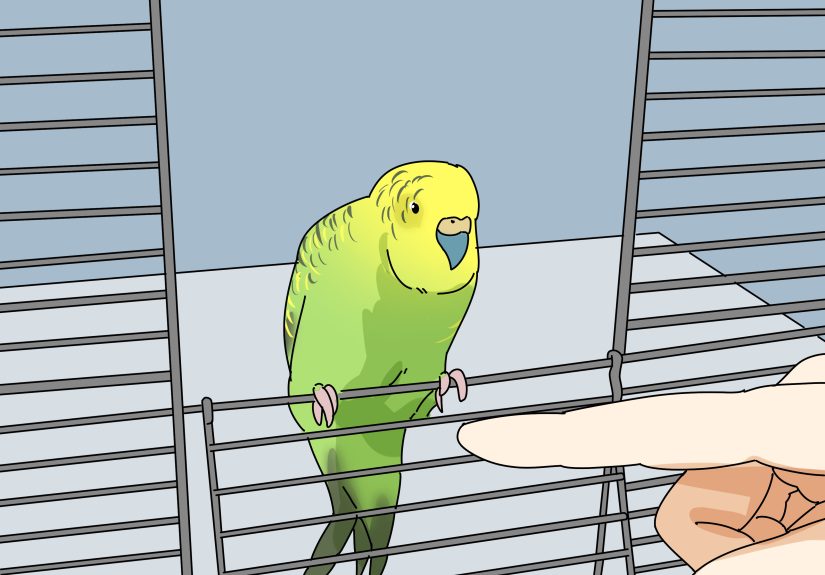
Start in a neutral place, such as the top of the cage or a nearby perch. Present your hand or finger calmly and slightly below chest level rather than swooping in from above. Use a consistent verbal cue like “step up.” Reward even tiny progress: leaning toward your hand, lifting a foot, touching your finger, or stepping on for one second. Keep sessions short, easy, and successful.
If your bird fears hands, begin with a perch, small towel, or handheld stick first. The goal is not to win today; the goal is to teach your parakeet that stepping toward you leads to good things.
-
6. Use positive reinforcement like it is your new religion
Birds learn best when good behavior gets rewarded. That means treats, praise, attention, or access to something they enjoy should arrive right after the behavior you want. If your parakeet stays calm near your hand, reward that. If it steps up without biting, reward that. If it chooses curiosity over chaos, reward that like it just won a tiny bird Oscar.
The reward has to matter to your bird. For some budgies, that is a favorite seed. For others, it may be praise, head attention, or access to a favorite perch. Use small rewards and fast timing. You are building an association: hands are safe, training is predictable, and calm choices pay well.
-
7. Make your hands less scary and more predictable
Many pet birds do not hate hands. They hate surprising hands. Fast hands. Grabby hands. Mystery hands. Hands that keep coming even after the bird says “not today.” If your parakeet bites whenever you reach in, slow everything down.
Move your hand gradually into view. Pause before touching. Let the bird come toward you when possible. Approach from the front or slightly below rather than from above like a hawk audition. Keep motions steady. Avoid cornering the bird. If your budgie backs away, do not keep advancing like a motivational speaker with no brakes. Back off, reset, and try again later.
Desensitization works. When hands repeatedly appear without forcing touch, birds often become less defensive because they stop expecting invasion.
-
8. Reduce hormonal and territorial triggers
Sometimes the problem is not training; it is timing. Hormonal birds can become nippy, protective, loud, and territorial. A parakeet that was fine last month may suddenly act like a tiny landlord defending valuable property. Common triggers include petting the body instead of just the head, creating nest-like spaces, encouraging pair-bond behavior, and allowing overly possessive routines to grow.
Keep petting limited to the head and neck. Avoid stroking the back or under the wings. Do not encourage nesty hideouts, shredding binges in dark corners, or constant cuddly behavior that makes your bird treat you like a mate. If your parakeet gets pushy on your shoulder or face, move it back to the hand or perch during retraining. The more visible and structured the interaction, the fewer surprise bites you will collect on your nose.
-
9. Improve the environment so your bird is less stressed
A bored, stressed, overstimulated, or chronically frustrated bird is more likely to bite. Behavior is not just about training sessions; it is also about daily life. Your parakeet needs a predictable routine, mental stimulation, safe chewing options, foraging opportunities, movement, and enough quiet rest.
Rotate toys. Offer safe items to shred and chew. Scatter small foraging opportunities. Keep the cage setup comfortable and uncluttered. Watch for stressors like loud traffic near the cage, rough handling by visitors, chasing from other pets, or a schedule that changes every five minutes. A calm bird learns faster. An overwhelmed bird bites faster.
-
10. Be consistent, keep sessions short, and get help when needed
Progress with a biting parakeet is usually not dramatic. It is built from tiny wins repeated consistently. Five calm minutes every day beats one heroic forty-minute session that ends with both of you emotionally exhausted. Short, upbeat sessions help your budgie stay engaged and help you avoid pushing too far.
Make sure everyone in the household uses the same cues and same rules. If one person respects the bird’s boundaries and another insists on grabbing, your parakeet will vote with its beak. And if the biting is intense, worsening, linked to fear, or not improving despite your best efforts, bring in an avian veterinarian or qualified bird behavior professional. Sometimes the fastest way forward is getting expert eyes on the situation.
Common Mistakes That Make Biting Worse
Punishing the bird
Punishment can increase fear and damage trust. It may stop a bird for a second, but it often makes the next bite more likely and more intense.
Ignoring warning signs
If your parakeet leans away, fans the tail, freezes, opens the beak, or moves off, that is useful information. Respecting those signs prevents bites and teaches your bird that softer communication works.
Forcing handling too soon
Trust grows when the bird has choices. Forcing step-up, grabbing from the cage, or cornering a nervous budgie can quickly teach the bird that hands predict trouble.
Rewarding the wrong moment
If you offer a treat right after a bite just to distract the bird, you may accidentally teach, “Bite first, snack second.” Reward calm behavior before the bite, not the bite itself.
What Improvement Usually Looks Like
Success does not always look like a bird instantly turning into a feathery angel. It may start with smaller things: fewer lunges, less freezing, softer beak pressure, stepping onto a perch more willingly, accepting your hand nearby, or recovering faster after a surprise. Those are real wins.
A parakeet that no longer feels the need to defend itself constantly is already making progress. Once fear goes down, learning goes up. That is the real secret behind stopping a parakeet from biting.
Real-World Experiences Owners Often Have While Fixing Biting
Many owners start this process convinced their parakeet “just hates people.” Then they begin observing carefully and realize the bird has actually been giving a whole speech before each bite. One owner might notice that the budgie only bites when a hand enters the cage during dinner. Another finds out the bird is perfectly polite on the play stand but turns into a tiny dragon on top of the cage. Someone else realizes the problem is not hands in general, but fast hands, unfamiliar nail polish, or being approached from above. These discoveries can feel almost ridiculous at first, but they are exactly the kind of details that turn a frustrating problem into a fixable one.
A very common experience is the “I made it worse by trying harder” phase. Owners who love their birds often respond to biting by handling more, reaching more, correcting more, and insisting more. Unfortunately, the bird often hears that as pressure. Once those owners switch to slower training, neutral spaces, and rewards for calm behavior, they are shocked by how quickly tension drops. Not overnight, of course. Birds enjoy keeping us humble. But many people report that once they stop pushing for contact and start inviting it, the relationship becomes much smoother.
Another frequent pattern is that progress comes in uneven waves. You may get three great days in a row, then one random chomp that makes you question your life choices. That does not always mean training failed. Sometimes the bird is tired, startled, hormonal, protective, or simply having a very bird day. Experienced owners learn to look at the overall trend rather than treating every bite like a dramatic plot twist. If the bird is biting less often, warning more clearly, stepping up more easily, or calming down faster, that is progress worth trusting.
People also learn that confidence matters. Nervous handling can accidentally invite more biting because hesitant fingers tend to wobble, retreat suddenly, and create an odd, suspicious energy. Calm, predictable movement usually works better. That does not mean you need to become fearless overnight. It just means your bird benefits when you act like a steady perch instead of a panicked tree branch in a windstorm.
One of the most encouraging experiences owners describe is the moment the bird chooses cooperation. The first voluntary step-up. The first time a hand enters the space and the bird does not lunge. The first time a budgie leans in with curiosity instead of backing off in alarm. Those moments are small, but they change the emotional temperature of the whole relationship. Suddenly, the bird is not something to manage. It is a partner in communication.
And perhaps the most valuable lesson owners share is this: biting improvement often has less to do with “stopping bad behavior” and more to do with creating a bird who no longer feels like biting is necessary. When trust grows, the beak usually calms down. Not because the bird was defeated, but because it finally feels heard.
Conclusion
If you want to stop a parakeet from biting, focus less on punishment and more on prevention, trust, and communication. Learn the triggers. Watch the body language. Respect the cage. Use positive reinforcement. Teach step-up slowly. Reduce stress and hormonal triggers. And never underestimate the power of being boringly consistent.
Your budgie is not trying to ruin your day. It is trying to stay safe, be understood, and keep some control over a very large world run by humans with giant fingers. Once you work with that instead of against it, the bites usually shrink, the trust grows, and life becomes much less pointy.