Table of Contents >> Show >> Hide
- First Things First: Is It a Nestling or a Fledgling?
- What to Do If You Find a Healthy Fledgling on the Ground
- When a Baby Bird Really Does Need Help
- How to Help a Nestling Safely
- What Not to Do With a Fallen Baby Bird
- How to Contain an Injured Baby Bird Before Transport
- Special Situations: Cats, Windows, and Ground-Nesting Confusion
- How to Find Help Fast
- How to Prevent Baby Bird Emergencies Around Your Home
- Real-Life Experiences and Lessons From Helping Baby Birds
- Conclusion
- SEO Tags
Finding a baby bird on the ground can trigger instant panic. One second you are watering your plants, and the next you are starring in what feels like a tiny wildlife emergency. Your heart says, “Rescue mission!” The bird, however, may simply be having a very normal, very awkward first day outside the nest.
That is the key thing to understand before you do anything heroic. Not every fallen baby bird needs saving. In fact, many young birds found on the ground are fledglings, which means they are supposed to be there. They have left the nest but are still being fed and supervised by their parents while they learn to hop, flutter, and eventually fly without looking like feathery interns on their first day.
If you have found a baby bird in your yard, on a sidewalk, or under a tree, this guide will help you figure out what kind of bird you are dealing with, when to leave it alone, when to step in, and when to call a licensed wildlife rehabilitator. The goal is simple: help the bird without making things worse. That may not sound glamorous, but in baby bird rescue, calm decisions beat dramatic rescues every time.
First Things First: Is It a Nestling or a Fledgling?
Before you help a fallen fledgling or any baby bird on the ground, you need to identify its stage of development. This is the difference between “leave it alone” and “yes, this bird genuinely needs assistance.”
What a nestling looks like
A nestling is very young. It may be featherless, mostly bare, or covered in only a little down. It usually cannot perch well, cannot hop with confidence, and absolutely does not look ready to manage life on the ground. If a nestling is out of the nest, it usually needs help.
What a fledgling looks like
A fledgling is older and much more feathered. It may have a short tail, a fluffy look, and a slightly confused expression that says, “I meant to do that.” Fledglings often hop, flutter, cling to branches, and spend time on the ground while they learn to fly. Parents are often nearby, even if you do not see them right away.
If the bird is fully or mostly feathered and alert, there is a good chance it is a fledgling. And if it is a fledgling, the best help is often minimal help.
What to Do If You Find a Healthy Fledgling on the Ground
If you have found a healthy fledgling, resist the urge to scoop it up and start a backyard bird nursery. A grounded fledgling is often exactly where it should be.
Leave it alone if the area is safe
The ideal move is often no move at all. Parent birds continue feeding fledglings after they leave the nest. They may stay out of sight to avoid drawing predators to the baby. So if you do not immediately see mom or dad, that does not mean the bird has been abandoned. It may just mean the parents are smarter than the average human with binoculars.
Make the area safer
If the fledgling is in immediate danger, you can help by reducing threats rather than “rescuing” it. Keep dogs inside for a while. Bring cats indoors. Ask kids to admire the bird from a distance instead of forming a committee around it. Fledglings need space, quiet, and time.
Move it only a short distance if necessary
If the bird is sitting in the road, on a busy walkway, or in a spot where predators can reach it easily, gently move it to a nearby shrub, low branch, or sheltered patch of ground close to where you found it. Do not relocate it across the yard, down the block, or to your cousin’s “nice bird-friendly garden.” Parents find their young by location and calls, so keeping the bird nearby matters.
When a Baby Bird Really Does Need Help
Now for the serious part. Some baby birds do need intervention, and timing matters. A wild bird that is injured, cold, or attacked by a pet should not be left to “figure it out.”
Signs the bird may need rescue
- It is featherless or barely feathered and on the ground.
- It has a drooping wing or leg.
- It is bleeding or has obvious wounds.
- It is weak, cold, unresponsive, or lying on its side.
- It was caught by a cat or dog, even if injuries are not obvious.
- It hit a window and seems stunned, dazed, or unable to fly.
- You have watched from a distance for about an hour and no parent birds return to a nestling or substitute nest.
In these situations, the right move is to contact a licensed wildlife rehabilitator. Wild baby birds are delicate, their care is specialized, and in many cases native birds are protected by law. Good intentions are lovely. Permits and training are lovelier.
How to Help a Nestling Safely
If the bird is clearly a nestling, your first goal is to reunite it with its parents. That is almost always better than any human care, no matter how kind, determined, or equipped with a shoebox you may be.
Step 1: Look for the nest
Check nearby branches, shrubs, gutters, hanging planters, and tree forks. Many nests are closer than people think. If you find the nest and it is intact, gently place the baby back inside.
Step 2: Ignore the old “human scent” myth
Many people still believe parent birds will reject a baby if a person touches it. Thankfully, that myth needs to retire. Most parent birds will continue caring for their young after brief human handling. So yes, you can return the baby to the nest without triggering a soap opera in the treetops.
Step 3: Make a substitute nest if needed
If the original nest is damaged or unreachable, you can make a temporary substitute nest. Use a small basket, berry container, or similar lightweight container with drainage holes. Line it with a soft cloth or paper towel, but do not make it too deep or overly fluffy. Secure it as close as possible to the original nest location and place the baby inside.
Then step back and watch from a distance. Parent birds may take a little time to return, especially if you are standing nearby like an overinvested reality show host. Give them space.
What Not to Do With a Fallen Baby Bird
This section may save more birds than anything else in the article.
Do not give food or water
One of the most common mistakes in baby bird rescue is trying to feed the bird right away. Do not do it. Baby birds have very specific diets, and giving the wrong food can cause choking, aspiration, digestive problems, or worse. Water can also be dangerous if offered the wrong way. Until a rehabilitator instructs you otherwise, skip the snacks and the eyedropper.
Do not try to raise it yourself
Even when done with love, home care usually leads to poor outcomes. Baby birds need species-specific diets, frequent feeding schedules, proper warmth, careful handling, and protection from imprinting on humans. What looks like kindness can easily become unintentional harm.
Do not move the bird far away
If the bird is a fledgling, relocating it too far from where it was found can separate it from its parents. Keep any move short and local.
Do not hover
Parents may not return while people are standing nearby. Watch discreetly from indoors or from a distance.
How to Contain an Injured Baby Bird Before Transport
If the bird is clearly injured and you are waiting to transport it to a rehabilitator, the goal is simple: keep it warm, dark, quiet, and stress-free.
Use a small box with ventilation
A cardboard box with air holes works well. Line it with a soft towel or paper towel. Place the bird inside and close the lid loosely enough for airflow but securely enough to prevent escape or panic.
Keep it warm and calm
Place the box in a quiet indoor space away from kids, pets, bright lights, loud music, and well-meaning relatives offering breadcrumbs. A mildly warm environment helps; overheating does not. You are creating a recovery waiting room, not a bird sauna.
Handle as little as possible
Minimal handling reduces stress and lowers the risk of further injury. Wash your hands after contact, or wear gloves if needed.
Special Situations: Cats, Windows, and Ground-Nesting Confusion
If a cat caught the bird
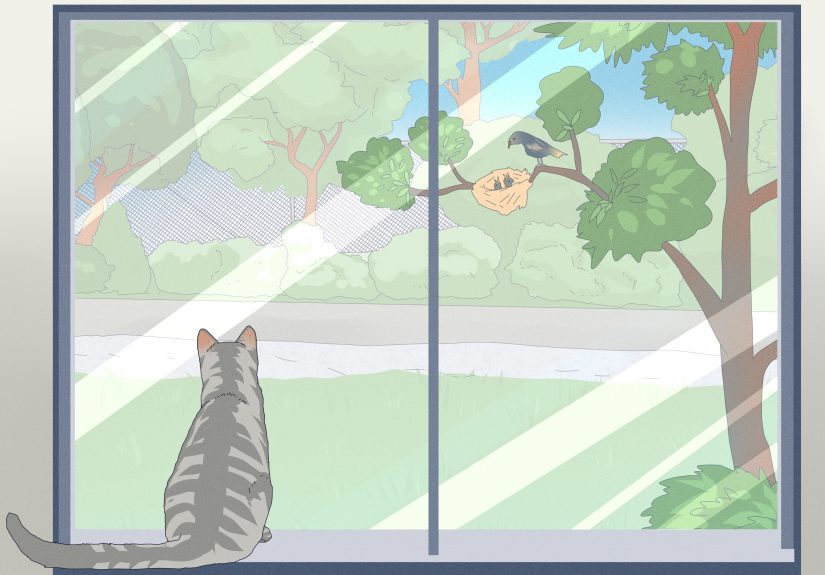
This is urgent. Even tiny punctures from a cat can cause life-threatening infections, and injuries may not be obvious. If a cat has had the bird in its mouth or paws, contact a wildlife rehabilitator right away.
If the bird hit a window
A bird that strikes glass may look merely stunned, but internal injuries can be serious. Place it in a dark, quiet box and contact a rehabber promptly. Going forward, make windows safer by reducing reflections and using bird-friendly window markers or exterior treatments. One lonely decal in the middle of a giant pane is not a strategy. It is decoration.
If you think the nest is “missing”
Some birds nest in odd places, and some fledglings spend time in low shrubs or on the ground by design. Do not assume every ground-level young bird fell from disaster. Grounded does not always mean orphaned.
How to Find Help Fast
If you are unsure whether the bird needs intervention, contact a licensed wildlife rehabilitator, local Audubon center, wildlife hospital, or state wildlife agency. A quick phone call can prevent a bad decision. Photos can also help professionals identify whether you are looking at a nestling, fledgling, or a bird that needs immediate care.
When you call, be ready to describe:
- Where the bird was found
- Whether it is feathered or mostly bare
- Whether it is alert, hopping, or injured
- Whether a cat, dog, or window strike was involved
- How long you have observed the bird
The clearer your description, the faster you will get good advice.
How to Prevent Baby Bird Emergencies Around Your Home
The best baby bird rescue tip is preventing trouble before it starts.
Keep cats indoors
Outdoor cats are a major threat to birds, especially inexperienced fledglings. Keeping cats indoors protects wildlife and also protects cats.
Make windows visible to birds
Use screens, external markings, or bird-safe glass treatments to reduce collisions. Bird-friendly homes are not just trendy; they save lives.
Give nesting birds some peace
If birds are nesting near your home, try to reduce disturbance. Avoid pruning, construction, or constant foot traffic close to active nests when possible.
Real-Life Experiences and Lessons From Helping Baby Birds
One of the most common experiences people have with a fallen fledgling starts with pure panic and ends with a surprising amount of humility. A homeowner steps outside, finds a fluffy little robin under a maple tree, and immediately assumes the bird has been abandoned. The bird is hopping, not flying, and looking generally offended by gravity. The person prepares for an all-day rescue operation. Then, after backing away and watching from the window, they spot an adult robin swooping down every few minutes with food. The “emergency” turns out to be a normal flying lesson, and the biggest service the human provides is keeping the dog indoors and canceling their urge to interfere.
Another common story involves a true nestling. After a storm, someone finds a nearly featherless baby bird on the ground below a shrub. This time, intervention is the right choice. They locate the nest, gently return the chick, and leave the area. Within minutes, the parent bird comes back. It is a simple outcome, but it teaches an important lesson: when a young bird can be reunited with its parents, that is usually the gold standard. Wildlife parents may not have degrees, but they are still better at raising baby birds than we are.
Then there are the substitute nest success stories. These often happen when the original nest is damaged or just out of reach. A person uses a small basket or container, secures it close to the original nesting spot, and places the chicks inside. They step back, wait, and try not to narrate the scene like a nature documentary. Soon enough, the adult birds return and continue feeding the babies. It is one of those rare moments when a careful human assist actually works beautifully.
Of course, not every experience is simple. Some people find a fledgling after a cat encounter or a window strike. These are the situations that remind us why professional help matters. A bird may look okay at first, but hidden injuries can be serious. People who call a wildlife rehabilitator quickly often describe feeling relieved that someone knowledgeable can take over. They stop guessing, stop Googling contradictory advice, and start following a real plan.
There is also an emotional side to all this. Helping a baby bird can make people feel protective, anxious, hopeful, and sometimes guilty if the outcome is uncertain. That is normal. Wild animals can tug at the heart in a big way, especially when they are tiny and fluffy and appear to be making questionable life choices on your lawn. But the best experiences usually come from recognizing that helping does not always mean handling. Sometimes it means observing quietly, removing danger, and trusting the parents. Sometimes it means calling a rehabilitator instead of trying to become one in your kitchen.
The biggest takeaway from real-world baby bird encounters is this: good intentions matter, but informed action matters more. The people who help birds most successfully are usually the ones who slow down, identify whether they are looking at a nestling or a fledgling, and respond with exactly the amount of help needed, not more. That kind of restraint may not feel dramatic, but for a wild baby bird, it can make all the difference.
Conclusion
If you find a baby bird on the ground, do not assume the worst. Start by asking the smartest question: is this a nestling or a fledgling? A healthy fledgling usually needs protection from danger, not a full-scale rescue. A nestling usually needs to be returned to the nest or a nearby substitute nest. And an injured bird, cat-caught bird, or window-strike bird needs a licensed wildlife rehabilitator as soon as possible.
In other words, the best way to help a fallen fledgling is to stay calm, observe carefully, and do only what the situation truly requires. Baby birds are fragile, but the right response can be wonderfully simple. Sometimes saving a bird means picking it up. Sometimes it means putting it back. And very often, it means stepping away and letting nature finish the job.