Table of Contents >> Show >> Hide
- Why Eyebrow Piercing Scars Happen
- Before You Get Pierced: Scar Prevention Starts Early
- The Best Eyebrow Piercing Aftercare Routine
- What Not to Put on an Eyebrow Piercing
- Reduce Friction: The Secret to Preventing Piercing Bumps
- Jewelry Downsizing Can Help Prevent Scars
- Piercing Bump, Hypertrophic Scar, or Keloid?
- Signs You Should Get Professional Help
- Migration and Rejection: Act Early to Minimize Scarring
- How to Care for the Skin If You Retire the Piercing
- Common Mistakes That Make Eyebrow Piercing Scars More Likely
- Practical Healing Timeline for an Eyebrow Piercing
- Real-World Experiences: What Actually Helps Prevent Eyebrow Piercing Scars
- Conclusion: Calm Healing Is the Best Scar Prevention
An eyebrow piercing can look sharp, expressive, and just rebellious enough to make your grandma pause mid-sentence. But the goal is style, not a souvenir scar shaped like a tiny eyebrow speed bump. The good news? Most eyebrow piercing scars are not mysterious acts of the piercing gods. They usually happen because of irritation, poor jewelry, trauma, infection, allergic reaction, migration, or aftercare that was a little too enthusiastic.
In other words, your eyebrow piercing does not need a 12-step skincare ritual, a motivational speech, or a homemade potion from the internet. It needs clean hands, sterile saline, low-friction habits, good jewelry, patience, and the wisdom to stop touching it every time you pass a mirror.
This guide explains how to avoid eyebrow piercing scars with realistic aftercare tips, common mistakes to avoid, and practical examples that help you heal like a responsible adulteven if you still forget where you put your keys.
Why Eyebrow Piercing Scars Happen
Scarring is part of the body’s natural repair process. A piercing is a controlled wound, and your skin has one job: close, protect, and rebuild. Most eyebrow piercings leave little to no visible mark when healed properly, but complications can increase the chance of noticeable scarring.
The most common causes of eyebrow piercing scars
- Repeated irritation: Bumping, twisting, snagging, or sleeping on the jewelry can keep the piercing angry.
- Improper jewelry: Low-quality metal, jewelry that is too tight, or jewelry that is too long after swelling goes down can cause pressure and friction.
- Infection: Infection can damage tissue and increase the risk of raised or discolored scars.
- Allergic reaction: Nickel and other irritating metals may cause redness, itching, swelling, and delayed healing.
- Migration or rejection: Eyebrow piercings are surface-adjacent piercings, so the body may slowly push jewelry outward if the tissue is stressed.
- Picking crust or bumps: Your fingers are not tiny dermatologists. Picking can reopen healing tissue and worsen inflammation.
The key idea is simple: calm skin scars less. Irritated skin makes drama. And unlike reality TV, eyebrow piercings do not benefit from drama.
Before You Get Pierced: Scar Prevention Starts Early
The best way to avoid eyebrow piercing scars begins before the needle even enters the chat. A clean studio, a qualified piercer, proper placement, and safe jewelry all reduce the risk of complications.
Choose a professional piercer, not a bargain adventure
Look for a licensed, reputable piercing studio that uses sterile, single-use needles and follows strict hygiene practices. Avoid DIY piercing, piercing guns, or “my friend has done this twice” situations. Your eyebrow is not the place for a discount experiment.
A professional piercer should explain the process, review aftercare, discuss jewelry material, and check your anatomy. Not every brow shape or skin structure is ideal for every placement. Good placement helps reduce pressure, migration, rejection, and scarring.
Pick high-quality jewelry
Jewelry matters more than people think. For a fresh eyebrow piercing, implant-grade titanium is often a smart choice because it is lightweight and usually well tolerated. Other body-safe options may include niobium or solid 14k or 18k gold from a reputable source. Avoid mystery metals, gold-plated jewelry, cheap costume jewelry, and anything that contains nickel if you are sensitive.
Nickel allergy can trigger itching, redness, dryness, rash-like irritation, and delayed healing. When a piercing stays inflamed, the chance of bumps and scars goes up. Basically, cheap jewelry can become very expensive when your skin files a complaint.
Consider your keloid history
If you have a personal or family history of keloids, talk with a dermatologist before getting an eyebrow piercing. Keloids are raised scars that grow beyond the original wound. They are not the same as ordinary irritation bumps, and they often require medical care. People who already know they form keloids should be extra cautious with piercings, tattoos, and unnecessary skin trauma.
The Best Eyebrow Piercing Aftercare Routine
Aftercare should be boring. That is a compliment. A calm, consistent routine gives the piercing time to heal without constant interference.
1. Wash your hands before touching the area
Before cleaning your eyebrow piercing, wash your hands with soap and water. This is not optional. Hands carry bacteria, oils, sunscreen, food residue, pet fluff, and whatever was on your phone five minutes ago. Touching a fresh piercing with unwashed hands is like inviting chaos to brunch.
2. Clean with sterile saline
Use sterile saline wound wash, ideally a simple product with sodium chloride and water only. Spray or apply saline gently to the piercing once or twice daily, depending on your piercer’s instructions. Let it soften any dried lymph fluid or crust, then gently remove loosened debris with clean gauze if needed.
Do not dig, scrape, or chase every tiny crust like it owes you money. Some light crusting can be normal during healing. The goal is cleanliness, not polishing your eyebrow like a sports car.
3. Dry the piercing gently
After cleaning, gently pat the area dry with clean disposable gauze or a clean paper product. Avoid fluffy towels because fibers can snag jewelry and towels can harbor bacteria. Moisture trapped around a piercing may contribute to irritation, so drying matters.
4. Leave the jewelry alone
Do not twist, spin, rotate, tug, or “check” the jewelry. The old advice about rotating piercings is outdated for body piercings. Movement can tear fragile healing tissue inside the channel and create more inflammation. Your piercing is healing, not practicing gymnastics.
What Not to Put on an Eyebrow Piercing
One of the fastest ways to annoy a healing piercing is to treat it with harsh products. More cleaning does not mean better healing. Overcleaning can dry and irritate the tissue, which may increase bumps and scarring.
Avoid these common irritants
- Rubbing alcohol
- Hydrogen peroxide
- Tea tree oil
- Antibiotic ointment unless prescribed
- Heavy creams or petroleum products on the piercing
- Makeup directly around the holes
- Fragranced skincare near the piercing
- Hair spray, styling gel, or facial exfoliants on the area
These products can dry, burn, clog, or irritate healing tissue. Keep your skincare routine away from the piercing channel until it is fully healed. Your eyebrow piercing does not need toner, serum, retinol, or a glow-up routine. It needs peace.
Reduce Friction: The Secret to Preventing Piercing Bumps
Friction is one of the biggest enemies of eyebrow piercing healing. A fresh piercing can tolerate normal facial movement, but repeated bumps and snags can cause swelling, irritation bumps, migration, or scar tissue.
Protect your piercing from everyday accidents
- Be careful when pulling shirts, hoodies, or helmets over your head.
- Keep towels, washcloths, and pillowcases from snagging the jewelry.
- Avoid sleeping face-down or directly on the piercing.
- Keep hair products away from the area.
- Be cautious during sports, workouts, or rough play.
- Do not let pets lick or rub against the piercing. Cute? Yes. Sterile? Absolutely not.
If your eyebrow jewelry keeps catching on things, visit your piercer. The jewelry may need evaluation or downsizing once swelling has settled.
Jewelry Downsizing Can Help Prevent Scars
Fresh eyebrow piercings often start with jewelry that has extra room for swelling. That extra room is useful at first. But once swelling decreases, jewelry that is too long may move too much, catch on clothing, or put pressure on the piercing.
Downsizing means a professional piercer replaces the initial jewelry with a better-fitting piece. Do not do this yourself during early healing. Changing jewelry too soon can tear the healing channel, introduce bacteria, and restart irritation. Think of downsizing like tailoring a suit: the fit matters, and scissors should not be handled by someone guessing.
Piercing Bump, Hypertrophic Scar, or Keloid?
Not every bump is a keloid. In fact, many bumps near eyebrow piercings are irritation bumps caused by friction, pressure, moisture, poor jewelry angle, or cleaning mistakes. Knowing the difference helps you avoid panic and avoid bad DIY treatments.
| Issue | What It May Look Like | What to Do |
|---|---|---|
| Irritation bump | Small bump near the piercing hole, often linked to snagging or pressure | Reduce friction, use saline, and ask a piercer to check jewelry fit |
| Hypertrophic scar | Raised scar tissue that usually stays within the wound area | See a professional piercer or dermatologist if it persists |
| Keloid | Raised scar that grows beyond the original wound and may keep enlarging | Consult a dermatologist; do not try to remove it yourself |
| Infection | Increasing pain, swelling, heat, pus, spreading redness, or fever | Seek medical care promptly |
Never pop, cut, tie off, squeeze, burn, or “drain” a bump yourself. That is not aftercare; that is a villain origin story for scar tissue.
Signs You Should Get Professional Help
Some redness, tenderness, and mild swelling can be normal early on. However, symptoms should gradually improve, not get worse. Contact a healthcare professional if you notice spreading redness, increasing warmth, worsening pain, thick yellow or green discharge, fever, chills, red streaks, or swelling that seems excessive.
If you suspect infection, do not remove the jewelry without professional guidance. Removing jewelry too early can sometimes trap drainage inside the tissue. A doctor, dermatologist, or qualified piercer can help you decide the safest next step.
Migration and Rejection: Act Early to Minimize Scarring
Eyebrow piercings can migrate or reject, especially if they are placed too shallow, constantly bumped, or fitted with poor jewelry. Signs may include jewelry appearing closer to the surface, the skin between the holes getting thinner, the piercing angle changing, or the holes stretching.
If you notice these signs, visit your piercer quickly. Sometimes retiring the piercing early leaves a smaller mark than waiting until the jewelry pushes out on its own. It is better to have a tiny scar than a dramatic exit wound your eyebrow did not RSVP for.
How to Care for the Skin If You Retire the Piercing
If you decide to remove the jewelry, have a professional piercer remove it when possible, especially if the piercing is irritated. Continue cleaning the area gently with sterile saline until the openings close. Do not pick scabs or force the holes closed.
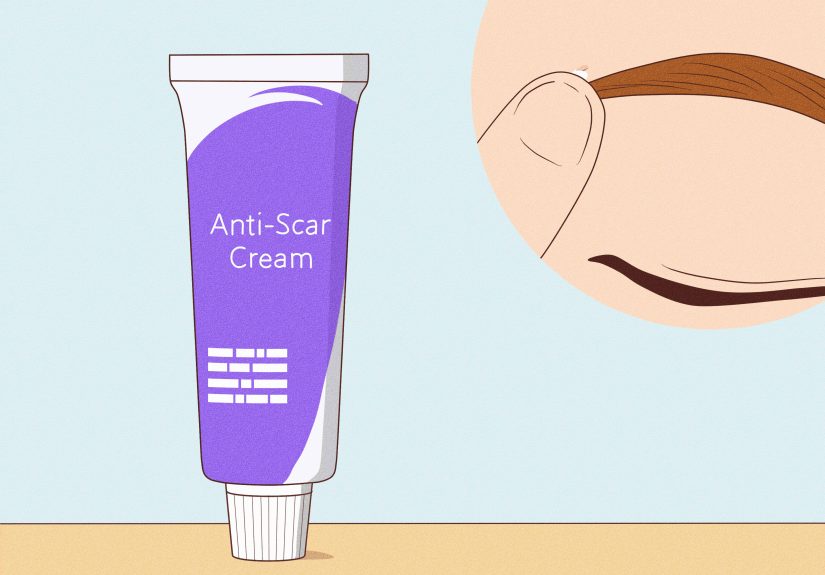
Once the skin is fully closed and no longer tender, sun protection can help reduce discoloration. If you develop a raised scar, thickened tissue, or dark mark that concerns you, see a dermatologist. Treatments such as silicone gel, steroid injections, laser therapy, or other medical options may be recommended depending on the scar type. The eyebrow area is close to the eye, so avoid experimenting with scar products without professional advice.
Common Mistakes That Make Eyebrow Piercing Scars More Likely
Changing jewelry too soon
Fresh piercings are fragile. Early jewelry changes can tear the healing channel and introduce bacteria. Wait until your piercer says the piercing is ready.
Using makeup around the piercing
Foundation, brow gel, concealer, glitter, and setting spray can irritate healing tissue. Keep makeup away from both piercing holes until healing is complete.
Cleaning aggressively
Scrubbing the area, using cotton swabs roughly, or cleaning five times a day can worsen irritation. Gentle, consistent care works better.
Ignoring jewelry allergies
If your piercing is itchy, rashy, dry, or persistently irritated, the jewelry material may be part of the problem. Ask your piercer about implant-grade alternatives and consult a dermatologist if symptoms continue.
Sleeping on it
Nightly pressure can keep the piercing inflamed. Try sleeping on the opposite side or using a travel pillow to reduce pressure near your brow.
Practical Healing Timeline for an Eyebrow Piercing
Healing timelines vary. Many eyebrow piercings need several months to settle, and some take longer depending on placement, jewelry, lifestyle, and aftercare habits. The outside may look healed before the inside is strong. That is why early jewelry changes, skipped cleaning, and rough handling can cause problems even when the piercing “looks fine.”
During the first few weeks, expect mild swelling, tenderness, and some clear or pale fluid that dries into light crust. Over time, tenderness should fade, crust should decrease, and the jewelry should feel more comfortable. If symptoms suddenly worsen after improving, look for a trigger: sleeping pressure, makeup, sweat, snagging, or jewelry movement.
Real-World Experiences: What Actually Helps Prevent Eyebrow Piercing Scars
Most people who heal eyebrow piercings successfully have one thing in common: they stop trying to “help” too much. The piercing world is full of stories where the solution was not a miracle product, but less touching, less cleaning, and better jewelry. It sounds too simple, which is probably why so many people ignore it.
One common experience is the “mirror check” habit. Someone gets a new eyebrow piercing, loves it, and then checks it constantly. A little crust appears. They touch it. A tiny bump appears. They press it. Then they clean it with three different products because panic has entered the building. Within days, the piercing is redder, puffier, and angrier. The better approach is to clean with sterile saline, dry gently, and leave it alone unless there are clear signs of infection or jewelry trouble.
Another familiar situation involves makeup. A person waits only a few days before applying concealer near the piercing because they want to hide redness. Unfortunately, makeup can enter the healing channel and irritate the tissue. The result may be a bump that looks worse than the original redness. For anyone who wears brow products, the safer move is to keep makeup away from the piercing holes and work around the area with clean tools only after the piercing is no longer fresh.
Jewelry fit is another big lesson. At first, longer jewelry is useful because swelling needs space. Later, that same extra length can become a snag machine. People often notice irritation after the jewelry catches on a towel, hoodie, or pillowcase. If the piercing keeps getting bumped, a qualified piercer can check whether downsizing is appropriate. This small adjustment can reduce movement and help prevent the kind of repeated trauma that leads to bumps or scars.
Sports and active routines also require planning. Sweat itself is not evil, but gym equipment, mats, helmets, and accidental hits can irritate a healing eyebrow piercing. People who heal well usually clean gently after sweaty activities, avoid direct impact, and keep the jewelry from getting pulled. A fresh piercing and a basketball elbow are not friends. They are barely acquaintances.
People with sensitive skin often learn that jewelry material matters. If the area stays itchy, rashy, or flaky, the problem may not be “bad healing” at all. It may be an allergic reaction or irritation from metal. Switching to high-quality, body-safe jewelry with help from a professional can make a major difference. The key is not to keep forcing the skin to tolerate something it clearly dislikes.
Finally, the best scar-prevention experience is knowing when to ask for help. If a bump grows, the skin thins, the jewelry shifts, or infection signs appear, waiting can make scarring worse. A good piercer can troubleshoot irritation and jewelry fit. A healthcare professional can treat infection or abnormal scarring. Getting help early is not dramatic. It is smart maintenancelike taking your car in before the engine starts making jazz noises.
Conclusion: Calm Healing Is the Best Scar Prevention
Avoiding eyebrow piercing scars is mostly about respecting the healing process. Choose a skilled piercer, wear high-quality jewelry, clean with sterile saline, avoid unnecessary touching, protect the area from friction, and get help early when something seems wrong. Your piercing does not need perfection. It needs patience, cleanliness, and a peaceful environment.
The best eyebrow piercing aftercare is simple enough to remember and consistent enough to work. Treat the piercing like a tiny healing wound, not a new toy. Keep it clean, keep it calm, and let your eyebrow enjoy its fashionable new hardware without turning healing into a full-time job.
Note: This article is for general educational purposes and does not replace advice from a qualified piercer, dermatologist, or healthcare professional. If you are under 18, follow local laws and involve a parent or guardian before getting a piercing.