Table of Contents >> Show >> Hide
- Why Lunar Ice Matters More Than It Sounds
- What VIPER Is Actually Built to Do
- How NASA’s VIPER Will Drill Into Lunar Ice
- Step 1: Scout for Hydrogen Before Digging
- Step 2: Park Carefully on Terrain That Is Trying to Ruin Your Day
- Step 3: Deploy TRIDENT, the Mission’s Robotic Drill
- Step 4: Drill in Measured Bites, Not One Giant Dramatic Stab
- Step 5: Bring the Cuttings to the Surface Without Losing the Plot
- Step 6: Analyze the Material With NIRVSS and MSolo
- Why Drilling Lunar Ice Is So Hard
- What VIPER Could Teach Future Artemis Missions
- The Experience Behind the Drill: What This Mission Really Represents
- Conclusion
The Moon has a reputation problem. People hear “Moon” and think of a silent gray rock, basically the universe’s fanciest driveway gravel. But at the lunar south pole, the story gets far more interesting. Hidden inside brutally cold, permanently shadowed terrain are deposits of water ice and other volatile materials that could help answer major scientific questions and, one day, support human exploration. That is where NASA’s VIPER rover comes in.
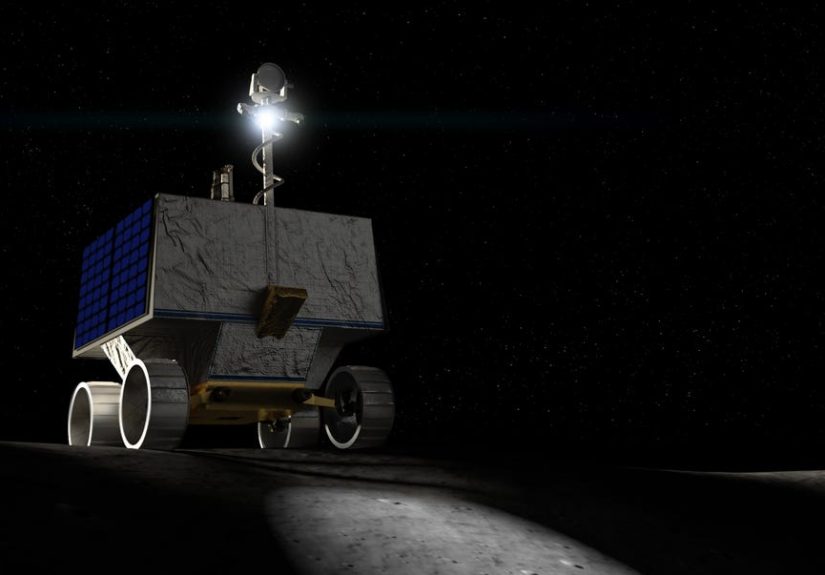
VIPER, short for Volatiles Investigating Polar Exploration Rover, was built to do something both elegant and gloriously difficult: drive across the Moon’s south polar region, identify promising places to search for ice, drill into the ground, and analyze what comes up. In other words, it is part prospector, part field geologist, part robotic detective, and part very expensive cordless drill that does not get to call customer support.
The mission’s story has had a few plot twists. NASA announced in 2024 that it intended to discontinue VIPER, then later selected Blue Origin in 2025 for a potential late-2027 delivery to the Moon. But the core science goal has remained remarkably steady: learn where lunar water is, what form it takes, how deep it sits, and how accessible it might be for future missions. That makes VIPER one of the most practical science missions in modern lunar exploration. It is not just asking, “Is there ice?” It is asking, “Can we work with what is actually there?”
Why Lunar Ice Matters More Than It Sounds
Water on the Moon is not just a neat science headline. It is a big deal for both exploration and economics. Water can be used for drinking, turned into breathable oxygen, and split into hydrogen and oxygen for rocket fuel. If astronauts can use local resources instead of hauling every drop from Earth, lunar missions become more realistic, more sustainable, and a lot less like the world’s priciest camping trip.
Scientists already have strong evidence that water ice exists near the lunar poles, especially in regions that sunlight never reaches. These permanently shadowed regions are among the coldest places in the solar system, acting like deep freezers that may have preserved volatiles for billions of years. Orbital missions and remote sensing data have shown the signs. What they have not fully answered is how that ice is distributed, how pure it is, whether it is mixed into the soil, and whether it is easy or maddeningly difficult to extract.
That gap between “we think it is there” and “we know how it behaves” is exactly where VIPER becomes important. The rover is designed to ground-truth orbital observations by making measurements on the surface and below it. Instead of guessing from above, VIPER will check directly at the source.
What VIPER Is Actually Built to Do
VIPER is about the size of a golf cart, but it has a much more interesting job than carrying people between sand traps. It was designed to explore the Moon’s south pole over an approximately 100-day mission, traveling through areas with dramatic changes in light, temperature, slope, and soil conditions. Some locations are sunlit enough to keep the rover operating efficiently. Others are dark, frigid traps where ice may be preserved close to the surface.
The rover’s scientific toolkit centers on four key pieces: the Neutron Spectrometer System (NSS), the TRIDENT drill, the Near-Infrared Volatiles Spectrometer System (NIRVSS), and MSolo, a mass spectrometer that helps identify gases and volatile compounds. Think of them as a team rather than separate gadgets. One finds the clues, one digs, and two more inspect the evidence.
VIPER’s target region has been associated with the lunar south pole near Mons Mouton, where sunlight and darkness exist in a strange patchwork. That matters because the rover has to balance science ambition with survival. It wants to go where the ice is most likely to be, but it also has to remain functional in one of the toughest operating environments imaginable.
How NASA’s VIPER Will Drill Into Lunar Ice
This is the heart of the mission, and it is where the engineering gets deliciously nerdy.
Step 1: Scout for Hydrogen Before Digging
VIPER does not just roll up to random spots and start punching holes in the Moon like an overcaffeinated contractor. First, it uses the Neutron Spectrometer System to look for signs of hydrogen in the ground. Hydrogen is important because where there is water, there is hydrogen. NSS measures changes in the number and energy of neutrons coming from the lunar surface. When those particles interact with hydrogen atoms, their behavior changes in a measurable way.
That means NSS helps VIPER figure out where subsurface material may contain hydrogen-rich deposits, including water ice. It is a smart way to narrow the search. On the Moon, power, time, and mobility are all precious. Digging only where the science looks promising is not just efficient; it is essential.
Step 2: Park Carefully on Terrain That Is Trying to Ruin Your Day
Once VIPER identifies a promising spot, the rover has to position itself for drilling. That sounds simple until you remember it is doing this on a cratered, dusty, sloped surface where traction can be unreliable and temperatures can swing wildly. The Moon’s south pole is not a nice flat garage floor. It is more like a badly lit obstacle course designed by a geologist with a wicked sense of humor.
The rover was built to traverse rugged terrain and even move into permanently shadowed areas, but drilling still requires stability. VIPER’s operators on Earth will have to plan routes and drilling stops carefully, using images, terrain data, and real-time operational judgment. The rover cannot afford to drill while poorly positioned, because even a good drill becomes a bad idea if the platform beneath it is not secure.
Step 3: Deploy TRIDENT, the Mission’s Robotic Drill
When the site is selected, VIPER deploys TRIDENT, short for The Regolith and Ice Drill for Exploring New Terrains. TRIDENT is designed to reach about 1 meter deep, or roughly 3.3 feet, below the lunar surface. That is important because the Moon is not expected to serve up giant cartoon ice cubes right on top. Scientists suspect much of the water is mixed with regolith, possibly as grains, coatings, or small concentrations that vary with depth and temperature.
TRIDENT is a rotary-percussive drill. In plain English, it both spins and hammers. The rotary motion cuts into the soil, while the percussive action helps fragment tougher material and makes drilling more energy-efficient. This combination is especially useful in lunar regolith, which can vary from fluffy and loose to compacted and stubborn.
The drill bit uses carbide cutting teeth, which are harder than steel and better at maintaining sharpness. That is a good quality to have when your repair technician is 238,900 miles away.
Step 4: Drill in Measured Bites, Not One Giant Dramatic Stab
TRIDENT is not expected to yank up one perfect core sample like a movie prop. Instead, it works in smaller increments, collecting cuttings from along the drill path. NASA has described the system as taking samples in roughly 10-centimeter bites, producing multiple sampling intervals over the full one-meter depth. This layered approach is incredibly valuable because it helps scientists understand how volatile materials change with depth.
That matters because lunar ice is likely not distributed evenly. One layer might contain almost nothing. A deeper layer might hold a more promising signal. Another may be colder, denser, or chemically different. By drilling progressively and examining material from different depths, VIPER can build a vertical profile instead of just answering a simple yes-or-no question.
Step 5: Bring the Cuttings to the Surface Without Losing the Plot
Along the length of the drill string are spiral flutes, the same basic idea you see on many Earth drills. As TRIDENT spins, those flutes carry the cuttings upward. Once the material reaches the surface, a rotating brush sweeps the sample into a tidy pile or transfer area so the rover’s other instruments can inspect it.
This may sound like a small mechanical detail, but it is actually mission-critical. VIPER is not drilling just to make a hole and admire it. The point is to bring up fresh material from below the surface where conditions may have preserved ice and other volatiles. If the drill cannot deliver usable cuttings, the science case collapses faster than a cheap folding chair.
Step 6: Analyze the Material With NIRVSS and MSolo
Once TRIDENT has done the messy work, the science instruments take over.
NIRVSS, the Near-Infrared Volatiles Spectrometer System, studies the sample and the surrounding soil to determine the nature of the hydrogen detected earlier. That hydrogen could belong to water molecules, hydroxyl, or other forms. NIRVSS also helps identify minerals and potential ices, including frozen carbon dioxide, ammonia, and methane. It does not just shout, “Yep, something wet-ish!” It distinguishes what kind of volatile material may be present.
MSolo, the mass spectrometer, complements that work by examining gases and volatile compounds associated with the sample and local environment. It also helps scientists separate what is truly from the lunar surface from anything that might have been introduced by the lander or the mission hardware. That contamination question is huge. On a mission searching for delicate chemical signatures, you absolutely do not want your robot to confuse lunar truth with its own exhaust perfume.
Together, these tools help VIPER turn drilled material into useful science: what is there, in what form, at what depth, and under what thermal conditions.
Why Drilling Lunar Ice Is So Hard
If you are thinking, “Fine, just drill the Moon,” the Moon would like a word.
First, the polar environment is extreme. Some regions are sunlit, some are dark, and some switch from usable to dangerous depending on the rover’s position. Permanently shadowed craters are exceptionally cold, which is good for preserving ice but terrible for convenience. Electronics, mobility, power management, and navigation all become harder.
Second, lunar regolith is weird stuff. It is abrasive, dusty, electrostatically pesky, and not especially interested in cooperating. Some soil may be loose and fluffy. Some may be compacted. Some may hold clues only a few centimeters down, while other areas may demand deeper excavation before any meaningful volatile signal appears.
Third, the science requires cleanliness. VIPER is looking for water and other volatiles in tiny amounts, so separating lunar signals from mission-generated contamination is essential. That is one reason the instrument suite is designed as a coordinated system rather than a collection of random gizmos bolted together because they looked cool in a design meeting.
Finally, drilling on another world is always a risk. On Earth, field crews can adapt in person. On the Moon, every move has to be anticipated, tested, simulated, and monitored remotely. VIPER’s drilling strategy reflects that reality. It is careful, layered, and data-driven by design.
What VIPER Could Teach Future Artemis Missions
The biggest payoff from VIPER may be that it transforms lunar water from a fascinating idea into a mapped resource. If the rover shows where ice concentrates, how it is mixed with soil, and how hard it is to access, future missions can plan much more intelligently. That affects landing site selection, surface operations, power systems, habitat planning, and long-term resource use.
In plain terms, VIPER is the mission that helps answer whether the Moon’s south pole is merely interesting or genuinely useful. Those are not the same thing. A place can be scientifically exciting and operationally miserable. VIPER is built to figure out where those lines meet.
There is also deep scientific value beyond exploration logistics. The form and distribution of lunar ice can reveal clues about how water and volatiles moved through the inner solar system. Some deposits may preserve a record of comet impacts, solar wind interactions, or ancient geologic processes. So while VIPER absolutely has practical value, it is also a time capsule opener with wheels.
The Experience Behind the Drill: What This Mission Really Represents
To understand why the phrase “How NASA’s VIPER will drill into lunar ice” matters, it helps to think beyond the hardware and into the experience of the mission itself. This is not just about whether a robotic drill can punch through lunar soil. It is about what it means to work at the edge of uncertainty, where every sample is both a scientific clue and an operational rehearsal for the future.
Imagine the rover team planning a traverse across the Moon’s south pole. They are not simply driving from point A to point B. They are negotiating sunlight, shadow, communications, terrain safety, and scientific priorities at the same time. A promising hydrogen signal may lie near a darker patch that offers great science but tougher survival conditions. A safer route may yield less interesting material. So every drilling stop becomes a judgment call that blends geology, engineering, and risk management.
There is also something wonderfully human about the mission, even though the drill itself is robotic. People on Earth will be interpreting signals from an alien landscape, telling a machine when to roll, when to stop, when to lower a drill, and when to inspect a little pile of gray lunar cuttings for hints of frozen water. It is fieldwork, just with more antennas and fewer sandwiches.
For engineers, the experience is about proving that robotic excavation can be precise, repeatable, and scientifically meaningful in an environment that gives you no second chances. TRIDENT has to drill efficiently, bring up usable material, preserve sample context, and avoid turning the mission into an expensive demonstration of why gravity and atmosphere are underrated. Its temperature sensing, force measurements, and incremental sampling strategy are all part of a deeper lesson: future resource missions will need to know not just what is in the ground, but how the ground behaves while you are trying to extract it.
For scientists, the experience is richer still. They are not just hoping to detect water; they are trying to understand its story. Is the ice concentrated or patchy? Is it mixed into the soil like tiny grains, frozen coatings, or chemically bound material? Does one depth look dramatically different from another? Every drilled interval could reveal a slightly different chapter in the Moon’s long environmental history.
And for the broader public, VIPER offers a rare kind of excitement: practical wonder. Plenty of space missions inspire awe, but this one adds a compelling question with real-world consequences. Can humans learn to use local resources beyond Earth? If the answer starts becoming yes, then VIPER’s drilling experience is not just a scientific experiment. It is a rehearsal for a future in which exploration relies less on heroic resupply from Earth and more on understanding what a destination can provide.
That is why this mission resonates. A drill reaching one meter into lunar soil may sound modest compared with giant rockets or dramatic landings, but it represents a change in mindset. We are moving from visiting worlds to evaluating how to work on them. VIPER’s experience, from scouting hydrogen to analyzing drill cuttings, is part science mission, part engineering trial, and part opening scene in a much larger story about living and operating beyond Earth.
Conclusion
NASA’s VIPER rover is built to do far more than scratch the lunar surface. By combining neutron detection, targeted drilling, temperature sensing, and spectroscopic and mass-spectrometric analysis, VIPER is designed to turn the Moon’s south pole into a real laboratory. Its TRIDENT drill will not simply bore into the ground for the fun of it. It will help reveal where lunar ice is located, how it is layered, how accessible it may be, and what future explorers can realistically expect to find.
That makes VIPER one of the most important robotic resource missions ever conceived. It stands at the meeting point of planetary science, human exploration, and old-fashioned curiosity. If all goes well, the rover will show that the Moon is not just a destination to visit, but a place to understand, use wisely, and maybe someday work in without looking totally clueless.