Table of Contents >> Show >> Hide
- The Tragedy On Mount Rinjani
- Why Her Final Post Went Viral
- Who Was Juliana Marins?
- Mount Rinjani: Beautiful, Sacred, And Dangerous
- The Rescue Questions That Sparked Anger
- The Role Of Social Media In Modern Grief
- What Travelers Can Learn From This Tragedy
- Why The Story Still Haunts People
- Of Travel Experience And Reflection: When Adventure Meets Reality
- Conclusion
Some travel stories begin with a sunrise, a backpack, and the kind of grin that says, “Yes, I packed too much, and no, I do not regret the snacks.” But every so often, a story meant to be about adventure becomes something much heavier. That is what happened after the death of Brazilian traveler Juliana Marins, whose final social media posts and messages became a heartbreaking digital memorial after she fell while hiking Mount Rinjani, an active volcano on Indonesia’s Lombok Island.
The headline sounds almost unreal: a tourist, a 1,600-foot fall, an active volcano, a viral final post, and a rescue operation watched anxiously by millions. Yet behind the shock value was a real young woman with family, friends, dreams, humor, and a life that stretched far beyond one terrible accident. Juliana was not a headline. She was a traveler documenting Southeast Asia, a daughter sending affectionate messages home, and a person whose final online traces now carry a weight no one expected.
Her story has sparked grief, anger, questions about adventure tourism safety, and a wider conversation about how we consume tragedy online. When a final post goes viral after someone dies, the internet often turns into a strange town square: part memorial, part news desk, part courtroom, and part comment section chaos wearing flip-flops. In this case, the attention was intense because the details were so painful and because Mount Rinjani is both breathtaking and brutally unforgiving.
The Tragedy On Mount Rinjani
Juliana Marins was hiking Mount Rinjani in June 2025 with a guide and other travelers when she fell from the ridge of the volcano. Indonesian authorities described Mount Rinjani as a 3,726-meter, or 12,224-foot, active volcano. It is the second-highest volcano in Indonesia and one of the country’s most popular trekking destinations. Popular, however, does not mean easy. Rinjani is famous for steep trails, sudden weather changes, loose volcanic ground, fog, cold temperatures, and terrain that can turn a beautiful hike into a serious emergency with frightening speed.
According to official accounts reported by international outlets, Marins fell hundreds of meters down the side of the mountain. Rescue teams later located her using drone technology, but the operation was delayed by dangerous conditions, poor visibility, and the difficulty of reaching her position on the rocky slope. Her body was eventually recovered after days of search and rescue efforts.
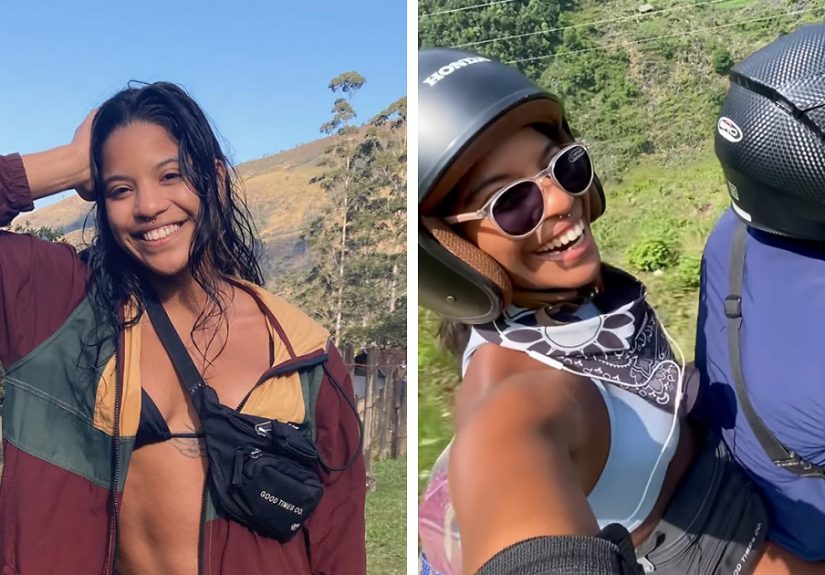
Those facts are difficult enough. What made the story spread so widely was the emotional layer around them. Her final posts showed a young traveler in motion: smiling, exploring, and living the kind of adventurous life that social media often presents as pure freedom. After news of her death, those same posts became a place where strangers left tributes, prayers, and messages of disbelief. The images did not change, but their meaning did. A travel photo became a goodbye.
Why Her Final Post Went Viral
The phrase “haunting final post” appears often in online coverage of tragedies, sometimes too often. It can feel dramatic, even exploitative. But in Juliana’s case, the reaction was understandable. Her posts captured the emotional contrast that makes these stories so hard to shake: one moment, a person is sharing a joyful snapshot from a once-in-a-lifetime trip; soon after, the world is reading that same post as if it contains a hidden farewell.
That is not because the post was written as a farewell. It was not. Most final posts are ordinary until tragedy gives them a terrible new context. A cup of coffee, a beach photo, a mountain view, a silly caption, a blurry selfie where everyone looks windburned and happythese things become “final” only afterward. The internet then reads them with a magnifying glass, searching for meaning in details that may simply have been life being life.
For readers, the viral post became a symbol of the thin line between adventure and danger. For loved ones, it became something far more personal: a last visible piece of Juliana’s joy. And for the public, it became a reminder that social media often preserves our happiest moments without warning us that they may later be viewed through grief.
Who Was Juliana Marins?
Juliana Marins was a Brazilian traveler from Niterói, a city across Guanabara Bay from Rio de Janeiro. Reports described her as adventurous, creative, and independent. She had been backpacking through parts of Southeast Asia, sharing moments from places such as the Philippines, Vietnam, Thailand, and Indonesia. Her online presence reflected a person who wanted to experience the world directly rather than simply scroll through it from the couchalthough, to be fair, the couch remains undefeated during rainy weekends.
Her family’s public words after the tragedy emphasized love, grief, and frustration. Messages she had sent before the accident showed affection for her family and a boldness about pursuing her dreams. That detail resonated deeply because it reframed the story. Juliana was not merely “a tourist who fell.” She was a daughter telling her mother she was grateful for support and unafraid to chase the life she wanted.
When people online respond so strongly to a story like this, it is often because they recognize something familiar. Maybe they have taken a risky hike. Maybe they have a daughter, sister, friend, or classmate with the same fearless spark. Maybe they have posted a smiling travel photo while standing somewhere that looked harmless but was actually one bad step from disaster. Juliana’s story landed because it felt both extraordinary and possible.
Mount Rinjani: Beautiful, Sacred, And Dangerous
Mount Rinjani is not just another scenic mountain with a dramatic Instagram backdrop. It is an active volcano with a massive caldera, a crater lake, and a landscape shaped by powerful geological forces. The Smithsonian Global Volcanism Program describes Rinjani as rising 3,726 meters on Lombok and notes that its caldera formed during one of the largest Holocene eruptions, around 1257 CE. In simpler terms: this mountain has a résumé, and it is not applying for a desk job.
The trek is famous for spectacular views, especially sunrise scenes above the clouds. Hikers often describe the route as physically demanding even in good weather. The slopes can be sandy and unstable. Temperatures can drop. Fog can erase visibility. A trail that looks manageable in a travel reel can become punishing when fatigue, altitude, wind, darkness, and loose rock join the group chat.
That is why experienced trekkers repeatedly stress preparation. Adventure travel is not automatically reckless, but it does require respect. A volcano does not care how many countries are on your bucket list. It does not care whether your phone camera is fully charged. It does not care if your hiking boots were expensive enough to come with their own personality. Mountains are magnificent because they are wildand wild places must be treated as wild.
The Rescue Questions That Sparked Anger
After Juliana’s death, public attention quickly turned toward the rescue effort. Reports stated that drone technology helped locate her, but weather and terrain slowed attempts to reach and recover her. Indonesian rescuers described rocky, steep, foggy conditions that made the operation extremely difficult.
At the same time, Juliana’s family publicly accused authorities and rescue teams of delays and negligence. They disputed parts of the official narrative and said she deserved a faster, more effective response. Those accusations spread widely online, intensifying the public outrage. Many people asked whether the hike should have been better managed, whether guides followed proper procedures, whether rescue teams had enough specialized equipment, and whether tourist safety protocols were strong enough for a destination as hazardous as Rinjani.
It is important to separate confirmed facts from claims still debated by family members, authorities, and media reports. What is clear is that the rescue was extremely difficult, the conditions were dangerous, and the tragedy exposed deep concerns about high-risk tourism. When travelers pay for guided adventures, they expect more than a scenic route. They expect planning, communication, emergency procedures, and guides who understand that “leave no one behind” is not just a nice phrase for motivational posters.
The Role Of Social Media In Modern Grief
Juliana’s final post went viral because social media turns private grief into a public gathering place. Friends, family, strangers, journalists, critics, and casual scrollers can all arrive at the same digital doorstep. Some come to mourn. Some come to learn. Some come to argue. A few arrive with the emotional sensitivity of a shopping cart with one broken wheel.
In the best cases, viral attention can pressure authorities, raise awareness, and help families feel supported. It can also remind travelers to take safety seriously. But viral grief has a darker side. People may speculate wildly, blame victims, spread unverified claims, or treat someone’s final photos like clues in a mystery game. That can be deeply painful for families already living through the worst days of their lives.
A more respectful response is possible. Readers can honor Juliana’s memory by recognizing her humanity first. That means avoiding graphic curiosity, resisting the urge to turn every detail into entertainment, and focusing on lessons that may protect future travelers. The goal should not be to consume tragedy. The goal should be to understand it with care.
What Travelers Can Learn From This Tragedy
Adventure travel will always involve some risk. That is part of why people are drawn to it. But risk should be managed, not romanticized. The death of Juliana Marins is a painful reminder that preparation is not boring. Preparation is what lets adventure remain adventure instead of becoming emergency paperwork with hiking poles.
Research The Route Beyond Pretty Photos
Before booking a volcano trek, travelers should read recent safety updates, understand the difficulty level, and check whether trails are open, restricted, or affected by weather. A five-star review that says “amazing sunrise” is useful, but it is not the same as knowing how steep the summit trail becomes or how cold the ridge feels before dawn.
Choose Licensed, Responsible Guides
A good guide is not just someone who knows where the trail starts. A responsible guide monitors group pace, checks on tired hikers, communicates clearly, and has a plan if someone cannot continue. The cheapest option may be tempting, especially when your travel budget is already crying softly over airport sandwiches, but safety is not where you want to bargain-hunt.
Respect Fatigue As A Warning Sign
Fatigue on a high, steep, exposed trail is not weakness. It is information. When a hiker is exhausted, cold, dizzy, or struggling to keep pace, the group needs to slow down and reassess. Many outdoor accidents happen when people push past warning signs because they do not want to disappoint others or miss a summit. The mountain will still be there tomorrow. A person’s life is not replaceable.
Carry Essentials Even On Guided Trips
Guided trips can create a false sense of security. Travelers should still carry basic essentials such as warm layers, water, a headlamp, basic first aid, emergency contact information, and a charged phone or power bank where appropriate. The point is not to become a survival expert overnight. The point is to avoid being completely helpless if the plan changes.
Why The Story Still Haunts People
Juliana’s story is haunting because it contains joy and loss in the same frame. Her final post did not look like danger. It looked like travel. It looked like freedom. It looked like the kind of memory people save money, time, and courage to create. That emotional whiplash is why readers keep returning to the story.
It also haunts people because many of us understand the desire to go further, climb higher, and see the view for ourselves. Adventure is not foolish. Travel is not foolish. Hiking a volcano with a guide is not automatically foolish. The painful lesson is more complicated: even meaningful, beautiful choices can carry real risk, and systems around travelers must be strong enough to respond when something goes wrong.
There is no neat moral that makes this tragedy feel less sad. “Be careful” is true but too small. “Do not travel” is wrong. “Live fully” is meaningful but incomplete. Perhaps the better lesson is this: live fully, but prepare seriously; chase wonder, but respect danger; document your life, but remember that the people in the photos matter more than the photos themselves.
Of Travel Experience And Reflection: When Adventure Meets Reality
Anyone who has ever stood at the edge of a mountain trail knows the feeling: part awe, part nerves, part “why did I think trail mix counted as breakfast?” High places have a way of making ordinary life feel very far away. The phone signal weakens, the air changes, and suddenly the world is reduced to footsteps, breath, weather, and the next safe place to stand.
That is the magic of adventure travel. It strips life down to something immediate. A volcano trek, especially one like Mount Rinjani, promises more than a view. It promises transformation. Travelers imagine returning home with stronger legs, better stories, and photos that make friends say, “Wow,” while secretly wondering if they would rather just visit a museum with air-conditioning.
But the experience of remote travel is also humbling. Trails do not adjust themselves to match our expectations. Weather does not pause because someone booked a return flight. Guides, group dynamics, fitness levels, equipment, and timing all matter. The most important experience a traveler can develop is not fear; it is judgment. Judgment means knowing when to continue, when to rest, when to speak up, and when to turn back.
Many people hesitate to admit they are struggling on group hikes. They worry about slowing others down or seeming unfit. But in outdoor settings, silence can be dangerous. Saying “I need a break” is not embarrassing. It is responsible. Saying “I do not feel safe” is not dramatic. It is data. A strong travel group makes room for honesty before a situation becomes urgent.
There is also an emotional lesson in Juliana’s story for the rest of us watching from screens. We should be careful about how we react to tragedy online. It is easy to turn someone’s final post into a symbol, a debate, or a viral moment. It is harder, and more humane, to remember that the post belonged to a real person. Behind every viral tragedy are parents refreshing updates, friends replaying memories, and communities trying to make sense of something that should not have happened.
For future travelers, the takeaway is not to avoid the world. The world is still worth seeing. Mountains, volcanoes, forests, deserts, and oceans can expand a person’s life in ways that no ordinary routine can. But wonder should travel with caution. Before stepping onto a difficult trail, ask practical questions. Is the route appropriate for your fitness? Is the guide licensed and attentive? What happens if someone cannot continue? What is the weather forecast? Are rescue resources realistic in that terrain?
These questions may not look glamorous in a photo caption, but they are part of the adventure. Preparation is not the enemy of freedom. It is what protects freedom. It allows travelers to chase sunrises without ignoring storm clouds, to seek beauty without pretending danger is fictional, and to return home with stories that end safely.
Conclusion
The tragic death of Juliana Marins on Mount Rinjani turned a joyful travel record into a viral memorial. Her final post continues to resonate because it captures the fragile space between adventure and loss, between a life lived boldly and a system that many believe failed her when she needed help most.
Her story should be remembered with care. It is not only a warning about volcano trekking or a headline about a 1,600-foot fall. It is a reminder that behind every viral post is a person whose life cannot be reduced to one moment. Juliana’s love for travel, her family’s grief, and the questions raised by her death deserve more than clicks. They deserve attention, compassion, and change.