Table of Contents >> Show >> Hide
- What Exactly Is CIS-4?
- The “Monkish” Part: Cistercian Numerals, Explained Like You’re Not a 13th-Century Monk
- How CIS-4 Tells Time With One Symbol
- The Hardware: Tiny Parts, Big Personality
- The Enclosure Hack: Using a Ceiling Light as the “Case”
- Design Analysis: What Makes CIS-4 Work (and What Can Make It Annoying)
- DIY Safety: A Quick Reality Check Before You Put Electronics in a Fixture
- Where CIS-4 Fits Best in a Home
- Conclusion: Why This Clock-Lamp Hybrid Is More Than a Gimmick
- Real-World Experiences: Living With a “Monkish” Clock in the Ceiling (About )
Some home decor says, “I like candles.” Some says, “I have a throw blanket budget.” And then there’s CIS-4, which says, “I have opinions about medieval number systems and I’m not afraid to mount them to the ceiling.”
CIS-4 is a clever DIY clock that hides inside a low-profile LED ceiling lamp housing. Instead of ordinary digits, it uses Cistercian numeralsa compact, monk-invented way to represent numbers using a single symbol. The result is part lighting fixture, part timekeeper, part conversation starter, and part “wait…what time is it?” brain teaser.
What Exactly Is CIS-4?
CIS-4 (short for a “Cistercian” clock project) is a minimalist digital clock built around a tiny LED matrix, a real-time clock module, and a microcontroller. The “magic trick” is that the display doesn’t look like a clock at first glancebecause it isn’t showing standard numerals by default.
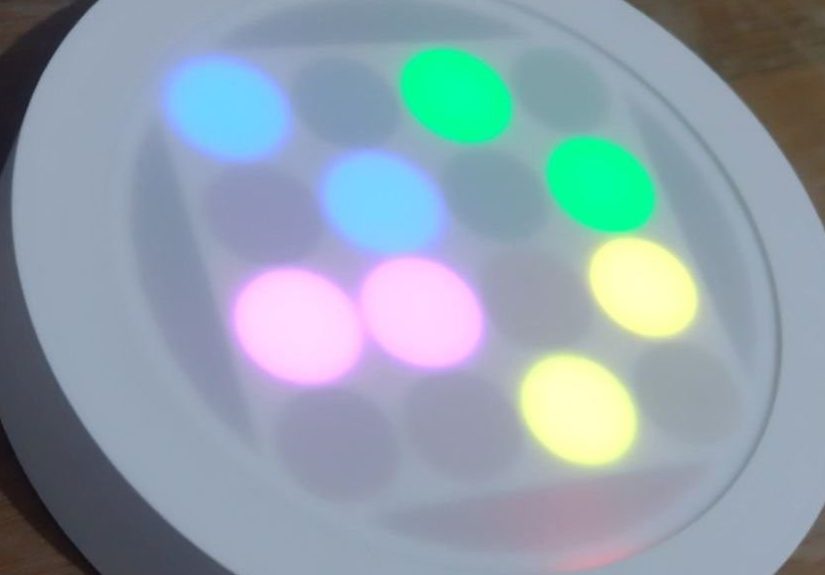
The build that popularized the idea places the electronics inside a cheap LED ceiling light so the diffuser, mounting hardware, and clean round enclosure are already solved. A printed mask sits between the LEDs and the diffuser to shape the glowing strokes into readable Cistercian glyphs, while also acting as a practical holder for the electronics.
Why Put a Clock in a Ceiling Lamp?
Because it’s delightfully efficient. A ceiling light enclosure is already:
- Shallow (perfect for a compact electronics stack),
- Diffused (so bright LEDs become soft, readable shapes),
- Mountable (no custom woodworking required),
- Aesthetically neutral (so the “weird clock art” looks intentional).
In other words: it’s a ready-made stage for the clock’s glow show.
The “Monkish” Part: Cistercian Numerals, Explained Like You’re Not a 13th-Century Monk
Cistercian numerals were developed by the Cistercian monastic order in the early 1200s. The headline feature is wild: a single glyph can represent any whole number from 1 to 9,999. No extra characters, no long strings of symbolsjust one “stave” (a central line) plus small strokes in different quadrants that encode the ones, tens, hundreds, and thousands places.
Think of it like a medieval heads-up display: one central spine, and four corners where each corner means a different place value. Add the right strokes, and you’ve built a numbercompact enough to impress even the most minimalist graphic designer.
How One Glyph Holds Four Digits
Traditional Cistercian notation uses the position around the stave to indicate place value: one area for ones, another for tens, another for hundreds, another for thousands. Combine them and you get a four-digit number without ever writing four separate digits.
CIS-4 adapts this idea for a tiny LED matrix, simplifying the shapes so they can be displayed using a small grid of light points. That simplification is key: the goal isn’t to recreate a museum manuscript perfectly; it’s to make a readable, learnable symbol system that looks great glowing through a diffuser.
How CIS-4 Tells Time With One Symbol
CIS-4 uses the “four-digit in one glyph” idea to encode time. One practical approach is: use two place values for hours and two for minutes, so a single glyph can represent HHMM.
For example, imagine you want to display 19:42:
- Hours (19) occupy the “upper” half (two places).
- Minutes (42) occupy the “lower” half (two places).
You’re not just reading “a shape.” You’re reading a compact code: two digits for hours, two digits for minutes, fused into one symbol that becomes surprisingly fast to recognize with practice.
But What If Your Brain Says “No Thanks”?
CIS-4 style builds often include an “easy read” mode that temporarily shows the time in standard numeralssometimes by scrolling or flipping to a decimal display. That means:
- You can learn the Cistercian system gradually.
- You can still confirm the time quickly when you’re half-asleep.
- Your guests won’t panic and assume the house is haunted by an unusually punctual monk.
The Hardware: Tiny Parts, Big Personality
The fun of CIS-4 is that it looks like an art object, but it’s also a tidy little embedded-systems project. A typical CIS-4-style build includes:
1) A 4×4 NeoPixel (WS2812-type) LED Matrix
A 4×4 matrix gives you 16 individually addressable RGB LEDs. That’s not a lot of pixels by modern standards, which is exactly why it works: the display becomes graphic and iconic instead of text-heavy.
Power note (because physics is undefeated): a single NeoPixel can draw up to about 60 mA at full-brightness white. Multiply that by 16 pixels and you’re near ~960 mA in the worst case. In real-world animations, colors, and brightness limits, it’s usually much lower, and many makers use conservative “rule of thumb” estimates during planning.
2) A DS3231 Real-Time Clock (RTC) Module
The DS3231 is popular because it’s temperature-compensated (it has a TCXO) and can keep accurate time even if your microcontroller reboots. Many boards support a backup battery, so the clock doesn’t forget the time during power interruptions. In plain English: your clock stays a clock.
3) A Small Microcontroller (ATtiny85/Digispark-Class)
A tiny microcontroller is enough to read the RTC over I²C, compute the glyph, and update the LED matrix. The constraint (limited memory) actually improves the project: it encourages simple, reliable firmware and a clean UI.
4) One Button + A Light Sensor
One-button interfaces feel like a party trick until you use them daily. With a good state-machine approach, one button can: change modes, set the time, adjust colors, toggle display behaviors, and more.
An LDR (light-dependent resistor) can auto-adjust brightness based on ambient light, which is crucial when your clock is literally designed to glow in a room. Nobody wants a ceiling-mounted supernova at 2:00 a.m.
The Enclosure Hack: Using a Ceiling Light as the “Case”
Here’s the design move that makes CIS-4 feel polished: instead of 3D-printing a whole enclosure, the project can reuse a slim LED ceiling light body. You get a diffuser, a finished look, and a built-in mounting method. Some builds size this around a compact round fixtureroughly “small dinner plate” diameterso it reads like normal decor from across the room.
Why the Diffuser Matters
A diffuser turns sharp pinpoints into soft shapes. That does three big things:
- Makes glyph strokes readable instead of looking like random dots.
- Reduces glare for a more comfortable “night glance.”
- Looks intentional, like a designed object rather than exposed electronics.
Design Analysis: What Makes CIS-4 Work (and What Can Make It Annoying)
Readability vs. Authenticity
Traditional Cistercian numerals are elegant, but also detailed. A 4×4 matrix can’t reproduce every nuance, so any CIS-4-style clock is a translation: the goal becomes “recognizable patterns” rather than historically perfect pen-strokes. That’s not a flawit’s the whole point.
Brightness and Comfort
Light at night can be disruptive, and LEDs can be deceptively intense when viewed in darkness. A good CIS-4 setup uses:
- Automatic dimming (via ambient sensing),
- Warm-ish colors or low-saturation tones at night,
- Lower overall brightness caps in firmware.
If you plan to install this in a bedroom, treat it like a nightlight: “visible and gentle” beats “bright and proud.”
Legibility for Guests (and Your Future Self)
The most successful builds include a quick-access “decimal” mode. This isn’t cheating; it’s user experience. The Cistercian glyph is the default, but the clock still respects reality: sometimes you need the time in plain digits, fast.
DIY Safety: A Quick Reality Check Before You Put Electronics in a Fixture
It’s tempting to treat any ceiling light as a convenient box and start stuffing parts inside like a tech-themed piñata. But lighting fixtures have safety standards for a reason.
Keep the Clock Low-Voltage
A safer approach is to run the clock electronics on low-voltage DC power and avoid altering mains wiring. If you are modifying or integrating anything into a ceiling-mounted fixture, consider consulting a qualified electricianespecially if you’re tempted to hardwire custom electronics.
About “Listings” and Modifications
Many fixtures are evaluated to safety standards, and guidance around field modifications can be complicated. As a practical rule: treat your CIS-4 as a maker project, not a certified commercial luminaire. If you modify a listed product after it leaves the factory, the original evaluation may no longer apply without further reviewso plan conservatively and prioritize safety.
Where CIS-4 Fits Best in a Home
Entryway or Hallway
Perfect for the “glance time while leaving the house” moment. Also perfect for guests, because it gives them something to talk about that isn’t the weather.
Home Office or Studio
CIS-4 shines (politely) as functional decor. You can keep it brighter in the day, dimmer at night, and use color as a subtle status indicator (e.g., blue for focus time, amber for break time).
Bedroom (If You’re Careful)
If you put it in a bedroom, prioritize dimming. LEDs are efficient and long-lasting, but that efficiency can still translate into “why is the ceiling glowing like a sci-fi interrogation room?” if you don’t cap brightness.
Conclusion: Why This Clock-Lamp Hybrid Is More Than a Gimmick
CIS-4 works because it’s not just “a clock with a weird font.” It’s a compact, thoughtful fusion of history, electronics, and everyday utility: Cistercian numerals provide a surprisingly elegant time encoding, NeoPixels provide a flexible display medium, and the ceiling lamp enclosure provides a clean, livable form factor.
If you’ve ever wanted your home to feel a little more like a design gallerywithout giving up practical functionCIS-4 is the kind of project that delivers. It tells time, it sets a mood, and it quietly asks every visitor: “Want to learn a medieval numeral system real quick?”
Real-World Experiences: Living With a “Monkish” Clock in the Ceiling (About )
The first week with a CIS-4-style ceiling clock usually follows a predictable emotional arc. Day one is pure delight: you flip the power on, the diffuser blooms with a crisp glyph, and you feel like you’ve installed a secret interface to the timeline. Day two is the first time you glance up and realize you don’t actually know what the glyph says. This is the moment the clock becomes a teacher.
Makers who live with this kind of clock often describe a “pattern learning” phase. At first, you rely on the easy-read mode (the one that shows regular digits) like training wheels. You tap the button, confirm the time, and then look back at the glyph. Slowly your brain starts to associate certain shapes with certain timesespecially the times you see constantly: 8:00, noon, 5:30, 10:15. The clock stops being an encrypted message and starts becoming a set of familiar icons.
The ceiling placement changes the experience too. Unlike a desk clock, you don’t “check it” as much as you glance at it while moving through a room. People report that this makes the clock feel less naggy. It’s there when you need it, but it doesn’t dominate the space. The diffuser softens the LEDs so the display reads like glowing ink rather than exposed pixelsespecially at night when harsh points of light can feel aggressive.
Brightness tuning becomes an unexpectedly big deal. Many folks start out with “fun bright,” then quickly dial it down after the first late-night water run when the ceiling suddenly looks like it’s trying to signal aircraft. Auto-dimming helps, but the most comfortable setups also include a strict brightness cap, plus a nighttime color choice that’s easy on the eyes. People tend to prefer calmer hues for night viewingsomething that says “time is passing” rather than “boss battle starting.”
Then there’s the social side. CIS-4 is a conversation magnet. Guests notice it, pause, and ask, “Is that…a symbol?” Some will guess it’s a rune. Some will guess it’s a weather icon. Someone will eventually ask if it’s “one of those cryptocurrency things,” and you’ll sigh in 13th-century monk. The best part is demonstrating it: show the glyph, tap the button to reveal the decimal time, then show the glyph again. It feels like a magic trick that’s also a history lesson.
Finally, there’s the maker satisfaction. Living with your own buildespecially one that feels “designed” instead of “prototype”is uniquely rewarding. A ceiling lamp enclosure makes the project feel finished, and that encourages long-term use instead of the classic maker fate: “cool demo, now it lives in a drawer.” In many homes, CIS-4 doesn’t just tell time. It becomes a small daily reminder that practical things can also be weird, beautiful, and just a little bit monkish.