Table of Contents >> Show >> Hide
Some toys are fun for five minutes. Others become living-room legends. The difference is often simple: kids love toys even more when they help make them. That is the magic of building projects for kids. A cardboard box turns into a race car. A water bottle becomes a boat. A pile of felt scraps somehow becomes a pizza, a taco, and a suspiciously blue donut. Suddenly, the toy is not just something to play with. It is proof that your child made something from almost nothing.
If you are looking for screen-free activities that do more than keep kids busy, DIY toys are a sweet spot. They blend creativity, problem-solving, pretend play, and hands-on learning without feeling like homework in disguise. Better yet, most of these projects use low-cost supplies you probably already have at home. That means less “Where is my wallet?” and more “Where did all the tape go?”
In this guide, you will find 10 DIY toys you can build with your kids, plus practical tips for choosing age-appropriate projects, keeping the process safe, and making the experience genuinely fun. The goal is not perfection. The goal is connection, confidence, and a toy your child will proudly tell everyone about for the next three weeks.
Why Building Projects for Kids Are Worth the Mess
DIY toys do more than fill an afternoon. They help children practice real skills while still feeling like they are just having fun. When kids measure, stack, tape, sort, decorate, test, and rebuild, they are working on fine motor control, early engineering thinking, creativity, and persistence. Open-ended play also gives children room to make choices, experiment, and tell their own stories.
That last part matters more than many parents realize. A toy that lights up, sings, and does seventeen tricks on its own may look impressive, but it can leave very little room for a child’s imagination. A homemade puppet, boat, or cardboard castle invites kids to invent voices, build worlds, and solve problems. In other words, the toy is not the whole show. Your child is.
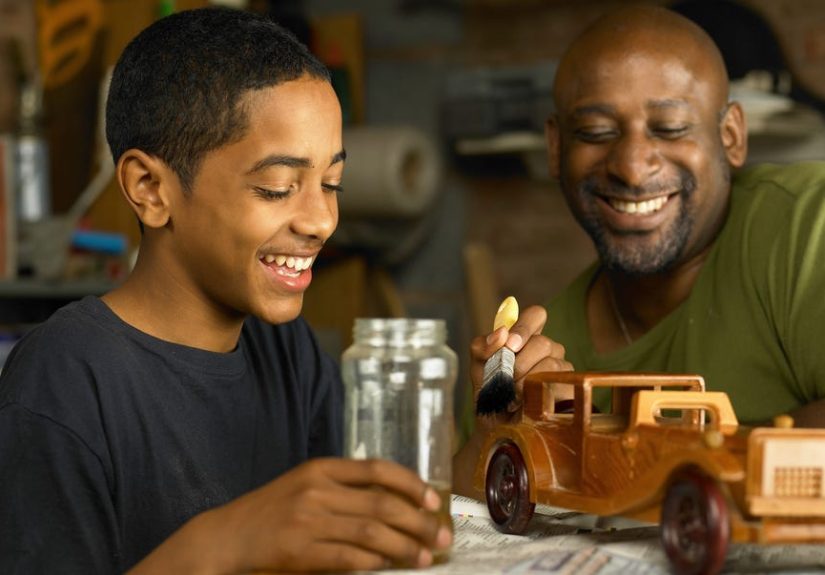
Building together also adds something store-bought toys cannot offer: shared memories. Kids remember the afternoon they painted the race car, argued over whether the boat needed a flag, and used enough glue to qualify for a home-renovation permit. Those are the moments that stick.
Before You Start: Smart Safety Rules for DIY Toys
Before you break out the craft bin, keep the basics in mind. Choose projects that fit your child’s developmental stage, not just their enthusiasm level. A four-year-old may love the idea of sewing felt food, but they may do better with decorating cardboard props while you handle the trickier steps. Younger children should not use toys with small loose parts, strong magnets, button batteries, sharp edges, or anything that can easily break into tiny pieces.
It also helps to set up your workspace like a sane person who hopes to use the table again one day. Cover the surface, keep scissors and adult-only tools separate, and put all small items in bowls or trays. If you are using recycled materials, clean them first. Discard plastic packaging right away so it does not become an accidental “toy” of its own.
A good rule of thumb: let kids do as much as they can safely manage, and let adults handle anything sharp, hot, or frustrating enough to launch a family meeting.
10 DIY Toys You Can Build With Your Kids
1. Cardboard Box Race Car
This is a classic for a reason. A cardboard box race car feels huge, dramatic, and wildly exciting to a child, even though it starts life as yesterday’s delivery box.
What you need: one large cardboard box, paper plates or cardboard circles for wheels, markers or paint, tape, glue, and stickers.
How to build it: Cut the top flaps so your child has an opening to “sit” in or lean over. Attach four wheels to the sides. Draw headlights, doors, a steering wheel, and a license plate. Let your child choose a color scheme. If they want rainbow flames and dinosaur decals, that is called artistic vision.
Why kids love it: It supports pretend play, movement, storytelling, and role-play. One day it is a race car. The next day it is a police cruiser, a pizza truck, or a machine that absolutely cannot be parked because “it is on a mission.”
2. Water Bottle Boats
Water bottle boats are easy, inexpensive, and perfect for bath time, backyard tubs, or a plastic storage bin filled with water.
What you need: empty plastic water bottles, paper or foam for sails, tape, straws or craft sticks, and waterproof markers.
How to build it: Clean and dry the bottle, then attach a straw or stick mast. Cut out a paper sail and tape it in place. Decorate the bottle with windows, stripes, flags, and the world’s most serious boat name. “Captain Pickles” is a strong option.
Why kids love it: Boats combine building and testing. Kids can experiment with balance, weight, floating, and speed while still having a simple toy they can race or use in pretend adventures.
3. Clothespin Airplanes
These tiny planes are quick to make and big on satisfaction. They are also a nice choice when your child wants a project that feels like a “real build” but does not take all afternoon.
What you need: wooden clothespins, craft sticks, nontoxic glue, and paint or markers.
How to build it: Glue one craft stick across the top of the clothespin and one across the bottom for wings. Add a smaller piece at the back for the tail. Once dry, let your child decorate the plane with colors, stripes, stars, or pilot names.
Why kids love it: The finished toy is small enough to carry around, line up in a fleet, or use in imaginative travel games. It is also an easy introduction to building parts into a whole object.
4. DIY Rattle Drum
If your child enjoys noise, rhythm, and putting on a living-room concert nobody requested, this one is a winner.
What you need: sturdy cardboard, string, tape, paper, markers, and securely attached beads or paper tabs on the ends of strings.
How to build it: Create a round drum body from cardboard or a lightweight recycled container. Attach a handle in the center. Tie short strings on each side so the ends tap the drum when it spins. Decorate the drum with bold patterns and musical symbols.
Why kids love it: It doubles as a toy and a homemade instrument. Kids can explore rhythm, movement, and performance while feeling extremely important.
5. Sock Puppets
Sock puppets are the MVPs of DIY toys. They are simple to make, endlessly customizable, and impossible to ruin. A crooked googly eye only improves the character.
What you need: clean socks, felt scraps, yarn, fabric glue, markers, and optional buttons only for older children with supervision.
How to build it: Use felt for ears, tongues, noses, or eyebrows. Add yarn hair, marker details, and a big puppet personality. Encourage your child to name the puppet and decide what kind of voice it has.
Why kids love it: Puppets support storytelling, emotional expression, and pretend play. They are especially great for shy kids who suddenly become very talkative when a sock is involved.
6. Cardboard Tube Binoculars
Cardboard tube binoculars are proof that children do not need complicated toys to have a great time. They just need a mission.
What you need: two cardboard tubes, tape or glue, string, and decorating supplies.
How to build it: Tape or glue the tubes side by side. Punch a hole on each outer side and tie on a string so the binoculars can hang around your child’s neck. Decorate them for jungle explorers, bird watchers, pirates, or backyard detectives.
Why kids love it: They instantly turn ordinary play into adventure play. The backyard becomes a safari, the couch becomes a mountain, and the dog becomes a suspicious creature worthy of observation.
7. Felt Play Food Set
Play food is one of the best DIY toys for imaginative kids, especially if they already love toy kitchens, grocery stores, or “serving” you a sandwich made of air.
What you need: felt sheets, fabric glue or simple stitching for older kids, stuffing scraps, and scissors.
How to build it: Start with easy shapes like cookies, pizza slices, tacos, or fruit wedges. Cut two matching felt pieces, decorate with toppings or details, then glue or stitch the edges and lightly stuff if desired.
Why kids love it: Homemade food extends pretend play and lets kids personalize their toy set. They can create a bakery, taco truck, picnic, or restaurant where the menu is somehow all desserts. Fascinating, honestly.
8. Stuffed-Animal Fort Kit
This project is a clever twist on traditional fort building. Instead of taking over your whole living room, kids build a mini fort for stuffed animals, dolls, or action figures.
What you need: clothespins, small blankets or dish towels, cardboard pieces, lightweight boxes, and cushions or blocks.
How to build it: Help your child create a small structure using boxes or sturdy supports. Drape fabric over the top, clip it in place, and add little details like a flag, tiny sleeping area, or pretend campfire made from paper.
Why kids love it: It combines building, design, and storytelling. Kids love making homes and hideouts for their favorite toys, and the mini scale feels manageable and magical.
9. Cardboard Castle or Dollhouse
If you have a few boxes and a child with opinions, you have the ingredients for a cardboard masterpiece.
What you need: cardboard boxes, tape, markers, nontoxic paint, paper, and scrap fabric.
How to build it: Cut doors, windows, and room openings. Add turrets for a castle or extra rooms for a dollhouse. Let your child decorate the interior with rugs, wall art, beds, signs, and furniture made from folded paper or small cardboard pieces.
Why kids love it: It is open-ended and grows with them. Today it is a princess castle. Tomorrow it is a superhero headquarters. By Friday it is a pet hotel with questionable management policies.
10. DIY Ring Toss Game
A homemade ring toss game gives kids something they can build and then immediately use for active play. That is a powerful combination.
What you need: cardboard, paper towel tubes or sturdy bottles, rope or rolled paper rings, tape, and paint.
How to build it: Create a base from sturdy cardboard. Attach upright targets spaced apart. Make lightweight rings from rope, paper, or flexible craft materials, then decorate everything with bright colors and point values.
Why kids love it: It turns crafting into a playable game. They can invent rules, track scores, and keep tweaking the setup to make it easier or harder.
How to Make DIY Toy Time Actually Fun
The secret to successful building projects for kids is not doing everything perfectly. It is choosing projects that leave room for your child to participate in real ways. Let them pick colors, decide on details, test ideas, and fix mistakes. If the wheel is crooked, the puppet has purple eyebrows, or the boat looks like it has been through several storms before launch, that is fine. More than fine, actually. That is the point.
It also helps to think in layers. Younger children can paint, stick, sort, and decorate while adults do the cutting or assembly. Older kids can help plan, measure, and redesign. Siblings can each own one part of the project: one builds, one decorates, one narrates the process like a television host who has had too much juice.
Keep expectations low and energy high. The first goal is not “museum-quality toy.” The first goal is “we had a good afternoon and nobody cried over the tape dispenser.” If you get a toy at the end too, that is a bonus.
Common Mistakes to Avoid
One mistake parents make is choosing projects that are too complicated. If a toy takes three hours, twelve specialty supplies, and the emotional resilience of an engineer, it may not be the best starting point. Begin with easy wins that deliver quick payoff.
Another mistake is over-controlling the design. It is tempting to “fix” every odd color choice and wobbly detail, but kids are more invested when the final toy actually reflects their ideas. A lopsided cardboard car with lightning-bolt windows may not match your design vision, but to your child, it is glorious.
Finally, do not underestimate setup and cleanup. Put supplies in bowls, keep wipes nearby, and end with a small victory lap. Have your child show off the toy, give it a name, and play with it right away. That last step matters. Building is fun, but building something that immediately enters the toy rotation is even better.
Real-Life Experiences Families Often Have With DIY Toy Projects
One of the most interesting things about building projects for kids is how rarely the experience goes exactly as planned and how often that ends up being the best part. Families usually start with a picture in their heads: a peaceful afternoon, a tidy table, a smiling child, and a beautiful finished toy. What they often get is a different kind of success. The cardboard car has one giant wheel and three smaller ones. The puppet ends up looking like a confused goat. The boat sinks on the first test run. And yet the child is thrilled, because the toy is theirs in a way a store-bought toy never is.
Many parents notice that kids become more patient when they are building for a purpose. A child who would normally abandon a worksheet in three minutes may happily spend half an hour adding windows to a cardboard castle or making toppings for felt pizza. There is something powerful about creating an object they can use afterward. The process feels meaningful. They are not just “doing a craft.” They are making a thing that belongs in their play world.
Another common experience is that kids often care more about the freedom than the final result. Give them a plan for a race car, and they might turn it into a dragon bus. Suggest a puppet, and they might invent an entire puppet family with jobs, hobbies, and a dramatic backstory. That kind of creative detour can feel messy to adults, but it is usually where the richest play begins. Children are telling you how they think. If you follow their lead a little, the project becomes more personal and much more memorable.
Parents also tend to discover that imperfection is strangely helpful. When a project looks handmade, kids feel less pressure and more ownership. They are more willing to improve it, repair it, or reinvent it later. A cardboard dollhouse can gain a new room next week. The ring toss game can get new rules tomorrow. The stuffed-animal fort can become a hotel, then a spaceship, then a veterinary clinic. Homemade toys invite revision, and revision is where creativity gets stronger.
There is also the emotional side of the experience. Building together creates moments of teamwork that are hard to fake. Kids ask for help, adults step back, someone laughs because the glue string is now attached to everything, and the project slowly turns into a shared memory. Even short projects can create a feeling of “we made this together,” which stays with children longer than many parents expect.
In everyday family life, DIY toy projects often work best not as grand events, but as repeatable little rituals. A rainy Saturday boat build. A holiday puppet show. A summer cardboard city on the porch. The more often families build together, the more confident kids become about trying new ideas. They start to see ordinary materials as possibilities instead of trash. A box is not a box. It is a rocket, a market stand, a mailbox, or a shark cave waiting for approval.
That shift is the real payoff. DIY toys are fun, yes. But the deeper value is that kids begin to think like makers. They notice problems and invent solutions. They imagine first and build second. They learn that fun is not only something you buy. Sometimes, with a little tape, a few scraps, and a willing grown-up, fun is something you build.