Table of Contents >> Show >> Hide
- What analog surround sound actually was
- Before Dolby ruled the couch: quadraphonic sound and the first surround boom
- The clever middle step: Hafler circuits and “surround” from ordinary stereo
- How movie theaters helped hide surround in plain sight
- Dolby Surround and Pro Logic: the part you probably lived through
- Broadcast TV, cable, and the art of smuggling surround through two channels
- Yes, video games used it too
- Why people did not notice it
- Its limits were real, but so was its brilliance
- The lived experience of hidden surround: what it actually felt like
- Conclusion
Surround sound has a flashy reputation now. It arrives with logos, calibration tones, speaker diagrams, and a strong sense that you are about to become the kind of person who argues about ceiling speakers at dinner. But for a long stretch of media history, surround sound was far sneakier. It slipped into movie theaters, VHS tapes, analog TV broadcasts, game consoles, CDs, and stereo receivers without making a huge fuss. In many cases, it rode inside an ordinary two-channel signal. No extra cable circus. No futuristic sci-fi box glowing in the corner. Just plain old stereo doing a surprisingly clever magic trick.
That is the funny heart of analog surround sound: it was often hiding in plain sight. You could own content with surround information, connect it with the same red-and-white stereo cables you used for everything else, and still have no idea you were listening to something more ambitious than left and right. The effect was everywhere, but the technology was modest enough, and backward-compatible enough, that it rarely announced itself with a trumpet fanfare. It was the ninja of home audio.
What analog surround sound actually was
When people hear the phrase analog surround sound, they often imagine giant theater processors, wood-paneled receivers, and a suspicious number of buttons labeled “Hall,” “Stadium,” or “Jazz Club.” Some of that image is fair. But the core idea was simpler: engineers found ways to matrix-encode multiple channels into a regular stereo signal, then decode that signal back into a more spacious soundfield during playback.
In other words, analog surround was not always “extra channels” in the obvious modern sense. A lot of the time, it was more like a carefully folded map. The front left and front right information stayed recognizable, while center and surround cues were tucked into phase relationships and level differences. If you played the signal on ordinary stereo equipment, it still worked. If you ran it through the right decoder, the sound bloomed outward and backward. That compatibility is exactly why the format spread so far.
Why that mattered
Compatibility made analog matrix surround incredibly practical. Media industries love anything that does not force every customer on earth to buy a brand-new system overnight. A matrixed soundtrack could travel over two-channel television, VHS, stereo broadcasts, CDs, and game-console outputs while remaining playable for people with basic equipment. That was not just convenient. It was the whole sales pitch.
Before Dolby ruled the couch: quadraphonic sound and the first surround boom
Long before “home theater” became a marketing religion, the 1970s had already fallen in love with the idea of sound all around the listener. That era gave us quadraphonic sound, usually shortened to “quad.” The dream was straightforward: four channels, four speakers, more immersion, more drama, more proof that your hi-fi setup had become your personality.
But quadraphonic audio had a problem so classic it almost deserves its own museum exhibit: too many competing formats. Systems such as SQ, QS, EV-4, and CD-4 all chased the surround dream in different ways, and they were not nicely interchangeable. To consumers, this was less “the future of music” and more “why does every store demo require a decoder with a name that sounds like a robot tax form?”
Some formats used matrix encoding, while others tried for more discrete channel separation. Some worked impressively well in ideal conditions. Others were fussy, format-specific, or fragile in real-world setups. The result was a paradox: quadraphonic sound proved that people wanted immersion, but it also showed how badly a market can wobble when standards start multiplying like rabbits in a hi-fi showroom.
Even so, quad mattered. A lot. It normalized the idea that music and effects could wrap around the listener. It pushed decoder design forward. It trained audiences and manufacturers to think beyond two speakers. And it created the conceptual runway for the surround technologies that would later become far more mainstream.
The clever middle step: Hafler circuits and “surround” from ordinary stereo
Not every analog surround trick needed official encoding. One of the most charming hacks from the era was the Hafler circuit, a method that extracted ambient information from the difference between the left and right stereo channels. With the right speaker wiring, some rear ambience could be teased out of ordinary stereo recordings.
This was not the same thing as a purpose-built movie surround system, and it was certainly not perfect. But it proved something important: stereo recordings often contained spatial clues that could be reinterpreted into a wider listening experience. In practical terms, it meant even standard music could sound larger, airier, and more room-filling when processed the right way.
That idea never fully disappeared. It lived on in later “ambience extraction,” music modes, and receiver settings that tried to make two channels sound like more than two channels. Some of those modes were wonderful. Some sounded like your living room had been replaced by a haunted gymnasium. Such is audio progress.
How movie theaters helped hide surround in plain sight
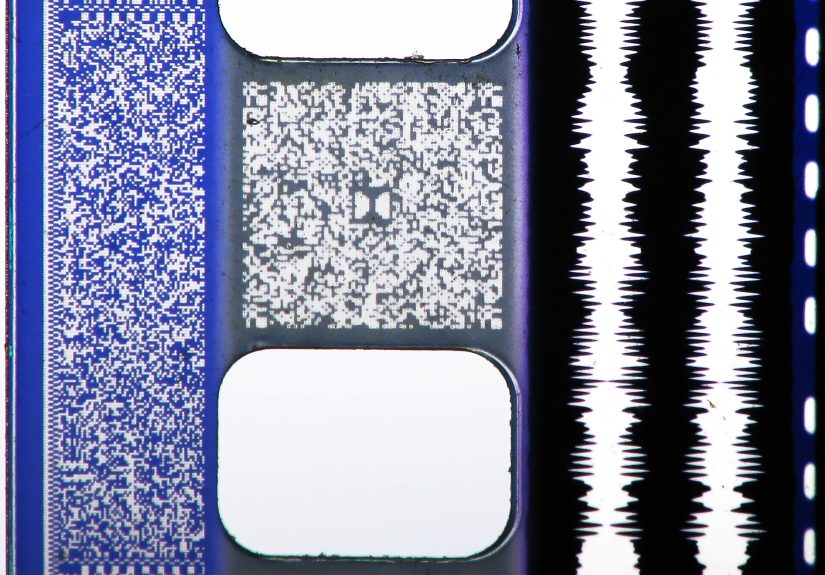
The real mainstream breakthrough came when matrix surround became useful to film exhibition. Dolby Stereo brought a powerful idea to theaters: multiple playback channels could be carried in a format that still fit practical distribution methods. In cinemas, that helped deliver left, center, right, and surround information from matrixed optical film soundtracks.
What made this important for the average person was not just the theater experience. It was the migration path. Once the logic of matrix surround had proven itself in cinema, it could be adapted for home listening. The same basic advantage remained irresistible: you could deliver a surround-capable experience without abandoning stereo compatibility.
That is why analog surround spread so widely without seeming dramatic. It did not always arrive as a total replacement. It arrived as a better use of what already existed.
Dolby Surround and Pro Logic: the part you probably lived through
If you grew up around VHS, early cable, LaserDisc, stereo TVs, or bulky receivers with too many tiny LEDs, this is the chapter where your memory starts pointing and yelling, “Oh, that thing.”
Dolby Surround brought matrix decoding into the consumer space in a way that fit the media habits of the 1980s. Instead of demanding some exotic delivery system, it allowed a four-channel-style experience to be carried inside a regular stereo signal. The earliest home implementations were limited by modern standards, especially in separation and rear-channel bandwidth, but they were good enough to be thrilling. Suddenly, movie effects could spread beyond the television. Rooms felt larger. Dialogue felt more anchored. The living room began its slow mutation into a miniature theater.
Then came Dolby Pro Logic, which improved channel steering and added more convincing center-channel behavior. That mattered because center information is where a lot of dialogue wants to live. Once voices stopped wandering vaguely between the left and right speakers and started feeling pinned to the screen, home viewing got more cinematic in a way even non-audio obsessives could notice. They might not have said, “Ah yes, superior matrix steering logic.” They were more likely to say, “Huh, this sounds better.” Same outcome.
Why VHS was a huge deal
Analog surround was not just a lab trick or an audiophile side quest. It became part of everyday media because stereo Hi-Fi VHS could carry it. That was massive. For a lot of households, VHS was the highway that brought movie-style surround into the home. And it did so using familiar, boring-looking stereo connections. No one was forced to install a mysterious new media shrine just to participate.
This is one reason people underestimate how widespread analog surround really was. They remember stereo tapes and red-and-white connectors, so they assume the experience was “just stereo.” But a matrixed Dolby Surround soundtrack could be living inside that signal the whole time, waiting for a decoder to unfold it.
Broadcast TV, cable, and the art of smuggling surround through two channels
Analog surround also spread through television and broadcast workflows, where compatibility was king. Broadcasters and mixers often relied on Lt/Rt delivery, short for Left total/Right total. That format allowed a surround-capable mix to be folded into two channels for transmission. On a plain stereo setup, it still played as stereo. Through a Pro Logic-type decoder, it could open up into surround playback.
This was the audio equivalent of packing a winter coat into a carry-on without looking suspicious. Efficient, adaptable, and slightly ridiculous when you stop to think about it.
The point is that analog or stereo-limited delivery paths did not automatically mean “no surround.” In many cases, the industry intentionally built surround compatibility into those paths because two-channel infrastructure was everywhere. Cable systems, analog stations, videotape, and other consumer media all benefited from the same promise: one signal, multiple playback possibilities.
Yes, video games used it too
One of the best examples of hidden analog surround is gaming. If you only associate surround sound with digital optical cables, HDMI, or the sixth menu page on a modern console, it is easy to miss how much older game hardware accomplished with simple stereo outputs.
Nintendo-era systems such as the GameCube and Wii supported Dolby Pro Logic II in many games, which meant surround information could travel over ordinary stereo AV cables. That is delightfully sneaky. A player could plug in what looked like a standard analog stereo connection, yet a compatible receiver could decode a larger, more directional soundfield from it.
So yes, a lot of people were effectively getting surround from the same kind of cable they associated with routine TV hookups. No glowing fiber-optic wizardry. Just good engineering and a decoder on the other end.
Why people did not notice it
The title question has a surprisingly simple answer: analog surround was designed not to break anything. It was intentionally subtle from a user-experience standpoint. If you had the right equipment, you got more immersion. If you did not, the signal still played normally enough that you never felt excluded.
That meant many listeners never had a dramatic “I have entered the surround era” moment. Instead, they drifted into it through hardware upgrades, movie nights, receiver presets, and the occasional salesperson who said, “Try this mode.” Because the transition was incremental, it rarely felt revolutionary, even when it absolutely was.
There is also a branding problem. People tend to remember digital milestones: Dolby Digital, DTS, 5.1, Blu-ray, HDMI, Atmos. Those formats sounded new, looked new, and came wrapped in obvious marketing. Analog matrix surround was more like infrastructure. It was elegant, transitional, and often invisible. History books love fireworks. They are less excited by extremely competent folding chairs.
Its limits were real, but so was its brilliance
To be fair, analog surround was not perfect. Matrix decoding could not match the precision of later discrete digital formats. Rear channels were often bandwidth-limited. Channel separation was sometimes modest. Music could confuse the decoder. Some receiver modes pumped, smeared, or made the room sound like it had opinions. There were reasons discrete multichannel digital formats eventually took over.
But those limitations should not obscure the achievement. Analog surround made immersive playback scalable. It worked across incompatible households, legacy equipment, and two-channel media pipelines. It gave consumers a taste of cinematic space long before discrete digital surround became normal. It helped build the listening habits that later made 5.1, 7.1, and object-based audio feel desirable instead of bizarre.
The lived experience of hidden surround: what it actually felt like
To understand why analog surround is easy to forget, it helps to think less like an engineer and more like a person standing in a family room in the late 1980s, 1990s, or early 2000s. Maybe there was a wooden TV stand, a VCR with the clock blinking like it had given up on time as a concept, and a receiver big enough to qualify as light construction equipment. You put on a movie, heard a helicopter pass overhead, and noticed that the room suddenly felt wider than the room really was.
You probably did not stop the tape and announce, “Ladies and gentlemen, the Lt/Rt matrix has arrived.” You just thought the movie sounded cool.
That was the experience for a lot of people. Analog surround was often encountered as a pleasant surprise rather than a formal feature. A parent might buy a receiver because it was on sale. A friend might hook up rear speakers just because they had some spare ones in the closet. A game might sound unusually alive, with voices in front and effects drifting behind, even though the console was connected by the same humble stereo cable used for everything else. The technology did not always explain itself. It simply improved the mood of the room.
There was also a kind of mystery to it that modern systems rarely have. Today, menus tell you exactly what is happening. Your TV, receiver, and streaming box all want credit. Back then, the effect often felt half-accidental. Maybe the “Dolby Surround” light clicked on when a tape started. Maybe a receiver mode changed the soundstage enough that everyone in the room looked up. Maybe one movie sounded enormous while the next sounded merely decent, and no one quite knew why. Analog surround had a little bit of stage magic in it.
It also shaped how people remember media. Many viewers recall certain VHS tapes, LaserDiscs, television specials, and game sessions as sounding unexpectedly cinematic, even if they could not explain the signal path. That memory is important. It means analog surround was not just a technical bridge between stereo and digital 5.1. It was part of the emotional texture of watching and listening in that era. It made homes feel modern. It made ordinary speakers feel ambitious. It gave mass-market entertainment a wider canvas without demanding that the audience become experts first.
And that may be the best argument for its importance. Analog surround succeeded not because everyone noticed it, but because they did not have to. It blended into everyday media life so smoothly that it became part of the background improvement people now take for granted. That is an impressive legacy for a format family built on folding extra space into two channels and hoping the decoder on the other side knew the trick.
Conclusion
Analog surround sound deserves more credit than it usually gets. It was not merely a clumsy prequel to digital audio. It was a smart, adaptive, deeply practical technology that helped immersive sound spread across theaters, living rooms, broadcasts, tapes, and games. It worked because it respected the installed base. It smuggled bigger sound through ordinary stereo paths. And it let millions of people experience early surround without needing to understand the math, the matrix, or the wiring diagram.
So if you ever watched a VHS movie that felt strangely cinematic, played a Nintendo-era game that sounded bigger than its cable had any right to, or sat in front of a receiver that made two channels behave like several, you were not imagining things. Analog surround really was everywhere. You probably just did not notice because it was doing its job beautifully.