


Table of Contents >> Show >> Hide
- Why Small Homes Feel Cramped in the First Place
- The Real Secret: Make the Eye Travel
- Color and Light Did More Heavy Lifting Than I Expected
- The Storage Fixes That Made the Biggest Difference
- The Design Tricks That Made My Home Feel More Expensive and More Spacious
- How I Broke My 800-Square-Foot Home Into Zones
- What I’d Tell Anyone Trying to Make a Small Home Feel Bigger
- My Real-Life Experience Living in 800 Square Feet
- Conclusion
For a long time, I thought the answer to a small home was obvious: buy smaller stuff, use less color, and pretend I was the kind of person who could live with exactly one mug, one throw blanket, and one decorative object. In other words, I tried to turn my 800-square-foot home into a museum of self-denial.
It did not work.
What finally worked was much smarter and much less depressing. After digging into expert-backed small-space design ideas and testing them in real life, I realized that making a compact home feel larger has less to do with square footage and more to do with visual flow, storage strategy, lighting, and scale. Once I stopped decorating my home like it was apologizing for existing, everything changed.
If you’re trying to make a small house, condo, or apartment feel bigger, brighter, and less like a game of furniture Tetris, here’s what actually helps. These are the small-space design tricks that made my 800-square-foot home feel dramatically more open, functional, and yes, surprisingly luxurious.
Why Small Homes Feel Cramped in the First Place
Before I fixed anything, I had to understand what was making my home feel tight. It wasn’t just the size. It was the visual noise. Too many objects on open shelves. Too many pieces of furniture stopping the eye every few feet. Too many dark corners. Too many “just in case” items squatting on valuable real estate like they were paying rent.
Small homes feel cramped when the eye doesn’t know where to go. Choppy color changes, blocked pathways, bulky furniture, undersized rugs, and cluttered surfaces all make a room feel busier than it really is. The good news is that when you fix those problems, a modest home can start to feel calm, airy, and well planned instead of crowded and chaotic.
The Real Secret: Make the Eye Travel
The biggest shift in my thinking was this: a home feels larger when your eye can move through it easily. That means fewer visual stops, longer sightlines, and more continuity from one zone to the next.
Once I started designing for visual flow instead of just stuffing storage wherever it fit, my house stopped feeling like a series of tiny boxes and started feeling like one cohesive home.
1. I Stopped Fighting for Floor Space and Started Using Wall Space
In a small home, the walls are not just walls. They are untapped square footage wearing a disguise.
Adding vertical storage was one of the smartest things I did. Tall bookcases, wall-mounted shelves, hooks, and cabinetry helped me store more without eating up precious walking room. Drawing the eye upward also made the ceilings feel taller, which instantly changed the mood of the entire space.
Instead of cramming everything into low furniture, I spread storage upward. Suddenly, the floor looked more open. The room breathed better. My shoulders unclenched. It was a whole moment.
2. I Chose Fewer Pieces, But They Worked Harder
I used to think a small room needed tiny furniture. Turns out, a room full of undersized pieces can make a space feel fussy and fragmented. The better move was choosing fewer, better-scaled items that pulled double duty.
A storage ottoman gave me seating, hidden storage, and a coffee-table substitute when needed. A dining table that could expand or shrink depending on the day saved space without sacrificing function. A bed with drawers underneath replaced the need for an extra dresser. In a compact home, multifunctional furniture is not optional. It is basically your unpaid intern.
3. I Let Some Furniture Float
Not every piece of furniture has to be shoved against a wall like it’s in trouble.
One of the most surprising layout tricks was pulling my sofa slightly away from the wall and arranging pieces to create better flow. That tiny adjustment made the room feel more intentional and less like a waiting room. In small homes, layout matters as much as décor. Good circulation can make a modest room feel far more generous than it is on paper.
Color and Light Did More Heavy Lifting Than I Expected
I did not need to paint everything sterile white and live inside a marshmallow. What I did need was a more cohesive palette and better light distribution.
4. I Used a Low-Contrast Color Palette
One reason my home looked smaller than it was? Too many contrast breaks. Dark trim against light walls. Busy textiles. Random accent colors that had somehow wandered in and made themselves comfortable.
Switching to a softer, more unified color palette made a huge difference. Using similar tones across walls, trim, textiles, and larger furniture pieces created continuity, and continuity makes rooms feel bigger. Light neutrals, soft earth tones, muted greens, and warm whites all helped open things up without making the space feel cold or bland.
This doesn’t mean you can’t use bold color in a small home. You absolutely can. The trick is to use it intentionally. One confident color story is chic. Seven competing personalities in one room is chaos in a cardigan.
5. I Made Natural Light a Priority
Nothing shrinks a room faster than blocking the light it already has.
I swapped heavy window treatments for lighter ones, cleaned up the area around the windows, and hung curtains closer to the ceiling rather than right on top of the window frame. That one change made my windows look taller and the whole room feel more expansive.
Then I layered in lighting where the natural light couldn’t reach. A good small-space lighting plan includes overhead light, task lighting, and ambient light. Dark corners make rooms feel smaller. Well-lit rooms feel open, polished, and more expensive. That is just science, or at least very persuasive design logic.
6. I Added Mirrors Without Turning My Home Into a Dance Studio
Yes, mirrors really do work. They reflect light, create depth, and make a room feel less boxed in. The key is placement.
I positioned a mirror where it could bounce natural light across the room instead of just reflecting the back of my own head. One larger mirror worked better than a cluttered arrangement of many tiny ones. It expanded the room visually while also acting like décor instead of a gimmick.
The Storage Fixes That Made the Biggest Difference
A home does not feel huge because it has less stuff. It feels huge because the stuff has somewhere to go.
7. I Embraced Closed Storage
Open shelving looks charming online, but in a small home, too much visible storage can quickly become visual clutter. I learned to mix open and closed storage instead of relying on open shelves for everything.
Closed cabinets, baskets, lidded boxes, and furniture with hidden compartments gave me a place to stash the necessary but not-so-pretty things. Paperwork, chargers, extra linens, seasonal décor, hobby supplies, and miscellaneous household chaos all disappeared behind doors and lids. The result was immediate: cleaner lines, calmer rooms, and fewer objects competing for attention.
8. I Cleared Surfaces Like It Was My Part-Time Job
If I could recommend only one habit for making a small home feel bigger, it would be this: keep surfaces as clear as possible.
Countertops, nightstands, entry tables, coffee tables, and dressers act like visual billboards. When they’re crowded, the whole room feels full. When they’re edited, the room feels intentional. I still decorate, but now I do it with restraint. A lamp, a tray, a book, a plant. Not a lamp, six candles, three bowls, loose mail, and a mysterious charging cable from 2018.
9. I Created Storage Inside My Storage
One underrated trick is organizing the interior of drawers, cabinets, and closets so they actually hold more. Dividers, bins, risers, and small containers made every inch work harder. That meant fewer overflow piles living out in the open.
Small-space living gets dramatically easier when every item has a defined home. Otherwise, your house slowly becomes a very stylish lost-and-found bin.
The Design Tricks That Made My Home Feel More Expensive and More Spacious
10. I Chose a Bigger Rug, Not a Smaller One
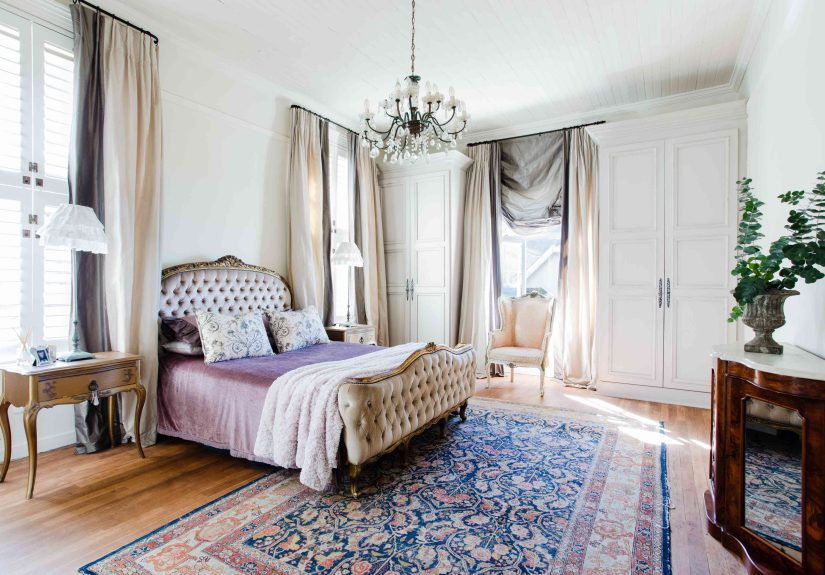
This felt backward at first, but it worked. A too-small rug makes furniture look disconnected and makes the room itself feel smaller. A larger rug that sits under at least the front legs of major furniture pieces helps unify the layout and visually expand the space.
Once I sized up my rug, the room stopped looking like a collection of separate objects and started reading as one complete zone. It was one of those mildly annoying design lessons where the experts were right all along.
11. I Picked Furniture With Legs
Furniture that sits directly on the floor can look heavy in a compact room. Pieces with visible legs allow more floor area to show, which creates a lighter, airier effect. My sofa, accent chair, and side tables all started feeling less bulky once there was a little breathing room underneath them.
This tiny visual trick had a major payoff. In small-space design, what you can see matters almost as much as what you can store.
12. I Used Larger Art, Not More Art
Too many small frames can make a room feel busy. One larger piece of art, or a more intentional grouping with space around it, looks cleaner and can actually make the room feel bigger. I also hung artwork a bit higher to pull the eye upward and emphasize height.
Basically, I stopped decorating like I was trying to win a wall-crowding contest.
How I Broke My 800-Square-Foot Home Into Zones
One of the reasons small homes feel chaotic is that every room is trying to do too many jobs at once. So I started defining zones. Not with walls, but with furniture placement, lighting, rugs, and purpose.
My living area became a true seating zone. My dining table also functioned as a work zone, but only because I kept the supplies contained and easy to clear away. My bedroom had a sleep zone, not a laundry-sorting zone, not a doom-scroll zone, and definitely not an “I’ll just stack this here for now” zone.
When each part of a small home has a clear function, the entire space feels more organized and more spacious. It also feels easier to live in because your home stops asking every corner to be everything all at once.
What I’d Tell Anyone Trying to Make a Small Home Feel Bigger
If your home is under 1,000 square feet, do not assume you have to live without personality or comfort. That’s the biggest myth of small-space living. The goal is not to own nothing and sit on one beige cube in perfect silence. The goal is to be selective, strategic, and honest about how you actually live.
Make room for what matters. Hide what doesn’t need to be seen. Use the height you have. Let light do its thing. Keep the palette cohesive. Choose pieces with intention. And above all, stop treating your small home like a compromise.
Once I did that, my 800-square-foot home stopped feeling like a limitation and started feeling like a master class in editing, function, and style. It didn’t magically gain square footage. It just started using every inch better.
My Real-Life Experience Living in 800 Square Feet
Here’s the part nobody tells you about living in a smaller home: the problem usually isn’t the size on day one. The problem is what happens by month six. A small space often feels perfectly manageable when you first move in because everything still has a sense of possibility. The boxes are unpacked, the sofa is in place, and you’re feeling weirdly proud that you can vacuum the whole house in what feels like the runtime of a sitcom episode.
Then real life shows up.
The mail starts piling up. Shoes gather by the door like they’re forming a union. Throw blankets multiply. The kitchen counter becomes a temporary holding area for absolutely everything except cooking. A chair in the bedroom turns into a part-time closet. And suddenly the home that once felt “cozy” starts feeling suspiciously close to “why am I always stepping around something?”
That was exactly my experience. I didn’t need a bigger house as much as I needed better systems. Once I admitted that, everything got easier. I stopped asking my home to forgive messy habits and started designing it to support better ones.
I noticed, for example, that when I had a proper basket for incoming papers, they stopped breeding on the dining table. When I added hooks where I actually dropped my bag and jacket, I stopped draping them over furniture like a Victorian ghost. When I replaced random decorative pieces with hidden storage, the room instantly looked calmer without feeling stripped of personality.
The biggest emotional shift was realizing that living small can actually feel luxurious when the space is working with you instead of against you. A smaller home is easier to clean, cheaper to furnish thoughtfully, and much faster to reset when things get out of hand. There’s also something satisfying about knowing every object has earned its place.
And no, I did not become a minimalist monk. I still like books, cozy textiles, candles, and all the little things that make a house feel human. I just learned that in a compact home, editing is an act of kindness to yourself. The room doesn’t need more stuff to feel finished. It needs the right stuff, in the right places, with enough breathing room around it.
Now when people walk into my home, they almost always say the same thing: “Wait, this is only 800 square feet?” That is the dream, honestly. Not because I’m trying to trick anyone, but because it means the space feels open, intentional, and comfortable. It means the home tells a better story than the floor plan does.
That, to me, is the real code. A small home feels huge when it feels easy to live in. When the light moves, the layout flows, the clutter is controlled, and the rooms know what they’re doing, square footage matters a whole lot less. And once you experience that, you stop chasing the fantasy of “more space” and start appreciating the power of using the space you already have brilliantly.
Conclusion
I didn’t discover one magical trick that transformed my 800-square-foot home overnight. I discovered a collection of smart, practical design choices that worked together: better storage, fewer but more useful pieces, more vertical thinking, improved lighting, larger visual anchors, and less clutter fighting for attention. That combination is what made my small home feel so much bigger.
If you want your own compact home to feel huge, don’t start by wishing for more square footage. Start by improving flow, editing what’s visible, and making every piece earn its spot. That’s the real small-space secret, and it works a lot better than pretending your floor lamp is also a personality trait.