Table of Contents >> Show >> Hide
- What Is Cowboy Stew?
- Why This Cowboy Stew Recipe Works
- Cowboy Stew Recipe at a Glance
- Ingredients for Cowboy Stew
- How to Make Cowboy Stew
- Tips for the Best Cowboy Stew Recipe
- Easy Variations
- What to Serve with Cowboy Stew
- How to Store, Freeze, and Reheat Cowboy Stew
- Common Mistakes to Avoid
- Frequently Asked Questions
- The Experience of Making and Sharing Cowboy Stew
- Conclusion
If chili and beef stew had a delicious, smoky cousin who wore dusty boots and showed up hungry, it would be cowboy stew. This dish is bold, hearty, and wonderfully unfussy. It is the kind of one-pot meal that does not whisper “comfort food.” It kicks open the saloon doors and announces it.
A great cowboy stew recipe is all about big flavor without a lot of drama. You brown the meat, build a savory tomato-based broth, add potatoes, beans, corn, and seasonings, then let the whole thing simmer until the kitchen smells like dinner has finally decided to get serious. The result is thick, cozy, and packed with enough texture to feel like a full meal in every spoonful.
This version takes inspiration from the best modern American takes on cowboy stew while keeping the method easy for home cooks. It is smoky from sausage, rich from ground beef, satisfying from potatoes and beans, and just a little zippy from tomatoes and spices. It is perfect for cold nights, busy weekends, game days, or those evenings when everyone is hungry enough to start negotiating over snack crackers.
What Is Cowboy Stew?
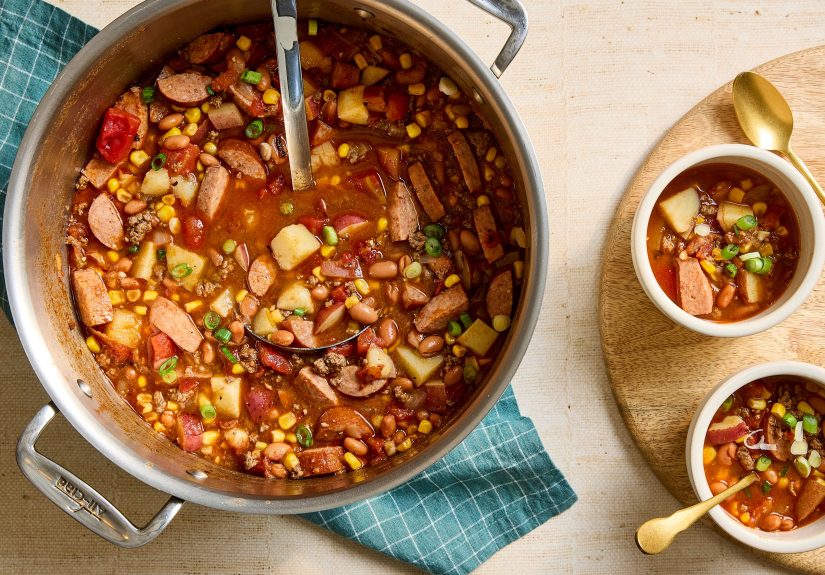
Cowboy stew is a rustic, hearty American stew that borrows a little from chili and a little from classic beef stew. Most modern versions include ground beef, smoked sausage, potatoes, beans, corn, tomatoes, broth, and a warm blend of seasonings such as chili powder, cumin, paprika, and black pepper. Some recipes add bacon, green chiles, hot sauce, or extra vegetables for even more flavor.
The name suggests campfire cooking and chuckwagon practicality, and that is part of the dish’s charm. Cowboy stew is not fussy food. It is built to be filling, flexible, and deeply comforting. It is also one of those recipes that invites a cook to use what is already in the pantry, which may explain why there are so many regional and family variations floating around out there.
Why This Cowboy Stew Recipe Works
This cowboy stew recipe works because it hits all the right comfort-food notes at the same time. The ground beef gives the broth body, the smoked sausage adds richness and a campfire-style flavor, the potatoes make it substantial, and the beans and corn bring sweetness and texture. Fire-roasted tomatoes help create a deeper flavor, while chili powder and cumin give the stew that slightly Southwestern personality people expect from a great bowl of cowboy stew.
It is also practical. Most of the ingredients are easy to find, budget-friendly, and pantry-friendly. You do not need culinary gymnastics, tweezers, or a dramatic soundtrack. You just need a big pot, a spoon, and the willingness to let dinner simmer until it tastes like you worked harder than you actually did.
Cowboy Stew Recipe at a Glance
- Yield: 8 servings
- Prep time: 20 minutes
- Cook time: 50 minutes
- Total time: About 1 hour 10 minutes
- Best for: Family dinners, meal prep, potlucks, chilly evenings, and hungry crowds
Ingredients for Cowboy Stew
Main ingredients
- 6 slices bacon, chopped
- 1 pound ground beef
- 12 to 14 ounces smoked sausage or kielbasa, sliced into rounds
- 1 medium yellow onion, chopped
- 1 green bell pepper, chopped
- 3 cloves garlic, minced
- 1 tablespoon chili powder
- 1 teaspoon ground cumin
- 1 teaspoon smoked paprika
- 1/2 teaspoon black pepper
- 1 to 1 1/2 teaspoons kosher salt, to taste
- 4 cups beef broth
- 1 can fire-roasted diced tomatoes
- 1 can regular diced tomatoes
- 2 medium Yukon Gold potatoes, diced
- 1 can pinto beans or kidney beans, drained and rinsed
- 1 can corn, drained
- 1 tablespoon Worcestershire sauce
- Hot sauce, optional
Optional toppings
- Shredded cheddar cheese
- Sliced scallions
- Fresh parsley
- Sour cream
- Crushed tortilla chips
- Extra hot sauce
How to Make Cowboy Stew
1. Cook the bacon
In a large Dutch oven or heavy-bottomed pot, cook the chopped bacon over medium heat until crisp. Remove it with a slotted spoon and set it aside on a paper towel-lined plate. Leave a little bacon fat in the pot, because that is free flavor and we are not the kind of people who walk away from free flavor.
2. Brown the sausage and beef
Add the sliced smoked sausage and cook for a few minutes until lightly browned. Remove and set aside. Add the ground beef to the same pot and cook until browned, breaking it up with a spoon as it cooks. Drain excess grease if needed.
3. Build the flavor base
Add the onion and bell pepper to the pot and cook until softened, about 4 to 5 minutes. Stir in the garlic, chili powder, cumin, smoked paprika, black pepper, and salt. Cook for about 30 seconds, just until the spices smell warm and toasty.
4. Add the rest of the ingredients
Return the sausage and bacon to the pot. Stir in the beef broth, both cans of tomatoes, diced potatoes, beans, corn, and Worcestershire sauce. If you like a little heat, add a few dashes of hot sauce here.
5. Simmer until thick and hearty
Bring the stew to a gentle boil, then reduce the heat and simmer uncovered or partially covered for 35 to 45 minutes. Stir occasionally. The potatoes should become tender, and the broth should thicken slightly into that ideal not-quite-soup, not-quite-chili texture.
6. Taste and finish
Taste the stew and adjust the seasoning. Add a little more salt, pepper, or hot sauce if needed. Serve hot with your favorite toppings and a side of cornbread, biscuits, or crusty bread.
Tips for the Best Cowboy Stew Recipe
Use smoked sausage, not plain sausage. This is where much of the stew’s signature flavor comes from. Kielbasa and andouille both work beautifully.
Choose potatoes that hold their shape. Yukon Gold potatoes are ideal because they become tender without turning into mush. Russets can work too, but they break down more quickly.
Do not skip browning. Browning the bacon, sausage, and beef creates layers of flavor that make the stew taste richer and more complex.
Let it simmer long enough. Cowboy stew is not difficult, but it does reward patience. A little simmer time helps the broth deepen and the flavors come together.
Make it your own. This recipe is flexible. Add jalapeños for heat, black beans for variety, or an extra can of tomatoes if you like a looser broth.
Easy Variations
Texas-style cowboy stew
Add a little extra chili powder, a pinch of cayenne, and maybe some diced green chiles for a bigger Southwestern kick.
Slow cooker cowboy stew
Brown the bacon, sausage, beef, and aromatics first, then transfer everything to a slow cooker. Cook on low for 6 to 7 hours or on high for 3 to 4 hours, until the potatoes are tender.
Lighter cowboy stew
Swap the ground beef for ground turkey and use turkey sausage. The stew will be a bit lighter, but still hearty enough to satisfy.
Extra vegetable cowboy stew
Add carrots, celery, green beans, or even frozen mixed vegetables if you want to stretch the pot and sneak in more produce.
What to Serve with Cowboy Stew
Cowboy stew is already a full meal, but the right side can turn dinner from very good to “please put this on the regular rotation.” Cornbread is the classic partner because it soaks up the broth beautifully. Biscuits are excellent too, especially if you like splitting one open and dragging it through the bowl in a way that would absolutely impress no one at a formal dinner party.
You can also serve cowboy stew with a crisp green salad, roasted vegetables, or simple coleslaw if you want something fresh alongside all that smoky richness. For toppings, shredded cheddar, sliced green onions, sour cream, and hot sauce all work well.
How to Store, Freeze, and Reheat Cowboy Stew
Let the stew cool slightly, then refrigerate leftovers in an airtight container. It keeps well for several days and often tastes even better the next day, after the flavors have had time to settle in and get acquainted.
For longer storage, freeze individual portions so you can thaw only what you need. That makes cowboy stew an excellent meal-prep recipe for busy weeks when cooking from scratch feels emotionally ambitious.
To reheat, warm it gently on the stovetop over medium-low heat or in the microwave in short intervals, stirring as needed. If the stew has thickened in the fridge, add a splash of broth or water to loosen it up.
Common Mistakes to Avoid
Adding too much liquid. Cowboy stew should be thick and hearty, not watery. Start with the recommended broth amount and add more only if needed.
Undersalting the potatoes. Potatoes absorb seasoning like tiny edible sponges. Taste the stew after simmering and adjust accordingly.
Overcooking the potatoes. Simmer until tender, but do not let them collapse completely unless you want a much thicker, softer stew.
Skipping acid or spice balance. A few dashes of hot sauce or the tang from tomatoes help cut through the richness of the meat and sausage.
Frequently Asked Questions
Is cowboy stew the same as chili?
No. Cowboy stew is more stew-like than chili because it usually includes potatoes and a brothier texture. It sits somewhere between the two, which is exactly why so many people love it.
Can I make cowboy stew ahead of time?
Yes. In fact, it is a great make-ahead dinner. The flavors deepen as it rests, making leftovers especially tasty.
What beans are best in cowboy stew?
Pinto beans, kidney beans, chili beans, or ranch-style beans all work well. This is not a bean dictatorship.
Can I leave out the bacon?
Absolutely. The bacon adds smoky richness, but the stew will still be delicious with ground beef and smoked sausage alone.
The Experience of Making and Sharing Cowboy Stew
There is something undeniably satisfying about making cowboy stew that goes beyond the ingredient list. It starts the moment the bacon hits the pot and the kitchen begins to smell like you have your life together. Then the sausage browns, the beef sizzles, the onion softens, and suddenly dinner feels less like a chore and more like an event.
Cowboy stew is the kind of recipe that invites people into the kitchen. Someone wanders in and asks what smells so good. Someone else lifts the lid even though they know perfectly well they are not supposed to. A child asks if there will be cheese on top. An adult asks if there is cornbread. The answer to both questions should usually be yes.
It is also one of those meals that seems to fit all kinds of evenings. On a cold night, it feels like a blanket in bowl form. On a busy weeknight, it feels mercifully practical. On a casual weekend, it feels like the sort of dinner that deserves a big spoon, a deep bowl, and absolutely no rush. Cowboy stew does not ask for fancy plating. It wants to be served hot, generously, and with enough confidence to say, “Dinner is ready, and no one is leaving hungry.”
Another reason people keep coming back to this recipe is the nostalgia factor. Even if you did not grow up eating cowboy stew, it tastes familiar. It hits the same comfort notes as chili night, soup season, and those old-school family dinners where the pot on the stove seemed bottomless. It tastes like practical hospitality. It tastes like someone cooked with appetite in mind.
There is also joy in how adaptable the recipe is. Some cooks make it a little spicy. Some make it extra smoky. Some add more beans, more vegetables, or more broth depending on what they have at home. And every version somehow still feels like cowboy stew. That flexibility makes it especially lovable. It is a recipe with structure, but not much ego.
If you are cooking for a group, cowboy stew has a wonderful way of making the table feel relaxed. Nobody takes tiny polite portions. People go back for seconds. Toppings appear. Bread disappears. Someone inevitably says, “You should make this again,” which is the highest compliment a one-pot dinner can earn.
And then there are the leftovers, quietly waiting in the fridge like a reward for your former self. The next-day bowl may be the best bowl of all. The flavors settle, the broth thickens a bit more, and lunch suddenly feels far more exciting than it has any right to be.
So yes, cowboy stew is a recipe. But it is also a mood. It is warm, generous, low-fuss cooking that makes people feel taken care of. In a world full of overcomplicated dinner ideas and suspiciously tiny restaurant portions, that is reason enough to keep this recipe handy.
Conclusion
A great cowboy stew recipe delivers everything you want from comfort food: rich flavor, easy prep, pantry-friendly ingredients, and enough heartiness to satisfy a table full of hungry people. With smoky sausage, seasoned beef, tender potatoes, beans, corn, and tomatoes all simmered together in one pot, this stew earns its place in the cold-weather dinner hall of fame. It is simple, flexible, crowd-pleasing, and just rustic enough to make you feel a little more capable than usual. Not bad for one pot.