Table of Contents >> Show >> Hide
- 1. Earthquakes Happen When Stressed Rocks Suddenly Slip Along Faults
- 2. Most Earthquakes Occur Near Plate Boundaries, but Not All of Them
- 3. Magnitude and Intensity Are Not the Same Thing
- 4. The First Waves Are Not Always the Most Damaging
- 5. Not Every Earthquake Causes a Tsunami, but Some Are Tsunami Machines
- 6. Aftershocks Can Be More Than Just Annoying Encores
- 7. The Ground Itself Can Become Part of the Disaster
- 8. Humans Can Trigger Some Earthquakes
- 9. Scientists Can Forecast Earthquake Probability, but They Cannot Predict the Exact Time
- 10. The Best Earthquake Safety Advice Is Still Simple and Brilliant
- What These Earthquake Facts Really Tell Us
- Earthquake Experiences: What It Really Feels Like When the Ground Moves
- Conclusion
- SEO Tags
Earthquakes are one of nature’s most dramatic reminders that the planet is not a decorative rock spinning politely through space. It is active, restless, and occasionally in the mood to rearrange your bookshelf at 3:17 a.m. But while earthquakes can feel chaotic, the science behind them is surprisingly fascinating. From the way seismic waves race through Earth to the reason a small shake can still cause big damage, there is a lot more going on beneath our feet than most people realize.
In this guide, we are diving into 10 intriguing facts about earthquakes that explain how they happen, why they matter, and what they reveal about the planet itself. Along the way, we will look at earthquake science, seismic waves, fault lines, aftershocks, early warning systems, tsunami risk, earthquake preparedness, and other related topics that help make sense of these powerful events. Think of this as your friendly, slightly nerdy tour through one of Earth’s most jaw-dropping natural processes.
1. Earthquakes Happen When Stressed Rocks Suddenly Slip Along Faults
The most important fact about earthquakes is also the most fundamental: an earthquake is not just “the ground shaking for mysterious reasons.” It usually begins when stress builds up in Earth’s crust and rocks finally slip along a fault. A fault is a fracture or zone of fractures where blocks of rock move relative to one another.
That means earthquakes are really about stored energy. Tectonic plates are constantly moving, but their edges do not glide like butter on a hot pan. They stick. Stress builds. Eventually the rocks break or slip, releasing energy in seismic waves. That release is what we feel as shaking.
Why this matters
This idea explains why earthquakes can seem sudden even though the conditions that create them develop over years, decades, or much longer. The event itself is fast. The setup is slow. Earth is basically the world’s least patient pressure cooker.
2. Most Earthquakes Occur Near Plate Boundaries, but Not All of Them
Many of the world’s earthquakes happen where tectonic plates meet. These boundaries are geologic hot zones where plates collide, pull apart, or slide past each other. Subduction zones, transform faults, and spreading centers are all common earthquake-producing settings.
That is why places near active plate boundaries, such as parts of the Pacific region, tend to experience more frequent and sometimes stronger earthquakes. However, not every quake happens neatly at a plate boundary. Some occur within plates, where older faults can still reactivate under stress. So while plate boundaries are the headline act, Earth sometimes throws in a surprise guest performance inland.
Why this matters
People often assume only a few famous places are at risk. In reality, seismic hazard can extend well beyond the most obvious fault lines. Understanding regional geology matters just as much as knowing where the nearest plate boundary sits on a classroom map.
3. Magnitude and Intensity Are Not the Same Thing
One of the most common earthquake misconceptions is that there is only one way to measure a quake. In reality, earthquake magnitude and earthquake intensity describe different things.
Magnitude refers to the size of the earthquake at its source. It is a measure of the energy released. Intensity, on the other hand, describes how strongly the shaking is felt at a specific location and what kind of effects it causes there. Two people in different places can experience the same earthquake very differently depending on their distance from the rupture, local soil conditions, building quality, and depth of the event.
Why this matters
This is why a moderate earthquake can feel brutal in one neighborhood and much less dramatic in another. It also explains why earthquake reports often include both a magnitude value and maps showing where shaking was strongest. Big number, small panic? Sometimes. Smaller number, bigger mess? Also possible.
4. The First Waves Are Not Always the Most Damaging
Earthquakes generate different kinds of seismic waves. P-waves arrive first because they travel faster. S-waves come later and often produce stronger side-to-side or up-and-down motion that can be more damaging. Surface waves can also contribute heavily to destruction, especially farther from the source.
This wave sequence is not just a scientific detail for seismologists to admire over coffee. It is the basis for earthquake early warning systems. If sensors detect the first waves quickly enough, alerts can sometimes be sent before the strongest shaking arrives in places farther away.
Why this matters
Those seconds matter. They may allow trains to slow, surgeons to pause, utilities to respond, and people to drop, cover, and hold on. It is not prediction. The earthquake has already started. But it is still a powerful example of science buying people precious moments.
5. Not Every Earthquake Causes a Tsunami, but Some Are Tsunami Machines
Earthquakes and tsunamis are often linked in people’s minds, but the relationship is more specific than many headlines make it seem. A tsunami usually requires an earthquake that displaces a large volume of water, often through vertical movement on the seafloor. That is why major subduction zone earthquakes are especially important in tsunami science.
In contrast, many earthquakes on land or along faults with mostly horizontal motion do not generate tsunamis at all. The setting matters, the fault motion matters, and the location matters.
Why this matters
Understanding this difference helps communities focus on real coastal hazards instead of assuming every offshore shake is automatically a giant wave on the way. It also helps explain why certain regions, such as areas near subduction zones, spend serious time planning for both strong shaking and tsunami evacuation.
6. Aftershocks Can Be More Than Just Annoying Encores
After a main earthquake, the crust often needs time to settle into a new stress arrangement. That process can trigger aftershocks, which are smaller earthquakes that occur in the same general area after the main event. They can continue for days, weeks, months, or even longer depending on the event.
Aftershocks are not merely geological leftovers. They can cause additional damage, especially to structures already weakened by the main shock. They can also complicate rescue efforts, recovery work, inspections, and public confidence.
Why this matters
The danger does not always end when the first shaking stops. A building that survived the main event may be much more vulnerable when the next jolt arrives. This is one reason emergency guidance emphasizes caution when reentering damaged areas. Earthquakes do not always believe in clean endings.
7. The Ground Itself Can Become Part of the Disaster
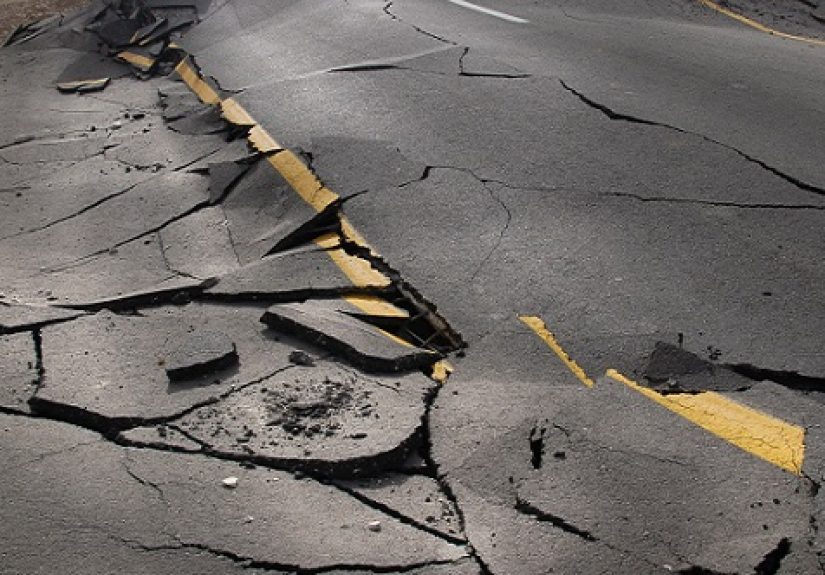
When people picture earthquake damage, they usually imagine walls cracking or objects flying off shelves. But sometimes the ground does its own nightmare routine. Strong shaking can trigger liquefaction, landslides, lateral spreading, and surface rupture.
Liquefaction happens when water-saturated sediments lose strength during shaking and start behaving more like a liquid than a stable solid. Buildings may tilt, pipelines may break, and roads can deform. In hilly or mountainous terrain, landslides can be triggered as slopes fail under intense shaking.
Why this matters
This is why local geology is such a big deal in earthquake risk. Two buildings with similar designs can perform very differently depending on what is beneath them. Bedrock, soft sediment, slope angle, and groundwater conditions all influence outcomes. The shaking is only part of the story. The ground response writes the rest.
8. Humans Can Trigger Some Earthquakes
Yes, some earthquakes are linked to human activity. These are often called induced earthquakes. They can occur when activities such as fluid injection change pressure conditions underground and affect preexisting faults. Not every industrial activity causes seismicity, and not every region responds the same way, but the connection is real enough that scientists study it closely.
This does not mean humans are secretly running the planet like a badly managed DJ booth. Natural tectonic earthquakes remain a major force. Still, in certain places, human actions can increase the likelihood of seismic events.
Why this matters
This fact changes how we think about hazard management. Earthquake science is not only about plate tectonics and ancient faults. It is also about monitoring, policy, engineering, and how decisions made above ground can influence what happens below it.
9. Scientists Can Forecast Earthquake Probability, but They Cannot Predict the Exact Time
This is one of the most important and most misunderstood points in seismology: scientists cannot predict exactly when a major earthquake will happen, where it will occur down to a precise spot, and how large it will be in the moment-to-moment way people often imagine.
What scientists can do is estimate probability over time. They study faults, seismic history, plate motion, crustal deformation, and patterns of earthquake occurrence to assess hazard. That is forecasting, not prediction.
Why this matters
This distinction matters because bad information spreads fast after noticeable seismic activity. Rumors about “earthquake weather,” mysterious animal behavior, or guaranteed predictions can distract from the real tools people need: hazard maps, safer construction, emergency plans, and trustworthy public alerts.
10. The Best Earthquake Safety Advice Is Still Simple and Brilliant
For all the advanced science around seismic monitoring and hazard modeling, one of the most effective personal safety messages remains beautifully straightforward: Drop, Cover, and Hold On.
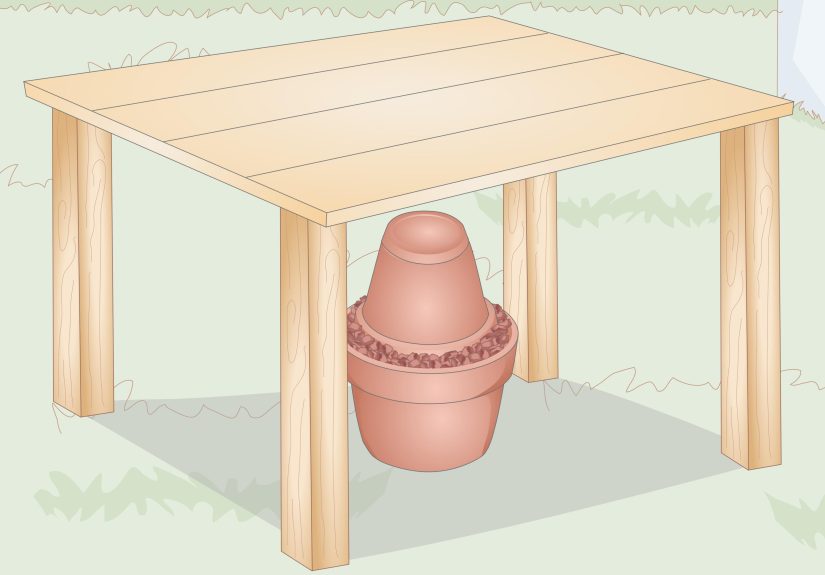
If you are indoors during strong shaking, dropping to your hands and knees helps keep you from being knocked down. Covering under a sturdy desk or table helps protect your head and neck. Holding on matters because that furniture may move. The advice sounds simple because it is simple. Good emergency guidance usually is.
Preparedness before an earthquake matters too. Securing heavy furniture, fastening water heaters, storing emergency supplies, practicing family plans, and knowing how to communicate after a disaster can make a meaningful difference.
Why this matters
Earthquake safety is not about becoming fearless. It is about becoming less helpless. And there is a big difference between those two things.
What These Earthquake Facts Really Tell Us
When you put all 10 facts together, a bigger picture emerges. Earthquakes are not random acts of planetary drama. They are the result of physical processes that scientists understand remarkably well, even if exact prediction remains out of reach. Fault slip, seismic waves, local ground conditions, aftershocks, tsunami potential, early warning systems, and preparedness all connect into one larger story: Earth is dynamic, and human safety depends on respecting that reality.
The most fascinating part may be that earthquakes do two jobs at once. They are hazards, yes, but they are also messengers. They reveal where stress is building, how the crust is moving, and what lies beneath the surface. Every quake is both an event and a clue.
So the next time someone says an earthquake is “just the ground shaking,” you have full permission to smile politely and explain that it is actually a multilayered geophysical event involving tectonic stress, wave propagation, fault mechanics, ground response, and sometimes a major lesson in why that wobbly bookshelf should have been anchored last year.
Earthquake Experiences: What It Really Feels Like When the Ground Moves
Reading about earthquakes is one thing. Experiencing one is something else entirely. People often say the strangest part is not the noise or even the motion. It is the mental mismatch. Floors are not supposed to ripple. Walls are not supposed to creak like ship hulls. Lamps are not supposed to start their own dance routine without permission.
In a mild earthquake, the first sensation may be uncertainty. Was that a truck outside? A heavy door slamming? A weird vibration from the washing machine? Then the room answers the question for you. Glass rattles. Hanging lights sway. A shelf gives a nervous little shimmy. You suddenly become very aware that gravity has always been a handshake agreement, not a legal contract.
In a stronger earthquake, people often describe a fast shift from confusion to instinct. The sound can come first: a low rumble, a cracking noise, a rolling vibration, or a deep thud. Then motion follows. Some quakes feel like a jolt. Others feel like a wave passing through the ground. Standing can become difficult. Walking becomes awkward. Your brain, which is used to stable floors, files an immediate complaint.
What many survivors remember most vividly is not just the shaking itself but the seconds right after. There is a pause filled with checking, listening, and scanning. Is anyone hurt? Is that gas? Did something fall in the next room? Should we move outside? Then comes the emotional aftershock, even before the geological one: adrenaline, shaky hands, racing thoughts, and the strange urge to stare at walls as if they have personally betrayed you.
Aftershocks add another layer to the experience. Even small ones can feel huge if nerves are already frayed. People may sleep lightly, keep shoes near the bed, or jump at ordinary sounds. Elevators, stairwells, ceiling cracks, and stacked dishes suddenly seem much more interesting than they did yesterday.
Community experience matters too. In earthquake-prone regions, people often learn practical habits that outsiders may never think about. They know where to take cover. They secure tall furniture. They keep flashlights handy. They talk about meeting places, emergency kits, medications, pet plans, and who is picking up the kids if roads are blocked. Preparedness becomes less about fear and more about routine, like keeping an umbrella around because weather enjoys surprises.
There is also a shared psychological effect that follows noticeable shaking. Neighbors check on neighbors. Families text. Schools review procedures. Local news fills with maps, explanations, and a hundred people saying, “Did you feel that?” That collective reaction reminds us that earthquakes are deeply human events as much as geological ones.
And maybe that is the most powerful experience of all: realizing how fragile everyday normal can feel, and how quickly people adapt when it wobbles. Earthquakes may begin in the crust, but their real story continues in kitchens, classrooms, hospitals, apartments, and neighborhoods where people decide, sometimes in seconds, how to respond and recover.
Conclusion
These 10 intriguing facts about earthquakes show that seismic events are far more complex than a sudden shake and a dramatic headline. They involve faults, tectonic stress, wave behavior, local geology, tsunami mechanics, and human preparedness. They can be destructive, but they are also scientifically rich and endlessly revealing.
If there is one takeaway worth keeping, it is this: you do not need to be a seismologist to understand earthquakes better. Learning the basics of earthquake facts, seismic waves, earthquake preparedness, aftershocks, and fault lines can make the topic less mysterious and a lot more manageable. Earth may always move on its own schedule, but informed people are much better prepared when it does.