Table of Contents >> Show >> Hide
Some photographers chase drama. René Maltête chased timing, irony, and the glorious possibility that a perfectly ordinary sidewalk might suddenly behave like a stand-up comic. That is exactly why a set like 68 Humorous Street Photos From 1950s France By René Maltête still feels so fresh. These images are not funny because they are loud. They are funny because they are observant. A shadow lands in the right place. A sign accidentally rewrites a person walking past it. A couple, a dog, a bicycle, or a hat enters the frame at the exact wrong moment and becomes exactly right. The joke is visual, human, and over before the subject even knows it happened.
Maltête was one of those rare artists who understood that street photography is not only about documenting life. It is also about noticing when life starts making clever little puns on its own. His black-and-white photographs from mid-century France feel light on their feet, but they are built with incredible discipline. Behind every laugh is timing, framing, patience, and a deep affection for everyday people. He did not photograph the street as a place of spectacle alone. He photographed it as a place where comedy quietly blooms between strangers, storefronts, weather, architecture, and chance.
That is what makes these humorous French street photos so irresistible. They give us vintage fashion, sidewalks, cafés, beaches, workers, vacationers, and postwar city life, yes. But more importantly, they give us proof that human beings have always been a little ridiculous in the best possible way. Long before memes, reaction images, or viral photo dumps, Maltête was already showing that one well-timed frame could say, “Humanity is chaos, and honestly, it’s pretty charming.”
Who Was René Maltête?
René Maltête was a French photographer and poet born in 1930, and his reputation rests largely on his gift for humorous, candid, and gently ironic images of public life. He began taking photographs as a teenager, moved to Paris in the early 1950s, and became more serious about photography after buying a Semflex camera in 1954. By 1958 he had joined the Rapho agency, the same orbit associated with several major names in humanist photography. In 1960, his breakthrough book Paris des rues et des chansons helped cement his identity as a photographer who could find poetry in the ordinary without ironing out its wrinkles.
That last part matters. Plenty of photographers can find beauty. Fewer can find beauty and humor in the same frame without making either one feel cheap. Maltête managed that balancing act beautifully. His pictures often look effortless, but they are not casual in the lazy sense. They are casual in the elegant sense, like someone tossing off a perfect joke at dinner and pretending they did not rehearse it in the mirror for three years.
His work is often linked to the humanist tradition in French photography, which favored everyday life, empathy, and ordinary people over grand declarations. Yet Maltête’s pictures have an extra twist. He was not satisfied with simply showing the dignity of daily life. He also wanted to show its absurdity, its visual mischief, and those tiny collisions between reality and illusion that make you grin before you even know why.
Why These 68 Humorous Street Photos Still Work
1. The timing is the punch line
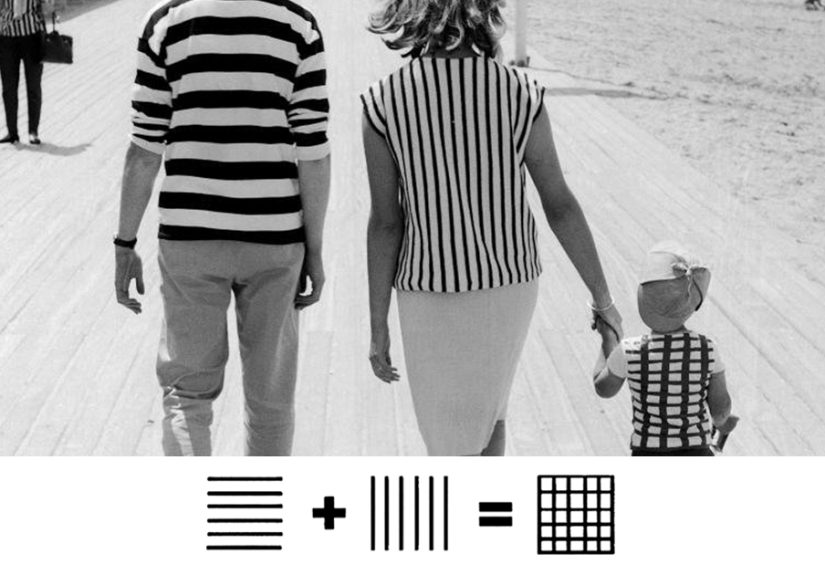
The best René Maltête photos work like visual one-liners. The setup is the street itself: a poster, a wall, a bench, a beach, a striped umbrella, a passing stranger. The punch line arrives when two unrelated things suddenly click together. A body lines up with an advertisement. A gesture echoes a statue. A hat appears to grow from the wrong head. The comedy depends on split-second timing, which is why these pictures still feel alive. They were not manufactured in a studio. They were discovered in the wild, where the universe occasionally behaves like it has a very dry sense of humor.
2. The humor is kind, not cruel
One reason these vintage street photos age so well is that Maltête rarely punches down. He is amused by people, not mean to them. His lens does not sneer. It notices. That distinction gives the work warmth. Even when the frame catches someone in an awkward or ironic moment, the feeling is affectionate rather than embarrassing. The people in his photographs are not victims of a joke. They are participants in the theater of everyday life, even if they did not know they were auditioning.
3. Mid-century France becomes a character
These images are not just funny photographs. They are also a lively record of 1950s France street life and the years around it. Clothes, shop windows, public signage, haircuts, leisure habits, bicycles, beaches, city corners, and working neighborhoods all help build the atmosphere. France in these pictures does not feel frozen in a museum case. It feels noisy, crowded, flirtatious, and slightly chaotic. In other words, it feels like a place where humor would naturally happen.
4. Black-and-white makes the joke sharper
Color can be wonderful, but black-and-white often forces the eye to pay attention to form, contrast, and visual rhythm. Maltête understood this instinctively. His black-and-white compositions make lines, silhouettes, shadows, and objects snap into relation with one another. That is important because many of his jokes are not verbal or narrative. They are structural. The laugh comes from how shapes meet inside the frame. Strip away color, and the eye becomes more sensitive to the exact arrangement that makes the image funny.
5. The ordinary setting makes the absurdity better
If these scenes took place on circus stages, they would lose half their charm. What makes them memorable is that they happen in spaces that seem routine: sidewalks, parks, beaches, cafés, train platforms, neighborhood streets. The ordinary backdrop acts like a straight man in a comedy duo. It behaves seriously while the visual joke sneaks in from the side. That contrast is the secret sauce.
What René Maltête’s Photos Reveal About 1950s France
Looking at humorous street photography from France is not just an aesthetic experience. It is also a social one. These photographs capture a country in motion. Postwar urban life was growing, leisure culture was visible, and public space still functioned as a dense stage where strangers constantly crossed paths. You can see the rhythms of the era in the clothing, the pace of walking, the prominence of bicycles and public gathering places, and the constant interaction between people and the built environment.
There is also something deeply revealing about what makes a photo funny in any particular era. Maltête’s humor depends on public life still being public. People are out in the open. Children spill into parks. Adults sit, stroll, flirt, work, smoke, read, argue, and daydream where everyone can see them. Shop signs and posters matter because people are looking at them. Street corners matter because people linger. The joke often comes from shared space, and that tells us something important about mid-century France: the street was not merely a route from one private box to another. It was a social ecosystem.
That public quality gives the photographs historical value beyond nostalgia. They show how comedy emerges from density, proximity, and attention. When people occupy common spaces, chance encounters multiply. And when chance encounters multiply, so do visual accidents. Maltête turned those accidents into art without draining them of their spontaneity.
The Art Behind the Laugh
It would be easy to describe Maltête as simply “funny,” but that undersells the sophistication of his method. Great humorous photography is never only about humor. It is also about composition, patience, and anticipation. You have to understand where people will move, how the background will interact with the foreground, what enters a frame too early, and what arrives one second too late. In street photography, the difference between ordinary and unforgettable is often measured in fractions of a second.
Maltête clearly had an instinct for what photography critics often call the decisive moment: that instant when subject, form, gesture, and meaning lock together. But he added something extra to that tradition. He looked for moments that were decisive and mischievous. His images often suggest that reality is constantly arranging visual pranks for anyone patient enough to notice. A less attentive photographer might record a street. Maltête recorded a wink.
There is also a poetic dimension to his work. Many of the funniest frames are not laugh-out-loud funny so much as delightfully off-center. They leave you hovering between amusement and reflection. Why does this scene feel ridiculous? Why does it also feel elegant? Why does a tiny mismatch between person and environment suddenly say something profound about modern life? That is the magic trick. Maltête’s best photographs are comic, but they are never empty calories.
Why René Maltête Feels Surprisingly Modern
For a photographer associated with mid-century France, Maltête feels weirdly contemporary. Part of that is because modern viewers are fluent in visual irony. We understand accidental alignments, background jokes, and instant contrasts almost instinctively. Scroll culture has trained us to read images fast. Maltête rewards that speed, but he also exceeds it. His photographs hit quickly, then linger. They make immediate sense, yet they still invite a second look.
He also anticipated a major truth of internet-age humor: context is everything. A person alone may not be funny. A sign alone may not be funny. Put them together for one perfect second, and suddenly you have comedy. That logic powers everything from street photography to meme culture. The difference is that Maltête did it with real streets, real weather, real strangers, and no delete key.
And maybe that is why his work still lands. In an era of endless editing, staging, filters, and content engineered to death, his images remind us how satisfying genuine surprise can be. They are not trying too hard. They are simply alert to the ridiculous grace of ordinary life.
Experiences Inspired by “68 Humorous Street Photos From 1950s France By René Maltête”
Spending time with these photographs can change the way you move through the world. After a while, you stop looking at the images as relics from old France and start feeling them as instructions for modern attention. You notice how often people accidentally complete one another’s gestures. You notice reflections in windows, the way a poster argues with the person standing below it, the way weather can rewrite a whole mood in an instant. Suddenly the sidewalk near your apartment looks less like a commute and more like a stage where visual jokes are quietly rehearsing all day.
There is also something oddly comforting about Maltête’s humor. The photos suggest that life has always been messy, awkward, and full of unplanned comedy. Every generation thinks it invented public absurdity. Then along comes a black-and-white frame from decades ago showing that no, people have always misread signs, worn expressions that accidentally match a billboard, stood in the wrong place at the right time, or wandered through the day with the kind of seriousness that makes reality immediately tease them.
These images can also inspire a more generous way of seeing. Instead of rushing past strangers as background noise, you begin to register them as part of a shared visual conversation. A man balancing packages, a child staring at pigeons, a woman laughing into the wind, a dog dragging someone into a scene they clearly did not plan to enter; all of it becomes more interesting when you look with patience. Maltête’s gift was not only wit. It was permission. He gave viewers permission to treat ordinary life as worthy of curiosity.
For photographers, the experience is even more specific. Looking at Maltête can be humbling. You realize how much of good street photography depends not on expensive gear or dramatic settings, but on timing, restraint, and faith in the street itself. You do not need fireworks when a bench, a shadow, and one perfectly placed passerby can do the job. The lesson is almost annoying in its simplicity. The magic is out there. You just have to stop stomping around like the universe owes you a masterpiece every twelve seconds.
For non-photographers, the appeal is simpler and maybe sweeter. These pictures are fun. They let you travel into vintage France without treating the past like homework. You get the textures of another era, but you also get a feeling that human behavior has not changed nearly as much as our technology has. We still pose without meaning to. We still drift into ridiculous compositions. We still carry ourselves as if the world is not constantly setting little traps for our dignity. René Maltête knew that dignity survives those traps just fine. In fact, sometimes it becomes more lovable because of them.
And that may be the lasting experience of this collection: you finish it wanting to look up more, walk slower, and laugh a little sooner. Not because the world is shallow, but because it is layered. Humor, beauty, awkwardness, and tenderness often arrive in the same second. Maltête saw that clearly. His photographs invite us to see it too.
Conclusion
68 Humorous Street Photos From 1950s France By René Maltête is more than a charming vintage gallery title. It is an invitation into the mind of a photographer who understood that the street is one of the greatest comedy writers ever hired by civilization. Maltête transformed ordinary French life into visual wit without losing its humanity. His images preserve mid-century public life, celebrate the poetry of chance, and remind us that the funniest moments are often the ones nobody planned. That is why these photographs continue to resonate: they are stylish, historical, intelligent, and wonderfully human. They make the past feel vivid, and they make the present feel worth watching.