Table of Contents >> Show >> Hide
- Why actors regret roles in the first place
- Actors who said the quiet part out loud
- George Clooney and Batman & Robin
- Ben Affleck and Daredevil
- Channing Tatum and G.I. Joe: The Rise of Cobra
- Viola Davis and The Help
- Eddie Redmayne and The Danish Girl
- Fisher Stevens and Short Circuit
- Elliot Page and To Rome With Love
- Sally Field and The Amazing Spider-Man
- Bob Hoskins and Super Mario Bros.
- Rosamund Pike and Doom
- What these regrets reveal about Hollywood
- Extended reflections: the experiences actors keep describing again and again
- Conclusion
- SEO Tags
Hollywood loves a comeback story, but it secretly runs on something even juicier: regret. Not the dramatic kind where someone stares out a rain-streaked window and whispers, “I should have stayed in theater.” More the practical, painfully human kind. The kind that sounds like, “Yep, that movie was a mess,” or, “I would not make that casting choice today,” or the evergreen classic, “My agent said it was a great idea, and now here we are.”
Actors are usually trained to promote, defend, and politely smile through awkward press junkets. That is why it is always a little shocking when they pull back the curtain and admit they wish they had skipped a role entirely. Sometimes the regret comes from a movie that flopped so hard it practically left a crater. Sometimes it comes from realizing a performance missed the cultural moment, or worse, helped reinforce the wrong message. And sometimes the regret is less about the art than the machine behind it: the bad script, the studio pressure, the impossible production, the costume that should have been classified as a cry for help.
When actors talk honestly about the roles they regret taking, they reveal something useful about the business of entertainment. Regret is not always about failure. Often, it is about perspective. A role that once looked smart, safe, prestigious, or lucrative can feel very different years later. Careers evolve. Audiences change. Culture changes. The actor changes too.
That is what makes these admissions so fascinating. They are not just celebrity confessions for popcorn consumption. They are tiny case studies in Hollywood decision-making, career survival, and the gap between what looks good on paper and what actually works on screen.
Why actors regret roles in the first place
Before getting into specific examples, it helps to understand that “I regret that role” can mean several different things. Sometimes an actor regrets the final product because the movie simply did not work. Sometimes they regret the circumstances, such as taking a part because of contractual pressure, loyalty to a friend, or a fear of saying no. In other cases, the regret is ethical or cultural. A role that once seemed acceptable can later feel tone-deaf, reductive, or outright harmful.
That distinction matters. Not every regret sounds the same. One actor may laugh about a rubber suit and a bad script. Another may look back and realize a casting choice should have gone to someone from the community being represented. Another may say the movie centered the wrong voices, even if the performance earned awards attention. Same emotion, very different reasons.
In other words, regret in Hollywood is rarely one-size-fits-all. It is a cocktail of hindsight, growth, ego, pressure, commerce, and occasionally one truly terrible wig.
Actors who said the quiet part out loud
George Clooney and Batman & Robin
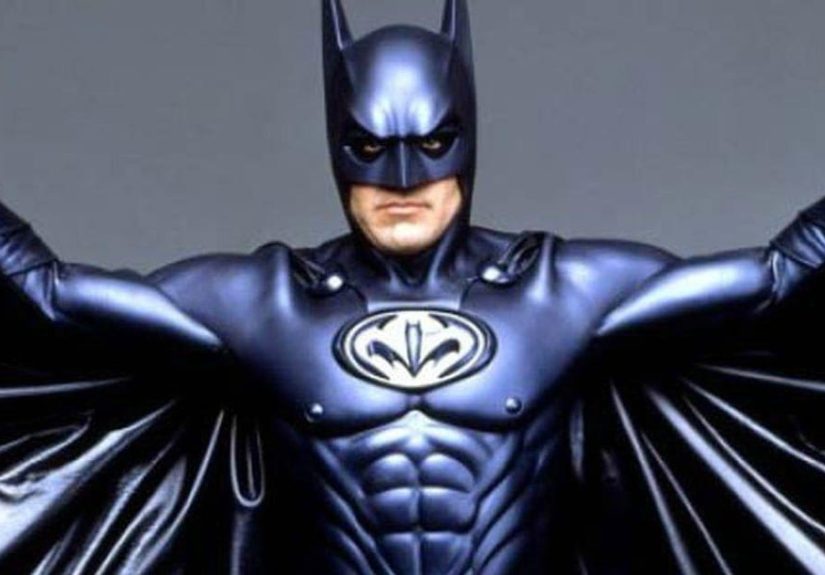
George Clooney has spent years joking about Batman & Robin, but the humor only works because the regret is real. He has openly described the movie as a major misfire and has repeatedly treated it as one of the clearest examples of a role that went wrong in execution. Clooney’s regret is not just about critical backlash. It is about legacy. When you play Batman, you are borrowing one of the biggest icons in modern pop culture, and if the movie lands like a lead balloon in a cape, people remember.
His comments are telling because they show how actors think about franchise roles. A blockbuster is not automatically a safe bet. Sometimes the giant opportunity is also the giant trap. Clooney later built a career on sharper, more controlled choices, and his candidness about Batman & Robin makes that pivot look even more intentional.
Ben Affleck and Daredevil
Ben Affleck has been unusually blunt about Daredevil, calling it the one movie he truly regrets. That honesty hits harder because Affleck actually cared about the character. This was not a casual paycheck job he barely remembered. He liked the source material and hated that the movie failed to do it justice.
That kind of regret is especially brutal because it combines personal investment with public disappointment. Affleck’s frustration also says a lot about the superhero era before comic book adaptations became more consistently polished. Today, audiences expect superhero films to be carefully built machines. Back then, the genre still had plenty of shaky, cynical entries that seemed more interested in costumes than storytelling. Affleck’s later return to the superhero world carried extra baggage precisely because Daredevil had stung so badly.
Channing Tatum and G.I. Joe: The Rise of Cobra
Channing Tatum did not exactly whisper his feelings about G.I. Joe: The Rise of Cobra. He said he hated the movie and later explained that contractual obligations played a major role in why he took it. That makes his regret especially revealing. Not every role is chosen from a place of artistic excitement. Sometimes the actor is doing professional damage control before the cameras even roll.
Tatum’s case is a reminder that movie careers are not built purely on passion projects and perfect scripts. Contracts, timing, momentum, and legal pressure can all shape what ends up on screen. His later success worked because he found roles that better matched his charm, comic instincts, and self-awareness. In hindsight, G.I. Joe feels like a role he wore rather than inhabited.
Viola Davis and The Help
Viola Davis offers one of the most thoughtful examples of role regret because her criticism is not about bad reviews or a failed performance. It is about perspective and representation. Davis has said she regretted making The Help because, in her view, the film did not truly center the voices of the Black maids it depicted. That is a much deeper kind of disappointment than “the movie was bad.”
Her comments matter because The Help was commercially successful and earned awards attention. On paper, it looked like the kind of film actors are supposed to be proud of forever. But Davis’s hindsight shows that acclaim does not automatically settle the question of whether a project got its point right. This is what makes role regret so interesting: sometimes the regret grows after the applause.
Eddie Redmayne and The Danish Girl
Eddie Redmayne later said taking the lead in The Danish Girl was a mistake, even though the role earned him another Oscar nomination. Again, this is not the story of a career disaster. It is the story of changing standards and deeper understanding. Redmayne has acknowledged that he would not take on the role now, which reflects how much the industry conversation around casting and representation has shifted.
His regret highlights a truth Hollywood has been slow to accept: technical skill is not the only issue in performance. Authenticity, access, and opportunity matter too. The question is no longer just, “Can this actor do it?” It is also, “Who should be getting the chance to tell this story in the first place?”
Fisher Stevens and Short Circuit
Fisher Stevens has said his role as Ben Jabituya in Short Circuit still haunts him. He later admitted he would never do the part again. That regret is not merely aesthetic or strategic. It is moral and cultural. Stevens, a white actor, played an Indian character in brownface, something he has since publicly recognized as wrong.
His hindsight reflects one of the clearest ways Hollywood regret evolves over time. What may once have been tolerated, or even barely questioned in mainstream filmmaking, can later look indefensible. These cases stand apart from ordinary “bad movie” regret because they force the industry to confront not just poor taste, but systemic blind spots.
Elliot Page and To Rome With Love
Elliot Page later described appearing in Woody Allen’s To Rome With Love as the biggest regret of his career. What makes that statement powerful is how direct it is. There is no vague hedging, no diplomatic fog, no “well, every project teaches you something.” It is a flat-out acknowledgment that he made the wrong choice.
That kind of regret is tied to more than a performance. It is about what a project represents, who gets supported by participation, and how young actors can feel pressured to say yes to powerful names. Hollywood often teaches performers that prestige is never optional. Page’s hindsight pushes back on that idea. Sometimes saying yes to the “important” opportunity becomes the choice you most wish you had avoided.
Sally Field and The Amazing Spider-Man
Sally Field was refreshingly unromantic about playing Aunt May in The Amazing Spider-Man. She admitted the movie was not really her kind of thing and explained that her reason for taking it had more to do with loyalty to producer Laura Ziskin than deep enthusiasm for the material. That honesty is almost refreshing in its plainness.
Field’s comments show that actors sometimes take roles for deeply personal reasons that have nothing to do with script quality or franchise potential. But personal motives do not always turn into satisfying work. You can say yes for a generous reason and still end up feeling disconnected from the role. That is a subtler form of regret, but still regret all the same.
Bob Hoskins and Super Mario Bros.
If career regret had a patron saint, Bob Hoskins might be in the running. He did not just dislike Super Mario Bros.; he seemed to regard the whole production as a cinematic endurance test. Reports about the chaotic making of the film have become almost as famous as the movie itself, and Hoskins later described the experience in brutally unflattering terms.
His regret captures the special misery of being trapped inside a production that feels broken from the inside out. Sometimes a role becomes regrettable not because the concept was terrible, but because the process is so chaotic that no one could have saved it. Actors can survive a bad review. Surviving a bad shoot is another matter.
Rosamund Pike and Doom
Rosamund Pike recently looked back on Doom and called it one of the worst films ever made, adding that it could have ended her career. That is the sound of an actor revisiting an early role with the clarity that only distance can provide. Pike’s comments are especially interesting because they underline how vulnerable young actors can be when they are still figuring out what kinds of projects actually suit them.
Early in a career, a role can look like opportunity when it is really just exposure without direction. Pike has since built a reputation on sharp, intelligent, often icy performances that feel miles away from generic action-movie expectations. Looking back, Doom reads like a lesson she survived rather than a role she embraced.
What these regrets reveal about Hollywood
Put all these stories together and a pattern emerges. Actors rarely regret roles for only one reason. The most memorable regrets usually sit at the intersection of bad timing, bad judgment, industry pressure, and later personal growth. A film can be commercially successful and still feel wrong in retrospect. A role can be culturally accepted at release and criticized later. A major franchise can boost visibility while damaging credibility. And a paycheck can solve one problem while creating another that follows the actor for years.
There is also a myth that stars always know when they are signing onto greatness or disaster. Clearly, they do not. If actors with Oscars, agents, managers, producers, and entire studio marketing departments can still end up saying, “Well, that was a mistake,” then maybe the entertainment business is less a precision science and more a roulette wheel wearing expensive sunglasses.
Role regret also exposes the difference between career momentum and career fit. Hollywood rewards visibility, but visibility is not the same thing as alignment. The best roles tend to amplify what an actor already does well. The regrettable ones often ask the performer to squeeze into a project built for somebody else, for another era, or for a version of the industry that no longer makes sense.
Extended reflections: the experiences actors keep describing again and again
If you listen closely to enough interviews about regretted roles, a few common experiences show up over and over. First, actors often describe a sense that they knew something was off before the movie was even finished. Maybe the script kept changing. Maybe the tone felt wrong. Maybe the character never fully came to life. Maybe the studio notes came in like a stampede and flattened everything interesting. Regret rarely arrives out of nowhere. In many cases, it starts as a quiet unease that grows louder once the movie is released.
Second, many actors talk about pressure. That pressure can come from fame, money, momentum, or fear. An actor on the rise may worry that saying no makes them look difficult. An established actor may feel tempted by a giant franchise because giant franchises come with giant checks and giant visibility. A younger performer may say yes because an admired filmmaker asked. A seasoned actor may agree out of loyalty to a producer, friend, or collaborator. The point is that role selection is rarely a purely artistic choice. It is often emotional, strategic, and messy.
Third, regret tends to sharpen once actors gain more control over their careers. After success, they can look back and see the mismatch more clearly. They understand the kinds of scripts they should have trusted, the kinds of directors they work best with, and the warning signs they missed. That is why some of the most candid regret stories come many years later. Time gives actors a better map of themselves.
Another recurring experience is embarrassment mixed with education. Some actors laugh when discussing a regretted role because humor is easier than self-flagellation. But behind the jokes is often a serious lesson: read more carefully, ask harder questions, think about representation, trust your instincts, or do not confuse scale with quality. Big movie does not automatically mean good movie. Important-sounding movie does not automatically mean thoughtful movie. Prestige does not guarantee wisdom. And yes, a superhero suit can still be a bad sign.
There is also a fascinating difference between audience regret and actor regret. Viewers usually regret a movie because it wasted two hours and a bucket of popcorn. Actors regret a role because it becomes part of their permanent record. It can affect future casting, public reputation, personal values, and the stories they tell themselves about their own work. To the audience, a bad movie is an inconvenience. To the actor, it can be an identity crisis with lighting.
In the end, these stories make actors more relatable, not less. We all have our version of a regretted role. The wrong job, the wrong partnership, the wrong yes given for the right-sounding reasons. What makes performers different is that their mistakes play on giant screens and get replayed on streaming platforms forever. Which, honestly, is enough to make anyone double-check the script before signing.
Conclusion
Actors talking about the roles they regret taking is more than celebrity honesty. It is a reminder that even the most glamorous careers are built through imperfect choices. Some regrets come from bad movies. Some come from bad fits. Others come from the slow, necessary realization that certain stories should have been told differently, or by different people entirely.
And that may be the most interesting part of all. Regret is not always a mark of failure. Sometimes it is evidence of growth. The actor who can look back, admit the mistake, and explain why it mattered is often the actor who has learned the most from it. Hollywood may still run on fantasy, but these moments of hindsight are refreshingly real.