Table of Contents >> Show >> Hide
- Why Closet Rods Sag in the First Place
- Way 1: Add a Center Support Bracket or Vertical Support
- Way 2: Replace the Rod and Brackets with Stronger Hardware
- Way 3: Reduce the Load and Redesign the Closet Layout
- Which Fix Is Best?
- Common Mistakes to Avoid
- Quick Maintenance Tips to Keep a Closet Rod from Sagging Again
- of Real-Life Experience with Sagging Closet Rods
- Final Thoughts
- SEO Tags
A sagging closet rod is one of those home problems that starts small and ends in chaos. First, the rod dips a little. Then your hangers huddle together like scared penguins. Then one morning you open the closet door and get a dramatic avalanche of shirts, jackets, and life choices. The good news is that fixing a sagging closet rod is usually a simple DIY job, and you do not need a contractor, a workshop full of tools, or a motivational speech from a home improvement show host.
If your closet rod is bowing in the middle, pulling away from the wall, or groaning under the weight of heavy clothes, there are three smart ways to solve it. You can add center support, replace weak hardware with stronger materials, or reduce the load and redesign how the closet works. The best fix depends on what caused the sag in the first place.
In this guide, you will learn exactly how to fix a sagging closet rod, when to use each method, what tools help, and how to keep the problem from coming back. Whether your closet is packed with light shirts or enough winter coats to survive six blizzards, there is a solution here that makes sense.
Why Closet Rods Sag in the First Place
Before you repair anything, it helps to know why the rod failed. A closet rod usually sags for one of four reasons: the span is too long, the rod material is too weak, the brackets are not supported properly, or the rod is carrying too much weight. Sometimes it is all four, which is the home improvement version of hitting the jackpot.
Long rods need support in the middle or at regular intervals. Thin wood rods and flimsy adjustable metal rods can flex under pressure, especially when they hold heavy coats, jeans, or densely packed clothes. Drywall-only installation can also cause trouble, because even a decent bracket will struggle if it is not anchored well. On top of that, many closets become accidental storage units, and the rod ends up doing the job of a small bridge.
Here are the common warning signs:
- The rod bows downward in the center.
- One or both end brackets pull loose from the wall.
- Hangers slide toward the middle.
- The rod rotates, creaks, or wobbles when touched.
- The closet is loaded with coats, hoodies, uniforms, or thick sweaters.
Once you know the cause, choosing the right repair gets much easier.
Way 1: Add a Center Support Bracket or Vertical Support
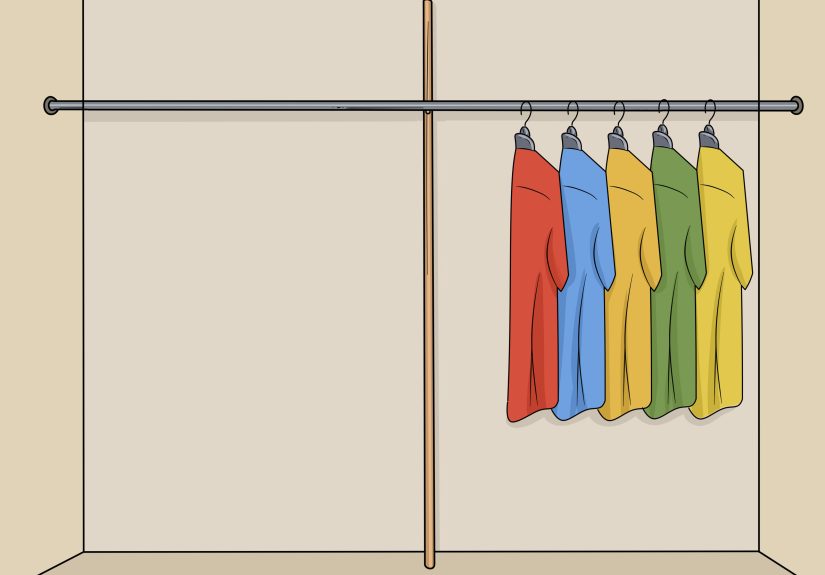
If your closet rod is long and sagging in the middle, this is usually the fastest and most effective fix. Adding center support redistributes the weight so the rod does not have to carry the whole load on its own. Think of it as giving your overworked closet rod a reliable friend.
Best for
Closet rods with a long span, especially when the rod itself is still in decent shape and the end brackets are secure.
What you need
- Center support bracket or rod support
- Stud finder
- Drill or screwdriver
- Level
- Tape measure
- Pencil
- Wall anchors if needed
How to do it
Start by removing the clothes from the rod. Yes, all of them. This is not the moment to test whether one bracket can survive while you “just leave a few things there.” Measure the rod and find the midpoint. Mark the center lightly with a pencil. If the closet is especially wide, you may need more than one support point, but one center bracket often solves the problem for a basic sagging rod.
Use a stud finder to locate a wall stud behind the back wall of the closet if the support will attach there. If there is a stud at or near the midpoint, you are in excellent shape. Mount the support bracket level and drive the screws into the stud. If no stud lines up exactly, use a heavy-duty anchor rated for the load, but remember that a stud-backed mount is stronger for heavy clothing.
Once the support is installed, place the rod back into position and check that it sits level. If your rod sits in a bracket under a shelf, make sure the support matches the rod diameter and does not pinch or twist it.
If you want a low-cost alternative, a vertical support post or wood prop can work too. This style sits below the rod and supports it from underneath. It is a practical fix for utility closets, kids’ closets, or hidden areas where appearance is not the top priority. It is not glamorous, but neither is picking coats off the floor for the third time this month.
Pros
- Fast and inexpensive
- Great for long spans
- Usually does not require replacing the whole rod
- Immediately improves weight distribution
Watch out for this mistake
Do not just screw a support into weak drywall and call it a day if the closet holds heavy items. That is not reinforcement. That is optimism with a power drill.
Way 2: Replace the Rod and Brackets with Stronger Hardware
Sometimes the real issue is not the span. It is the rod itself. A thin wooden rod, a bargain-bin telescoping rod, or undersized brackets may not be able to handle the load. In that case, you need an upgrade rather than a patch.
Best for
Closets that hold heavy garments, closets with bent or cracked rods, and closets where the end brackets are weak, loose, or poorly installed.
What to upgrade
- Swap a weak rod for a heavy-duty steel closet rod or thicker fixed rod
- Use heavy-duty shelf-and-rod brackets
- Choose brackets sized correctly for your rod diameter
- Install brackets into studs whenever possible
How to do it
Remove the old rod and inspect it closely. If it is visibly bent, cracked, split, or dented, replacement is the right move. Measure the width of your closet accurately before buying a new rod. Fixed rods are often sturdier than adjustable ones, especially for closets that carry heavier loads.
Next, examine the end brackets. If they are tiny, warped, or loose, replace them with stronger brackets made for closet rods and shelving. Many heavy-duty options are designed to support both a shelf and rod together, which is helpful in standard bedroom closets.
Mark your bracket locations carefully and use a level so the rod will sit straight. Install the brackets into studs whenever you can. If one side lands on a stud and the other does not, use the strongest appropriate wall anchor on the drywall side. For especially heavy use, consider repositioning slightly so both sides can fasten into framing.
Once the new brackets are up, cut the rod to fit if needed, install it, and test it before reloading the closet. Add a center support if the rod is long. A stronger rod helps, but even good hardware should not be asked to perform miracles across an unsupported wide span.
Why this works
Steel rods resist sagging better than lighter or thinner materials. Heavy-duty brackets improve stability at the ends, which reduces pulling, twisting, and long-term wear. This repair is especially smart in primary bedroom closets, shared closets, coat closets, and any space where the rod sees daily use.
A smart upgrade idea
If your closet has an upper shelf, consider shelf-and-rod brackets that tie the whole setup together. These can strengthen the system and reduce flex at the wall connection. It is a small upgrade that can make the closet feel much sturdier overall.
Way 3: Reduce the Load and Redesign the Closet Layout
This fix is less dramatic than shiny new hardware, but sometimes it is the most important one. A closet rod can only do so much. If the rod is overloaded with bulky coats, thick sweaters, denim, and items that should really live on shelves, the rod may not be the problem. Your storage habits might be.
Best for
Closets packed too tightly, seasonal wardrobes, shared closets, and situations where the rod keeps sagging even after repair.
How to lighten the load
- Fold heavy sweaters and hoodies instead of hanging them
- Store out-of-season clothing elsewhere
- Use slim matching hangers to reduce bulk
- Add shelves, bins, or cubbies for non-hanging items
- Install a second rod for short garments
Start by sorting what is actually on the rod. Long dresses, button-down shirts, blouses, and jackets make sense there. Thick sweaters, sweatshirts, and some knits usually do better folded. Moving those heavier items to a shelf instantly reduces strain and often prevents future sagging. It also protects some fabrics from stretching, which is a bonus your clothes will quietly appreciate.
Next, think about the closet layout. A double-rod system can be a game changer. One rod near the top and one below creates much more efficient hanging space for shirts, skirts, and folded-over pants. It also spreads the weight across more brackets and more hardware, instead of forcing one heroic rod to carry everything.
Use shelves or hanging organizers for bulky items and accessories. Slim velvet or rubberized hangers help free up space and keep clothes from bunching too tightly together. Crowding causes friction, makes the closet harder to use, and turns the rod into a weightlifting competitor it never agreed to become.
Why this works
Reducing the load lowers stress on the rod, brackets, and wall anchors. Better organization also makes the closet easier to maintain. In other words, this fix helps both the hardware and the human.
Which Fix Is Best?
If the rod sags only in the middle
Add a center support bracket first.
If the rod is bent, thin, or flimsy
Replace it with a heavy-duty rod and stronger brackets.
If the closet is stuffed with heavy clothes
Reduce the load, fold bulkier items, and redesign the storage layout.
If you want the strongest long-term solution
Combine all three: install stronger hardware, add center support, and lighten the load.
Common Mistakes to Avoid
- Reinstalling the same weak rod and expecting a different result
- Ignoring stud locations when mounting brackets
- Using light-duty anchors for a heavy closet
- Keeping all winter coats, jeans, and sweaters on one rod
- Skipping the center support on a long closet rod
- Using mismatched bracket and rod sizes
Another common mistake is measuring the rod while it is still sagging. Always measure the intended level position, not the droopy reality currently happening in your closet. The rod may be emotional, but your measurements should not be.
Quick Maintenance Tips to Keep a Closet Rod from Sagging Again
- Check the brackets once or twice a year for looseness
- Rotate out seasonal clothing to reduce overload
- Fold thick knits and heavy sweatshirts
- Do not cram every hanger shoulder to shoulder
- Upgrade weak hardware before it fails completely
- Add support early if you notice even slight bowing
of Real-Life Experience with Sagging Closet Rods
One of the most useful lessons people learn from fixing a sagging closet rod is that the problem rarely appears overnight. It usually builds slowly. At first, the rod looks a little tired. Then the clothes start sliding inward. Then someone says, “We should probably deal with that,” which is homeowner language for “We will revisit this after it becomes worse.” In real homes, the closet rod often becomes a silent victim of convenience. People hang one more coat, then one more hoodie, then a few pairs of jeans on hanger clips, and before long that rod is doing the work of a gym machine.
A very common experience is discovering that the rod was never installed as well as people assumed. Many closets in older homes have hardware that was “good enough” for a lighter wardrobe years ago, but not for today’s load. Modern closets often hold more clothes, heavier materials, and more accessories. People also use bedroom closets more aggressively now, especially in homes with limited storage. That means the original wood rod or basic adjustable rod may have been outmatched from the beginning.
Another real-world pattern is that families often focus on the rod and miss the bigger issue: organization. After a repair, some homeowners are surprised that the closet suddenly feels bigger even though they did not expand it. Why? Because during the repair they removed everything, sorted it, and finally noticed that half the strain came from items that did not need to hang there in the first place. Sweaters, sweatshirts, bulky scarves, and off-season jackets often move better to shelves or bins. That one simple habit change can make the repair last much longer.
People also learn quickly that a center support is not an eyesore when it saves the closet. In fact, once installed, most support brackets disappear visually behind the clothes. What homeowners remember is not the bracket. They remember that the rod stopped bowing and the closet finally felt solid again. That is a pretty good trade.
There is also a big difference between a quick fix and a satisfying fix. A quick fix gets the rod back up. A satisfying fix solves the structural issue and improves how the closet works every day. The best experiences usually come from combining practical reinforcement with smarter storage habits. A stronger rod, better brackets, and lighter hanging loads create a closet that feels easier to use, not just less broken.
And perhaps the most universal experience of all: once people fix one sagging closet rod, they start noticing every other questionable rod in the house. Hall closet. Laundry nook. Guest room. Suddenly everyone becomes a closet rod detective. That may sound ridiculous, but it is actually helpful. Catching small sagging issues early is cheaper, easier, and much less annoying than waiting for the great hanger collapse of next Tuesday.
Final Thoughts
If you are dealing with a sagging closet rod, do not settle for a temporary patch unless that truly fits your needs. In most cases, the smartest fix is simple: support the span, strengthen the hardware, and stop asking one rod to hold an unreasonable amount of stuff. A little planning goes a long way, and the reward is a closet that works better, looks neater, and no longer seems one sweater away from surrender.
So yes, you can fix a sagging closet rod. And once you do, opening the closet door becomes much less suspenseful.