Table of Contents >> Show >> Hide
- What Is a 3-Drawer Mobile Vertical Filing Cabinet?
- Why This Cabinet Style Stays Popular
- Key Features to Look For Before You Buy
- Common Dimensions and What They Mean for Real Spaces
- Steel vs. Wood-Look Cabinets
- Who Should Buy a 3-Drawer Mobile Vertical Filing Cabinet?
- How to Choose the Right One
- Organization Tips That Make the Cabinet Work Harder
- Real-World Experiences With a 3-Drawer Mobile Vertical Filing Cabinet
- Final Thoughts
If there is one office item that never gets invited to the glamour photo shoot, it is the filing cabinet. Desks get the spotlight. Chairs get ergonomic praise. Monitors get all the techy admiration. Meanwhile, the humble 3-drawer mobile vertical filing cabinet rolls quietly under the desk, holds the boring-but-important stuff, and basically keeps the whole operation from turning into a paper tornado. That is not flashy, but it is heroic.
A good mobile vertical filing cabinet does three jobs at once: it stores documents, organizes office supplies, and moves where you need it. That combination explains why it remains a staple in home offices, shared workspaces, small businesses, and traditional corporate offices. Compared with a bulky lateral cabinet, a vertical cabinet has a smaller footprint. Compared with a static pedestal, a mobile version adds flexibility. And compared with the old cardboard banker’s box in the closet, it looks like you actually have your life together.
This guide breaks down what a 3-drawer mobile filing cabinet is, what features matter most, who should buy one, and how to choose a model that fits your space without becoming the awkward wheeled brick you regret two weeks later.
What Is a 3-Drawer Mobile Vertical Filing Cabinet?
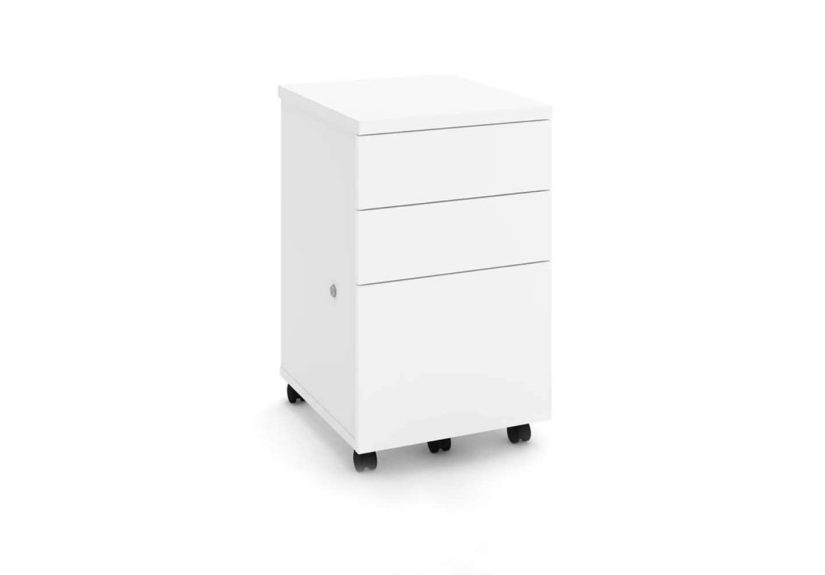
A 3-drawer mobile vertical filing cabinet is a compact storage unit designed to fit beside or under a desk. “Vertical” means the drawers are stacked from top to bottom rather than side by side. “Mobile” means the cabinet sits on casters, so it can roll across the room instead of staying planted in one place like an overpaid executive.
Most models follow a box-box-file layout. The top two drawers are smaller utility drawers for office supplies, notebooks, chargers, sticky notes, and the twenty-seven pens that appear to breed in every workspace. The bottom drawer is deeper and designed for hanging files. In many current models, that file drawer supports letter-size documents, while some versions also accommodate legal-size and even A4 paperwork.
That layout is the sweet spot for many buyers. You get everyday organization up top and document storage down below. It is compact enough for under-desk use, yet practical enough to handle a real workload. In other words, it is small, but it means business.
Why This Cabinet Style Stays Popular
1. It saves floor space
One of the biggest advantages of a vertical filing cabinet on wheels is its slim footprint. Many models are only about 15 to 16 inches wide, which makes them easier to tuck under a standard desk or workstation. That narrow profile matters in apartments, home offices, reception areas, classrooms, and shared offices where every inch counts.
2. It moves with your workflow
The casters are not a gimmick. Mobility is the whole point. You can keep the cabinet under your desk, roll it beside a printer station, slide it next to a meeting table, or reposition it when cleaning or rearranging the room. In flexible offices, that is a genuine advantage. In home offices, it is the difference between “adaptable storage” and “heavy metal box I now live around.”
3. It blends file storage with supply storage
A standard one-drawer file cabinet handles documents, sure, but it does not solve the daily clutter problem. A 3-drawer pedestal file cabinet gives you room for files plus the smaller items that usually end up scattered across your desk. That makes it especially useful for people who want a tidy work surface without adding multiple organizers.
4. It can offer real security
Many models include a locking mechanism, usually with one lock securing the file drawer or multiple drawers at once. That matters for invoices, contracts, HR paperwork, client files, tax records, and any document that should not be left out for wandering eyes or curious roommates.
Key Features to Look For Before You Buy
Drawer configuration
The classic setup is two utility drawers and one file drawer. This design works well for most offices because it balances small-item storage with hanging-file capacity. If your work is document-heavy, make sure the lower drawer is deep enough and clearly labeled for the file sizes you use most.
File compatibility
Do not assume every cabinet handles every paper size. Some are designed only for letter-size files, while others support legal-size folders, A4 documents, or convertible rails for more than one format. That detail is easy to overlook until you are holding a legal folder over the drawer and realizing the cabinet has other plans.
Locking system
A locking mobile file cabinet is worth considering even in a home office. Sensitive paperwork has a magical way of becoming important the moment it goes missing. Some cabinets use a single lock for one drawer, while others use one core lock to secure several drawers at once. If privacy matters, check exactly what the lock controls.
Caster design
Not all wheels are created equal. Better models often include a combination of swivel and fixed casters, with front wheels that lock for stability. Some cabinets add a center caster or anti-tip support for better balance, especially when the file drawer is open and carrying extra weight.
Drawer slides
Smooth drawer action is one of those details you appreciate every single day. Full-extension or ball-bearing slides are especially helpful because they let you reach items in the back of the drawer without digging around like you are on an archeological expedition. If you plan to use the cabinet heavily, slide quality matters more than marketing adjectives.
Material and finish
Most mobile filing cabinets fall into two camps: steel and laminate or engineered wood. Steel models usually lean more commercial, more durable, and more traditional. Laminate and wood-look cabinets often feel warmer and more furniture-like, which works well in home offices or design-conscious workspaces. Neither option is automatically better; it depends on whether you prioritize ruggedness, appearance, or a balance of both.
Assembly level
Some cabinets ship fully assembled or nearly assembled, while others require full setup. This matters more than people think. A fully assembled cabinet can be a gift to your sanity. A thirty-seven-step assembly process with unlabeled hardware can be a character-building exercise you never asked for.
Common Dimensions and What They Mean for Real Spaces
While dimensions vary by brand and construction, many 3-drawer mobile vertical file cabinets fall into a familiar range: roughly 15 to 16 inches wide, around 20 to 23 inches deep, and approximately 24 to 28 inches high. That range explains why they are so often marketed as under-desk storage solutions.
For buyers, the practical takeaway is simple: measure first. Do not just measure the width under your desk. Measure the usable height under the apron, any support bars, cable trays, wall outlets, and the space needed to pull the cabinet in and out. A cabinet can technically “fit” and still be annoying if it scrapes, blocks your knees, or turns cable management into interpretive dance.
Steel vs. Wood-Look Cabinets
Steel cabinets
Steel cabinets are often the best pick for high-use offices, shared work environments, and anyone who values durability over décor. They tend to feel sturdier, clean more easily, and match traditional office furniture. Many also come with commercial-grade features such as stronger suspensions, better locks, and tested performance standards.
Laminate or engineered wood cabinets
Wood-look models are popular in home offices because they blend more naturally with desks, bookcases, and room décor. They can look less industrial and more residential, which is a big plus if your “office” is also your guest room, dining nook, or cleverly disguised corner of the bedroom. The trade-off is that quality can vary more widely, especially at the lower end of the market.
Who Should Buy a 3-Drawer Mobile Vertical Filing Cabinet?
This cabinet style makes sense for a wide range of users:
Home office workers
If you need space for mail, tax paperwork, warranties, school records, and office supplies, this cabinet is one of the most efficient upgrades you can make. It keeps necessary clutter close without taking over the room.
Small business owners
Invoices, receipts, contracts, onboarding forms, insurance documents, and vendor paperwork all need a home. A rolling file cabinet helps you stay organized without committing to a giant storage wall.
Students and educators
A mobile cabinet works well for lesson plans, handouts, grading supplies, and project materials. The wheels make it easy to move between rooms or reposition within a compact workspace.
Shared offices and flexible workspaces
Mobility matters in dynamic environments. A cabinet that can move with the user, lock sensitive files, and fit under a desk is practical in offices where layouts change often.
How to Choose the Right One
Match it to your paperwork first
Before comparing finishes and handles, decide what you need to store. If you only keep letter-size files, your options are broad. If you need legal-size compatibility, your list gets shorter. If you use A4 as well, read the product details carefully.
Decide whether looks or durability matter more
For a professional office with heavy daily use, steel may be the smarter long-term choice. For a stylish home office, a laminate finish may better match your desk and shelving. Be honest about your environment. A sleek cabinet is great, but not if it struggles with real-life use.
Think about movement and stability
If you plan to reposition the cabinet often, pay close attention to caster quality and locking wheels. If it will mostly stay parked under the desk, stability and drawer performance may matter more than mobility alone.
Look beyond the headline description
“Locking,” “mobile,” and “vertical” are just the start. The better buying clues are in the details: drawer extension, material thickness, tested standards, weight support, included file rails, anti-tip features, and assembly requirements.
Organization Tips That Make the Cabinet Work Harder
A file cabinet is only as useful as the system inside it. Here are a few practical ways to get more out of it:
Use the top drawer for daily tools
Keep pens, sticky notes, stamps, chargers, and small gadgets in the top drawer. This should be the grab-it-fast zone.
Use the second drawer for backup supplies
Store extra notebooks, printer paper, envelopes, cables, and tech accessories here. Think of it as your mini supply closet.
Give the bottom drawer simple categories
Create broad file sections such as Finances, Clients, Household, Medical, School, or Projects. The goal is easy retrieval, not museum-level cataloging.
Do a monthly reset
Once a month, clear out junk, relocate outdated paperwork, and toss dead pens. Yes, dead pens deserve consequences.
Real-World Experiences With a 3-Drawer Mobile Vertical Filing Cabinet
Living with a 3-drawer mobile vertical filing cabinet is one of those experiences that sounds delightfully unexciting until you actually have one. Then, weirdly enough, it becomes the office item you rely on more than expected. The first thing most people notice is not the file storage. It is the way the cabinet quietly reduces visual chaos. Loose papers disappear. Chargers stop slithering across the desk like electronic spaghetti. Pens finally live somewhere other than “wherever they landed.”
In a home office, the cabinet often becomes a boundary marker between work and life. That sounds dramatic for a small box on wheels, but it is true. When your laptop sits on a dining table or in a bedroom corner, work can feel like it is always hanging around. A compact rolling file cabinet gives all the office odds and ends a dedicated home. At the end of the day, you close the drawers, roll the cabinet back under the desk, and the room feels a little more like your room again.
Another common experience is discovering how useful mobility really is. At first, the wheels seem like a nice extra. Later, they become the reason you would not go back to a fixed cabinet. Need to print a big stack of forms? Roll it near the printer. Rearranging the room? Move it in seconds. Vacuuming under the desk? No awkward lifting, no dragging, no muttering at furniture. It is one of those small conveniences that earns its keep over time.
People also tend to notice the difference between a cabinet that merely stores things and one that actually supports workflow. The best experience comes from a model with drawers that open smoothly, a file drawer that fits the folders you really use, and a lock that is easy to manage without feeling flimsy. When those basics are done well, the cabinet becomes almost invisible in the best way. It simply works. And in office furniture, “it simply works” is basically a standing ovation.
Of course, there are lessons users learn along the way. One is that measuring beforehand saves regret. Another is that drawer organization matters more than cabinet size. A small cabinet with a clear system feels spacious. A larger one filled with random cords, mystery receipts, and expired coupons becomes a tiny rolling monument to procrastination. Owners who label files, group supplies, and clean out the drawers regularly tend to love their cabinet more.
There is also the style factor. In corporate settings, a steel cabinet often feels right at home. In residential spaces, a wood-look finish can make the cabinet feel more like furniture and less like something borrowed from an accounting department. That aesthetic difference matters when your workspace shares space with the rest of your home. You may not want your office corner to look like tax season year-round.
Over time, many users end up treating the top surface as bonus real estate. A small printer, a plant, a tray for mail, or a lamp often lands there. That is useful, but only if you do not overdo it. The best real-world experience usually comes from keeping the top functional but not overloaded. A cabinet should support your workflow, not turn into a tiny clutter shelf with wheels.
In the end, the experience of owning a 3-drawer mobile vertical filing cabinet is less about excitement and more about relief. Relief that the files are organized. Relief that the office feels tidier. Relief that the cabinet fits the room instead of dominating it. It may never be the star of your workspace, but it is often the piece that makes the whole setup feel finished, capable, and pleasantly under control.
Final Thoughts
A 3-drawer mobile vertical filing cabinet remains one of the smartest storage choices for modern workspaces because it solves several problems at once. It saves space, supports organization, stores important documents, and moves where you need it. That combination is hard to beat.
The best cabinet for you depends on your paperwork, your room size, your design preferences, and how heavily you use your storage. Focus on the fundamentals: drawer layout, file-size support, lock quality, caster stability, slide performance, material, and fit. Get those right, and this quiet little office workhorse will earn its place every day.
It may not be the most glamorous item in the room. Then again, neither is a smoke detector, and you still want one that works. A great filing cabinet is the same kind of hero: practical, reliable, and much more valuable than its looks suggest.