Table of Contents >> Show >> Hide
- Why This Hellboy II Prop Still Gets People Talking
- The Movie World That Made the Prop Matter
- Mr. Wink: More Than a Big Troll With a Bad Attitude
- The Engineering Magic Behind the Mechanical Fist
- Practical Effects vs. CGI: The Wrong Fight
- Why Guillermo del Toro’s Creature Worlds Still Feel Different
- The Collector Appeal of a Hellboy II Prop
- What Modern Makers Can Learn From Mr. Wink’s Fist
- Why the Prop Still Feels Fresh in the Age of AI Effects
- Experiences Related to the Topic: Why Seeing a Practical Prop Changes Everything
- Conclusion
Some movie props age like forgotten foam in a storage unit. Others age like fine monster wine. The mechanical fist built for Mr. Wink in Hellboy II: The Golden Army belongs firmly in the second category. Seventeen years after Guillermo del Toro’s fantasy sequel stomped into theaters, this oversized animatronic hand still looks like it could punch through a wall, scare a studio accountant, and make a room full of engineers whisper, “Okay, that is ridiculous.”
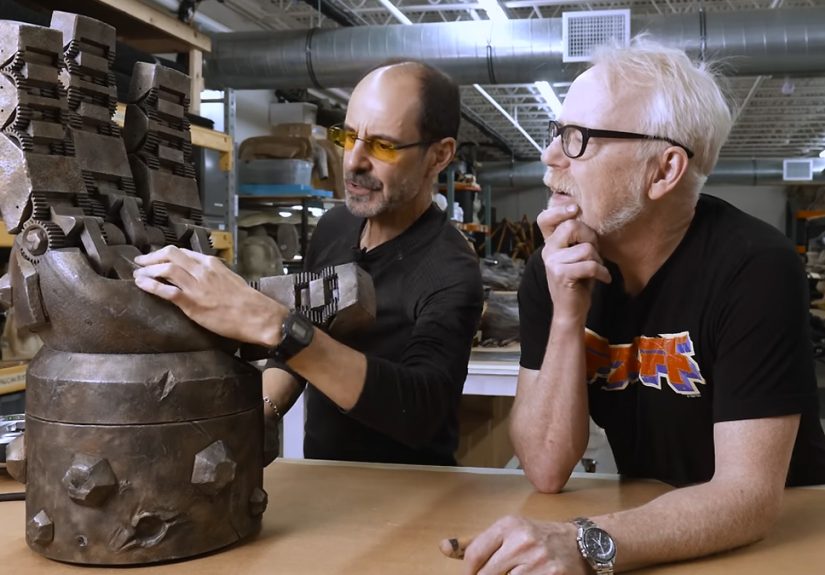
The renewed fascination comes from a closer look at the original practical effects prop: Mr. Wink’s mechanical fist, a chain-launching, servo-driven beast designed with old-school craft, early digital fabrication, hand finishing, and a healthy amount of “what if a medieval torture device got a robotics degree?” energy. In an era when audiences often assume anything spectacular must be computer-generated, the Hellboy II prop is a loud, clanking reminder that practical effects can still steal the show.
This article explores why the 17 year old Hellboy II prop still amazes fans, prop makers, collectors, engineers, and anyone who enjoys seeing movie magic built with bolts instead of pixels.
Why This Hellboy II Prop Still Gets People Talking
The prop in question is the mechanical fist of Mr. Wink, the hulking cave troll who serves Prince Nuada in Hellboy II: The Golden Army. In the film, Wink’s enormous metal hand is not just decorative. It can close into a fist, detach, shoot forward on a chain, retract, and generally behave like the worst possible version of a yo-yo. Kids, do not try this at home. Adults, also do not try this at home unless your garage has liability insurance and a goblin blacksmith on retainer.
What makes the Hellboy II mechanical fist so impressive is not simply that it looks cool. Plenty of props look cool from ten feet away. This one remains impressive up close because it was engineered as a functional object. It was built with moving fingers, internal mechanisms, textures, weight-conscious materials, and a design language that matched del Toro’s grimy fairy-tale world. It had to look ancient, brutal, and handmade, while still performing like a carefully planned machine.
That combination is rare. A purely sculptural prop can be beautiful but static. A purely mechanical device can move but feel sterile. Mr. Wink’s fist does both: it performs and it has personality. It looks like it has stories, dents, bad habits, and possibly a small mortgage.
The Movie World That Made the Prop Matter
Hellboy II: The Golden Army, released in 2008 by Universal Pictures, expanded the universe introduced in the 2004 Hellboy film. Ron Perlman returned as Hellboy, Selma Blair as Liz Sherman, Doug Jones as Abe Sapien, and Luke Goss appeared as Prince Nuada, the exiled elf prince determined to awaken a legendary army and wage war on humanity.
Guillermo del Toro did not treat the sequel as just another superhero follow-up. He used it as a doorway into folklore, monster culture, fantasy design, and handcrafted weirdness. The Troll Market sequence alone feels like a creature designer’s fever dream after too much espresso. The film is filled with tooth fairies, goblin vendors, elf royalty, living statues, towering golden soldiers, and oddball background beings that probably have entire family trees, tax problems, and strong opinions about soup.
In that environment, Mr. Wink needed to stand out. That is not easy in a movie where nearly every frame seems to contain a new creature. The mechanical fist gave Wink a memorable visual hook. It also matched the film’s central design theme: the ancient and the mechanical fused together. The Golden Army itself is built around clockwork menace, and Wink’s hand feels like a personal-scale version of that same idea.
Mr. Wink: More Than a Big Troll With a Bad Attitude
Mr. Wink is not a subtle character. He is big, scarred, one-eyed, loyal, and equipped with a weaponized hand that says, “I do not negotiate, but I do accessorize.” Yet his design has a surprising amount of elegance. The asymmetry of his face, the worn texture of his body, and the industrial brutality of his arm make him feel like a creature who has survived battles rather than a monster freshly printed from a concept sheet.
His mechanical fist also serves a storytelling purpose. It tells viewers something about the underworld of Hellboy II: this is a place where magic, craft, and machinery overlap. The hand is not sleek science fiction. It is not polished superhero tech. It is a gnarly tool from a hidden civilization where a blacksmith might build you a crown one day and a retractable troll fist the next.
That is why the prop still fascinates people. It is not just hardware. It is character design. It tells us who Wink is before he says anything, which is useful because Wink is not exactly delivering Shakespearean monologues between punches.
The Engineering Magic Behind the Mechanical Fist
The original practical prop involved a mix of fabrication techniques. Reports and behind-the-scenes discussions describe early 3D-printed parts, servo-driven finger joints, hand-textured surfaces, bevel gears, and a retractable chain mechanism. Some parts were reportedly made years before the film’s release, during a time when 3D printing was far less accessible than it is now.
Today, someone can buy a desktop 3D printer, download a dragon file, and accidentally turn their kitchen table into a spaghetti factory of melted filament. In the early 2000s, professional 3D printing was much more expensive, specialized, and industrial. Using it for a movie prop like this was forward-thinking. But the Hellboy II fist was not simply printed and painted. Its parts were shaped, weathered, detailed, assembled, and made to feel like a believable object from a monster kingdom.
The chain mechanism is especially interesting. A hand that merely opens and closes would already be a solid animatronic achievement. A hand that fires and retracts on a chain adds a completely different layer of complexity. The mechanism had to feel powerful, look dangerous, and fit inside the design without breaking the illusion. That is the kind of problem practical effects artists live for and production managers probably lose sleep over.
Why Moving Fingers Matter
Individually articulated fingers may sound like a small detail until you see them move. Human eyes are extremely good at spotting fake movement. A stiff prop looks like a toy. A hand with expressive joints suddenly feels alive, even when it belongs to a giant fictional troll with questionable workplace manners.
Servo-driven fingers allow the prop to perform little moments of life: curling, flexing, gripping, and forming a fist. Those small motions tell the audience that this is not just decoration. It is a working extension of the creature. That matters because monsters become more convincing when their bodies appear to obey physical rules.
The Beauty of Ugly Texture
One reason the prop holds up is texture. The surface is not clean, smooth, or bland. It has scratches, wear, ridges, grime, and the kind of “do not touch this unless your tetanus shot is current” personality that fits the movie perfectly. Texture gives scale. It catches light. It tells the camera where to look.
Many modern digital objects look technically perfect but emotionally weightless. Mr. Wink’s fist feels heavy because it looks used. Every dent and rough edge helps sell the idea that this object has been slammed into stone floors, dragged through underground markets, and maintained by someone whose toolbox includes both a wrench and a curse.
Practical Effects vs. CGI: The Wrong Fight
Whenever a practical movie prop goes viral, people often turn it into a battle between practical effects and CGI. That is understandable, but it is also too simple. Hellboy II used both. Practical suits, prosthetics, animatronics, miniatures, set pieces, and digital effects worked together. Some shots of Wink and his mechanical hand were practical. Others used digital augmentation or replacement when the action required something unsafe or impossible on set.
The real lesson is not “practical good, CGI bad.” The real lesson is that physical objects give filmmakers a powerful foundation. When actors can react to something on set, lighting can hit real surfaces, and animators can reference actual mechanics, the final image often feels richer. Digital effects can extend, enhance, and protect the illusion. Practical effects can give that illusion a skeleton.
In other words, the magic happens when departments collaborate instead of competing. The Hellboy II prop is a perfect example of that hybrid mindset. Sculptors, designers, machinists, animatronics artists, digital artists, performers, and the director’s vision all met inside one giant mechanical hand. That is teamwork, but with more gears.
Why Guillermo del Toro’s Creature Worlds Still Feel Different
Guillermo del Toro’s monsters tend to feel personal. They are rarely generic beasts. They often carry sadness, elegance, history, or strange beauty. In Hellboy II, even background creatures feel as though they came from a larger mythology. That worldbuilding is one reason old props from the film still attract attention.
The mechanical fist fits del Toro’s style because it is both grotesque and graceful. It is violent, but not lazy. It is decorative, but not random. It looks like an artifact from a culture with its own engineering traditions. That is the difference between a prop that merely fills a scene and a prop that invites viewers to pause the movie and say, “Wait, what is that thing?”
Del Toro’s best fantasy designs also understand that monsters are more interesting when they feel handmade. The little imperfections matter. The visible seams, textures, and mechanics are not weaknesses. They are part of the charm. Mr. Wink’s fist looks like it was made by someone inside the story, not just by someone behind the camera.
The Collector Appeal of a Hellboy II Prop
Movie props have become serious collectibles, especially when they come from beloved genre films. Items connected to recognizable characters, major scenes, or respected filmmakers often attract attention because they are not just objects; they are physical pieces of cinema history.
A Hellboy II prop has extra appeal because the film sits at a crossroads. It came after decades of practical creature tradition but before the current age of ultra-polished streaming-era visual effects. It was made when studios still supported large creature shops, heavy makeup work, and ambitious fantasy builds at a major scale. That makes props from the film feel like artifacts from a slightly vanished production culture.
Collectors love that. So do makers. So do fans who miss the feeling of tangible fantasy. A digital model can be archived, copied, and rendered again. A physical prop carries scars from production: paint touch-ups, repairs, wear, hidden mechanisms, and the fingerprints of the people who built it. It is not just a design; it is evidence.
What Modern Makers Can Learn From Mr. Wink’s Fist
The 17 year old Hellboy II prop still amazes because it teaches practical lessons. First, good design solves multiple problems at once. The fist had to look intimidating, move convincingly, remain light enough to operate, and match the character’s body. Second, digital fabrication is most powerful when combined with hand finishing. Printing parts is not the end of making; it is often the beginning.
Third, mechanical design should serve emotion. The prop does not move just to show off. It moves in a way that makes Wink feel more dangerous and more real. The audience remembers the character because the weapon has behavior, not just shape.
Finally, great props embrace constraints. Safety, weight, budget, filming angles, performer comfort, repairability, and time all affect the final object. The best prop makers do not ignore those limits. They turn them into design features. That is why practical effects are such a deliciously chaotic art form: half sculpture, half engineering, half panic. Yes, that is three halves. Movie math is different.
Why the Prop Still Feels Fresh in the Age of AI Effects
Today, AI-generated images and digital tools can create astonishing visuals in seconds. That speed is exciting, but it also makes handmade objects feel even more precious. Mr. Wink’s mechanical fist reminds us that amazement is not only about the final image. It is also about knowing that a person had to design the mechanism, test the motion, carve the texture, troubleshoot the failure, repaint the scuffs, and make the whole thing survive a film set.
There is a human drama inside practical effects. Something jams. A servo burns out. Paint cracks. A director wants one more take. A performer is sweating inside a suit. Someone is crouched just off-camera operating a remote and silently praying to the gods of torque. That effort gives the final result a kind of soul.
This is why old practical props keep resurfacing online. They make viewers feel the labor behind the illusion. They remind us that fantasy can be manufactured by hand, one gear and one bad idea at a time.
Experiences Related to the Topic: Why Seeing a Practical Prop Changes Everything
Anyone who has ever visited a movie prop exhibit, a creature shop, a convention display, or even a behind-the-scenes museum knows the strange thrill of standing near a real screen-used object. On film, a prop is part of a moving illusion. In person, it becomes something else: smaller than expected, bigger than expected, rougher, stranger, and somehow more impressive because it exists outside the frame.
The experience of seeing a prop like Mr. Wink’s mechanical fist is especially powerful because it changes how you watch the movie. Before learning how it was built, you might assume the hand was simply a digital effect. After seeing the mechanisms, the fingers, the chain system, and the textured surfaces, you start watching differently. You notice how the camera protects the illusion. You notice how lighting makes metal feel heavier. You notice how an actor’s timing sells the movement. Suddenly, the scene is not just entertainment; it is a magic trick you are lucky enough to partly understand.
For makers, that experience can be dangerous in the best way. One look at a serious practical effects prop can send a person down a rabbit hole of servos, foam latex, Arduino boards, silicone molds, airbrushing tutorials, 3D modeling, and late-night searches for “how to make fake rust without ruining my apartment.” The Hellboy II prop is inspiring because it looks impossible at first, then becomes more inspiring when you realize it was solved through many smaller decisions. Every hinge, gear, panel, and scratch had a purpose.
For film fans, the prop also creates nostalgia without feeling dusty. It brings back a period when big fantasy movies often leaned heavily on physical creatures. That does not mean everything was better in the past. Some older effects aged poorly, and some modern digital work is breathtaking. But practical props create a specific kind of memory. They feel connected to performance, sweat, weight, and real space. They remind viewers that cinema is not only made in software. It is also made on workbenches.
There is also a lesson in patience. A prop like Mr. Wink’s fist does not happen instantly. It requires concept art, prototyping, failed tests, sculpting, machining, painting, rigging, and on-set problem solving. In a culture that often rewards speed, this kind of craftsmanship feels almost rebellious. It says, “Yes, we could fake it faster, but what if we built the monster’s hand and made it move?” That attitude is why fans still talk about it 17 years later.
The most memorable experience related to this topic is the moment of rediscovery. A viewer sees the prop again, years after watching the film, and realizes it still works emotionally. It still looks heavy. It still feels dangerous. It still carries the mood of del Toro’s world. The technology may be older, but the design intelligence has not expired. Great craft rarely does.
That is the real reason the 17 year old Hellboy II prop still amazes. It is not merely a nostalgic object from a cult-favorite movie. It is a working argument for practical imagination. It proves that when artists and engineers build something with care, personality, and just enough madness, the result can outlive trends. Pixels change. Software updates. But a beautifully ugly mechanical troll fist? That thing keeps swinging.
Conclusion
The 17 year old Hellboy II prop still amazes because it represents everything fans love about practical effects: invention, texture, movement, collaboration, and personality. Mr. Wink’s mechanical fist is more than a movie weapon. It is a miniature masterpiece of creature design and mechanical storytelling. It belongs to a film that treated monsters not as disposable obstacles, but as works of art with cultural weight and visual wit.
In a modern entertainment world flooded with digital spectacle, the Hellboy II mechanical fist remains special because it feels stubbornly real. It has gears, scars, motion, and menace. It reminds us that fantasy can be built by hand, and that the best movie props do not simply support a scene. They become part of why people remember it.
Note: This article is based on publicly documented production information, behind-the-scenes coverage, prop-making commentary, film data, and practical effects context. No source links are inserted in the article body for publication convenience.