Table of Contents >> Show >> Hide
- 1. You Get a Roof Over Your Head
- 2. Meals Arrive on a Schedule
- 3. Your Day Has Structure
- 4. Health Care Exists, at Least in Theory
- 5. Exercise Is Built Into the Environment
- 6. Education and Job Training May Be Available
- 7. You Get a Forced Digital Detox
- 8. You May Spend Less Time Worrying About Bills
- 9. Libraries and Reading Time Can Become Real Again
- 10. Prison Can Make Priorities Painfully Clear
- The Big Catch: Prison Is Not a Life Upgrade
- What Free People Can Learn Without Losing Freedom
- Related Experiences: When “Prison Sounds Better” Is Really Burnout Talking
- Conclusion
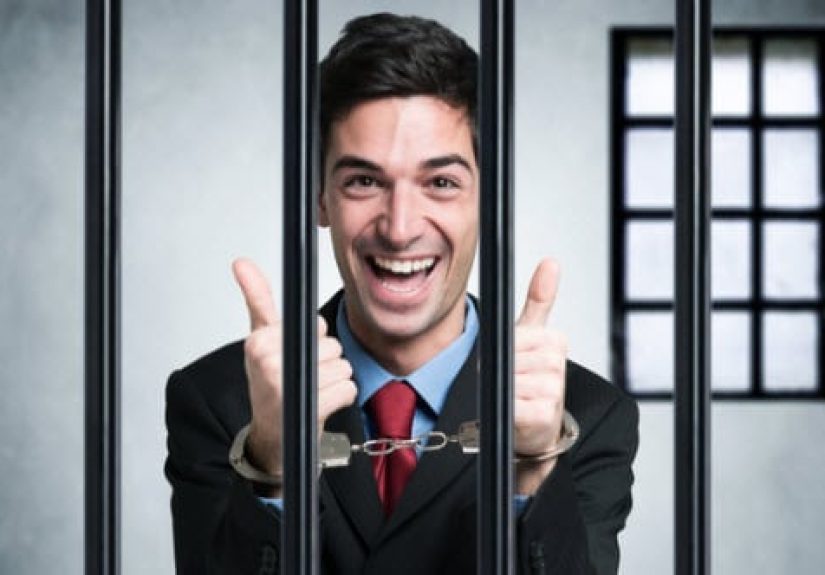
Let’s start with a legal disclaimer before anyone gets inspired to rob a bank for the “free room and board.” Prison is not better than freedom. Not even close. Losing your liberty, privacy, choices, family time, income, identity, and ability to decide whether Tuesday is pizza night is a brutal price to pay. Still, the phrase “10 ways prison is better than your life” works because it pokes at a painful modern truth: many free people are exhausted, broke, lonely, overworked, underinsured, glued to screens, and one surprise bill away from yelling into a decorative pillow.
So this article is a tongue-in-cheek comparison, not a travel brochure for federal custody. The point is to look at the odd places where prison, at least on paper, provides structure that many people outside struggle to build: meals, routine, exercise, medical access, education, and fewer pointless distractions. The joke is sharp because real life has become absurdly complicated. When a prison schedule looks more organized than your Google Calendar, something has gone spiritually sideways.
Below are ten ways prison may appear better than your life, followed by the enormous catch hiding behind every one of them: freedom is still the upgrade package nobody should trade away.
1. You Get a Roof Over Your Head
Housing is one of the most stressful parts of American life. Rent rises, mortgages bite, roommates leave dishes in the sink as if archaeologists will one day study them, and a “cozy studio” often means you can touch the refrigerator from bed.
In prison, shelter is guaranteed because custody requires confinement. You are assigned a place to sleep. You are not checking apartment listings at midnight or calculating whether moving 40 minutes farther away will save enough money to justify losing your will to commute.
But here is the obvious catch: prison housing is not home. It is controlled space. You do not choose your neighborhood, your furniture, your lighting, your roommate, or whether someone slams a door at 5 a.m. A roof without freedom is not a lifestyle hack; it is a locked ceiling.
2. Meals Arrive on a Schedule
Outside, eating well can feel like a full-time job with side quests. You need groceries, money, meal planning, clean containers, and the emotional discipline not to order tacos after a bad email. Prison meals, by contrast, are scheduled. Breakfast happens. Lunch happens. Dinner happens. No one asks, “What are we doing for food?” and then stares into the fridge like it contains ancient wisdom.
That sounds convenient until you remember the menu is not exactly a chef’s tasting experience. Institutional food must meet basic requirements, but quality varies widely. You are not choosing between sushi, barbecue, or grandma’s lasagna. You are eating what is served, when it is served, in the portion provided.
Still, the comparison lands because many people outside are food insecure, rushed, or too tired to cook. The lesson is not “prison food is great.” The lesson is that regular meals should not feel like a luxury in ordinary life.
3. Your Day Has Structure
Modern freedom comes with an underrated problem: nobody tells you what to do, but everything demands your attention. Emails, errands, bills, appointments, subscriptions, group chats, health goals, career goals, and that one sock that disappears every laundry cycle all compete for brain space.
Prisons run on structure. Count times, meals, work assignments, classes, recreation, and lights-out routines create a predictable rhythm. For some people, especially those who have lived through chaos, addiction, homelessness, or unstable routines, structure can feel stabilizing.
The downside is that prison structure is imposed. It is not a planner you bought because it had gold tabs and made you feel like a CEO. It is a system of control. You follow the routine because you must. Still, there is a useful reminder here: a free person can borrow the healthy part of structure without importing the guards, bars, and jumpsuits.
4. Health Care Exists, at Least in Theory
In the free world, health care can feel like a scavenger hunt designed by a billing department. You need insurance, referrals, approvals, networks, passwords, co-pays, and the patience of a saint with a fax machine.
Incarcerated people have a legal right to medical care. Prisons are expected to provide essential medical, dental, and mental health services. That sounds, on paper, better than being uninsured and hoping a mysterious pain “just becomes a personality trait.”
But the phrase “in theory” is doing Olympic-level lifting here. Prison medical care can be delayed, understaffed, inadequate, or the subject of litigation. Rights do not always equal quick treatment. Many incarcerated people and advocates report serious failures in medical and mental health care. So yes, prison may provide a pathway to care that some free people lack, but that pathway can be narrow, slow, and deeply frustrating.
5. Exercise Is Built Into the Environment
Outside, the hardest part of fitness is often not the workout. It is getting to the workout. You must defeat traffic, fatigue, gym fees, laundry, weather, and the powerful gravitational field of your couch.
Prisons commonly offer recreation periods, yards, basic fitness activities, and wellness programming. People lift, walk, run, stretch, play sports, or do bodyweight routines. The classic “prison workout” became famous because limited space and limited equipment can still produce discipline, strength, and consistency.
Of course, access depends on facility rules, safety conditions, staffing, and security level. Recreation is not the same as a boutique gym with eucalyptus towels and a smoothie bar named “The Glute Awakening.” But the core idea is useful: fitness improves when it is part of the daily structure, not a heroic event squeezed between work and exhaustion.
6. Education and Job Training May Be Available
Many prisons offer literacy classes, GED preparation, English language learning, parenting classes, library services, vocational training, and work programs. Federal prison programs may also include opportunities connected to reentry, job readiness, and marketable skills. Research has repeatedly found that correctional education is associated with lower odds of returning to prison after release.
Compared with the outside world, where college costs can make a person consider selling a kidney on a suspicious website, prison education may appear like a rare chance to study without tuition bills piling up in the mailbox.
But access is uneven. Waiting lists, eligibility rules, transfers, staffing problems, and limited program capacity can all get in the way. Prison education is valuable because learning is valuable, not because prison is an ideal campus. A classroom behind bars is still behind bars.
7. You Get a Forced Digital Detox
Outside, we live inside a casino of notifications. Your phone buzzes, your watch buzzes, your laptop pings, and suddenly you have spent 47 minutes watching a stranger organize a pantry you will never visit.
Prison cuts off much of that noise. There is no endless doomscrolling, no influencer telling you your morning routine is morally inferior, no algorithm dragging you from world news to celebrity gossip to videos of raccoons stealing cat food. In a strange way, the lack of digital freedom can create mental quiet.
But let’s not romanticize it. Digital restriction also means limited contact with loved ones, fewer educational tools, fewer job-search resources, and dependence on controlled communication systems that may cost families money. A voluntary phone break is healthy. A mandatory communication barrier is not the same thing.
8. You May Spend Less Time Worrying About Bills
Free life comes with invoices. Rent, utilities, insurance, car repairs, phone plans, subscriptions, dental bills, and mystery charges that appear under names like “SERVICEPLUS 8821” and make you question reality.
In prison, ordinary consumer bills largely disappear. You are not comparing internet packages, negotiating with landlords, or wondering why the electric bill looks like your apartment is mining cryptocurrency.
But again, the trade-off is massive. Incarcerated people often earn very low wages, and families may still pay for commissary, phone calls, emails, visits, legal costs, and support after release. Financial stress does not vanish; it moves around. Sometimes it lands hardest on loved ones outside.
9. Libraries and Reading Time Can Become Real Again
Many people outside say they want to read more, then spend the evening reading comment sections, cereal boxes, and subtitles on a show they are half-watching. Prison libraries, legal resources, and quiet hours can make reading a major part of life for some incarcerated people.
Books matter in prison because they expand the mind when the body cannot go far. Memoirs, novels, legal guides, history, poetry, business books, and spiritual texts can become lifelines. Reading can help people reflect, learn, pass time, and prepare for a different life after release.
Still, access varies by facility, and prison libraries may be limited. Books can also be restricted or delayed. The lesson for free people is simple: if you envy someone’s reading time in prison, you do not need incarceration. You need a library card, a quieter evening, and maybe the courage to delete one app.
10. Prison Can Make Priorities Painfully Clear
Freedom can be noisy. We chase promotions, brands, trends, likes, arguments, errands, and other shiny distractions. Prison strips life down to basics: health, safety, family, time, regret, hope, faith, discipline, and the future.
Many formerly incarcerated people describe prison as a place of loss, but also as a place where they had to confront themselves. Some used that time to get sober, study, write, exercise, reconnect with faith, repair relationships, or decide who they wanted to become. That does not make prison good. It means human beings can find meaning even in harsh circumstances.
The uncomfortable truth is that free people often wait for disaster before they simplify. Prison forces clarity. Freedom allows clarity. The better option is obvious: choose clarity before life chooses it for you.
The Big Catch: Prison Is Not a Life Upgrade
Every item on this list comes with a giant flashing warning sign. Prison may provide structure, meals, shelter, health care access, education, and routine, but it does so by taking away liberty. You cannot leave when you want. You cannot hug your family when you want. You cannot take a private walk, choose your dinner, change jobs freely, sleep in your own bed, or build a normal day on your own terms.
Also, prison conditions vary dramatically. Some facilities offer meaningful programming; others struggle with crowding, violence, staffing shortages, poor medical care, isolation, and inadequate resources. The American prison system is not one simple thing. It is a maze of federal, state, local, private, and immigration detention systems with different rules, budgets, cultures, and outcomes.
So when we joke that prison is better than your life, the target is not incarcerated people. The target is a society where ordinary free life can become so expensive, stressful, disconnected, and unhealthy that institutional basics start to look appealing from a distance. That is not a compliment to prison. It is a criticism of life outside.
What Free People Can Learn Without Losing Freedom
The useful question is not “How can I make my life more like prison?” Please do not add bars to your windows and call it self-improvement. The useful question is: what healthy structures can free people build voluntarily?
Create a Basic Daily Schedule
Wake up at a consistent time. Eat real meals. Put exercise on the calendar. Set a bedtime. Your brain loves rhythm, even if your inner teenager thinks schedules are a government conspiracy.
Simplify Food Decisions
You do not need gourmet meal prep. Pick a few reliable breakfasts, lunches, and dinners. Repetition is not failure. It is how adults survive Wednesday.
Use Free or Low-Cost Education
Public libraries, community colleges, online courses, trade programs, podcasts, and books can create serious growth. You do not need a crisis to learn a new skill.
Build a Digital Boundary
Try phone-free mornings, app limits, or one screen-free evening per week. If prison’s accidental advantage is fewer distractions, freedom’s advantage is that you can choose your own limits.
Take Health Seriously Before It Becomes Urgent
Schedule checkups, move daily, sleep more, drink water, and ask for help when your mental health starts waving a red flag. Preventive care is less dramatic than crisis care, which is exactly why it works.
Related Experiences: When “Prison Sounds Better” Is Really Burnout Talking
People usually do not say “prison sounds better than my life” because they truly want incarceration. They say it after a 12-hour shift, a rent increase, a denied insurance claim, a broken car, a pile of dishes, and a phone battery at 3%. It is burnout speaking in dark comedy.
Imagine a person named Mark. Mark works two jobs, eats most meals in his car, and has not seen a dentist since the Obama administration. His apartment is technically “affordable” if he gives up savings, joy, and name-brand cereal. When Mark hears that prison includes meals, a bed, medical access, and time to read, he laughs and says, “Where do I sign?” He does not mean it. He means he is tired of surviving without a net.
Now imagine Alicia, a single mother who manages work, school forms, groceries, bills, and family obligations. Her calendar looks like a military operation planned by a raccoon. She hears about prison routines and thinks, “At least someone tells you when to eat.” Again, she does not want prison. She wants support. She wants predictability. She wants one hour where nobody needs anything from her.
Or consider someone recovering from addiction. Outside, temptation can be everywhere: old friends, old habits, stress, loneliness, and easy access. Some people enter custody and experience forced sobriety for the first time in years. That can create a painful but real turning point. Yet forced separation is not the same as healing. Recovery works best with treatment, community, dignity, housing, employment, and long-term support after release.
There are also people who discover discipline in prison. They wake up early, exercise, read, study, write letters, attend programs, and begin to rebuild their identity. Their stories can be powerful. But the power comes from human resilience, not from the cage. The same discipline is available outside, though it often requires building your own structure without anyone handing you a schedule.
The common thread is this: when prison seems better, something outside is broken. Maybe it is housing. Maybe it is health care. Maybe it is loneliness. Maybe it is debt. Maybe it is a work culture that treats rest like a suspicious hobby. The answer is not to romanticize prison. The answer is to make free life more livable.
That means creating routines, protecting relationships, asking for help, using community resources, and refusing to measure your worth by productivity alone. It also means recognizing that many incarcerated people need better conditions, better reentry support, better health care, and better chances to return home safely. A humane society should not make prison look attractive by making ordinary life unbearable.
So yes, prison may beat your life in a few narrow categories: fewer bills, scheduled meals, more routine, less scrolling, and maybe more time to read. But freedom wins the championship by a landslide. The goal is not to trade your life for a cell. The goal is to take the hint: simplify, structure, rest, learn, move, connect, and make your free life feel less like a sentence.
Conclusion
“10 ways prison is better than your life” is funny because it is uncomfortable. It points to the absurdity of modern stress while reminding us that basic human needs should not feel like premium upgrades. Prison may offer routine, meals, shelter, education, and medical obligations, but it also removes freedom, privacy, autonomy, and normal human connection. The better lesson is to build the useful parts of structure into everyday life without losing the priceless parts of freedom.