Table of Contents >> Show >> Hide
- What the NASA EM Drive paper actually claimed
- Why the EM Drive sounded so exciting
- The part that made physicists reach for the aspirin
- Where the paper deserved respect
- Where the hype went off the rails
- What later experiments did to the EM Drive claim
- So, was the NASA EM Drive paper “wrong”?
- What experts should learn from the EM Drive saga
- Could the saga still have value?
- Final expert opinion
- Experience: What it felt like to watch the EM Drive story unfold
- Conclusion
Every few years, the internet rediscovers a favorite fantasy: a machine that somehow slips past the usual rules and gives humanity a shortcut to the stars. The EM Drive became one of the most irresistible versions of that dream. Here was the promise, wrapped in copper and microwave jargon: a propulsion device with no propellant, no obvious exhaust, and no patience for the rocket equation. In other words, catnip for space fans, headline writers, and anyone who has ever looked at a Mars mission timeline and muttered, “Surely there’s got to be a faster way than this.”
Then came the now-famous NASA-associated paper from the Eagleworks team at Johnson Space Center. Suddenly, the story was no longer just internet folklore or fringe engineering chatter. It had crossed into peer-reviewed territory. That was enough to make some people shout “breakthrough,” others shout “heresy,” and a third group quietly reach for coffee and a better force sensor.
My expert opinion is simple: the EM Drive paper was interesting, legitimate to publish, and nowhere near the revolution that hype merchants tried to sell. It mattered because it documented a measured anomaly. It did not matter because it proved a reactionless engine worked. That distinction is the entire story, and frankly, it is where most of the online conversation face-planted.
What the NASA EM Drive paper actually claimed
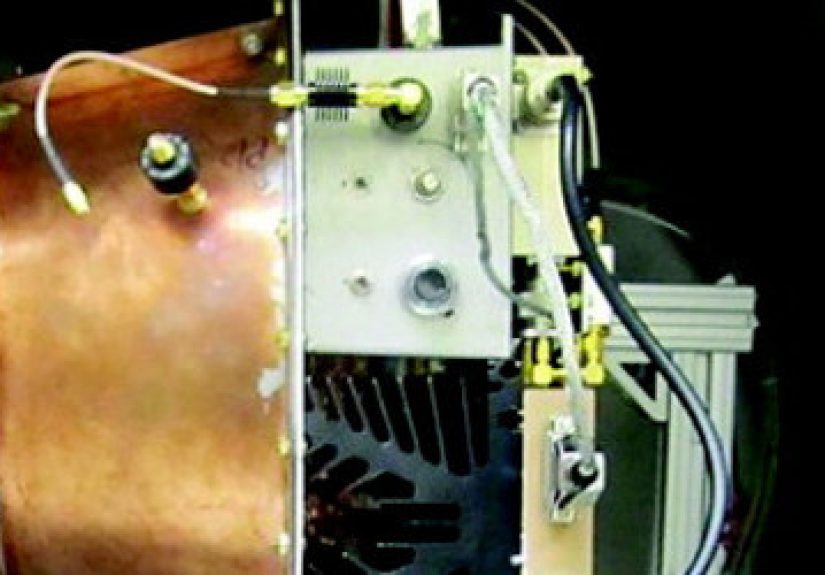
The original Eagleworks result was not “NASA has invented a warp drive,” despite the internet acting like it had just heard the Enterprise warming up on a launch pad in Houston. The paper described tests of a closed radio-frequency cavity in vacuum. The authors reported a tiny thrust signal under certain operating conditions and gave a thrust-to-power figure that sounded eyebrow-raising enough to escape the lab and sprint straight into the news cycle.
That is an important point: the paper reported a measured effect, not a settled explanation. The authors were not handing humanity a finished engine. They were saying, in effect, “We observed something odd under these conditions, here is the setup, here are the numbers, and here are possible interpretations.” In science, that is allowed. In fact, it is necessary. Data gets published before the world sends out parade balloons.
Unfortunately, once a paper contains the words NASA, vacuum, and thrust, the public imagination tends to skip the fine print and run straight toward Pluto in eighteen months.
Why the EM Drive sounded so exciting
The appeal of the EM Drive was never hard to understand. Spaceflight is brutally expensive because moving mass is a pain. Rockets are essentially very dramatic machines for throwing stuff backward so the spacecraft can go forward. Carrying propellant means carrying extra mass, which means burning more propellant, which means carrying even more mass. It is a vicious little spiral, and every propulsion engineer on Earth would love a cleaner answer.
So when a device claims it can generate thrust by bouncing microwaves around inside a closed cavity, people pay attention. Even a tiny, scalable effect would be a very big deal. On paper, a propellantless thruster could transform station-keeping, deep-space robotic missions, and maybe one day broader spacecraft design. The dream was not silly. The evidence was just very thin.
That difference matters. Good science is not anti-dream. It is anti-premature-victory-lap.
The part that made physicists reach for the aspirin
The EM Drive’s core problem was never a lack of imagination. It was conservation of momentum. If you have a closed system and all you are doing is sloshing electromagnetic energy around inside it, the center of mass should not suddenly decide to moonwalk across the universe. Internal forces inside a closed cavity do not ordinarily create net external thrust. If they did, we would not just have a new engine; we would have a very awkward meeting with a large chunk of modern physics.
That is why critics were not being stodgy villains guarding the castle gates of orthodoxy. They were pointing out that extraordinary claims do not merely require more data; they require data so clean, repeatable, and boringly undeniable that alternative explanations collapse one by one. The EM Drive never got close to that standard.
And yes, it is true that science sometimes changes its mind. But when it does, it is usually because the evidence becomes overwhelming, not because a copper cone generated a tiny signal while everybody else argued on the internet with the energy of medieval theologians discussing angels on a pinhead.
Where the paper deserved respect
Let’s be fair to the Eagleworks paper. It was not crazy to test the claim. It was not crazy to publish a puzzling result. Peer review does not mean “this is true forever.” It means the work was organized well enough, argued carefully enough, and documented clearly enough to deserve public scrutiny from the scientific community. That is a much lower bar than internet mythology tends to assume, but it is still a real bar.
In that sense, the paper did one useful thing: it forced the EM Drive conversation out of the foggy swamp of forum threads and into a place where methods, assumptions, and error sources could be examined in daylight. Once that happens, the glamour usually fades and the instrumentation starts doing the talking. Science is funny that way. It is less “Eureka!” and more “Did someone check the cables?”
The Eagleworks team also acknowledged possible sources of error and did not claim that all objections had been permanently buried. That restraint often got lost in secondary coverage, which treated publication as if Newton had been personally served divorce papers.
Where the hype went off the rails
The most misleading interpretation of the paper was the idea that NASA, as an institution, had endorsed a physics-breaking drive. That was never the right reading. This was a small research effort associated with a specialized advanced propulsion lab, not a sweeping agency declaration that textbooks should be fed into a ceremonial bonfire.
The second mistake was treating one intriguing but tiny result as if it were engineering proof. Space hardware does not become real because it looks dramatic in an article thumbnail. Real propulsion systems survive replication, scaling, independent measurement, and the relentless cruelty of practical use. They do not live forever on the phrase “if true.”
The third mistake was assuming that “we don’t yet know what caused the signal” is basically the same thing as “new physics confirmed.” It is not. In precision measurement, tiny unexplained forces are common party crashers. Thermal expansion, vibration, electromagnetic coupling, cable forces, balance geometry, drift, and plain old instrument weirdness can all sneak in wearing fake mustaches.
What later experiments did to the EM Drive claim
Better apparatus, worse news for the miracle engine
This is the part of the story that matters most. Later, more careful investigations dramatically weakened the EM Drive case. High-accuracy follow-up work designed to eliminate false positives found no anomalous thrust across wide frequency ranges and multiple modes. That is not a minor footnote. That is the scientific plot twist.
These later researchers attacked the exact kinds of problems that tend to haunt small-force measurements. They reduced thermal drift. They eliminated or controlled magnetic interactions. They improved the mounting geometry. They powered the device in ways that reduced unwanted couplings. And once those gremlins were shown the door, the miracle seemed to leave with them.
In plain English: the better the experiment got, the less the EM Drive looked like a breakthrough and the more it looked like a lesson in how hard it is to measure tiny forces without fooling yourself.
That does not mean the original team acted in bad faith. It means precision experiments are vicious. Nature does not care how cool your idea sounds. If your setup has a thermal expansion path, a cable interaction, or a magnetic effect hiding in the shadows, nature will happily let you embarrass yourself in public.
So, was the NASA EM Drive paper “wrong”?
That depends on what you mean by wrong. If by wrong you mean “fraudulent,” no. If you mean “a final demonstration that propellantless thrust works,” also no, and very much no. The fairest judgment is that the paper captured a signal that later work strongly suggested was not evidence of exotic propulsion. In other words, it was a real scientific paper about what was most likely not a real new engine.
That distinction is worth protecting, because science needs room for strange results to be tested. If researchers were only allowed to publish findings that already fit comfortably inside consensus, progress would slow to a crawl. But the system also needs replication and skepticism, because otherwise every lab glitch would become a documentary series and a startup pitch deck by Thursday.
So yes, the paper deserves to be remembered. Just not as the moment we almost built a starship in a vacuum chamber with microwaves and vibes.
What experts should learn from the EM Drive saga
First, never confuse publication with confirmation. Peer review is a checkpoint, not a coronation. The real test is what happens when other teams try to reproduce the result with tighter controls and fewer opportunities for hidden artifacts.
Second, the smaller the effect, the meaner the experiment. When you are measuring minute forces, everything matters: temperature, power routing, supports, resonances, chamber geometry, the balance mechanism, and the environment surrounding the apparatus. Tiny anomalies are where wishful thinking and instrumental sloppiness love to meet for brunch.
Third, public communication around speculative propulsion needs adult supervision. There is nothing wrong with covering ambitious ideas. There is something very wrong with packaging provisional lab results as if human civilization is one press release away from weekend trips to Alpha Centauri.
Fourth, the EM Drive episode is a good reminder that skepticism is not hostility. Good skeptics are not dream-killers. They are quality control for the future.
Could the saga still have value?
Absolutely. Even failed propulsion revolutions can leave useful tools behind. The EM Drive controversy pushed researchers to refine small-force measurement methods, stress-test assumptions, and improve experimental design for exotic propulsion concepts more broadly. Sometimes the glamorous theory falls apart, but the metrology gets better. That is still progress.
And culturally, the story is valuable because it shows how modern science really works when the topic is flashy enough to go viral. You get a provocative claim, a burst of media oxygen, a lot of confident nonsense, a few careful voices asking for replication, then a long, less glamorous stretch where instrumentation and patience slowly grind away at the mystery. It is not cinematic, but it is honest.
Final expert opinion
That NASA EM Drive paper was worth reading, worth debating, and worth testing harder. It was not proof that conservation of momentum had finally met its match. It was a snapshot of science doing what science is supposed to do: publish a puzzling result, invite scrutiny, and then let better experiments decide whether the phenomenon survives.
In the end, the EM Drive did not really collapse because cynics were mean. It collapsed because careful measurement is undefeated. The later evidence points far more strongly to experimental artifacts than to a revolutionary propulsion principle. So my expert opinion is not that the paper was ridiculous. It is that the hype around it was.
And honestly, that may be the most useful verdict of all. Space exploration needs imagination, but it also needs brakes. Otherwise every shiny anomaly becomes tomorrow’s impossible engine, and physics spends its weekends cleaning up after headlines.
Experience: What it felt like to watch the EM Drive story unfold
Following the EM Drive saga in real time was a strange mix of wonder, amusement, and scientific whiplash. At first, it felt like one of those rare moments when a deeply nerdy corner of physics escaped the lab and barged into mainstream culture. Suddenly, people who could not define momentum conservation were talking confidently about conical cavities, quantum vacuum effects, and whether Mars had just moved from “someday” to “pack a lunch.” It was glorious, ridiculous, and very online.
There was also something emotionally familiar about it. The EM Drive story scratched the same itch as cold fusion headlines, room-temperature superconductor rumors, and every article that implies the future has arrived early and forgot to warn us. You want it to be true, not because you have weighed the evidence, but because the world feels more exciting when impossible things turn out to be merely inconvenient.
Reading the original paper was a very different experience from reading the coverage around it. The paper felt technical, cautious, and limited. The headlines felt like they had each consumed three energy drinks and a science-fiction screenplay. That gap between what researchers actually say and what the public hears is one of the most revealing parts of the whole episode. In the paper, you could see uncertainty. In the online reaction, uncertainty was often replaced by a giant blinking sign that said, “NEW PHYSICS, BABY.”
Then came the long middle phase, which is where science stories usually lose casual readers. No fireworks. No warp-speed montages. Just better instrumentation, harder controls, more careful teams, and the slow realization that the magical signal might have been the experimental equivalent of a squeaky floorboard in a haunted house. Less ghost, more plumbing.
That phase was oddly satisfying. Disappointing, yes, if you wanted a star-drive. But satisfying if you care about how knowledge gets cleaned up. The later null results did not feel like a failure of science. They felt like science finally catching up with the story people had wanted to tell too early. The excitement was real, but so was the correction.
And that is probably the lasting experience of the EM Drive saga: it reminds you that being impressed by a weird result is fine, but falling in love with it too fast is dangerous. The universe does not hand out shortcuts because we are bored with propellant tanks. It makes us earn every inch.
So, emotionally, the EM Drive journey was a roller coaster. Intellectually, it was a master class in restraint. It taught a useful habit: when a revolutionary claim appears, do not ask only whether it is thrilling. Ask whether it survives better tools, harsher tests, and the withering stare of replication. If it does, celebrate. If it does not, thank the process and move on. Space is still amazing, even without microwave miracles.
Conclusion
The best way to remember the NASA EM Drive paper is not as a joke and not as a prophecy. It was a serious attempt to measure a controversial claim, followed by the even more important scientific step of trying to break that claim with better methods. The later evidence won. That is not sad. That is the system working.
If you are looking for a clean verdict, here it is: the paper was historically interesting, scientifically provocative, and ultimately unconvincing as proof of a working propellantless engine. The lesson is bigger than the device itself. Extraordinary claims deserve curiosity, but curiosity without discipline is just fandom with lab equipment.